
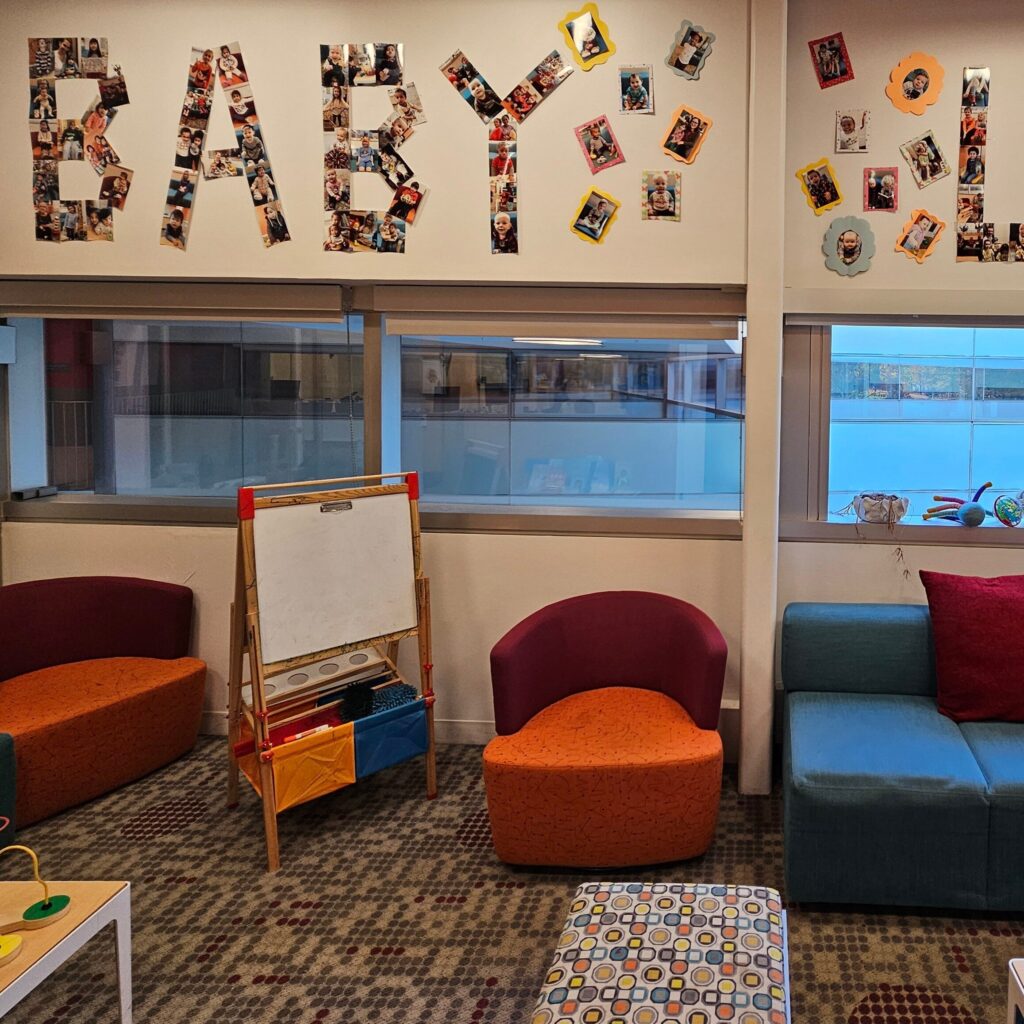
My roommate recently asked how I got into the labs I am working in. As a cognitive science minor, she is hoping to join a psychology lab like the Baby Lab. She is worried that being a chemical and biological engineering major will negatively affect her chances and does not know where to begin. Joining a lab can feel intimidating, especially one outside of your department. However, it does not have to feel like a daunting task when you know how to approach it.
As a sophomore, I have already had three different research experiences. I am currently a student in the Princeton Baby Lab and a research assistant in the Princeton Social Neuroscience Lab. I have also previously worked with a psychology graduate student as a volunteer research assistant. These different experiences were accessed in different ways.
I met the graduate student I volunteered for at the Princeton Psychology Society’s Psychology Lab Mixer. This event is open to all students (regardless of major) and is advertised through the Mathey mailing list. The event starts with lab managers and graduate students pitching their projects. This event is what initially got me interested in the Baby Lab.
I met two important people at this mixer: the Baby Lab manager and a graduate student. The latter had to leave early, so I did not get a chance to talk with her for long. I was disappointed, as I was intrigued by her research on parasocial relationships. However, I did get her email.
Emailing is one of the most important steps in trying to join labs or research projects. It requires a lot of initiative and persistence. Graduate students and lab managers are often busy and may forget to respond. You have to take the lead, following up when needed and compromising if you have to.
My graduate student was revamping her project, meaning I first had to be patient and then had to accept a volunteer position. As I was waiting for her project to be ready to accept undergraduate research assistants, I maintained communication with her over months. My close relationship with her meant I was still learning even before I started working. I asked her questions about her experiences, her methodology and her interests. She in turn taught me a lot about designing a study and applying to graduate school.
This was similar to how I got to work in the Princeton Social Neuroscience Lab (PSNL). Despite first meeting the lab manager over the summer, I was only recently hired after months of emailing back and forth.
Over the summer, when I was working at the Baby Lab, I attended a department lunch with my lab. My lab manager was friends with the lab manager for PSNL and introduced us. I had read a really interesting paper published by PSNL and asked her some questions about it. Due to my clear interest in the lab and fMRI research, she had asked me if I would like to help her run scans.
I spent the summer training to be a L1 (scan buddy) for fMRI at the Scully Center. Gaining specific research skills like being an L1 can also help you get research experiences (anyone affiliated with PNI/Princeton Psychology Department can get fMRI training through the Scully Center). Unfortunately, by the time I completed training, the summer was over. It was my responsibility to reach out again in the fall to get into the lab.
Lastly, I got into the Princeton Baby Lab by applying to work in the lab over the summer. While I was a research assistant under OURSIP (Office of Undergraduate Research Student Initiated Internship Program), I am now a research assistant through a course. In psychology, there is a course called the Psychology Research Experience I (PSY230). It is a year-long sequence you can take sophomore year to gain research experience. This class exists in other departments such as the chemistry department.
I told my roommate that she shouldn’t be discouraged from applying because of her major. The most important thing lab managers and graduate students are looking for is your passion and interest in their work. One way you can show that is through persistent and consistent communication.
– Jamilah Araf, Social Sciences Correspondent