
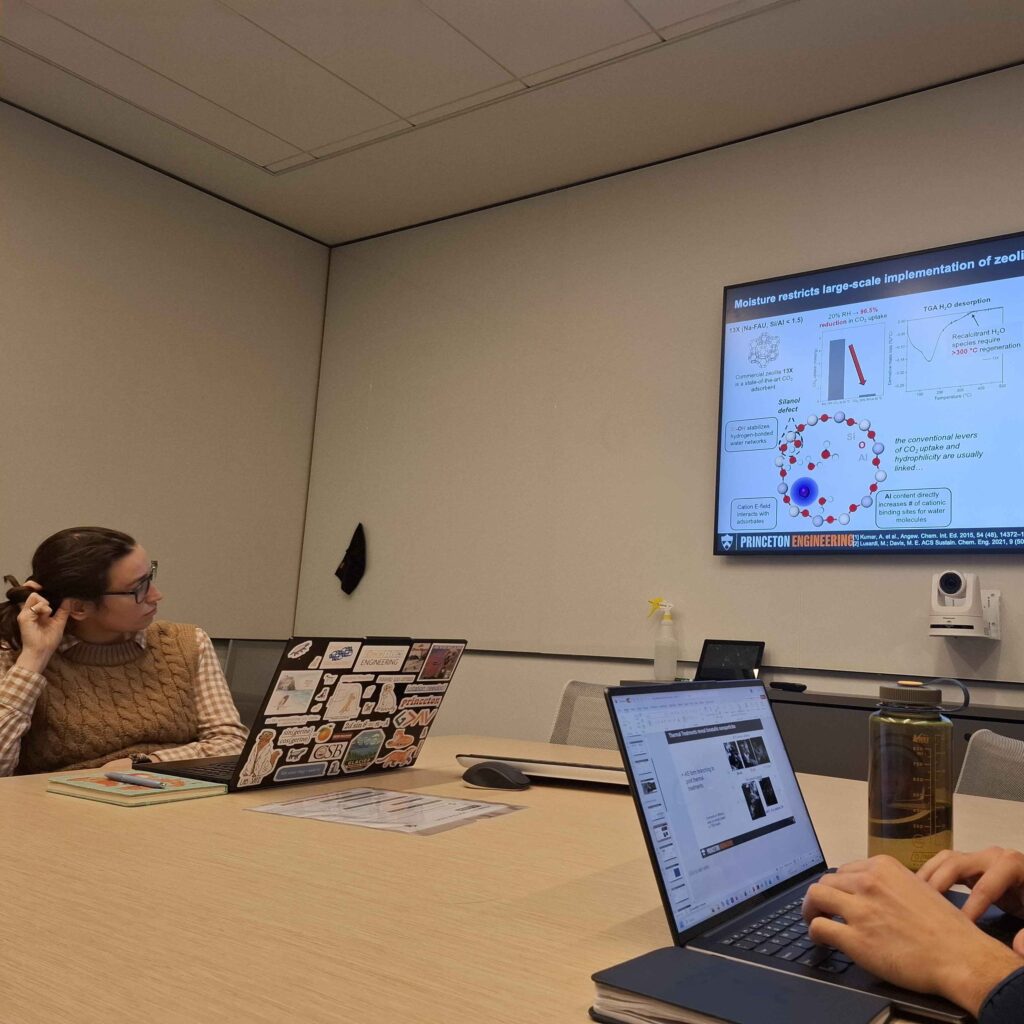
If you are part of a research group, chances are, you attend (or at least know about) the weekly group meetings (GM). GMs are exactly what they sound like — an occasion for the whole group to convene and share research updates. As one of the few undergrads in the group, I used to shy away from attending GMs, feeling a bit intimidated and out of place amongst the grad students presenting much more complex work. However, this semester, it has been one of my favorite parts of doing research, and if you are unfamiliar with or hesitant to attend GMs, let me convince you why you should!
The way GMs are conducted varies by group, but from my experience, they usually start with quick, general group-wide updates, such as restocking chemicals or improvements on lab safety. These announcements can be made as open-ended questions, allowing lab members with different perspectives to weigh in. Members will also share research updates, such as their paper getting accepted to a journal or a tricky experiment working out. Afterward, a person from the group will give a longer, in-depth presentation on their project. The presentation is structured similarly to a conference talk, but much more informal and focuses on recent progress and failures. During the presentation, the rest of the group can pose questions and share feedback to suggest improvements to the presenter’s project. The atmosphere is relaxed, and some groups will even have snacks (my friend’s research group drinks boba during GMs!).
What I’ve loved most about attending GMs is getting to hear about a wide array of fascinating research. For instance, while my project mostly deals with synthesizing zeolites (a type of porous material made of silicon, aluminum and oxygen), at GMs, I get to hear about how they are actually applied — in reaction engineering to selectively make ethylene, the world’s most widely produced organic chemical, and in carbon capture, to trap carbon dioxide before it is released into the atmosphere. I get to not only learn about advanced techniques others are using, but also practice scientific thinking as I critically examine their projects to understand what they could improve on, or where I could learn from them.
Still, the science is only half of what makes GMs worth showing up for. GMs are also where I can catch up with group mates whose schedules in the lab don’t often align with mine, and where the group comes together to celebrate individual successes. Even the research presentations are casual and, at times, humorous; we empathize with each other over a whole batch of experiments going wrong due to one tiny fault in the equipment, or joke about discoveries made by “bio-optical visible light spectroscopy” (i.e., your eyes). At GMs, my research group feels less like individual people working on tangentially related projects and more like a family, supporting each other on our research journeys.
So if you’ve been hesitant to attend GMs, like I was, I encourage you to go. You don’t need to understand every detail of the presentation to benefit. You’ll leave with new ideas, a broader view of what research can look like, and a stronger connection to the people around you. And if your group has boba, even better.
— Mai Tran, Engineering Correspondent