

With senior year well underway, it’s still pretty hard to wrap my head around the fact I’m actually working on my senior thesis. What isn’t hard to wrap my head around is the fact it means I’ll be producing yet another literature review. Whether it was my R2 during writing sem (an assignment from a now ancient version of the course) or what is shaping up to be the largest thing I’ve ever done, there’s always a lit review. This makes plenty of sense, given that literature reviews allow you to perform a necessary survey of the scholarly landscape, and can be used to teach necessary skills related to analyzing and synthesizing a broad range of perspectives and narratives. Despite this ubiquity, not every literature review is cut from the same cloth, and after writing my fair share of them, I’ve come to understand the practices that allow a quality literature review to stand a cut above.
Going Beyond Summary
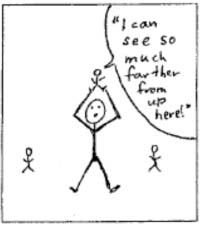
Perhaps the most important thing any literature review can do is actively engage in the scholarly conversation it explores. It can be tempting to allow a literature review to serve as simply a well-polished summary, just explaining the existing conversation. While providing clear background is important to a successful literature review, that would only be doing half of the work. No matter how much writing I do, I still find myself having to go back to the Gaipa moves I learned in Writing Seminar my first year. Whether that means “piggybacking” or “picking a fight”, finding a way to critically engage with the scholarship you find is always a necessary step. Doing this takes a literature review from obligatory to interesting for readers.. But contending with the ideas, frameworks, and methods that preceded your research in such an active way isn’t principally about helping anyone else, it’s actually an opportunity to extend your own thinking in new, exciting, and challenging ways.
Finding a Foundation
Still, simply figuring out what a given scholarly conversation even is at the moment can be challenging. They’re often tangled webs of arguments that constantly build and circle back on each other. With this context it’s even more important to find the foundational texts that address themes at the heart of your central question. These sources are often the ones that keep reappearing over and over again as citations in more modern research. These are also the works you’re most likely to encounter in a classroom setting. Last year, when I was writing my Junior Paper, I consistently found myself drawing on texts we covered in my junior seminar for anthropology majors or in the spring semester medical anthropology course. This wasn’t just because of convenience. In survey courses especially, you’re often presented with a sweeping range of foundational texts from across the discipline. Even though this can feel incoherent during the semester and might even seem irrelevant to what you’re interested in, during the writing process, these are the sources that can ground your argumentation.
Pulling from the Periphery
Beyond these foundational texts, it’s equally as important to pull from the periphery. This means doing more than going on JSTOR or EBSCO. The scholarly conversation isn’t some thing that only exists in journal articles. In fact, by being here on campus, we’re at the center of it! Go to talks on campus that you think could be related to what you’re researching. Reach out to the incredible librarians at Firestone. Explore the University’s archives. Reach out to professors to ask them about their own work. There are so many tangible ways to plug into the scholarly conversation that are unique privileges of being a student! So please take advantage of them, because as I’m finding out, four years goes faster than you think.
— Stanley Stoutamire, Social Sciences Correspondent