
Part 1: Brainstorming
As I begin to plan for my senior year, the quintessential Princeton trial looms over me: the senior thesis. For such a large and talked-about project, I felt the familiar feeling of “Where do I even start?”
As I embark upon my thesis journey, I’m hoping to take a self-reflective and forward-planning approach. In doing so, I hope to harness a productive and proactive energy that will help me treat this project as a series of small, feasible, and exciting tasks, and to help others who may be struggling.
Read more: Diary of a ThesisMy first step was to think of what I wanted to discuss. As a Classics major, I can choose to discuss anything I’m interested in – the possibilities are endless. As a pre-medical student, I knew that I wanted to keep my options relevant to my future career, discussing the ways ancient writers thought and wrote about the body, healing, and meaning in illness and mortality, applying ancient wisdom and lessons to modern contexts.
Yet, everything could be applied to my interests. I could write about Plato and Aristotle, Homer and Sappho, Horace and Virgil, Lucretius and Thucydides, the list goes on. I created a haphazard amalgamation of snippets from each of these authors to present to my adviser.
Perhaps as to be expected, he immediately told me my interests were too broad. I was having trouble picking a niche, narrow idea that I could talk about for dozens of pages. He told me that it was far better to start narrow and then broaden as my work naturally grew, rather than hoping the work would narrow itself down. There was no wrong answer, I simply had to pick something I was excited about. He also encouraged me not to have an explicit idea of what I wanted to argue ahead of time. Instead, he told me, pick a thread that I found interesting, and pull on it intensely. The work will broaden on its own: when I latch onto an idea, related texts and necessary arguments to be made will become clear as I write. I returned to the drawing board, examining my notes and browsing various classical texts, hoping to be struck with inspiration.
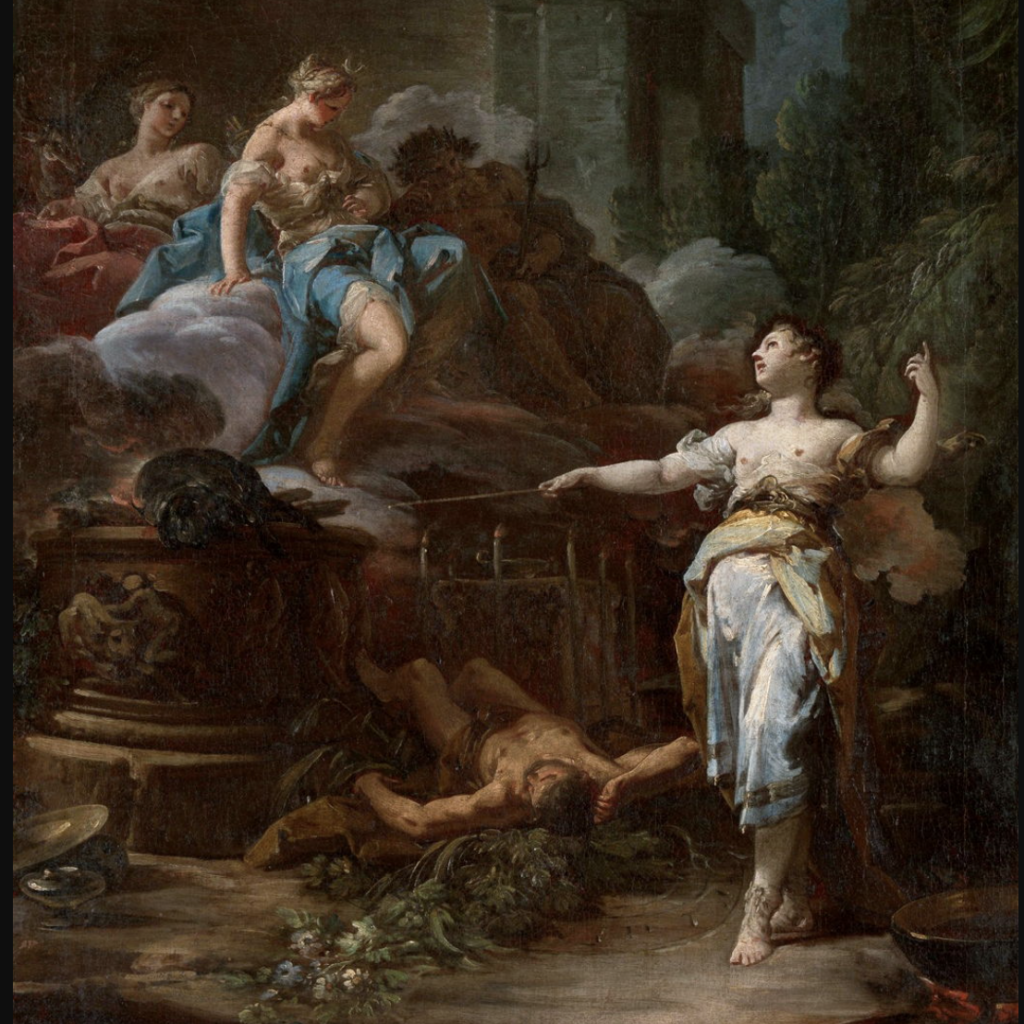
I reflected on why I was interested in ancient medicine: the healthy body is our medium through which our consciousness interacts with the world – through our brain, our eyes, our limbs and our senses. A wound or disease is a departure from our normally healthy bodies. I thought then that the concept of bodily change would be a good place to start. I turned to the quintessential resource on change in the ancient canon: Ovid’s Metamorphoses. I realized how I was highly interested in examining his interactions with ancient medical writers such as Hippocrates or Galen. The Metamorphoses is a huge and complex work that intricately interacts with many other ancient works: I needed more narrowing. I selected a few of the stories that were of particular interest to me, and seemed to have some ideas in common.
My next step is to simply read and get a lay of the land. What kind of medical knowledge would Ovid have known back then? What is the historical context in which Ovid was writing his work? What did people and physicians in antiquity actually believe about what happened to a body, and how does that show up in the literature? For my own interests, how could I apply these lessons to modern medicine?
In September of my senior year, I’m not expected to have all the answers. My job is to read and absorb information and cultivate a list of questions that I could try to answer over the coming year. The more I delve into the research, the clearer my questions will become.
– Gabriel Ascoli, Humanities Correspondent