

What began as a newfound interest in Formula 1 this summer has turned into the inspiration for my latest independent research project. After spending the summer following races and becoming an enthusiastic Mercedes fan, I found myself increasingly fascinated not only by the competition, but also by the engineering that makes it possible. From split-second strategic decisions to the enormous amounts of data collected during a race, Formula 1 offered an interesting intersection of technology, performance, and human decision-making.
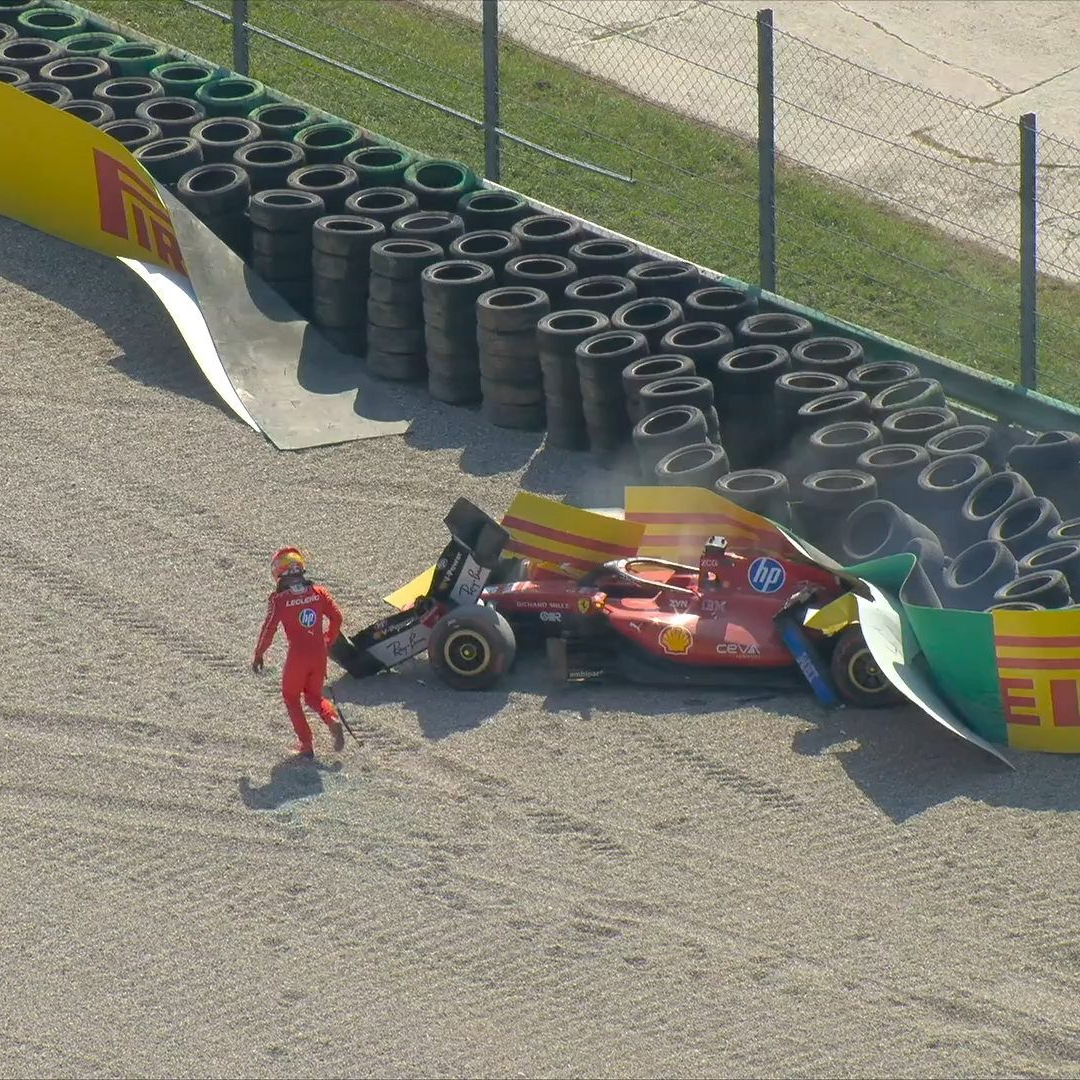
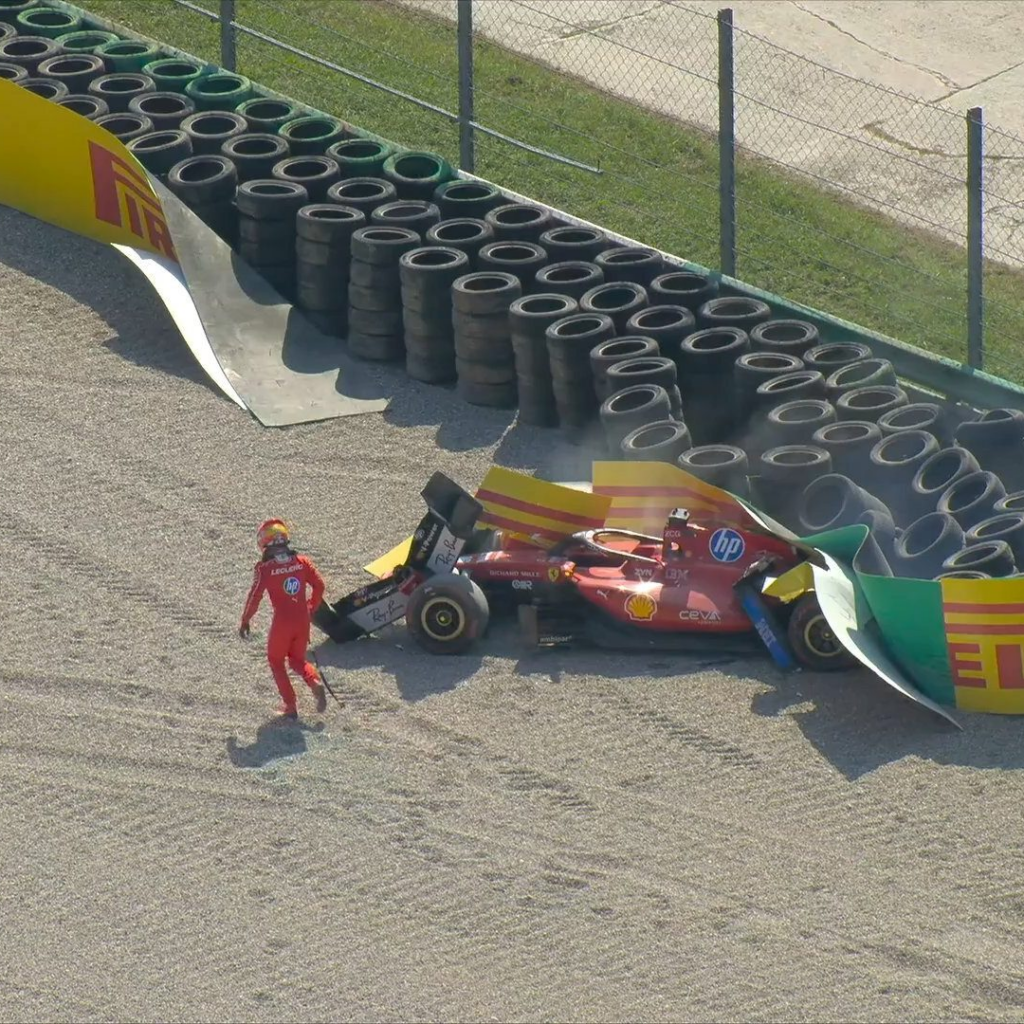
As an Electrical and Computer Engineering Junior, I began wondering how I could connect this interest with my academic background. In a sport where cars can exceed 200 miles per hour, even the smallest mistake can have serious consequences. While Formula 1 has made tremendous advances in safety, I was interested in exploring whether artificial intelligence could help identify dangerous situations before they occur.
That question became the foundation of my ECE 398 independent research project, which investigates whether machine learning can recognize warning signs in the moments leading up to an on-track incident. By examining information such as vehicle speed, braking, acceleration, and positioning, I hope to explore how technology might provide earlier warnings in situations where every second matters.
Building on Previous Research
This semester marks my third independent research experience at Princeton, each of which has introduced me to a different area of engineering. During the fall of my sophomore year, I studied how acoustic waves travel through the human ear canal, using computational simulations to investigate their potential for detecting ear infections. The project introduced me to the challenges of translating a real-world problem into a mathematical model and strengthened my interest in research with practical applications.
My following research experience, however, had an especially significant influence on the direction of my current work. Through a project involving TinyML, a field focused on making artificial intelligence models efficient enough to operate on small computing devices, I explored ways to improve driver-monitoring technology. Specifically, I worked on optimizing a model that estimates where a driver is looking, reducing its parameter count by 95.9% while maintaining strong predictive performance.
Beyond the technical accomplishment, the experience changed how I thought about artificial intelligence. I began to recognize that developing an accurate model was only part of the challenge. For technology to be useful, it must also be practical, efficient, and capable of operating under real-world constraints. A model that performs well on a powerful computer may not necessarily be suitable for a small device that needs to make decisions in real time.
Perhaps more importantly, the experience deepened my appreciation for the research process itself. Unlike traditional coursework, independent research rarely follows a predetermined path. There were unexpected results, approaches that required reconsideration, and moments when progress came from asking a different question rather than finding an immediate answer. I found that I genuinely enjoyed this uncertainty and the freedom to explore ideas beyond the classroom.
When deciding whether to pursue independent work again, I wanted to build on both the technical knowledge and independence I had developed through TinyML. My growing interest in Formula 1 presented an opportunity to apply those lessons to a new challenge. While my previous project focused on understanding driver behavior, this year’s research explores whether patterns in vehicle behavior can help anticipate dangerous situations.
Behind the Research
One of the most interesting aspects of Formula 1 is the amount of information generated throughout a race. Every lap produces a continuous stream of data describing how a car is performing, from its speed and acceleration to the driver’s braking and throttle inputs. Although these measurements are collected individually, their relationships over time can reveal much more about what is happening on the track.
For my project, I am analyzing historical Formula 1 telemetry to investigate whether certain patterns consistently appear before incidents occur. The challenge lies in distinguishing ordinary racing behavior from genuine warning signs. A sudden decrease in speed, for example, might indicate an approaching corner rather than an impending accident. Understanding the difference requires looking at how several measurements change together rather than relying on any single indicator.
Another important aspect of my research involves exploring how these predictions could be generated quickly enough to be useful. Rather than relying exclusively on large computers, I am investigating whether smaller computing devices could process incoming data and identify potential risks in real time.
Lessons Along the Way
Across my three independent research experiences, one of the most valuable lessons has been learning to become comfortable with uncertainty. In a typical classroom assignment, the problem is clearly defined and there is often an expected solution. Research, on the other hand, requires identifying which questions are worth asking, reconsidering assumptions, and accepting that not every experiment will produce the anticipated result.
My previous projects taught me that progress is not always measured by how quickly a problem is solved. Sometimes, an unexpected result reveals a limitation in the original approach or opens the door to a more meaningful question. Through this process, I have become more patient, adaptable, and confident in navigating unfamiliar challenges.
The transition from TinyML to Formula 1 safety has also shown me how knowledge gained in one area can carry into another. Although the applications differ, both projects involve understanding how artificial intelligence can be made more efficient and reliable in situations where timely decisions matter. Being able to recognize these connections has been one of the most rewarding aspects of independent work.
Above all, the experience has reinforced my appreciation for the freedom to pursue questions driven by personal curiosity. What started as an interest in watching Formula 1 has developed into an opportunity to explore artificial intelligence, transportation safety, and embedded computing. It has reminded me that meaningful engineering questions can emerge from unexpected places, including interests outside the classroom.
Looking Forward
As I continue my research this semester, I hope to better understand how early potential Formula 1 incidents can be predicted and whether these predictions can be generated efficiently on smaller devices. Although the project is centered on motorsport, its underlying ideas may also have applications in autonomous vehicles and driver-assistance technologies, where anticipating danger can be just as important as responding to it.
Looking back at my previous research experiences, I am grateful for the opportunity to pursue independent work again. Each project has challenged me to think differently, develop new skills, and approach unfamiliar problems with greater confidence.
What began as a summer interest in Formula 1 has grown into a project that brings together my academic interests and personal curiosity. While I still have plenty to explore, I am excited to see where the research leads, and, of course, to continue cheering for Mercedes along the way.
–Aishah Shahid, Engineering Correspondent