Last semester, Jalisha studied abroad in London and wrote about her experiences on the PCUR blog. Aside from finishing up papers and exams, I’m getting ready to head abroad myself — to the University of Otago in New Zealand! I wanted to share some tips on how to choose your study abroad location, and how to prepare for a semester of research away from Princeton (both of which add to Jalisha’s great advice).
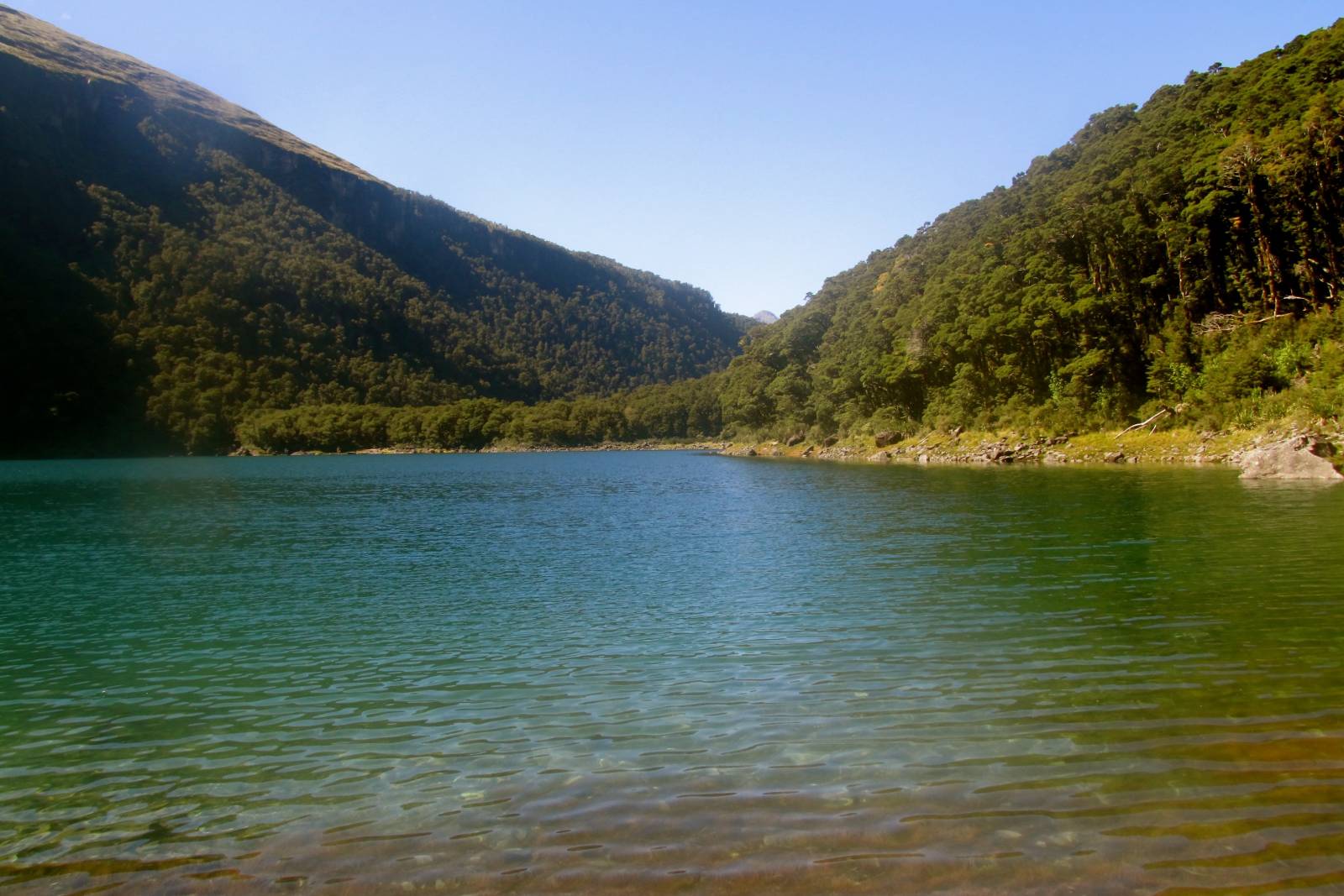
Lake Marian in Fiordland National Park, NZ! My friend Hema Lochan ’16 took this photo during her semester abroad.
“My friends, family, and classmates sometimes ask me why I do the things I do,” muses Ph.D. student Cara Brook in a recent NatGeo blog post. “Why do I spend so much time in remote corners of the world, tracking lethal viruses in enormous bats?”
In its broader form, this is a question all researchers can relate to: not just why she is so passionate, but how she found such passion for her particular research. How can we ever choose one question, of all the world’s exciting unknowns, for a thesis, or Ph.D., or career?
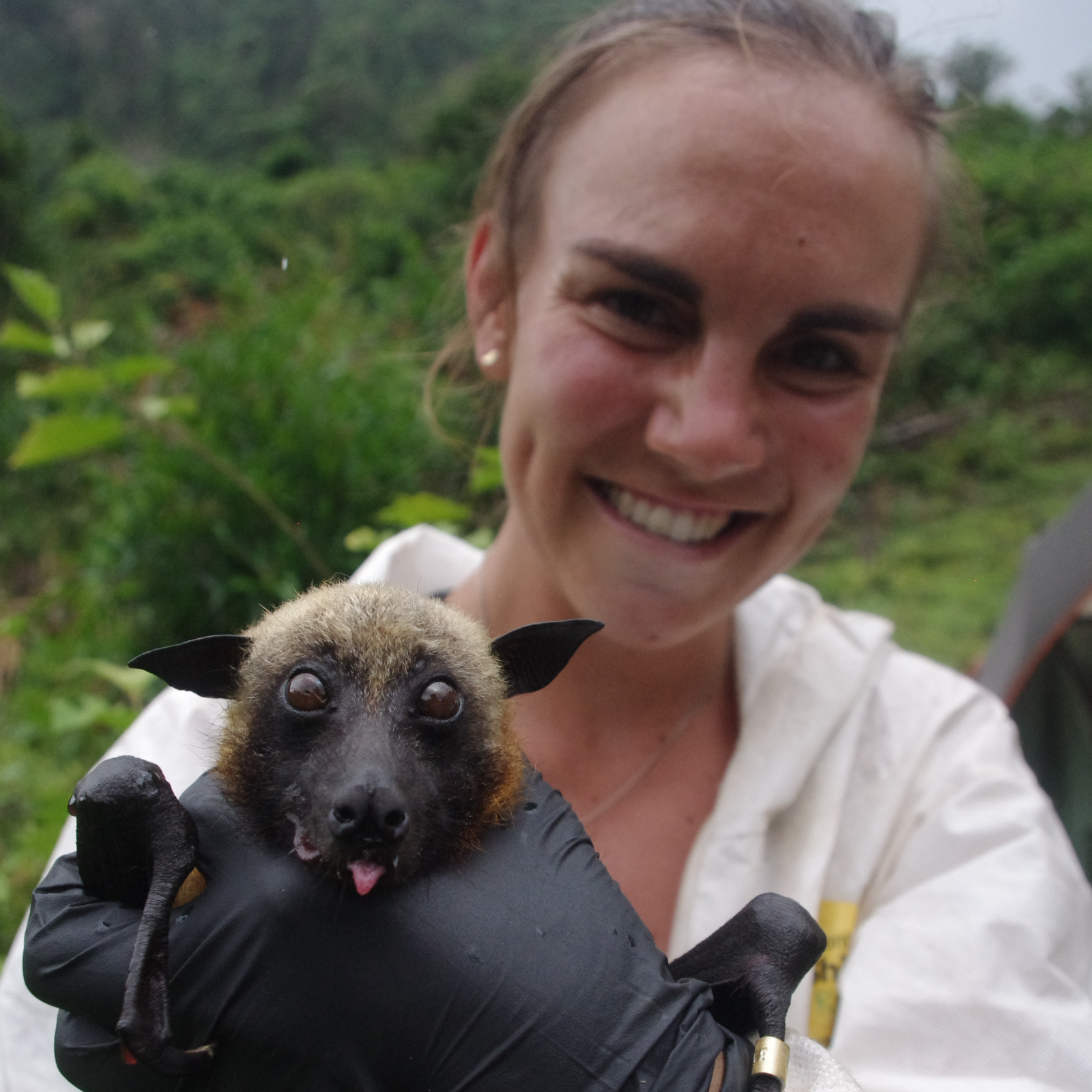
Cara and a Malagasy fruit bat pose in the field.
Cara and I met up in a campus coffee shop – each of us, like good ecologists, bringing a reusable mug – and I asked Cara how she came to her research. Over the past four years, Cara has spent more time in Madagascar than in Princeton. In the field, she camps in the remote wilderness, traps fruit bats, and collects samples of their blood, hair, and (sometimes) teeth, to trace the paths of pathogens through populations. Cara has sacrificed much – warm showers, wi-fi, and uninterrupted sleep, to start – for her research. How did she find a question that drives her so deeply?
Over the course of the semester, PCURs will explain how they found their place in research. We present these to you as a series called The Project That Made Me a Researcher. As any undergraduate knows, the transition from ‘doing a research project’ to thinking of yourself as aresearcher is an exciting and highly individualized phenomenon. Here, Stacey shares her story.
~~~~~~
Engineers don’t really do research, right? They just build systems.
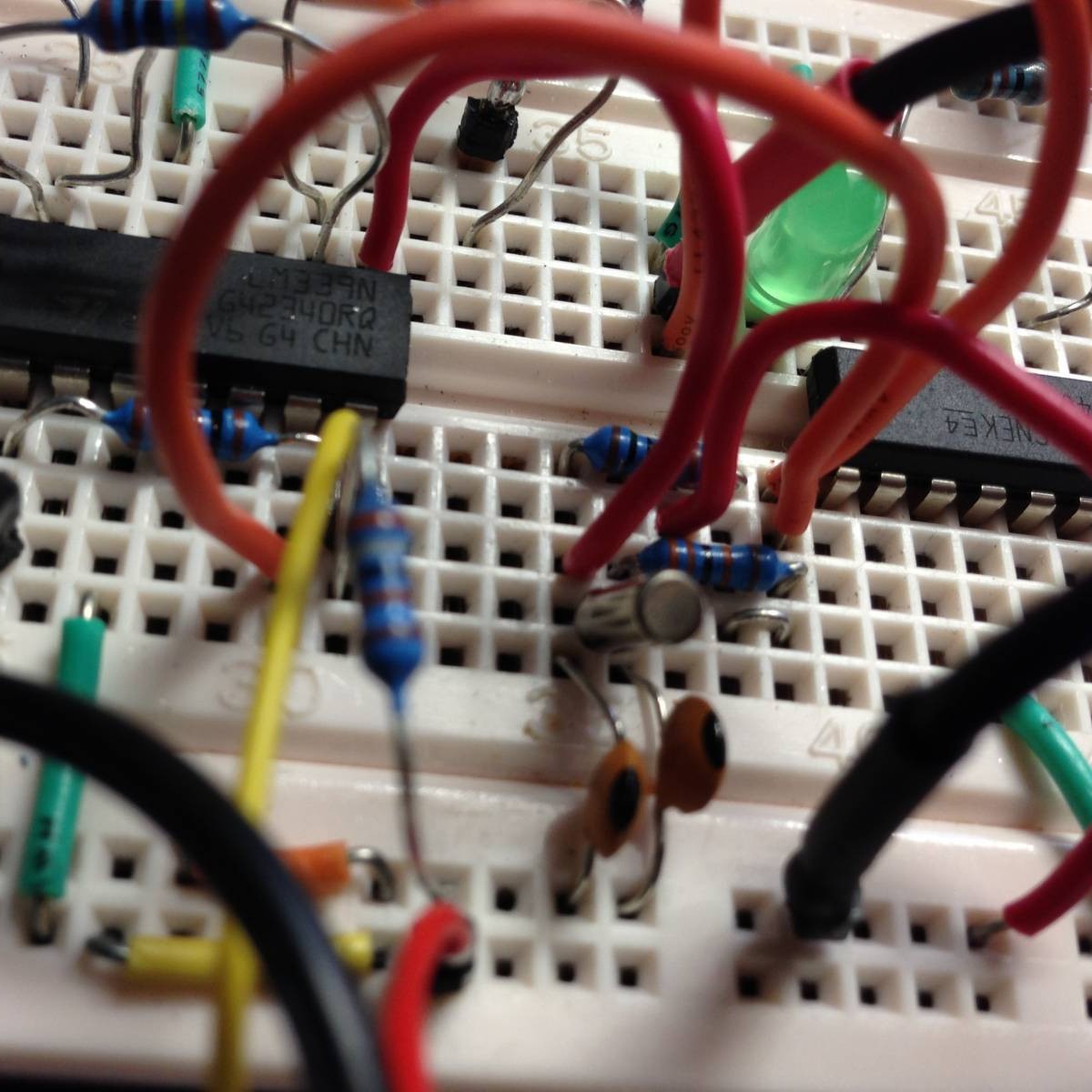
A messy first draft of a circuit I was building the summer of my sophomore year.
Those were my thoughts when, in my high school years, I pondered my future career path as an engineer. I had always believed research was only about discovering new information on how the world works. To me, it was a pursuit limited to natural and social science PhDs (who, more often than not in my mind, were clad in white lab coats). Even coming to Princeton, I found it difficult to believe that as an aspiring engineer I would need to conduct much research. As I slowly became more involved in research, I realized it was something I was interested in pursuing further. However, my limited knowledge of technical fields combined with my relative lack of experience made me a little hesitant about my ability to follow that goal. It wasn’t until a project I worked on in Germany (during my sophomore summer) that I first felt like a true researcher.
Princeton has an incredible wealth of resources dedicated especially to undergrads. But where are these resources, really? And how do we gain access to them? In my experience, the key to getting resources and advice is to simply ask.
Towards the end of my freshman year, I knew I was going to do the month-long Princeton in Brazil language program in Rio de Janeiro. I wanted to spend the rest of the summer there, too, but wasn’t sure how to do it. I couldn’t afford three months abroad by myself — and, even if I had the money, how would I fill the time?
Rio de Janeiro, Brazil, where I spent the summer after my freshman year and had my first experience traveling outside of North America!
My Portuguese professor knew I was interested in queer studies, and recommended I talk to Professor James Green, a visiting professor from Brown with the Program in Latin American Studies. She told me he was an expert in the field. I felt awkward reaching out to a professor I didn’t know, but I sent an email introducing myself, explaining my interests, and hoping to set up a time to talk.
He agreed to meet with me a week later, and — much to my surprise — I walked out of his office with an offer to be his research assistant for the summer in Rio. It was an exciting opportunity — and exactly what I needed to apply for summer funding.
How do I square my research with my class schedule — and content?
The University of Sussex, where I spent my Junior Spring, is like many European universities in that its three-year undergraduate courses are focused nearly exclusively upon one subject. Whether they wanted to or not, the third-year chemists I studied with there could never have sampled from the broad menu of courses I have at Princeton. Seeing the alternative, I am more-than-ever grateful to be at a liberal arts university where even the most technical-minded engineers can – indeed must – explore topics far afield from their specialties. As with all exploration, I have found some electives more fruitful than others. But many non-technical classes have been incredibly useful in honing my ability to communicate my research, collaborate with researchers from around the world, and understand the political and philosophical implications of my work.
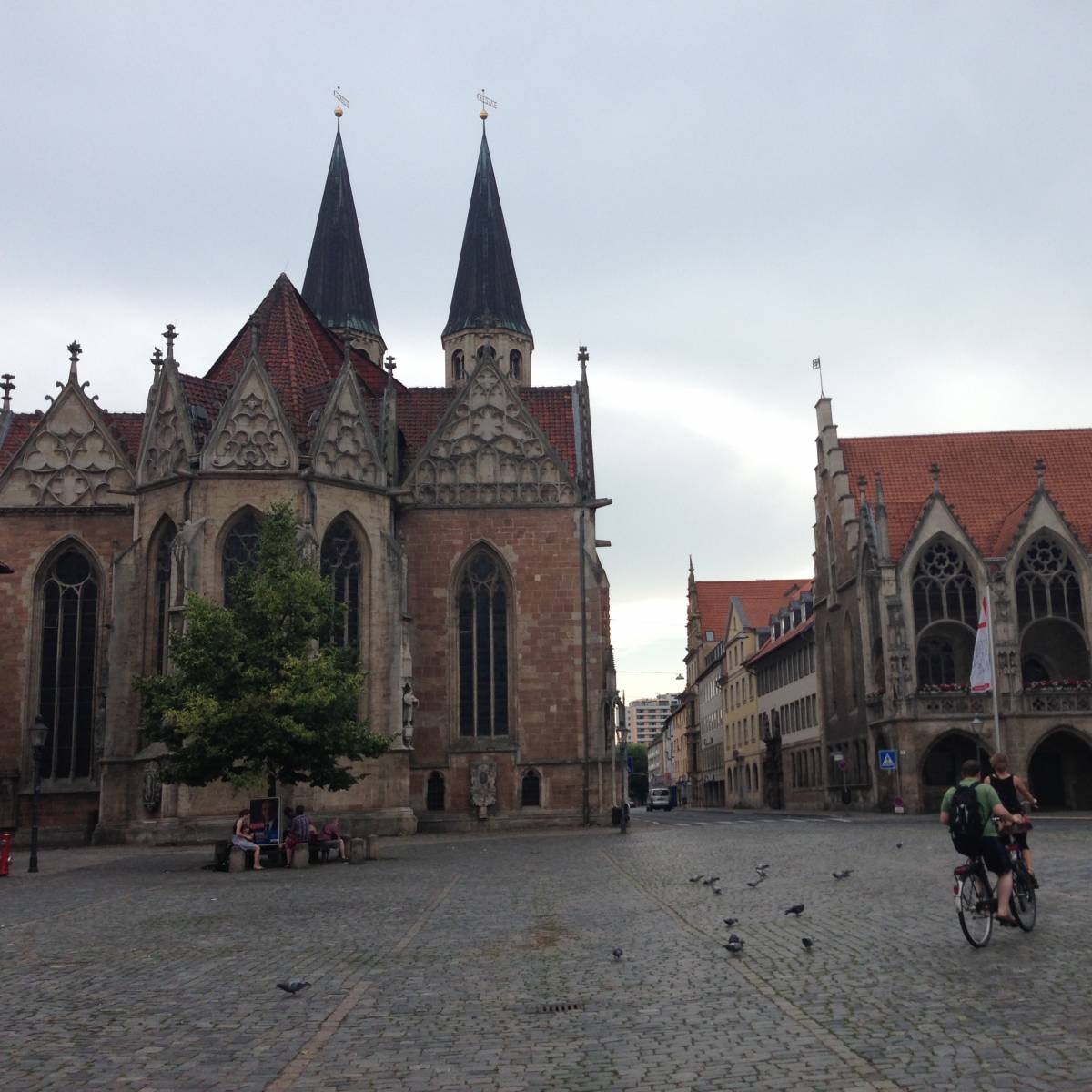
Princeton Environmental Institute (PEI) graciously provided me funding one summer to conduct research in Germany.
Now that the year is in full swing and you’ve settled in with academic life, you might be starting to think about the next step (after you’ve tackled your midterms, of course). With fall break behind us, it’s a great time to start thinking about and applying for summer opportunities. It can be simultaneously exciting and overwhelming to think about starting your search, but happily enough (and perhaps equally overwhelming), Princeton itself offers a vast array of summer opportunities, which are a good place to start.
Below is a non-exhaustive guide to summer research and abroad experiences offered through Princeton that I’m aware of, designed to help make the process a little easier. Due to my background, the list is probably more relevant to science and engineering majors, but either way, I hope you’ll find some information that is valuable for your internship search. I’ve grouped them loosely according to domestic and abroad opportunities.
It doesn’t quite mean wearing lab coats to church…
It’s late at night in the lab during my spring abroad in England. We’re waiting for the microplate reader to spit out another noisy mess of data, and I’m struggling. Not with any scientific point, but with trying to articulate poorly-remembered details of St. Thomas Aquinas’ teleology to a Muslim grad student colleague. What, you ask, does biochemistry have to do with Thomist teachings? Well, I wouldn’t be writing this if the answer weren’t “everything.”
Research, you see, isn’t just something we do in the lab or the archives. It’s a powerful expression of that fundamental human desire to understand the way the world works. It’s about wonder: We wonder where we came from, so we study cosmology and biochemistry. We wonder what came before us, so we study paleontology and archaeology. We wonder who we are so we study history, the arts, and the humanities. And we wonder at our place and our role in the world. And scientific answers lead to scientific questions, which inevitably stretch beyond the lab or the library into life.
Last summer, as I’ve mentioned, I researched the interactions between Bermuda’s groundwater and coral reefs. I entered the metaphorical woods: the ambiguity and self-doubt of immersion in data and details.
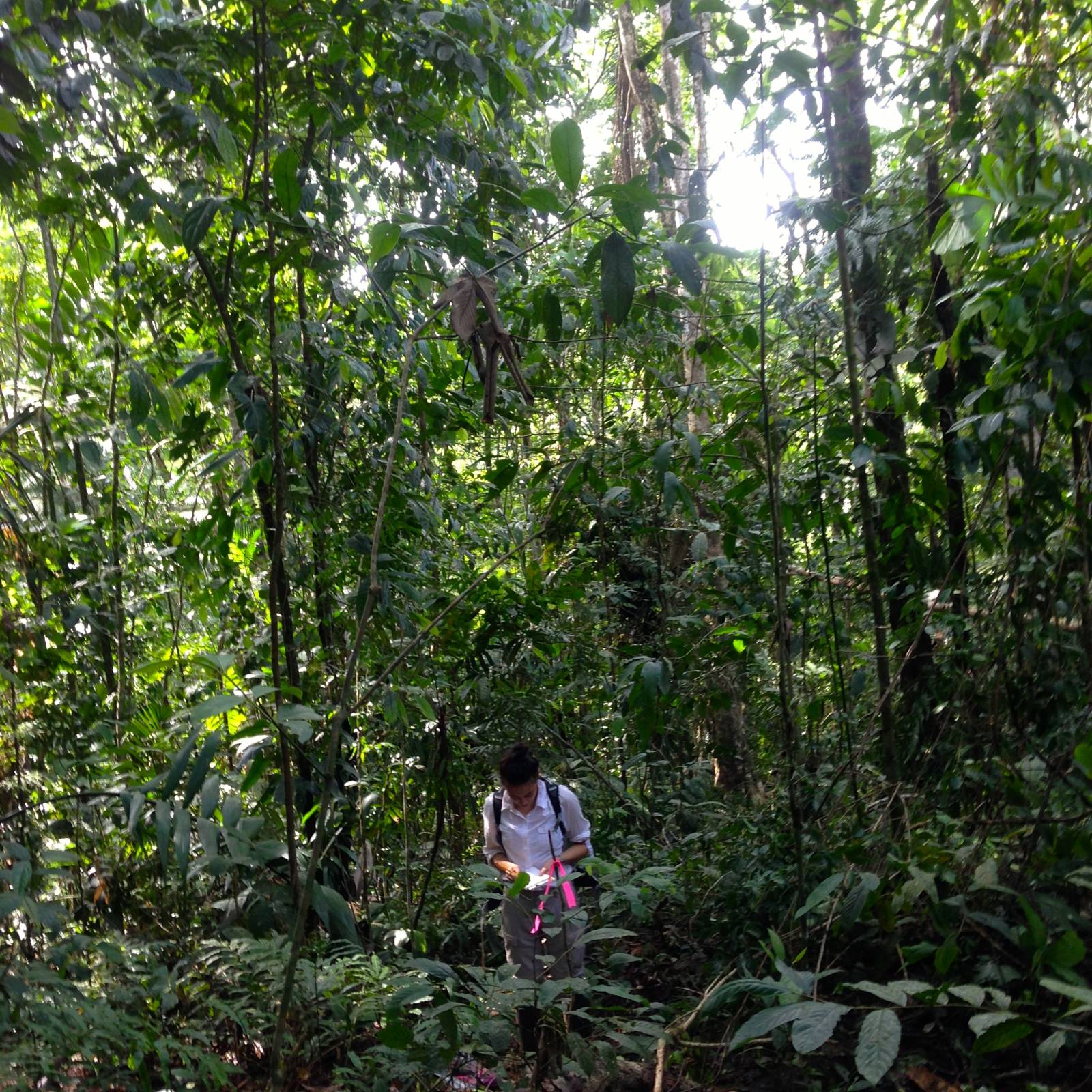
My mentor, Cleo Chou, taking measurements in the rainforest last summer.
I came to the field with a set of expectations for my project: a conceptual forest, if you will. But in the field, I zoomed in, rebuilding this conceptual forest from the ground up. Surrounded by trees, details, and noise, I lost faith that I could find significant results – any conceptual forest at all.
On Day One of my project, I had an abrupt reality check. The groundwater discharge I was studying was nowhere to be found. I swam along the rocky coastline of Bermuda’s Tynes
When I entered Princeton as a freshman, I was skeptical that research could do anything for me. I considered myself an applied person who cared little for theory, and I hadn’t planned on continuing on to graduate school. The tides turned when I stumbled upon an optics Research Experience for Undergraduates (REU) program when I was looking for summer programs freshman year. At the time I felt I had few marketable technical skills in my major, so I figured it would be a good chance to build up some useful skills and decided to give it a try. And I’m really glad I did — the experience made me realize how wrong I had been about my prior assumptions regarding research.
Are you a research skeptic, too? Let me tell you a bit about my story and why I would recommend giving research a try.
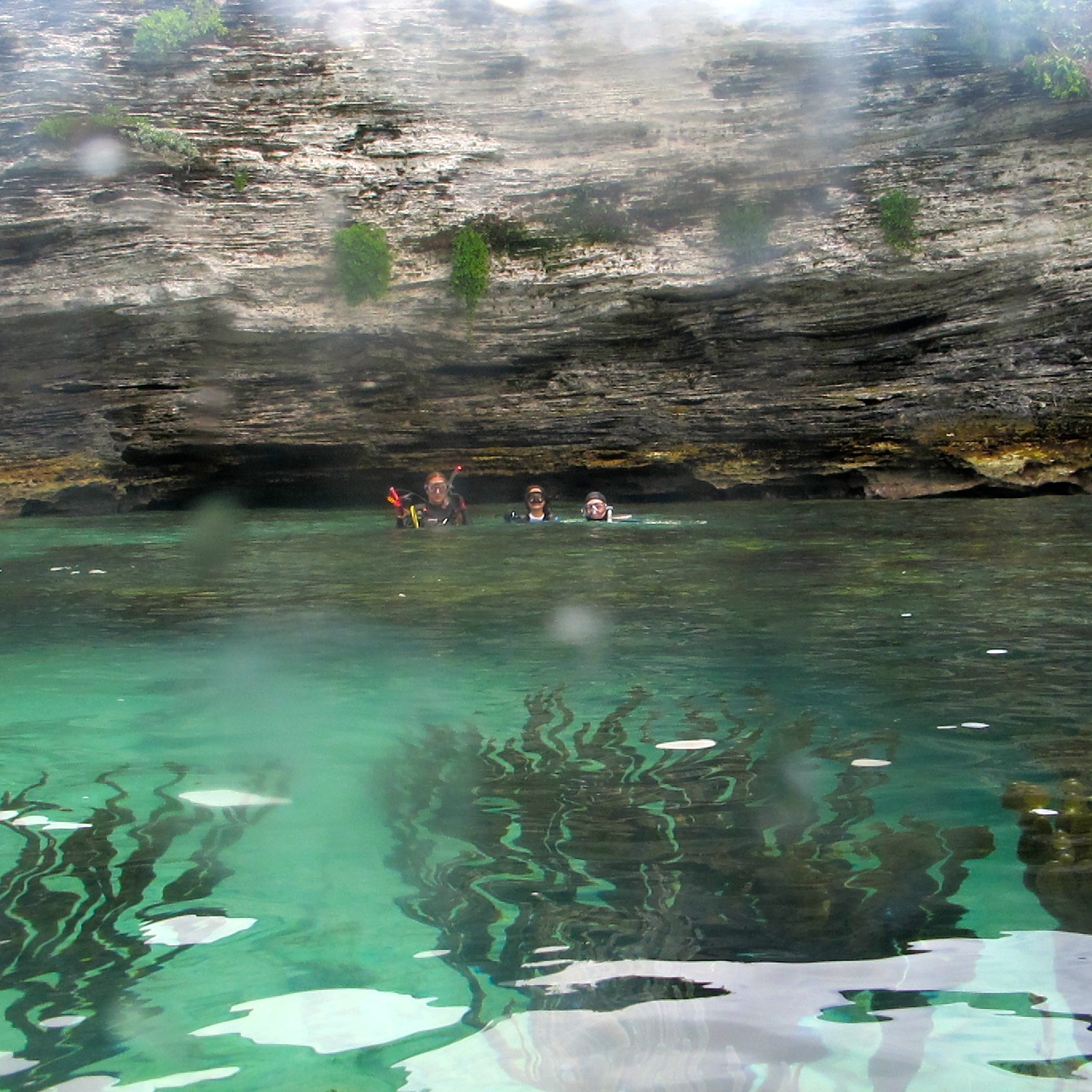
The water was so clear I could see the coral colonies on the reef below the boat. From dark clouds in the south, I heard a rumble of thunder. Dylan, our boat captain, eyed the horizon. “It’s okay for now,” he said.
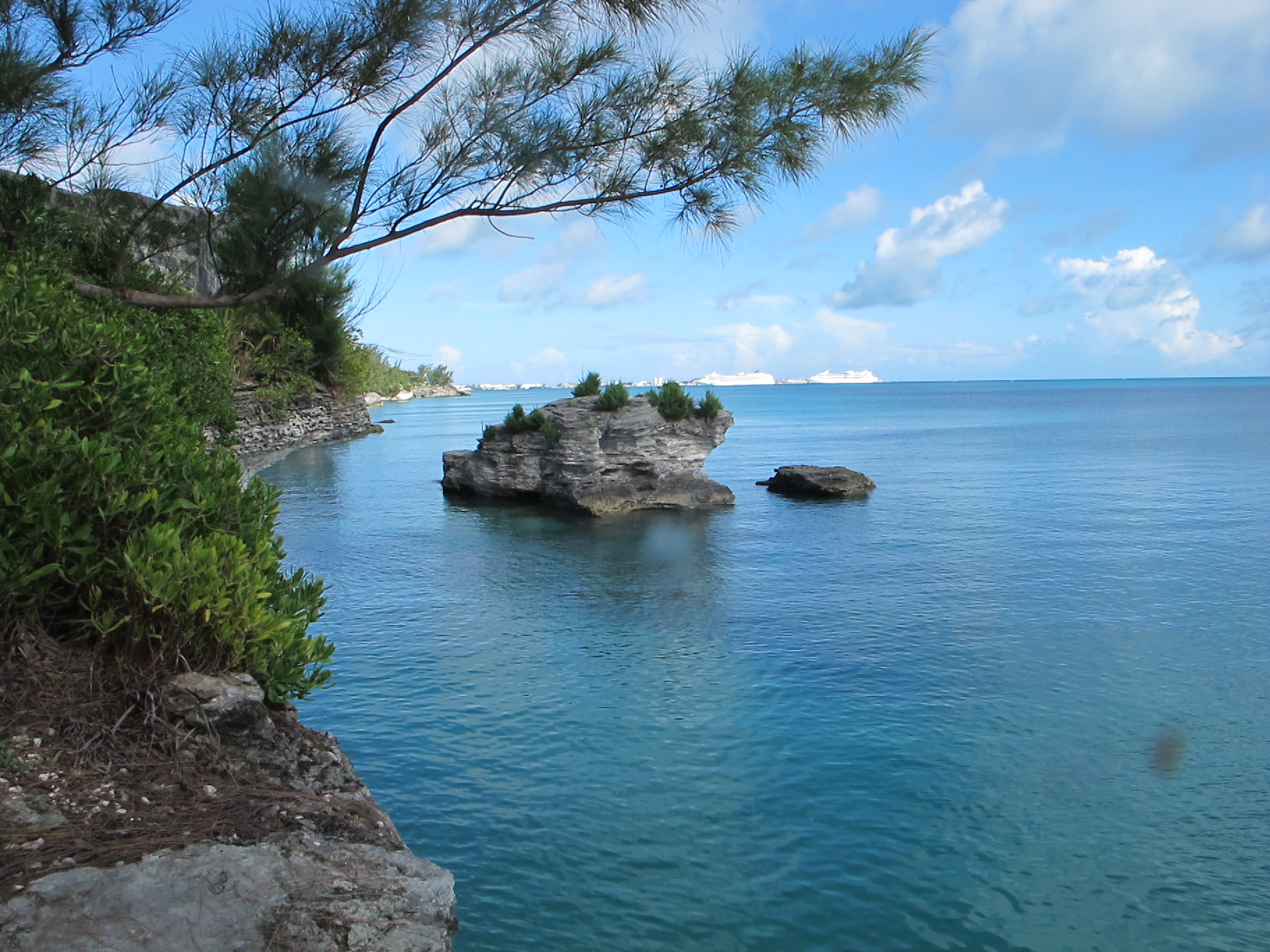
My field site on a sunnier day, photographed from shore.
I had come to Bermuda for two weeks of fieldwork: collecting water samples showing the effects of groundwater discharge on the reef, and assessing its impact on coral colonies nearby. I had two weeks to bring together the essence of my summer research project. Sun or storm, out we went.
On this particular day, I was collecting water samples with Tori, a Princeton grad student, and assisting two divers as they sampled the coral colonies.
Donning my snorkel and fins, I swam over to check on the divers. I was underwater, watching them carefully extract a coral sample, when it started raining. From below, I watched the water’s vast expanse erupt in a textured tessellation, repeated as far as I could see. Those first moments of that day’s downpour are one of my summer’s most transcendent memories.
Getting to work at my field site in Tynes Bay, Bermuda.
Perhaps I also remember that moment so vividly because of the chaos that followed.