Categories
Conduct Research Get Started with Research Research Life

Conducting Research While Studying Abroad 

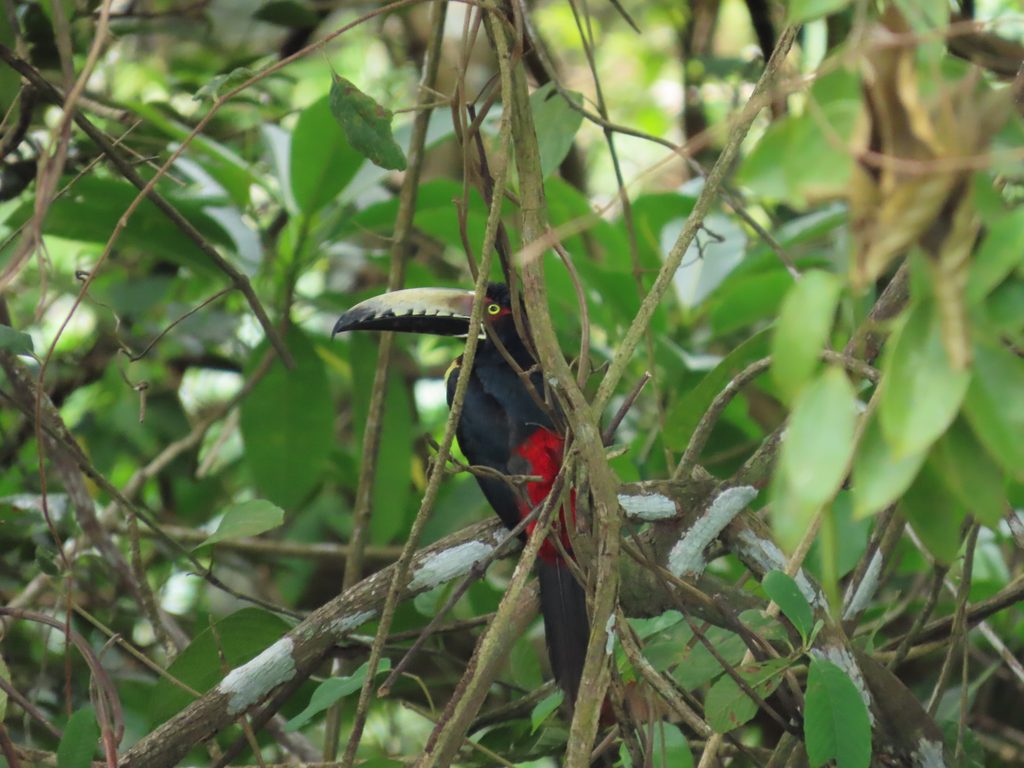
Collared Aracari sitting in a tree Photo Credit: Maya Cabrera

What is the point of studying abroad? Why would you want to leave the Princeton bubble? For me at least, studying abroad in Panamá through the Ecology and Evolutionary Biology (EEB) department was definitely my saving grace. I needed a break from the cold New Jersey winters and from the structured academic life here. So I guess, why should someone who wants to go into research study abroad? What if there aren’t any opportunities to do research abroad? Well, that just depends on the program you do! I was lucky that the EEB department offered a semester-long field research-based course (OIP link), but there are also other study abroad field-based programs out there, like the School for Field Studies! So, if you still aren’t sure if studying abroad is right for you, let me try and convince you further!

The first (and most obvious reason) I would suggest for someone to do field research abroad is that you can experience a different biome. Before I studied abroad, the only field work I had done was in temperate systems, so I had no experience in other fields. The Panamá field semester was in a tropical ecosystem, so I got to see and experience a wide variety of organisms and interactions I wouldn’t have otherwise seen. It is widely known that ecosystems near the equator experience a higher diversity of organisms, but learning about this in class didn’t really sink in as much as when we were actually there. Every day when I walked to class, I would always make sure to bring my camera, as there was always some animal hanging around the path. And staying in that area for an extended period of time allowed me to see and experience much more than if I only visited for a week or two. It’s always good to try new things, and as a field researcher, I would argue that the more experience, the better you are at discovering what you like/don’t like. 
Categories
Conduct Research Independent Work Present & Publish Findings Research Life Resources

How to Make a Poster: 5 Things I Learned from a Poster Workshop

Over the last few weeks of the semester, I needed to make two posters. In preparation, I attended a poster workshop that made me think more intentionally about how to make an effective poster. I’ve outlined some of my key takeaways below that I hope can offer guidance to anyone preparing a poster of their own. 

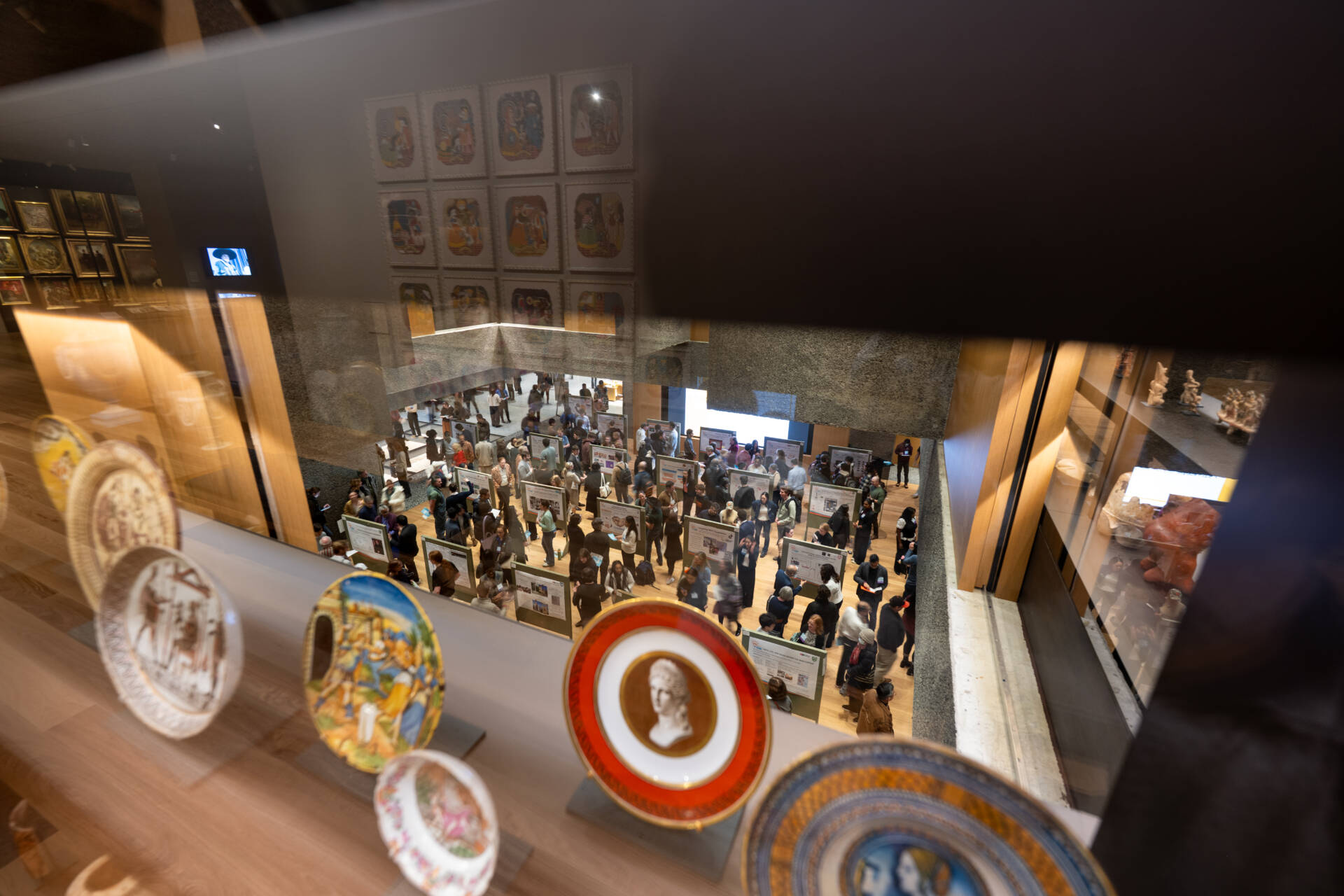
Image of Princeton Research Day from a higher vantage point in the Princeton University Art Museum
Princeton Research Day in the Princeton University Art Museum. Photo credit: Sameer Khan / Fotobuddy.
Categories
Conduct Research Independent Work Research Life Resources

Beyond the Orange Bubble: A Guide to Thesis Research Abroad

Traveling for research abroad
Leaving the Orange Bubble

One of the greatest benefits of being a Princeton student is the unparalleled access to international opportunities. Whether it’s traveling for classes and clubs, completing an IIP (International Internship Program), doing fieldwork through HMEI (High Meadows Environmental Institute), taking a Global Seminar course through PIIRS (Princeton Institute for International and Regional Studies), or participating in Princeton’s many language programs abroad, many students find ways to leave the Orange Bubble—literally. To become better-informed global citizens, it is important not only to study the world from Princeton, but also to spend time in the world beyond Princeton.

One powerful way to do this is by conducting research abroad. When I was a junior preparing for my senior thesis, I knew I wanted to incorporate an international dimension into my work and, if possible, travel over winter break of senior year. Although I had been fortunate to travel domestically through Princeton, I hadn’t yet taken advantage of any study or research opportunities abroad. Winter break of senior year is one of the last, and most popular, chances to do so. Princeton has a wide range of thesis funding sources, which makes it very possible to take your research to an international site.

Categories
Conduct Research Research Life

Doha Diaries: Zara’s Internship at QCRI

This summer, Zara Hommez traveled from Princeton to Doha, Qatar, for an internship at the Qatar Computing Research Institute (QCRI), where she worked in the Humanitarian AI division. As a sophomore majoring in Operations Research and Financial Engineering (ORFE), she was drawn to the placement through Princeton’s International Internship Program (IIP) because it offered a rare blend of quantitative modeling, computer vision, and real-world impact, which is the exact intersection she hopes to pursue.

When browsing IIP opportunities, QCRI immediately stood out. Its mission to use data and AI to address global humanitarian challenges aligned perfectly with her academic interests in optimization, systems thinking, and applied machine learning. The chance to live in Doha, a rapidly growing, modern city at the heart of the Middle East, added an exciting cultural dimension she was eager to explore.

Zara on a sand buggie
Zara on a sand buggie! Photo credit: Zara Hommez.
Categories
Research Life

Who Guides the Guardrails?

Image of interview subject, Katya Grygorenko in front a stone wall with artictic carvings.
ORFE major Katya Grygorenko (’27) over the summer. Photo credit; Katya Grygorenko.

There’s no doubt that the summer is one of the most promising times to experiment with your research interests, and the International Internship Program (IIP) can provide awesome opportunities for Princeton students to explore those curiosities. From creating theoretical frameworks to engaging with lab-based experimentation, there’s a wide range of ways to explore research through the summer program.

I had the pleasure of sitting down with Katya Grygorenko (‘27), who spent her summer doing research on artificial intelligence (AI) for the Center for the Study of Democracy (CSD), a public policy institute based in Sofia, Bulgaria. The rise of Large Language Learning Models (LLMs) like OpenAI’s ChatGPT and other AI systems has inspired uncertainty, and even fear. The idea of a “black box where people don’t really know what’s going on”, as Grygorenko put it, can feel daunting to think about. But the idea of tackling the ethical challenges of implementing these complex digital systems didn’t scare Grygorenko at all— it excited her.

Categories
Research Life

“My Summer in Kuala Lumpur”: Iman’s Internship Journey

This summer, Iman Bedru ’28 traveled from Woodbury, Minnesota, to Kuala Lumpur, Malaysia, for an internship with Chumbaka, an organization dedicated to empowering youth through technology and education. As a rising sophomore in Electrical and Computer Engineering, Iman went to Malaysia through Princeton’s International Internship Program (IIP), drawn by the opportunity to connect her technical background with her passion for education and community engagement.

When browsing through IIP’s opportunities, Chumbaka stood out immediately. Its mission, which is to equip students and teachers with the tools to explore and innovate through STEM, aligned perfectly with Iman’s vision of using engineering knowledge to create meaningful social impact. The fact that the internship was based in Malaysia only added to the appeal. A country rich in cultural and ethnic diversity, Malaysia promised not just professional growth, but also immersion in a vibrant new environment.

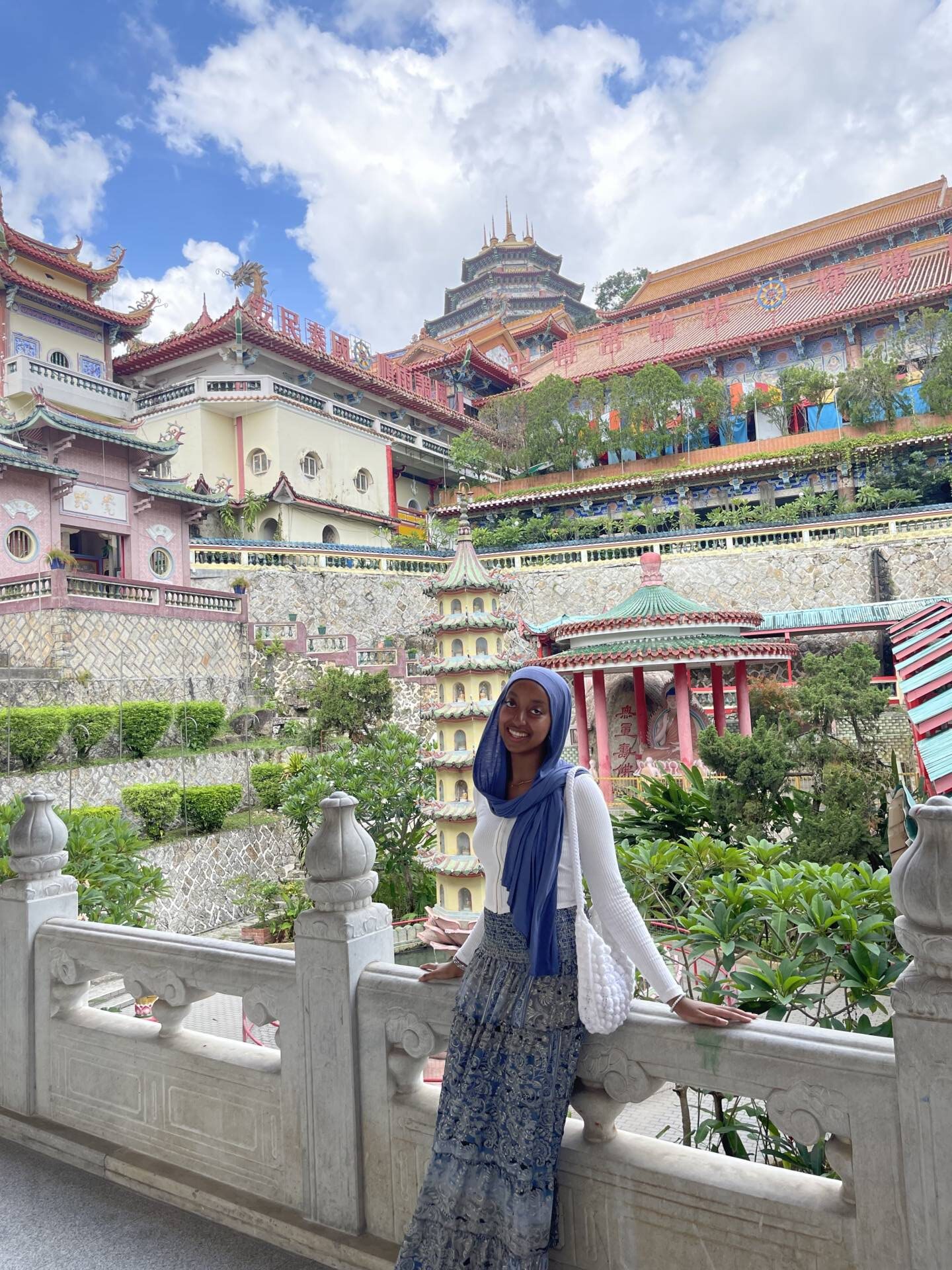
Picture of Iman Bedru at Kuala Lumpur temple.
Picture of Iman at a Kuala Lumpur temple.
Categories
Conduct Research Research Life

Research, Friends, Mountains, and Everything in Between

Neuschwanstein Castle
The view of the Neuschwanstein Castle on the way back from a 5-hour hike.

When I boarded my flight to Munich this summer, I thought I knew exactly what awaited me: labs buzzing with experiments and discoveries, even a big “Aha!” moment that would shape my research career. After spending over a month home in Thailand, beach hopping and exploring the underwater world with my scuba diving gear, I was ready to slip back into my academic shoes and make the most out of my time in a new country.

What I found was… not quite what I expected.

While I had overestimated how sparkly the research world would be, I didn’t even come close to imagining how many lessons I would learn or how many memories I would make.

Categories
Research Life

Staying Connected

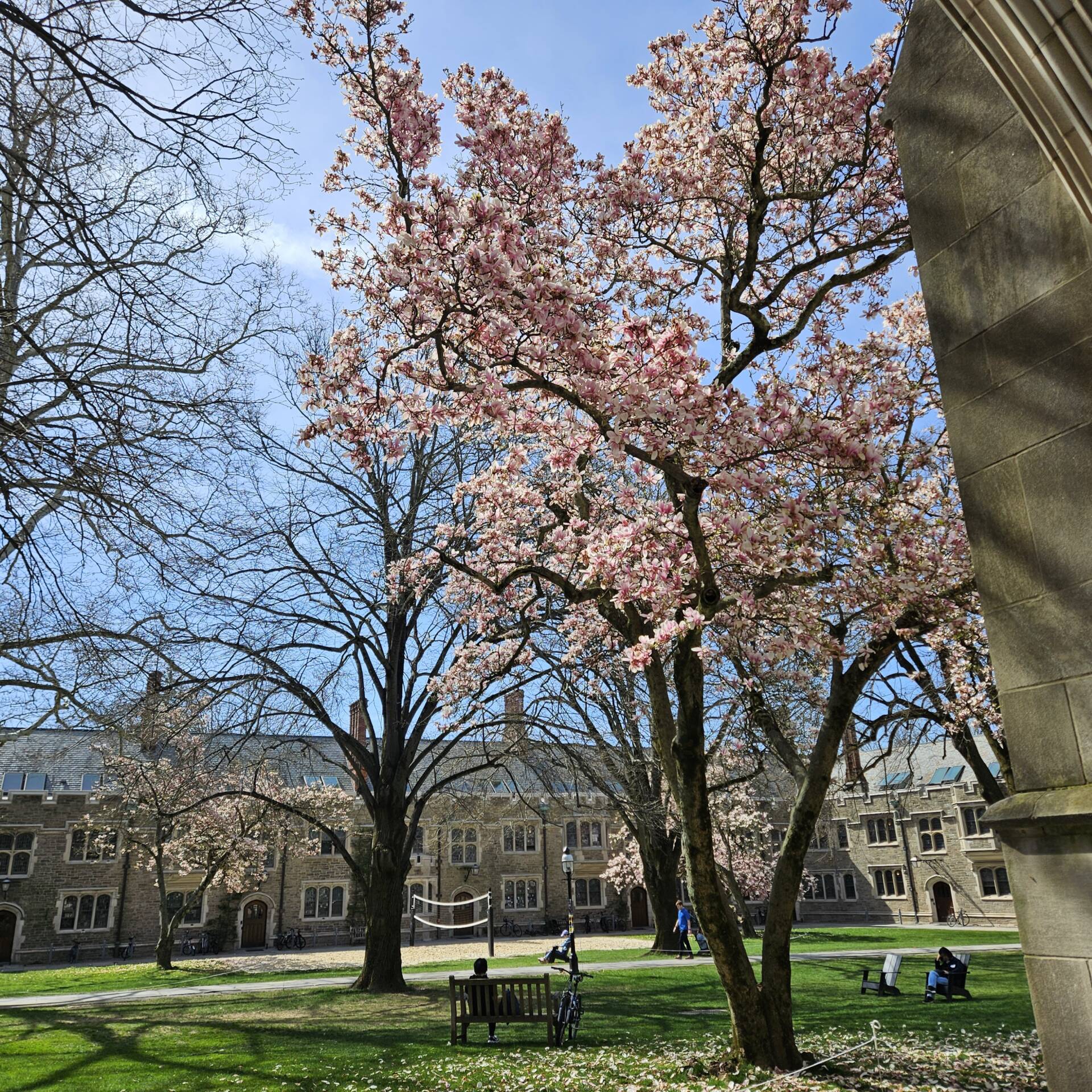
A blossoming cherry blossom tree towers over Joline courtyard in Spring as people work in the chairs below.
Joline Courtyard during Spring

Each spring semester, it feels like many of us find ourselves scrambling to find unique, competitive, and exciting research experiences. In these intense weeks full of interviews, rejections, and offers, it is also important to think ahead about what comes next. Although staying connected with your research team after a program or internship ends can present a unique set of challenges, it can just as easily open up a number of new opportunities. This was a dynamic I had to adjust to at the end of my research internship last summer. Through that personal experience, I have found that consistent and clear communication are key after any research experience.

Categories
Research Life

Field Research on the Juneau Icefield: Living the Emersonian Triangle

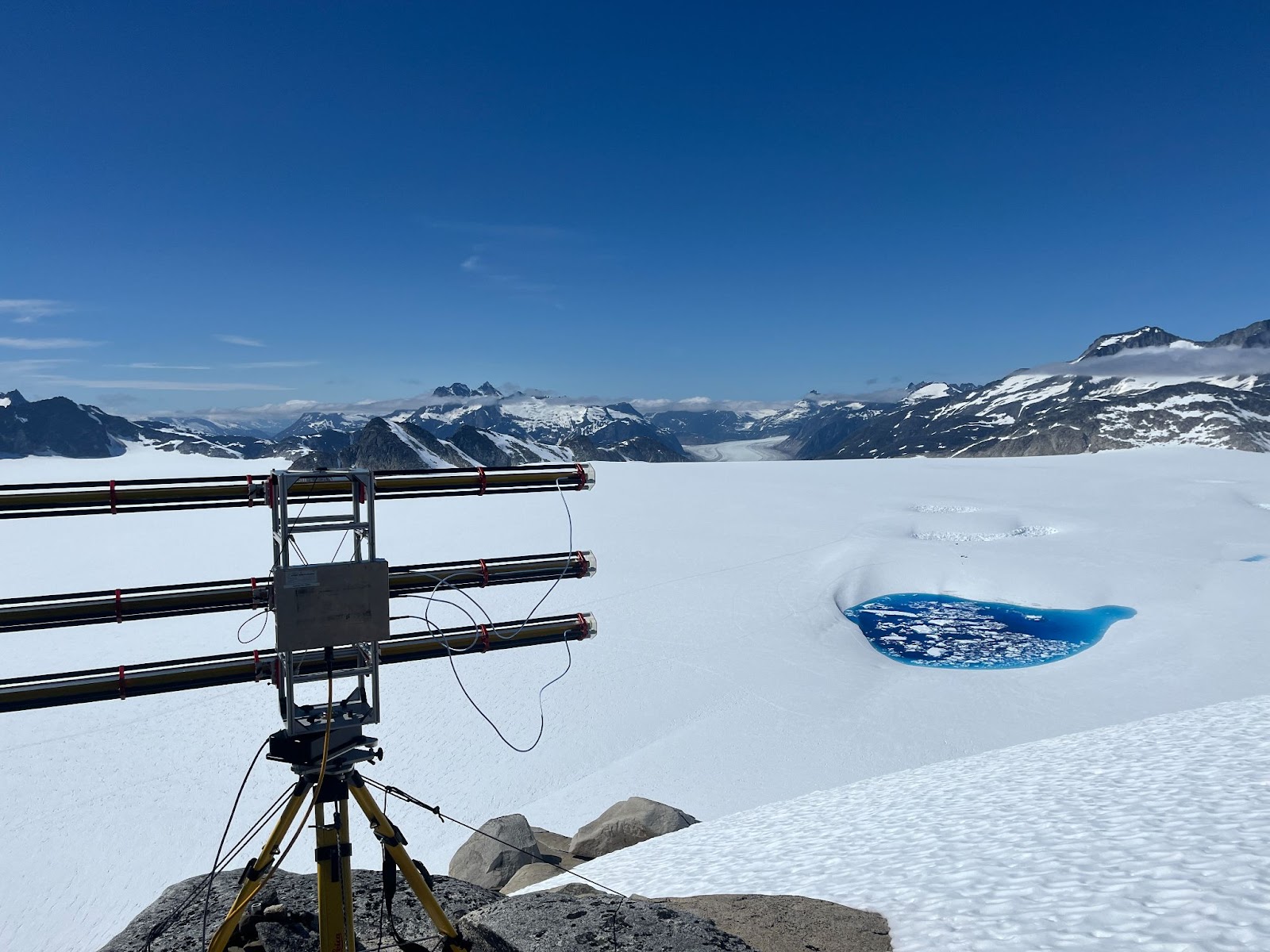
A Terrestrial Radar Interferometry (TRI) station overlooking Echo Glacier — a field site used by NASA as an analog environment to the moon Europa.
A Terrestrial Radar Interferometry (TRI) station overlooking Echo Glacier — a field site used by NASA as an analog environment to the moon Europa. Photo credit: Advik Eswaran.

Students across a variety of disciplines (or fields, if you will) have the opportunity to perform fieldwork at Princeton. In contrast to lab work—which involves performing experiments or analyses within a controlled on-campus environment—fieldwork takes place, well, in the field. Researchers venture out into the wide, wild world in pursuit of somehow collecting useful data from the vast webs of chaos that surround them. In my home department of the Geosciences, fieldwork is the norm: students go out to geological field camps or embark on oceanographic cruises to gather data about the raw Earth that surrounds us. However, fieldwork is truly possible in any discipline.

This past summer, I conducted my own fieldwork as part of the Juneau Icefield Research Program (JIRP). For two months, I lived and conducted glaciology research with about 40 other students, staff, and faculty on the glaciers of the Juneau Icefield—an interconnected system of over 140 glaciers spanning 1500 square miles across southern Alaska and northern Canada. It was one of the most incredible—and intellectually rewarding—experiences of my life. Here, I’ll share some stories from my time on the Icefield, contextualizing them within some broader lessons I learned about how field research operates.

Categories
Research Life

Why you should apply to 2024 International Internship Program (IIP)

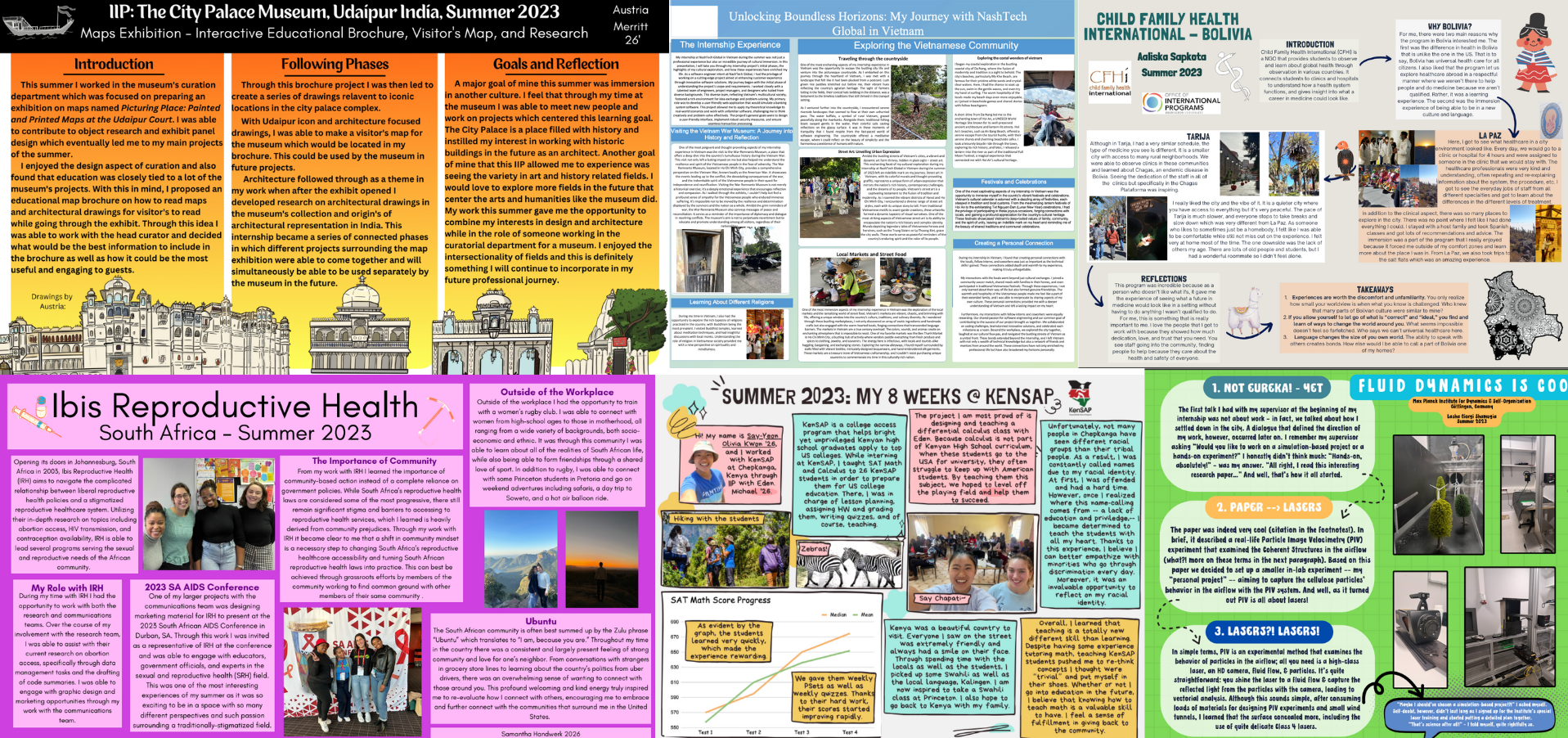
Spotlighting the experiences of the 2023 IIP Virtual Poster Winners

Several of the winning virtual posters from the 2023 IIP Program

Applications are currently open for the 2025 Summer International Internship Program (IIP)! This incredible program connects 1st, 2nd, and 3rd year students with an international institution for ~8 weeks to pursue a project that allows them to explore different careers, cultures, and workplace environments. Many of these projects empower students to take on various research endeavors, learn new research skills, and apply their research findings to make an impact on global communities. Here are several spotlights of Princeton students who shared their internship experiences and were winners of the 2023 IIP Virtual Posters. You can also view all of the poster reflections.