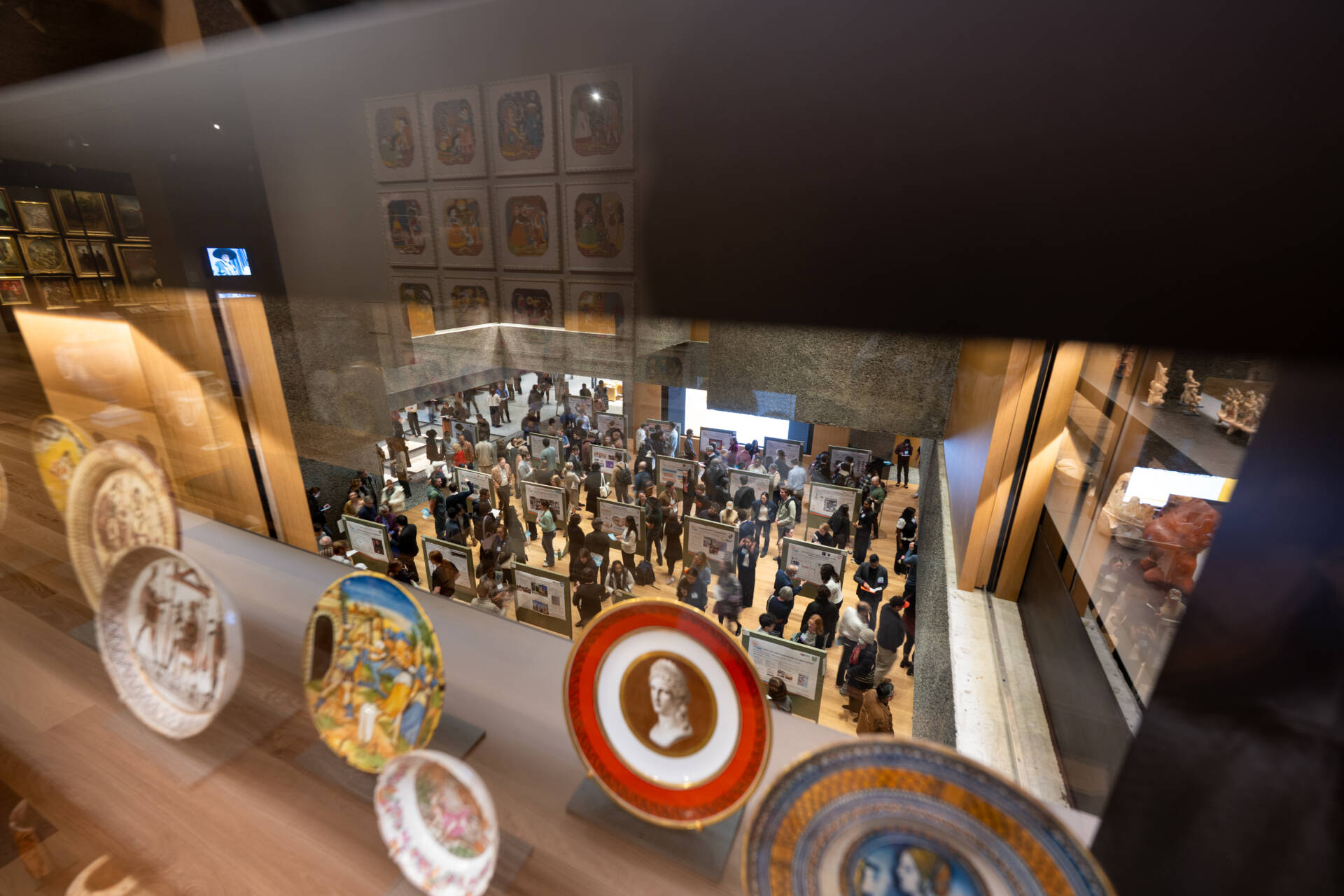
Over the last few weeks of the semester, I needed to make two posters. In preparation, I attended a poster workshop that made me think more intentionally about how to make an effective poster. I’ve outlined some of my key takeaways below that I hope can offer guidance to anyone preparing a poster of their own.
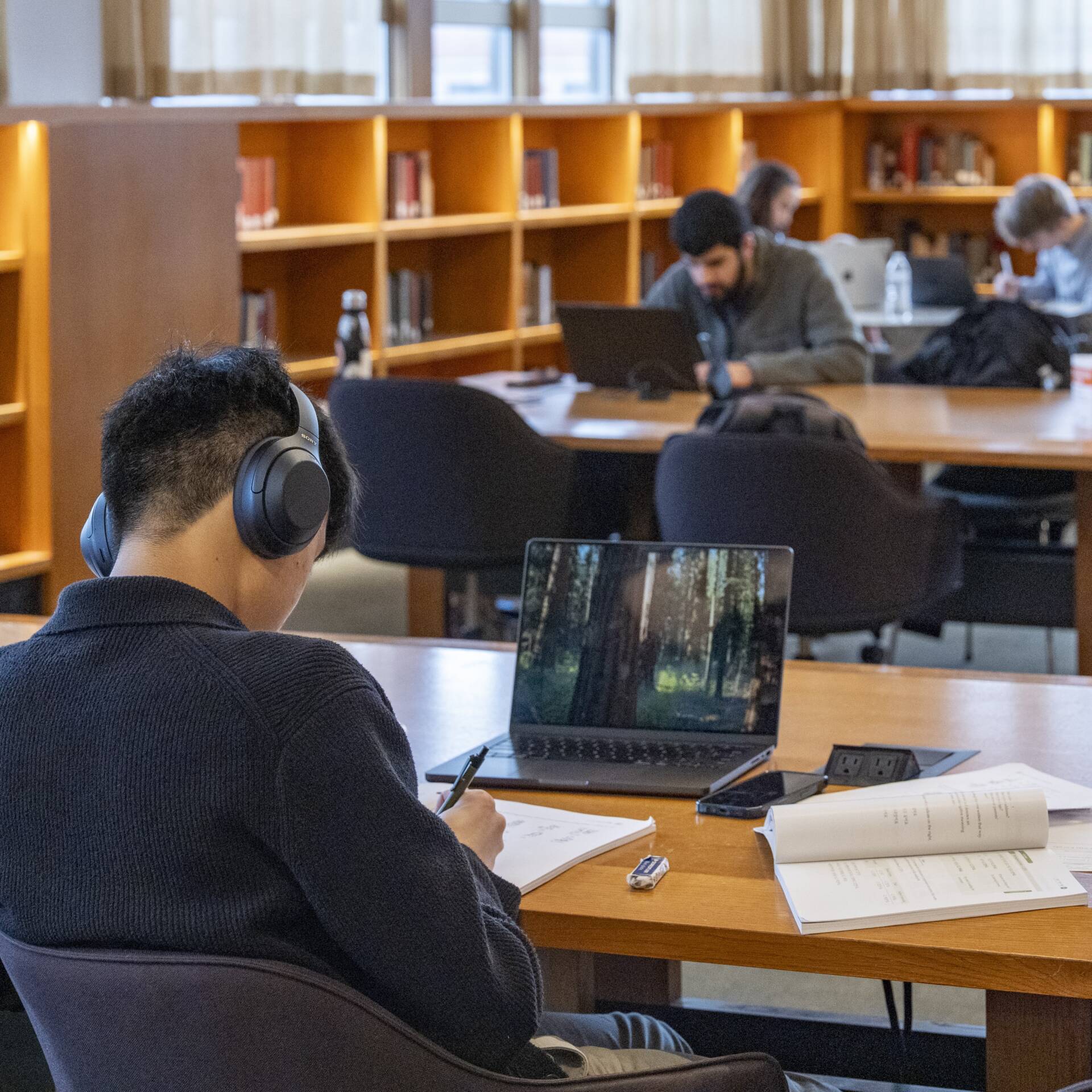
A student working in Firestone Library. Photo credit: Denise Applewhite, Princeton Department of Communications
If someone asked me to describe my experiences with research in a word, I’d probably end up at a loss. My research experiences have been exciting, tiring, and fulfilling all at once. Research is endlessly multifaceted, with each experience being unique. Still, a few constants remain, and deadlines are certainly one of them. No matter the methods, no matter the discipline, every project eventually comes to an end. As that moment creeps closer, it often feels more and more inconveniently insurmountable.
Despite this, deadlines are important. They not only help with the goal-setting process, but also force us to abandon the appeal of endless revisions in the pursuit of perfection. Deadlines ensure that, at some point, there will be a final product. Meeting those deadlines, however, is a different story and one that can present real challenges.
One of the greatest benefits of being a Princeton student is the unparalleled access to international opportunities. Whether it’s traveling for classes and clubs, completing an IIP (International Internship Program), doing fieldwork through HMEI (High Meadows Environmental Institute), taking a Global Seminar course through PIIRS (Princeton Institute for International and Regional Studies), or participating in Princeton’s many language programs abroad, many students find ways to leave the Orange Bubble—literally. To become better-informed global citizens, it is important not only to study the world from Princeton, but also to spend time in the world beyond Princeton.
One powerful way to do this is by conducting research abroad. When I was a junior preparing for my senior thesis, I knew I wanted to incorporate an international dimension into my work and, if possible, travel over winter break of senior year. Although I had been fortunate to travel domestically through Princeton, I hadn’t yet taken advantage of any study or research opportunities abroad. Winter break of senior year is one of the last, and most popular, chances to do so. Princeton has a wide range of thesis funding sources, which makes it very possible to take your research to an international site.
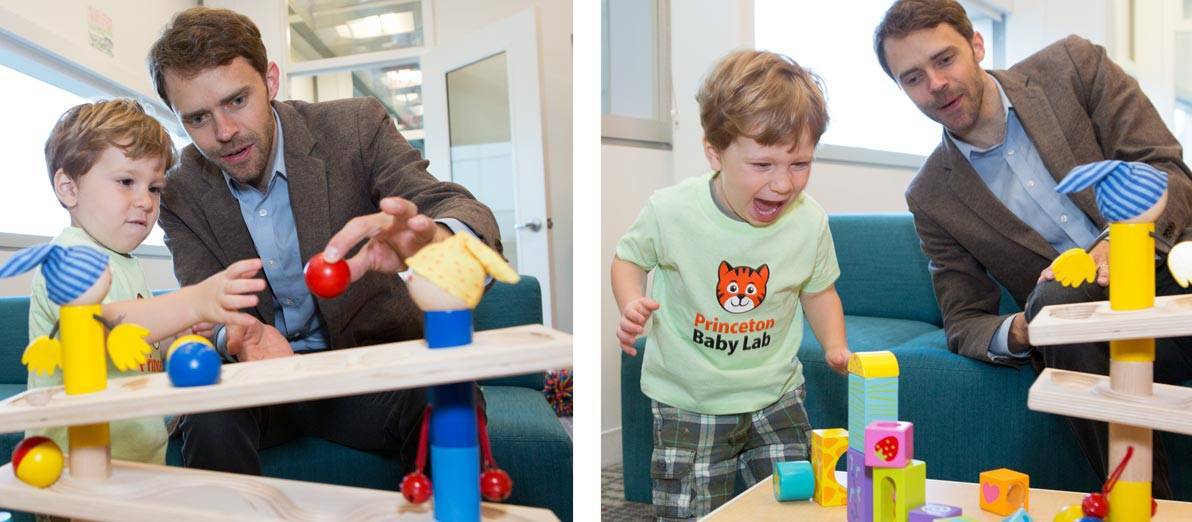
Professor Casey Lew-Williams at the Princeton Baby Lab. Photo Credit: Princeton Office of Communications.
What does it take to become a researcher?
The Making of a Researcher is a new mini-series exploring the paths scientists take to reach where they are today, highlighting their growth from beginners to experts.
Through interviews with faculty members in various fields, we’ll explore the necessary steps to becoming a researcher and how Princeton professors play a part in that process.
In this first feature, Professor Casey Lew-Williams, Chair of the Psychology Department and Director of the Princeton Baby Lab, reflects on his journey in developmental psychology and his role as a mentor to aspiring students in the field.
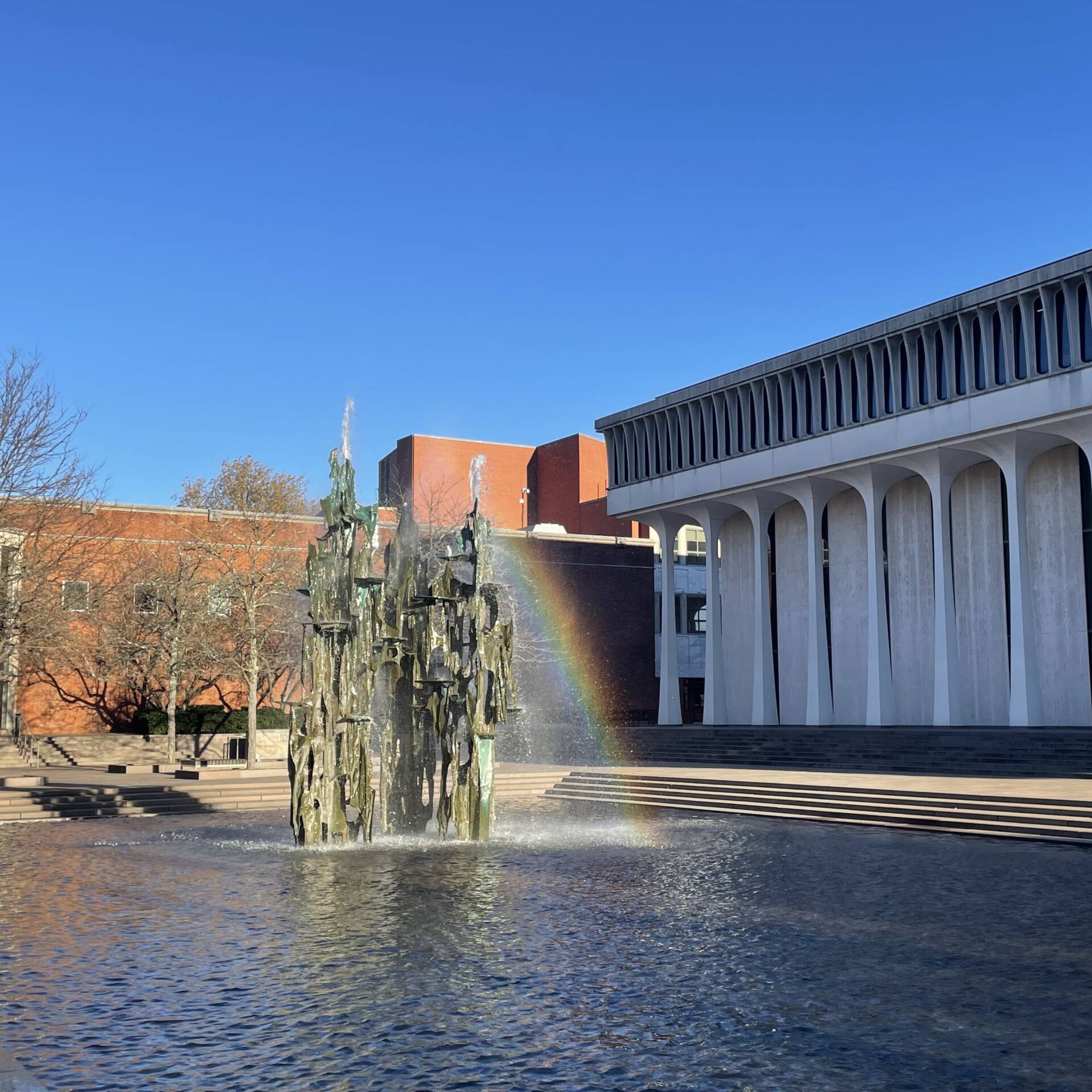
A rainbow at the Fountain of Freedom (colloquially called the “SPIA Fountain”), taken during a break from working on my thesis
Independent research at Princeton offers an incredible opportunity for students to explore their academic interests and gain experience in the research world. This year, I’m working on my Senior Thesis with Professor Aleksandra Korolova, conducting an audit of Google ad delivery optimization algorithms. Specifically, I am studying whether aspects of advertisements—the image, text, links, and so on—impact the demographics of the audience to whom the advertisement is delivered.
In the fall, many people were curious about how my thesis was progressing. The truth was, for a few weeks, I hadn’t started running any experiments, since I first needed my research to be approved by the Institutional Review Board (IRB). Through this experience, I both gained insight into the IRB process and found that many students had never even heard of the IRB. In this article, I share my experience and offer advice for students who are planning to conduct independent research.
Spotlight on the Summer Internship Project of Princeton Politics Junior Mai Kasemsawade
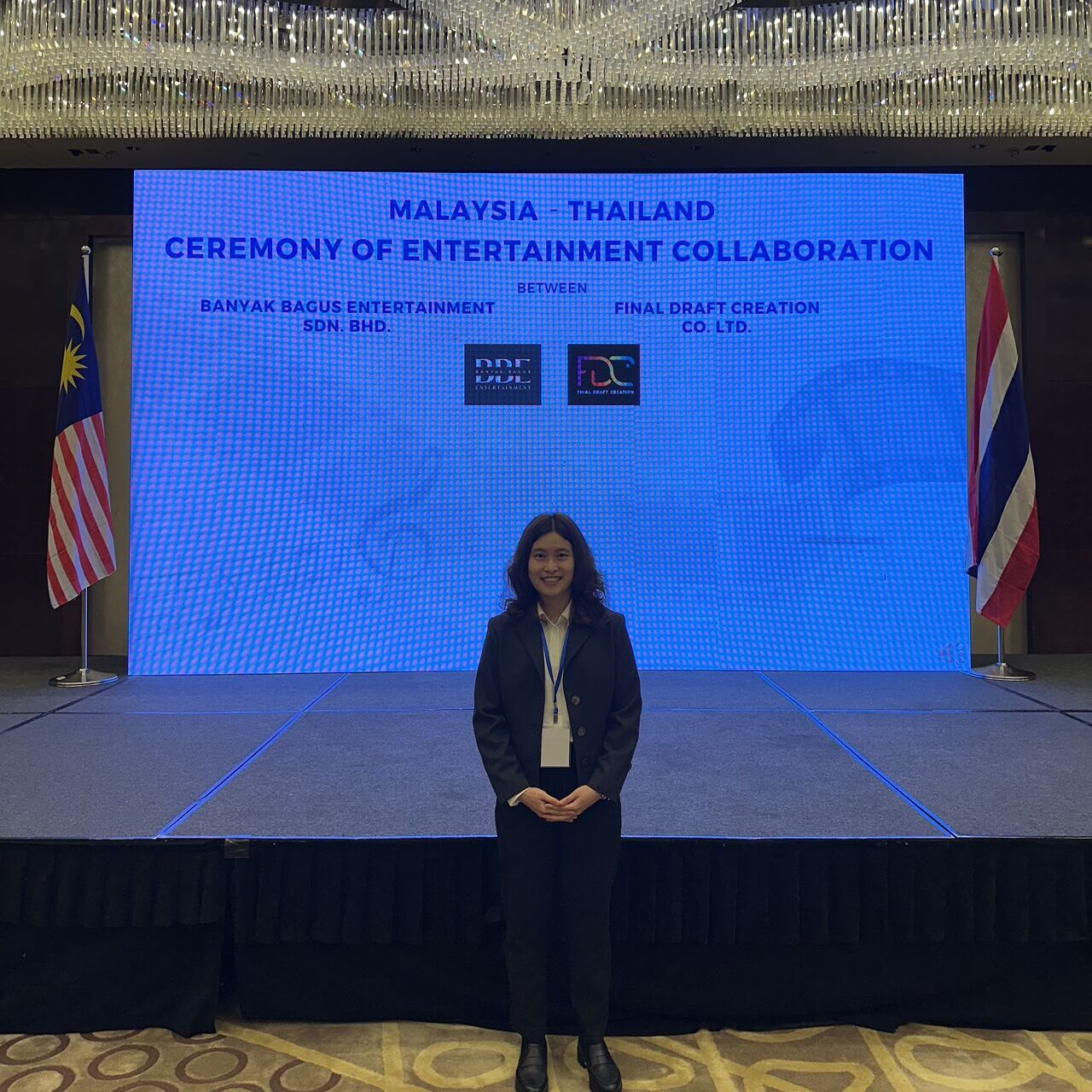
Mai Kasemsawade at the All-Party Parliamentary Group Malaysia for Political Financing meeting at the Malaysian Parliament, which she helped to host with The Institute for Democracy and Economic Affairs.
Many students walk into Princeton intending to change the world, Mai Kasemsawade ’26 is an extraordinary example of how one’s summer research can kickstart global political change. This past summer, Mai worked within the The Institute for Democracy and Economic Affairs in Kuala Lumpur, Malaysia as an intern in the Princeton International Internship Program. She connected her interests in political science research and data science to pursue an ambitious project in advancing Malaysia’s laws on funding for political parties in order to encourage a more democratic political scene. Her experience meeting with Malaysian government leaders, hosting a political engagement workshop, writing articles on critical policy, and conducting interdisciplinary research exemplifies the multitude of eye-opening opportunities that a research experience can offer!
Michael J. Thate is a Research Scholar for Responsible Tech, Innovation, and Policy at Princeton University’s Faith & Work Initiative, and Lecturer at the Keller Center for Innovation in Engineering Education and the School of Engineering and Applied Science, with a background in law, design, ethical philosophy and religious studies, and GIS. Michael’s academic interests and focus are informed and complemented by his corporate experience where he advises across STEM industry sectors on matters of brand equity, communication strategy, institutional trust, ethics, and regulatory strategy.
I had come to grapple with the idea of ethics in the engineering world when I became fascinated with Department of Defense (DoD)-related technologies and applying my computer science background to space-related development. I was struggling with the ethics in relation to human ecology, especially in defense and technology militarization, and how to balance this struggle with my fascination for the technologies present in the industry. Michael and I first connected via email over aligned interests in professional codes of conduct in defense and security AI systems.
As I began this research insights series, I sought to interview Michael in order to get a sense of what his research might look like from a highly interdisciplinary perspective, and how ethics, something that is prevalent in any academic area, is present as a core focus of research. In this article, I’m excited to present my interview with Michael, focusing on human interactions with the natural world, and how to quantify “life” and its “value” within a vast ecological space.
Please note that one response discusses animal injury and death.
Last semester, I interviewed Albert Lee ‘24 to get a glimpse of what conducting qualitative research for sociology Junior Papers can look like at Princeton. (If you’re interested in reading that piece, click here!). Discussing qualitative research with Albert was exciting because his words of advice were quite applicable to the qualitative Computer Science research I was conducting in COS 436: Human-Computer Interaction (HCI).
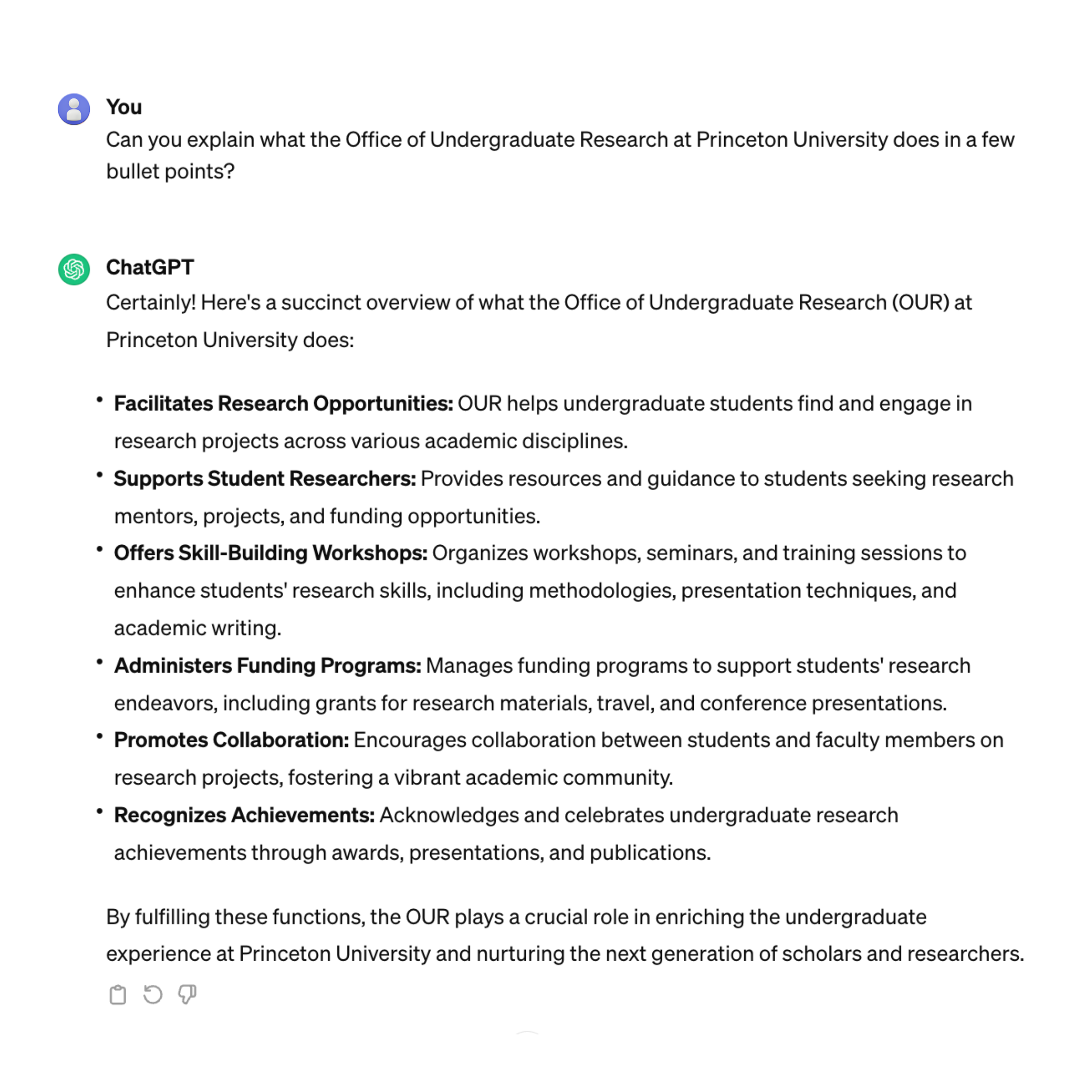
An example user prompt and ChatGPT response.
Prior to taking COS 436, I had little idea of what qualitative research looked like in Computer Science, particularly because many of the CS courses I had taken were quantitative, involving systems, mathematical models, or theory. Taking the course opened my eyes to a whole side of research: interview-based qualitative research. For my semester-long research project, my team and I aimed to dive deeper into educators’ opinions on the use of ChatGPT in CS education.
While it may feel like the semester has only just begun, classes are in full swing and, already, junior paper (JP) deadlines are fast approaching. For many majors, the spring semester is where the bulk of the JP work actually takes place. Whether that means writing thousands of words, crunching monstrously large datasets, or debugging hundreds of lines of code, I think we all can agree that a JP draft is better not left to the last minute.
One of the biggest challenges all Princeton students face with independent work, however, is figuring out where they can even find the time to start. With a full course load, weekly assignments, and a myriad of extracurricular obligations, just when exactly is a student to work on their JP? Read on for three tips on how you can fit your JP into a hectic schedule. With the right daily habits, supports, and mindset, you may even find that you enjoy the process more than the final product.
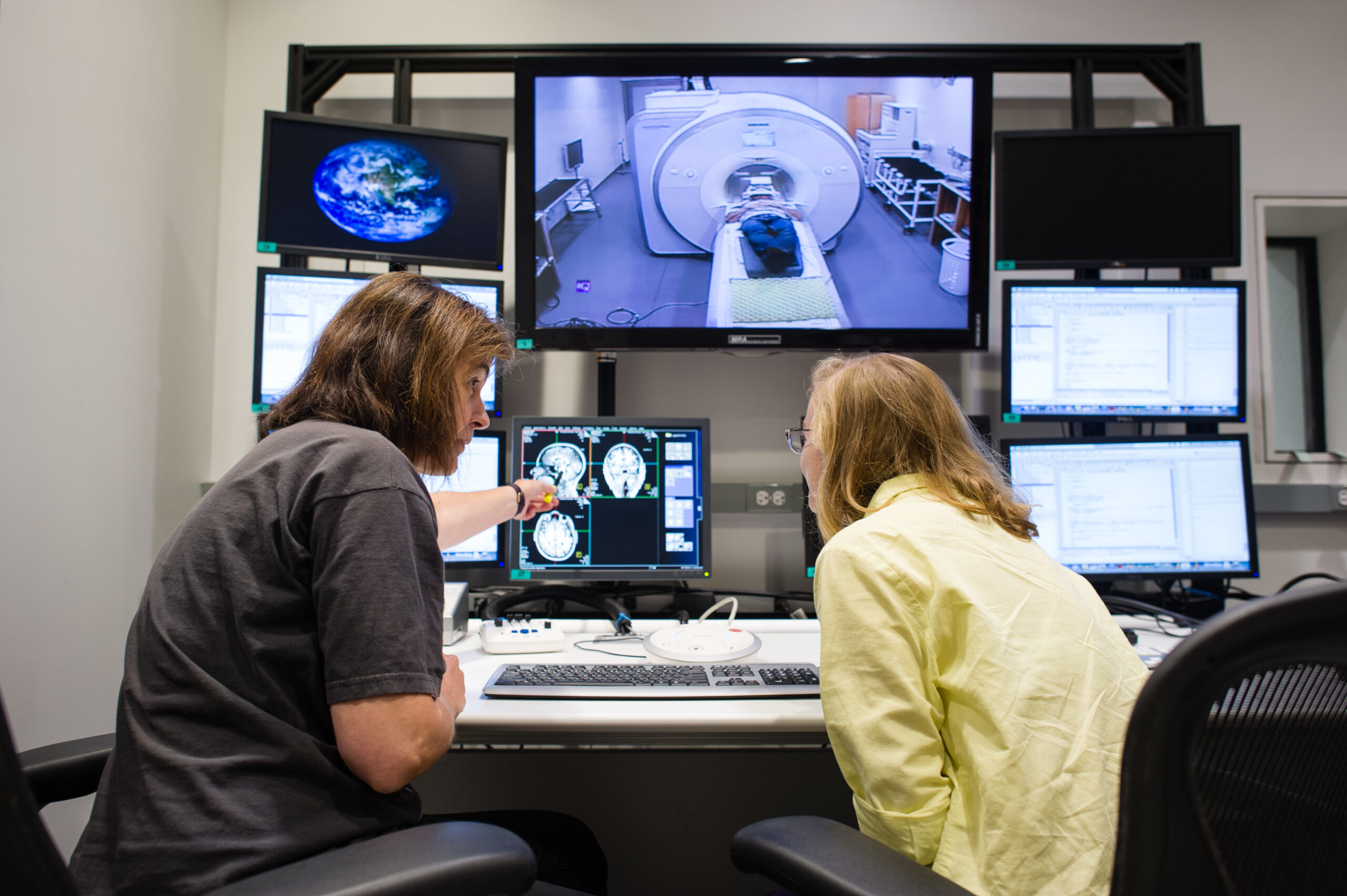
The research you do could be remotely on a computer, in-person working in a lab, or both, as we see here with brain imaging research at the Princeton Neuroscience Institute!
Princeton undergraduate students usually gain most of their research experience from things like independent work, theses, research-based courses, or summer research. However, you might not know that there are more options to do research during the school year: working a part-time job! Some of the most common part-time campus jobs you may think of might be working in a dining hall or at library reception, but you can actually do academic research and get paid for it. This isn’t limited to just STEM majors either; part-time research jobs exist across the humanities and social sciences and are offered by a wide range of departments. You could earn money and get work experience while analyzing literature, writing code, processing data, or working hands-on in a lab!
Here’s a quick guide on how to search for these jobs: