Over the last few weeks of the semester, I needed to make two posters. In preparation, I attended a poster workshop that made me think more intentionally about how to make an effective poster. I’ve outlined some of my key takeaways below that I hope can offer guidance to anyone preparing a poster of their own.
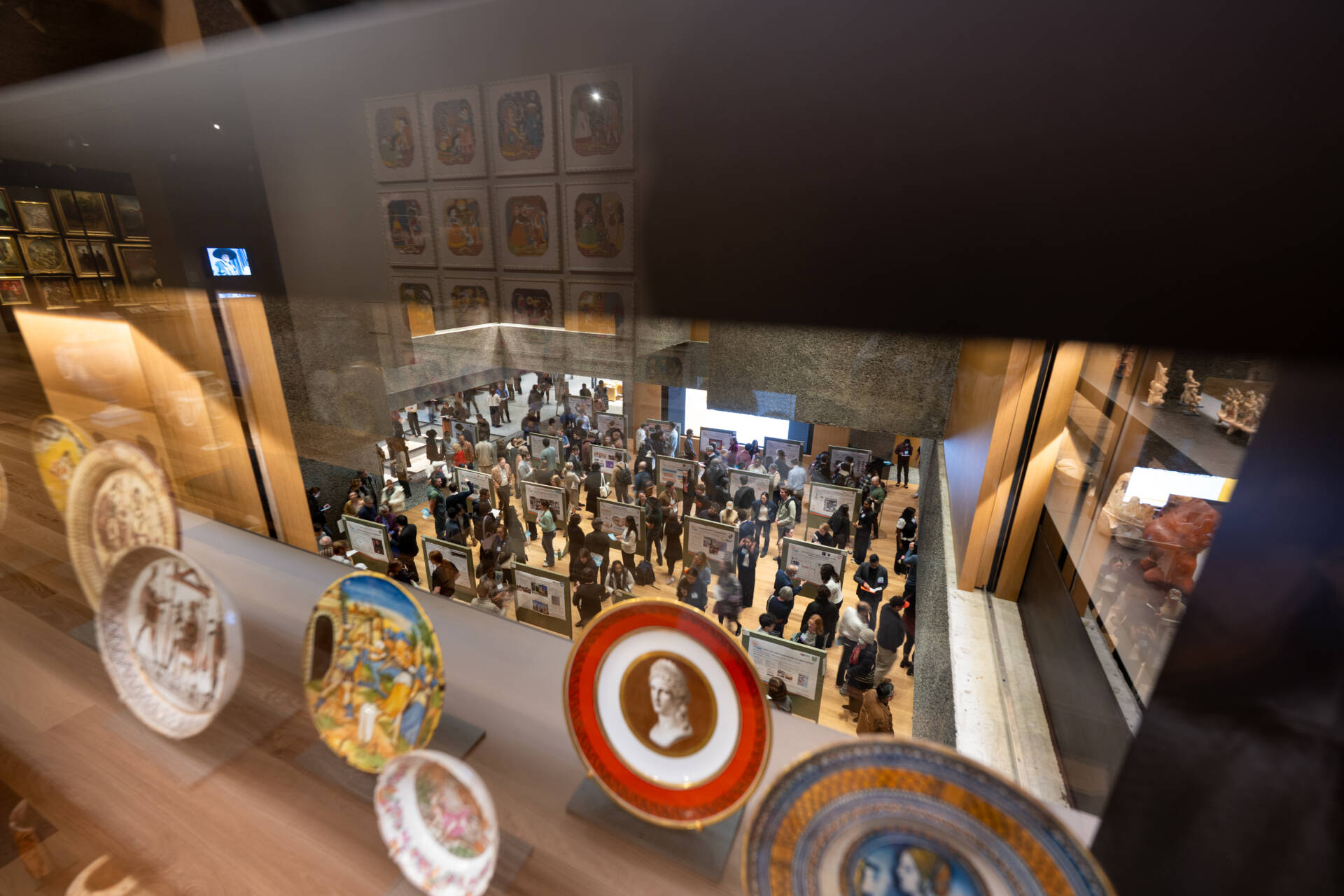
Princeton Research Day in the Princeton University Art Museum. Photo credit: Sameer Khan / Fotobuddy.
An ink quill and parchment. Photo credit: Mushki Brichta.
With two junior papers under my belt now, I’ve been taking some time to reflect on my writing strategies as I gear up to tackle my senior thesis next year. I’ve accumulated a list of what I think I would have benefited most from hearing, and I intend to take these lessons with me for my next year of work.
Thinking in Cannon Green (probably about a JP!). Photo Credit: Matt Raspanti.
It’s that time of year: I am writing a Junior Proposal as a molecular biology major. There are a few things I found about this experience that have humbled me very deeply. I obviously did not expect a cakewalk. I think it’s a good time for me to let juniors know; it’s not necessarily a difficult experience, but it’s strangely timed. The deadlines (at least for my major) are right in the middle of a somewhat hectic time between exams and the long stretch of spring semester post-spring break. Many of my peers (including myself) have been doing experiments for a while now, and working on the paper feels like coming up for air from a very deep lair at the bottom of the ocean. It can be very disorienting. The issue is that it requires a different way of thinking than when you’re in the midst of experimentation.
Historiographies are historical analyses of the historical scholarship written about a given subject. Rather than just identifying gaps in a scholarly conversation, historiographies analyze how that historical literature has been produced and how it has changed over time. Writing a historiography gives you the chance to make a historical argument about how the knowledge in your field has developed and evolved. However, approaching a whole new field of literature as an undergraduate researcher can be overwhelming. Here are some strategies I’ve used to parse historical literature and write historiographies for my independent work.
I start my historiographies in Firestone looking for a wide range of literature.Photo credit: Denise Applewhite.
At Princeton, research does not always look the way people imagine. It is not always telescopes pointed toward the sky or chalkboards filled with equations. Sometimes, it happens in quiet laboratories where the goal is to understand things you cannot even see, like streams of charged particles moving through space.
For Rishika Porandla, a member of the Class of 2028 majoring in astrophysics, this is exactly where her work lives. Her research sits at the intersection of space, plasma, and the instruments that allow scientists to study both.
When Erika Yeung arrived at Princeton, she knew she was drawn to the intersection of hardware and intelligence, the idea that physical systems like chips and sensors could not only compute, meaning process information, but also perceive the world, learn from data, and adapt over time. As a sophomore in the Electrical and Computer Engineering department, she took a bold step into that space through independent research with Professor Hossein Valavi. Her work focused on how neural networks, which are computer models inspired by the way the human brain processes information, can be redesigned to run efficiently on edge devices. These are small, local devices such as phones, sensors, or embedded systems that operate without relying on distant cloud servers.
At the heart of Erika’s work was quantization, a technique that reduces the numerical precision of neural network weights, which are the internal values that determine how the model makes decisions. Instead of using highly precise numbers, quantization simplifies them into smaller, more compact representations. This allows the model to take up less memory and run faster while still maintaining strong performance. This idea is central to fields like Edge AI and TinyML, which aim to move machine learning out of large data centers and into everyday devices, from wearable health monitors to autonomous systems operating far from the cloud. Running AI locally means the models must be not only accurate, but also lightweight, fast, and energy efficient. Quantization offers one of the most promising ways to make that possible.
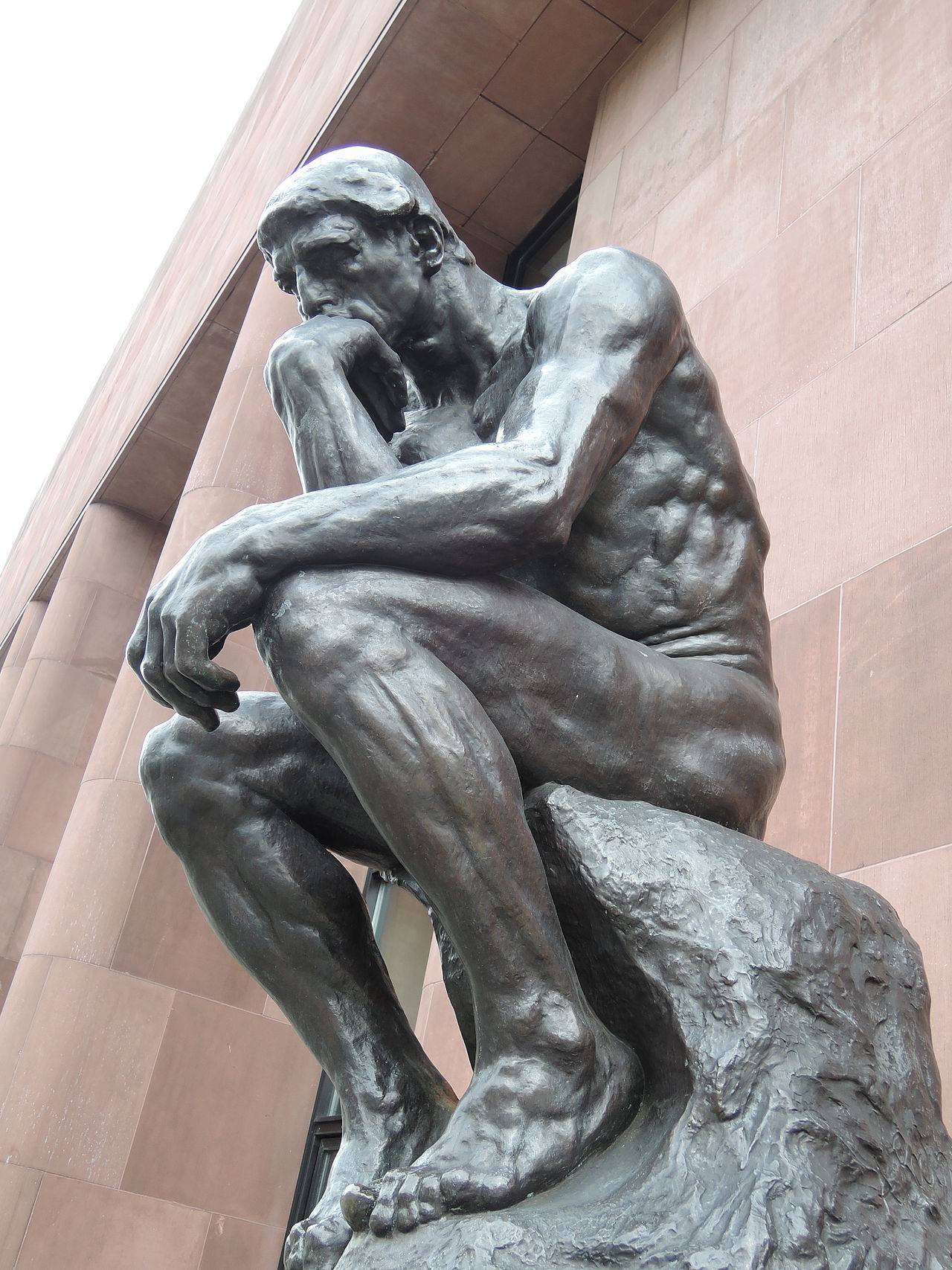
Le Penseur (The Thinker) Statue, by Auguste Rodin (1904)
As I wrapped up the first of my two independent junior research papers and began brainstorming for the second (and much larger) one, I hit a familiar wall: too much possibility, with no clear direction.
This next paper is supposed to be around 30 pages. The topic is broad. My notes are abundant and scattered. Every passage and source I consider seems to open a new direction I could take. In theory, this is a researcher’s dream – I have abundant evidence, rich material, and intellectual freedom. In practice though, it can feel paralyzing. What is even relevant? How do I start this? What am I actually trying to say?
My high school English teacher gave me the most useful writing advice I’ve ever heard: “With focus comes depth, and with depth comes complexity.”
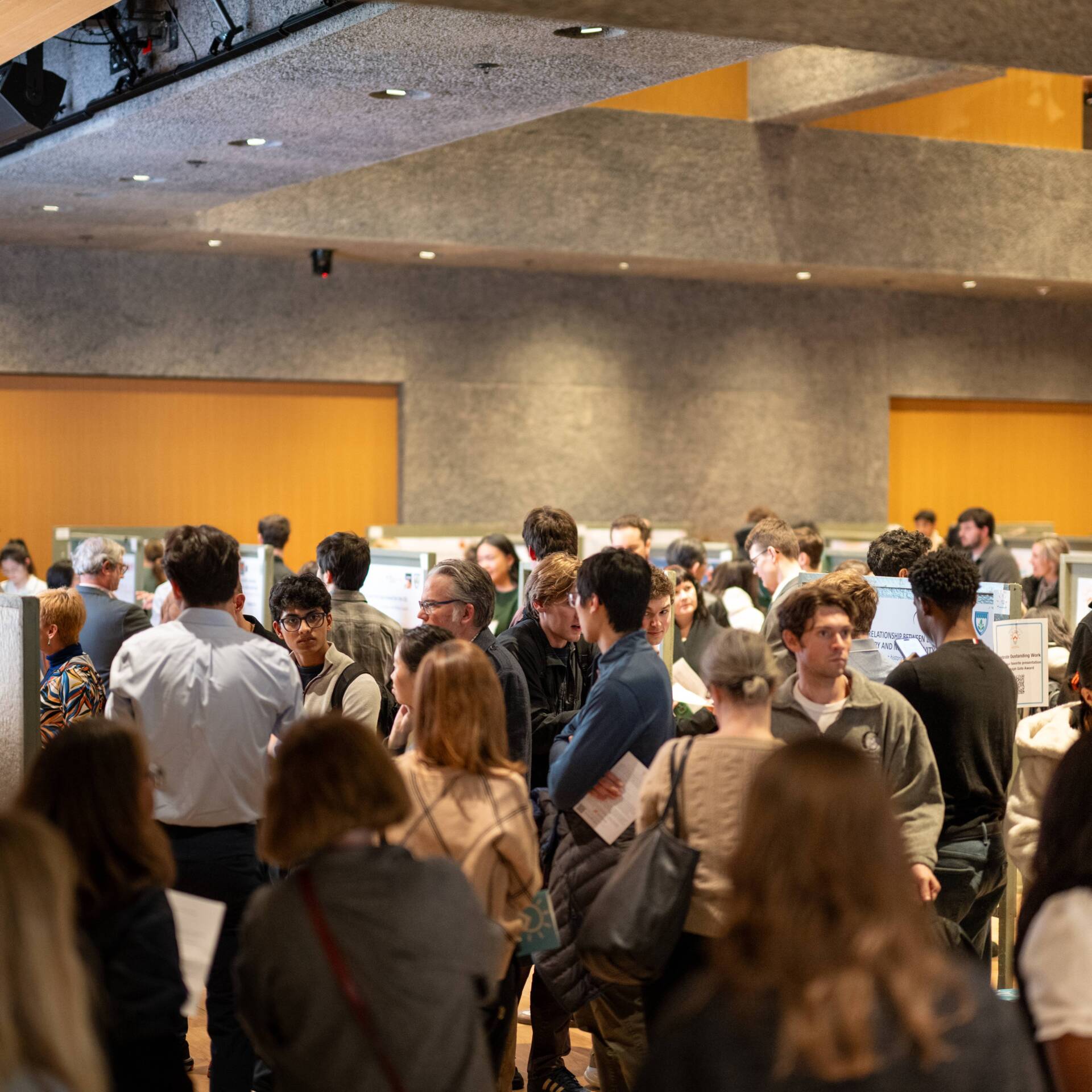
Princeton Research Day – Undergraduate Edition, Photo Credit: Sameer Khan / Fotobuddy
Getting accepted to a conference can feel like the end of a long marathon. After months of conducting research and several iterations of writing, you hit submit, you wait, and you refresh your inbox until finally, the email arrives. You’ve been accepted! Now, you have the opportunity to poster at a conference and share your work with a broader research community.
First of all, congratulations! It is no small feat to get your work reviewed and accepted, and you should be very proud of your accomplishments.
After the excitement and the celebration, you might be wondering what comes next. Acceptance is not just a milestone, but also the beginning of a series of steps to actually poster at a conference. It’s now time to finalize your submission for publication, decide how you will attend, and determine how you will present your research. I hope this practical guide helps you navigate the steps after acceptance.
Entrance to Aaron Burr Hall, home to the anthropology department and my JP adviser. Photo credit: AccessAbleUSA
Whether it’s long hours alone in a lab or late nights in Firestone, research can feel like a uniquely isolating experience. The process of compiling existing knowledge and producing new knowledge invites us to dive deep into ongoing conversations that exist within our fields. These deep dives into the procedures, frameworks, and models that define research projects require a degree of focus that can narrow our view. One of the few moments in any research journey that disrupts this individual flow is the feedback process. That moment, when we are reminded that research is explicitly collaborative, is always critical and often dreaded. Having received my fair share of feedback over the years, I’ve learned just how important each step of the feedback process is. This goes beyond just receiving feedback, but instead really considering the importance of preparing for feedback too.
New South, where many first-year writing seminars and sophomore research seminars take place.
First-year writing seminars are a rite of passage for all Princeton students, introducing you to the research and writing skills you need to craft an independent research paper. But what comes next? For many undergraduates, sophomore year is a year-long pause before you actually get to apply those independent research skills in your JP. The Princeton Writing Program’s sophomore research seminars offer an alternative.