At Princeton, academic research often felt extraordinarily low stakes. Even an argument with a strong motive could feel comfortably removed from the realities of my life. In the academy, we aim for empirical arguments, not personal ones. And though this presented challenges of its own, it was easy to forget how safe it feels to be merely an observer, the omniscient narrator to someone else’s story. Last semester, for instance, my research focused on medieval history and African-American poetry, two topics firmly removed from my day-to-day reality as a white person in the 21st century.
My research focused on the history of Bears Ears, a sacred landscape in danger
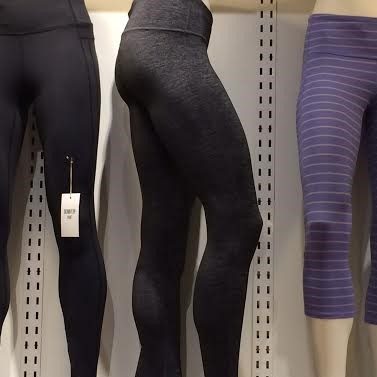
King of Prussia’s Athleta features muscular mannequin legs!
It took only a second for the topic of mannequins to pique my interest. I happened to be browsing at an Athleta store when I noticed the waist-down plastic legs in the window sporting colorful leggings. At first, I thought nothing of the typical figurines. But when I paused and looked again, I noticed that the mannequins weren’t composed of the slender limbs one usually sees in stores, but rather of muscular thighs and toned calves. My first reaction was one of elation—there was finally a window display with shapely thighs! But then, following my moment of internal celebration, a research question popped into my head: Do differently-shaped mannequins influence how women feel about their bodies?
Upon looking into the matter, I discovered that there weren’t many articles relating to this topic. After searching several combinations of terms that included the word “mannequin,” I found only one article that pertained to mannequins in the fashion industry. The source turned out to be a good find, however, for it explained the history of mannequins and how their purpose evolved from being used to fit clothes to displaying the latest trends in store windows. But now I was stuck with an exhausted list of search terms and only one article on which to base my findings. My research had left me with yet another problem: How do I go about researching mannequins? More importantly, how do I go about researching any uncommon topic? With some time and patience, I was able to come up with these three strategies to locate new sources.
When I hopped on my flight to Chicago a few weeks ago, I was surprisingly calm and collected about spending 10 weeks as an intern in a whole new city by myself. This seemed odd to me, because I’m normally extremely nervous about leaving my house for any longer than a week. I still remember how terrified I was during my first few months at Princeton. I worried about everything — The fact that the laundry room was located six entryways away scared me. Were my awful laundry habits going to leave me perpetually clothes-less?
But going to Chicago, I felt somewhat prepared. It’s probably because I pictured Chicago as a smaller version of New York City, which I had grown comfortable with during my two years at Princeton. While several of my friends were traveling to exotic, exciting places around the globe, Chicago seemed comparatively boring to me.
Now, I think back to my pre-Chicago mindset and can’t believe how terribly wrong I was.
My first view of Chicago’s skyline which I captured 5 minutes before I landed.
For me, the flight home is always a relaxing time to reflect on the first half of another semester at Princeton.
Alas, fall break is over; but it’s not too soon to reminisce. During our time off, the semester finally began to decelerate (at least until finals come around). For the first time in over 6 weeks, I had time to catch up with friends whom midterms shielded me from. I was able to relax and watch Sunday Night Football without the stack of problem sets on my desk reminding me of my academic responsibilities. And perhaps most importantly, fall break presented an opportunity for me to take on a new kind of research project, as I reflect on yet another quarter at Princeton.
So far, these mid-year “introspective research” projects have really helped me improve my overall experience here. While classes are in session, I usually can’t afford to take a few days off to reflect on life, but when I get the opportunity, I take it immediately. Just as scientific researchers go through several trials to improve their projects, I find it immensely helpful to periodically sit back and think about how I can continuously improve my quality of life in the Orange Bubble. After all, the subject of this ‘project’ is me – I’m the experiment that can be infinitely refined. But unlike laboratory research where finding novel ideas is difficult, it’s really quite simple to give oneself effective advice going forward. All it takes is a little bit of self-reflection and time spent towards developing a plan for the future.
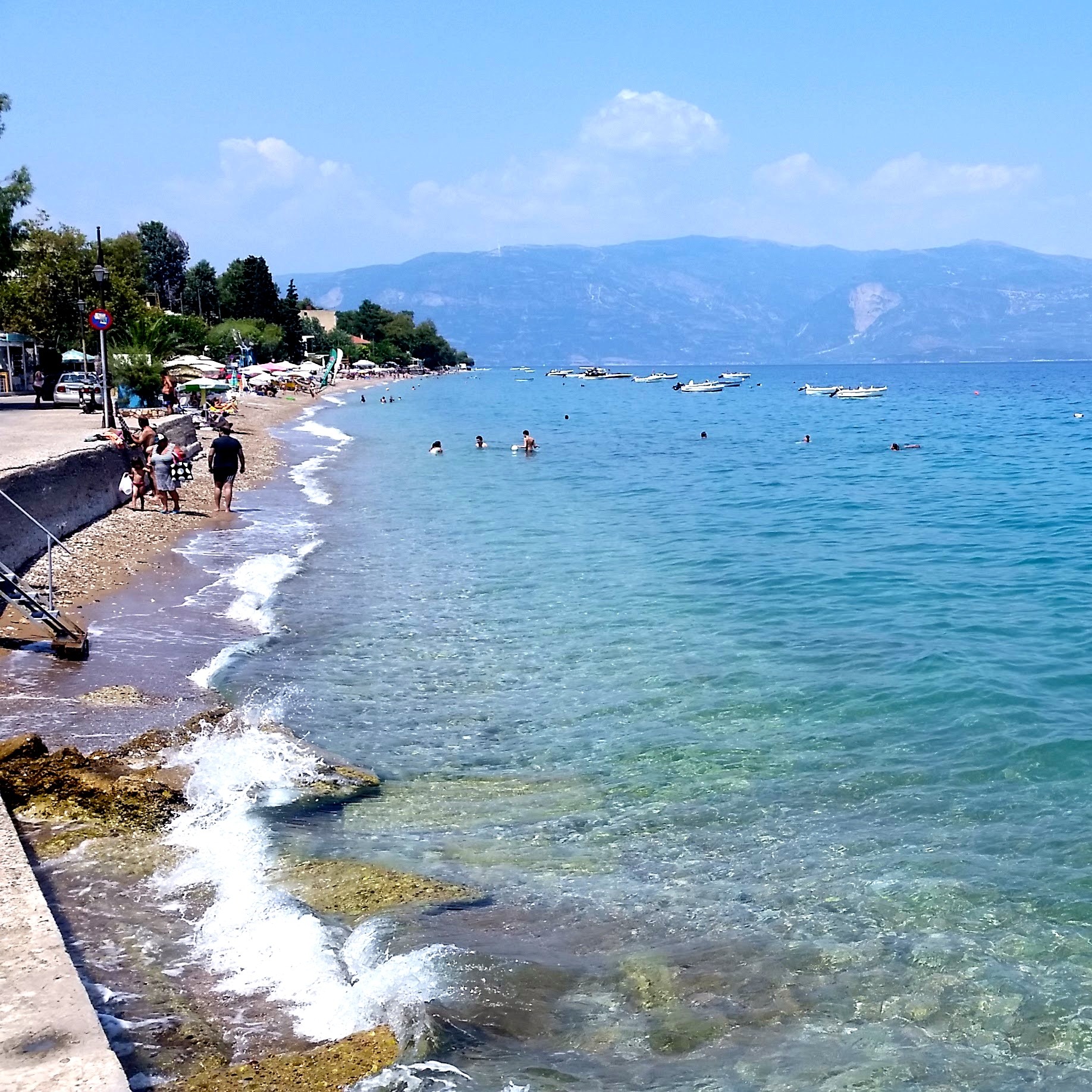
This summer, in the unlikely sleepy town of Selianitika, Greece, I had an unforgettable immersive learning experience. I applied to the Paideia Institute’s Living Greek in Greece program, devoted to immersion in Ancient Greek, at the urging of a friend. It would be perspective-changing, she said. Instead of running between classes and juggling ten different assignments at once, I would have one task–to grow comfortable with Ancient Greek–and an incredible amount of free time.
The Selianitika coastline, where I walked every day during my time in Greece!
It was a perspective-changing shift from my Princeton experience. I often feel limited by the lack of time available to fully experience the overwhelming material in my classes on campus. Beyond my Indo-European linguistics class, I want to browse through the Classics section of the library to see what I can find. In my computer science course, I want to do the optional exercises and play around with code. But independent exploration and extra-curricular learning can be hard to make time for, and I often end up working from one assignment to the next. Breadth and depth are challenging to achieve together.
Before last summer, I considered the term “research assistant” exclusively reserved for science majors in lab coats. And since my intended major and wardrobe don’t fit this conception, I never thought I’d apply the term to myself.
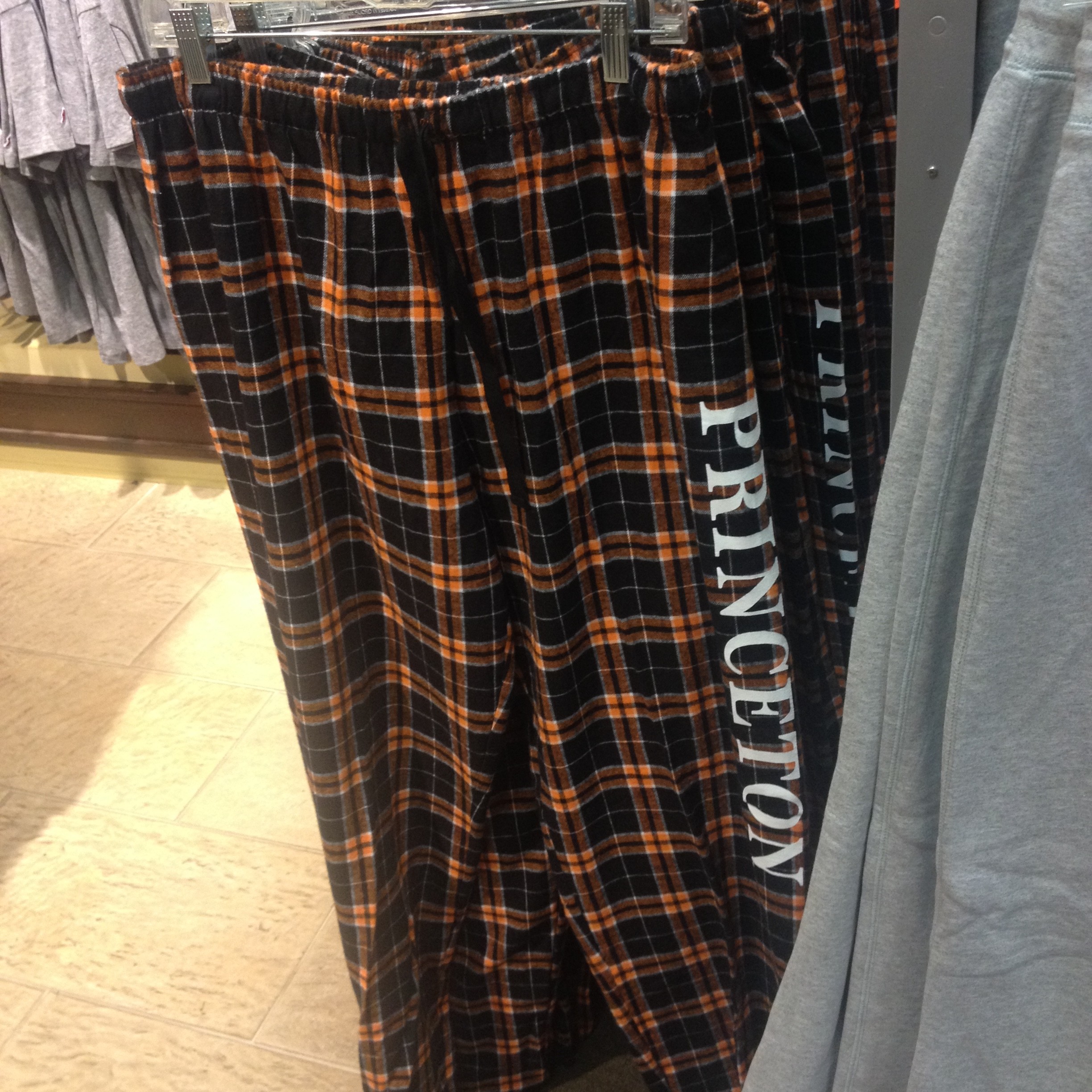
Well, I was wrong — in more ways than one. “Research assistant” has since been added to my resume, and I didn’t have to wear a lab coat to do it. In fact, pajamas were perfectly acceptable attire.
If you’re looking for research assistant loungewear, school spirit is a plus.
Let me explain: After a wonderful semester in Dr. Renita Miller’s writing seminar Race, Gender, and Representation, I knew I was interested in identity politics. The class fundamentally changed how I looked at policies and judged their effectiveness for minority groups. Dr. Miller must have noticed my enthusiasm, because she described her research project – a look at representation’s effects on the Texas State Legislature – and asked if I wanted to help code data over the summer. Relevant information in the legislature’s bills could be accessed anywhere online.
Four years after I had begun my first incursion into the research world, I saw myself as a somewhat seasoned student researcher. At the very least, I had some confidence in my research and experimental abilities. But it was not until this year that I realized that through all the lofty jargon and fancy terminology I had been picking up along the way, there was something I had been urgently lacking: the basics.
One of the eye-opening incidents happened just this past summer, when my supervisor asked me to explain to him an optical gas sensing technique known as “2f wavelength modulation spectroscopy.” That day, I had been trying to calibrate a laser that we were planning on using for a methane sensor and had been experiencing some problems. As my supervisor always does when he troubleshoots, he wanted to start from the basics. After all, if we didn’t know how every bit of the sensor worked, how could we figure out the possible sources of problems? But usually he had been the one doing all the explaining, so I was surprised when he suddenly asked me: “Stacey, what is the signal that we’re measuring anyway?”