
Categories
Independent Work Plan Beyond Graduation Research Life

Ready for Action: A Junior’s Guide to Independent Work & Research

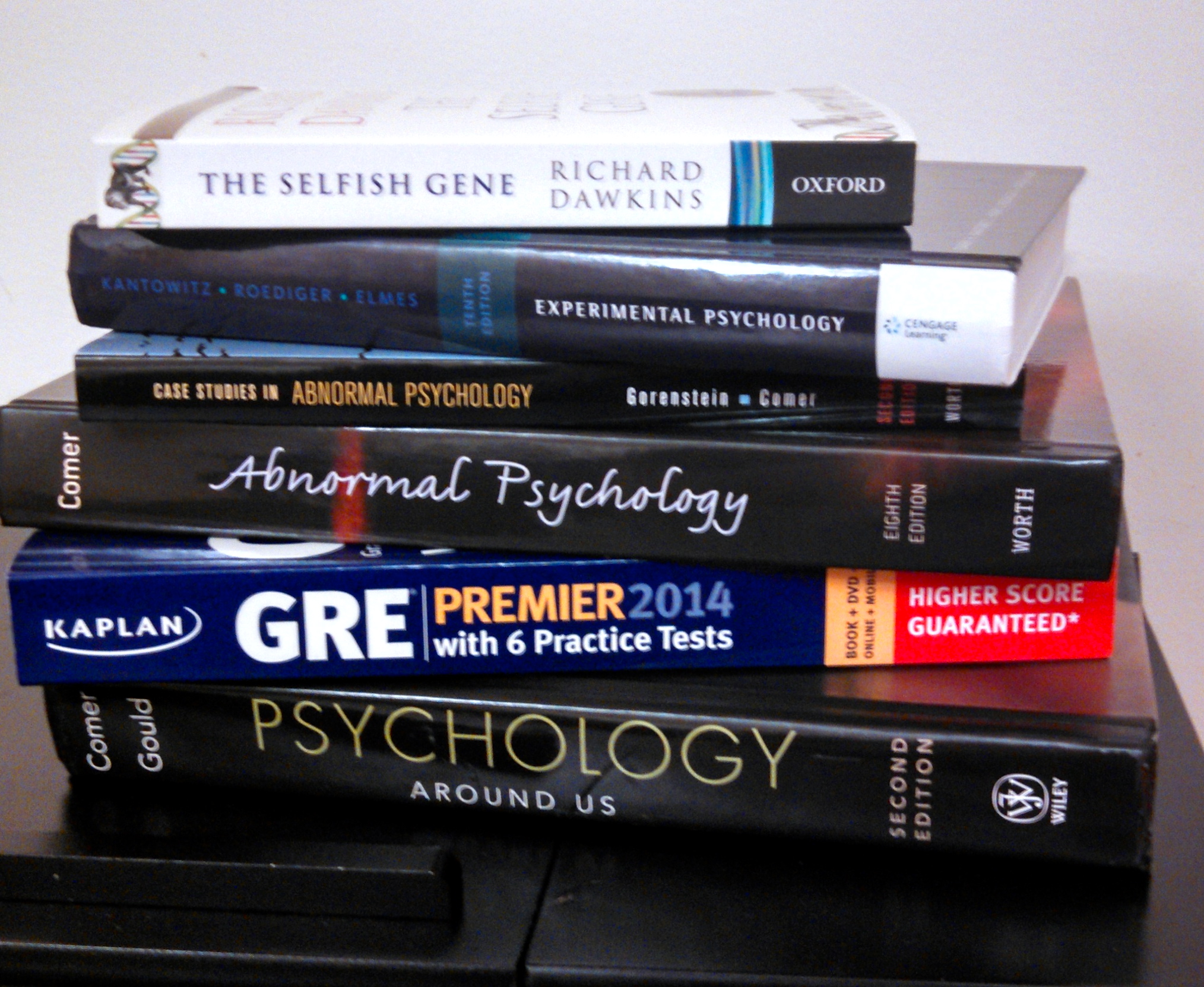
Textbooks and prep books track a student's past, present, and future! (Photo by Jalisha Braxton)
Textbooks and prep books track a student’s past, present, and future!

This past summer, I spent a lot of time thinking about my upcoming year back in the Orange Bubble. The transition from sophomore year to junior year is always described as being a tough one, especially for individuals in fields like Psychology, where independent research is required. Soon after declaring our major, we’re bombarded with emails that not only welcome us into the department, but also welcome into our lives an assortment of questions concerning what we want to do with the next (and last) two years of our undergraduate education.

How are you supposed to make decisions concerning independent work without much research experience on campus? What professors are best for your research interests? What exactly are your research interests? After many late nights reading countless websites and emailing tons of professors, here’s what I found about navigating junior year at Princeton.
Categories
Conduct Research Independent Work

The I-R-What?

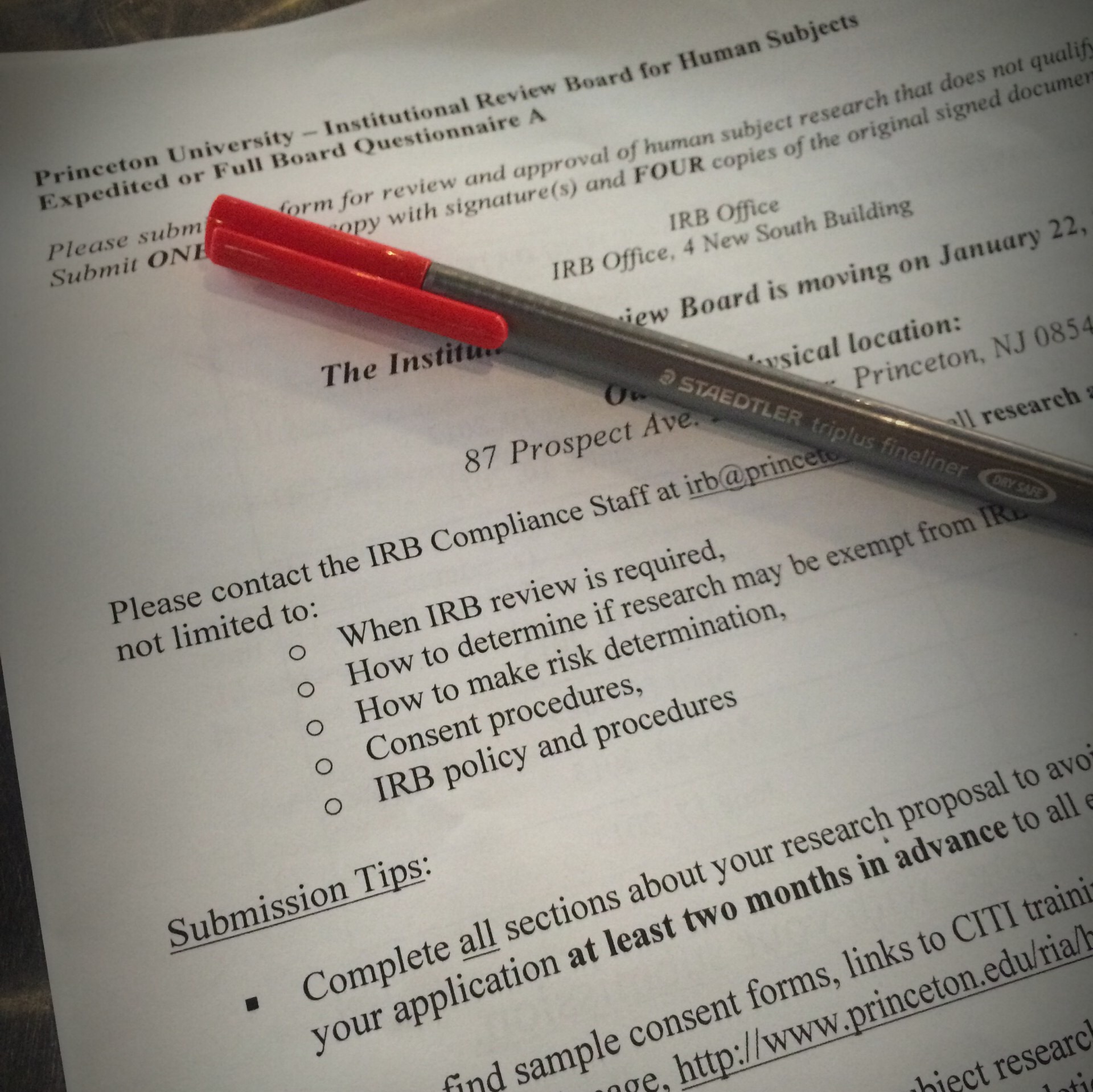
IMG_5144Ah, the Institutional Review Board. Set up to protect the rights of human subjects in research projects, it has an extremely integral role in upholding the standards of research ethics and morality. I’ll be the first to admit that the IRB application is nit-picky, especially for the low-risk research that most students will do. However, I then read about human experiments of years prior to the IRB’s establishment—like Tuskegee—and realize how truly important the IRB is and feel less like wanting to pull my hair out. If you don’t know what Tuskegee is, I suggest Googling it and you will have a new-found appreciation for the Institutional Review Board. You’ll finally understand exactly why the application is a gazillion pages long when all you’re really trying to do is send out an anonymous survey to a group of 35 kids. BUT, I digress.

If your independent research involves humans as experimental subjects in any way, including interviews and surveys, you will have to fill out an application to get IRB approval. The purpose of the review board serves to make sure that all of your methods are ethical and do not pose harm to the people with whom you are working. It seems long and arduous, but I promise you’ll survive.