Presentations are a large part of many research disciplines.
My inbox gets bombarded with emails advertising various events on campus on a daily basis. And every Monday, the Psychology Department advertises one particular event: Departmental Research Presentations. I always notice and read these emails, curious about what kinds of research professors and graduate students are conducting at the University. However, no matter how intriguing the presentation topic, I have never actually showed up to these presentations… that is, until recently.
What did I never expect to be challenging about the senior thesis? Its relative lack of deadlines.
As Princeton students, we’re busy. On top of the vast quantities of course work that we have, many of us take on multiple extracurricular activities such as sports or dance, and each week becomes a battle to meet deadlines for problem sets or readings. And through the trials and tribulations of our first few semesters here, we get better each day at balancing our commitments and meeting deadlines until they become normal parts of our lives.
But your senior thesis will throw you a curve-ball. By this point we’ve been so thoroughly conditioned to work around deadlines that, at first, it can be a little confusing as to how to react to the unexpected freedom of independent work. It’s very tempting to throw down your pen triumphantly when you see that your first deadline is at the end of the semester, and forget about your thesis until one week before that date. But of course, it’s not that easy – after all, a senior thesis is expected to exhibit the cumulative work of an entire year (which cannot be achieved one week before the deadline!).
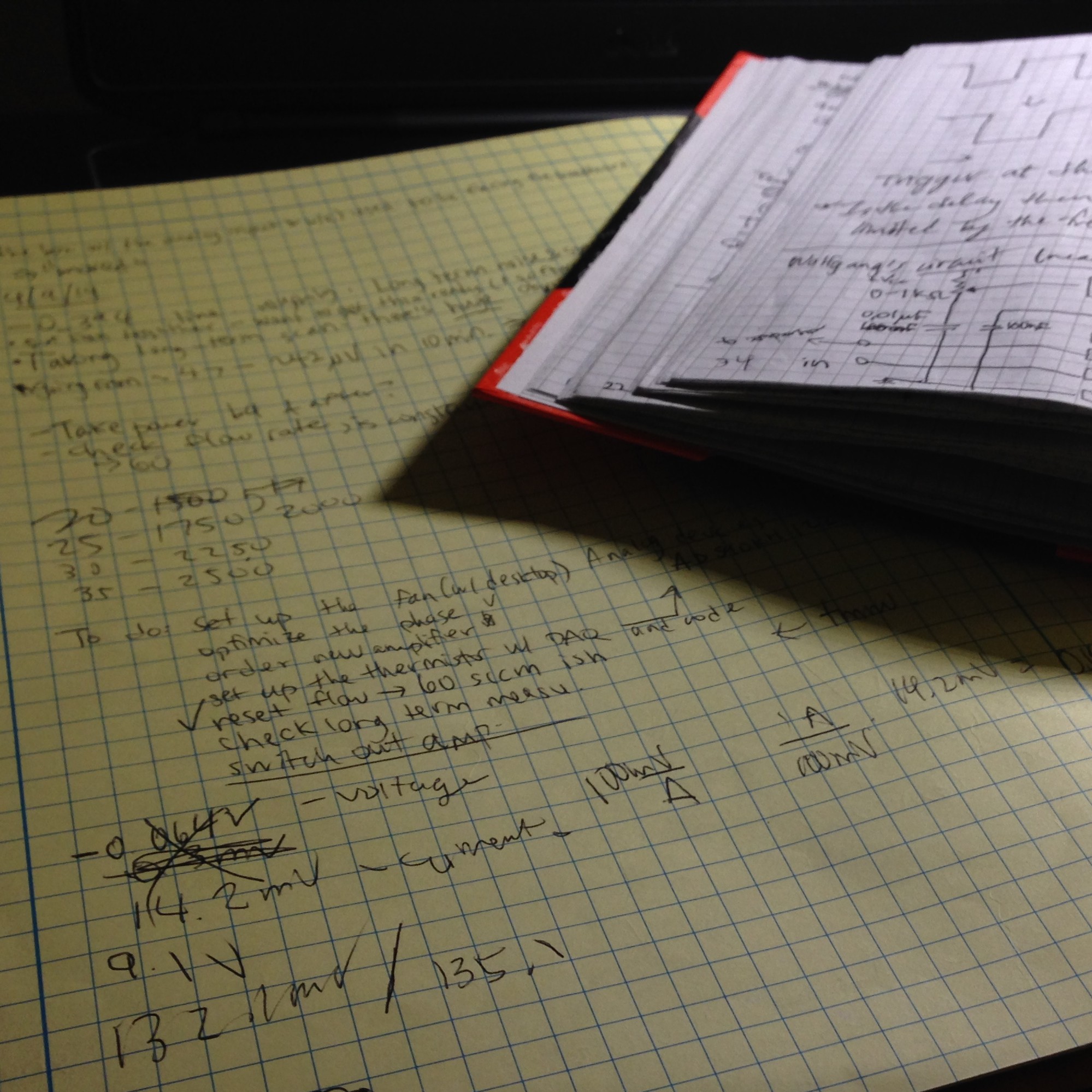
Whether you work in the sciences or humanities, it’s integral to keep track of your work. It sounds obvious – it did to me too – until I started flipping through some of my notes in my lab notebook, trying to figure out the tests and results for a few small tests last semester. I knew I had done the tests, but I just couldn’t figure out what exactly I had done. Eventually, I found a few numbers in my notebook but couldn’t decipher them. Maybe those notes made sense to me 5 months ago, but now they only look like random scrawls of numbers to me.
It isn’t always a lab notebook: it could be keeping track of papers you’ve read and researched, writing down ideas you’ve tossed around with classmates or your adviser, basically keeping a record of all the work you’ve done. Often it can get boring to record every little thing, and often it can feel unnecessary, but not keeping a detailed record or at least well-organized notes or data of your progress somewhere helps no one. It does your hard work no justice when you can’t look back on it in the future and save time by skipping what you’ve already done. It all saves you time in the future from looking at the same papers, doing the same tests.
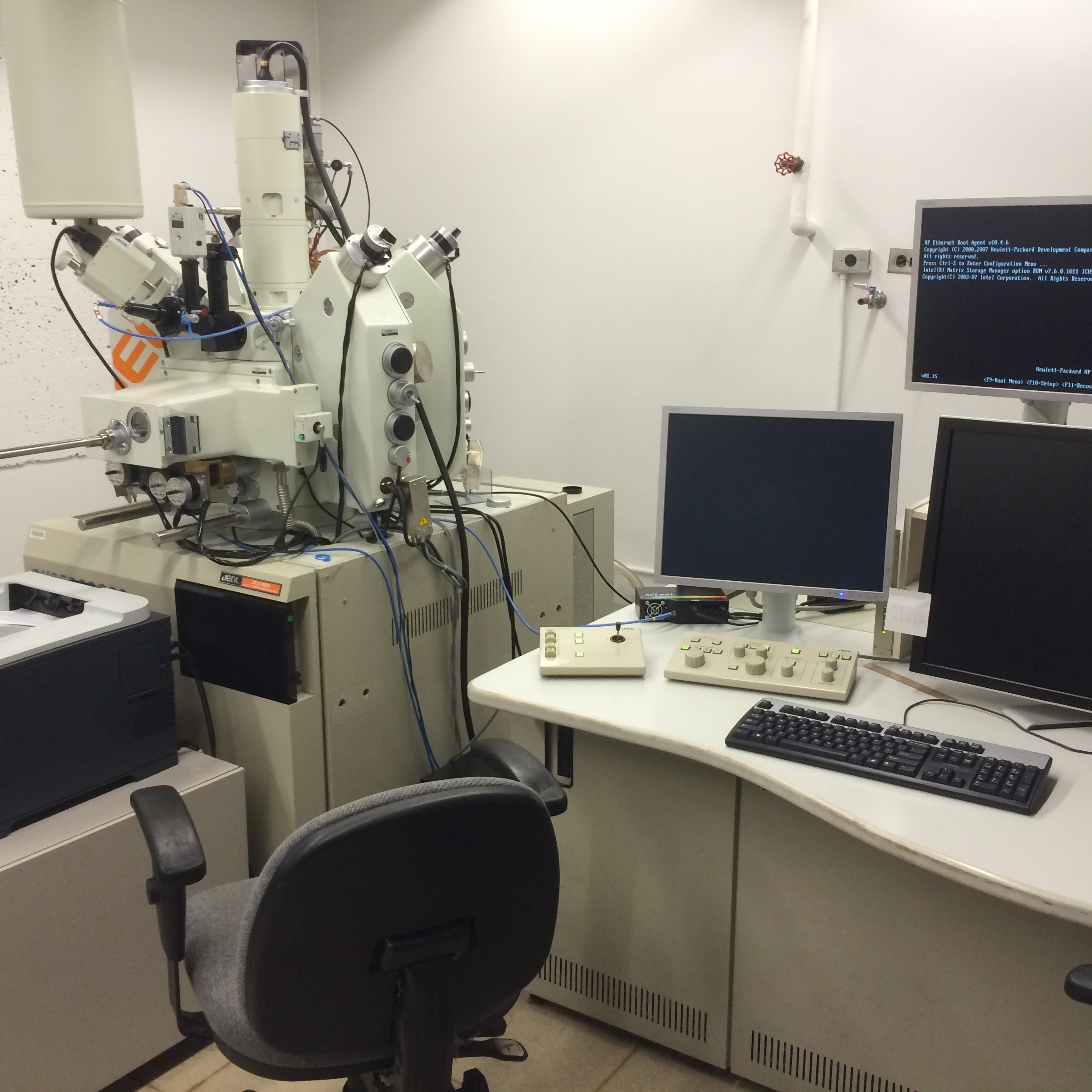
What I needed funding for last year – the electron microprobe at MIT.
As Benjamin Franklin once said, “An investment in knowledge pays the best interest.” And indeed, funding and supporting research projects is a priority for Princeton as well as many other institutions. But just because our society values research, it doesn’t mean that it’s a walk in the park to get a project funded. In fact, in many cases, it’s actually very difficult to get a project funded, even if it’s a highly worthwhile one.
However, this doesn’t mean that your chances of getting funding are beyond your control – the better your funding proposal, the better your chances are of getting your project fully funded. Of course that’s beyond obvious, but how exactly do you write a well-executed funding proposal? Below are a few tips that I’ve picked up:
Office hours are great places to sit and get to know professors! Special thanks to Laura Sarubbi for this photo.
Talk to your professors.College students are frequently given this age-old advice, which seems to exist as a panacea for low grades, a need for recommendation letters, a desire for intelligent conversation, and the like. However, most students will be quick to inform you that talking to professors is easier said than done. Whether held back by fear of inadequacy, intimidation, or just pure laziness, many students shy away from interacting with their educators. Unfortunately, this fear prevents students from obtaining amazing opportunities, especially ones related to conducting research.
As a learning consultant at Princeton’s McGraw Center for Teaching and Learning, I’ve discussed the difficulty of talking to professors with many of my peers. Most express a strong desire to engage their professors in conversation, but are unsure of what to say, or how to say it. While I’m no expert on perfecting the verbalization skills necessary to score a perfect relationship with professors, I have had some experiences where simply putting myself out there has made a world of difference for my Princeton career.
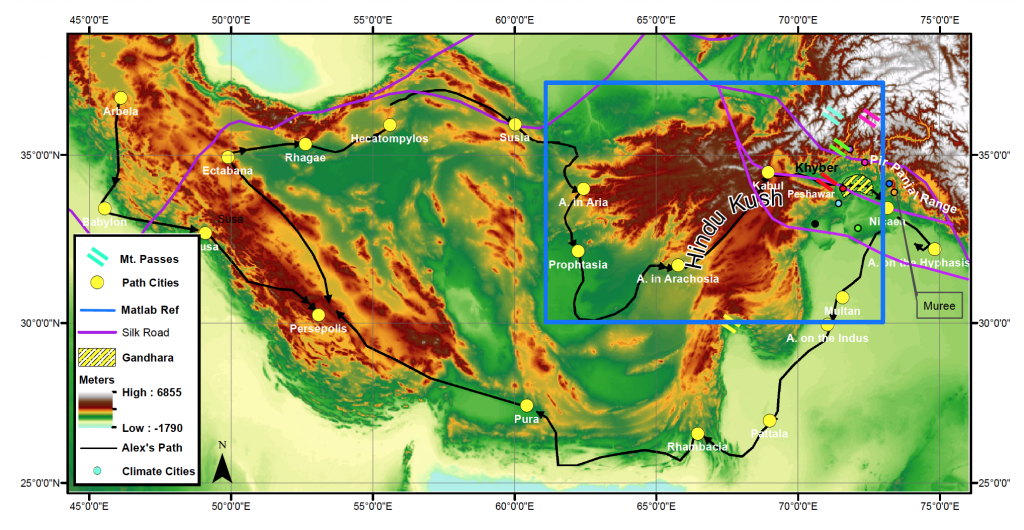
Around this time last fall, I was spending consistent hours in the basement of Fine Hall, gathering data from the Map Library and struggling with ArcGIS and Matlab to make sense of it. My goal? To explain the success of Gandhara, a little-known ancient civilization in northwest Pakistan.
I first learned about the region during an independent research project in my last semester of high school Latin. Gandhara started as an outpost for Alexander the Great’s generals but grew into an incredible region of diffusion between Greek and Indian cultures. Greek and Buddhist influences merged freely in philosophy, religion, and art, and not much research existed on the area.
Gandhara slipped from my mind until I resumed school in my first semester at Princeton. I was enrolled in FRS 187: Earth’s Environments and Ancient Civilizations, a geoscience seminar that traveled to Cyprus over fall break. In Cyprus, we used geophysics to examine unexcavated areas near a Princeton archeological dig house. As part of the course, we were responsible for writing three scientific papers explaining why a civilization succeeded or failed using topographical, mineral, and climate-based evidence. My mind turned naturally to Gandhara. I wanted to create one comprehensive paper examining its success, but I wasn’t sure that I could find sufficient evidence from three different angles.
This is a map that I created to provide an overview of Alexander’s route into Gandhara and major cities along his way.
Independent work and research research are by and far collaborative efforts.
It used to be easy to tell myself that I could do everything alone. That was the way I had mostly done things until college, and I never felt the need to change. It was no different when I began research at Princeton. It was easy to convince myself to not to ask questions, to simply turn to books or articles for help, for fear of pestering and disappointing my adviser and my labmates. As long as I kept my head down and worked, I believed I would know what was happening eventually.
But I don’t tell myself that anymore. In fact, it frustrates me when I look back a year ago to that time. I’m only now filling in the gaps of my incomplete knowledge, a problem that would easily have been solved had I had the audacity to speak up and ask the questions that really mattered. I was just unsure and afraid about what I was expected to know – and somehow, I translated that into the fact that I was somehow expected to know everything. Because of that fear, I ended up neglecting my greatest resources, my greatest friends – my adviser, my labmates, my peers.
It’s the first thing you have to do before you really start that research paper: nail down the thesis. After reading a few articles and narrowing down your focus, you’ve come up with a general idea for your argument, which is an important first step. However, until that idea is packaged in a strong and shiny statement, your paper has likely reached an impasse.
Of course, the thesis results from first asking a research question, trying to explain some phenomenon you’ve observed. The goal is to answer the question innovatively and assertively, advancing something both original and powerful enough to change the debate on an issue.
But who said questions have to be rhetorical?
When I’ve settled on a topic but haven’t advanced past the thesis-planning stage, I like to ask my question out loud — so I give my sisters a call. Both are graduate students, one in library and information science and the other in education, so their responses are a good way to test my ideas. I know I’m ready to seriously start writing if they both recognize the goal of my argument.
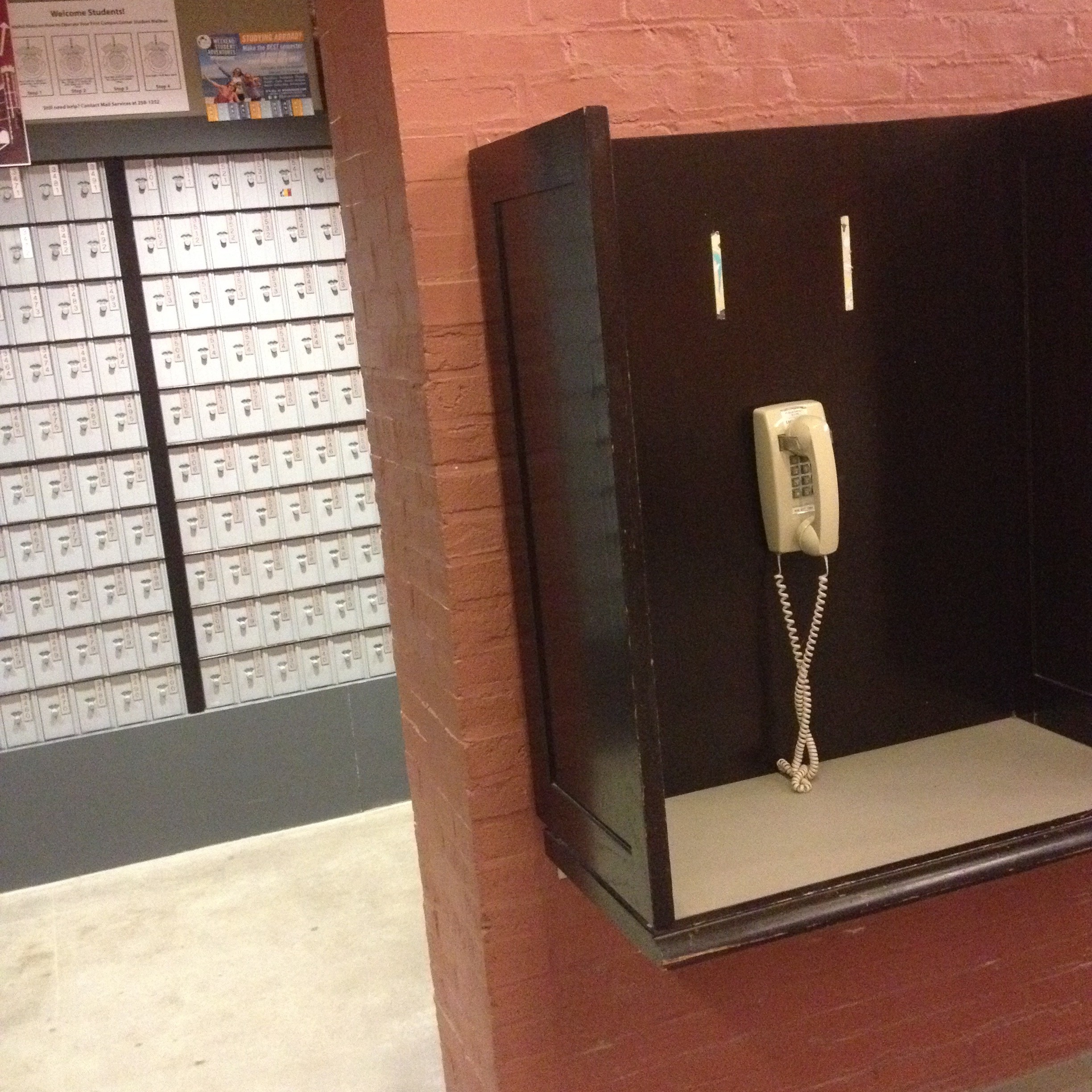
Frist has phones, which means you can assess your argument on the way to late meal…
That doesn’t mean I want my sisters to always agree with me. In fact, the opposite can be much more useful (and is, admittedly, much more common). A classic example: asking my oldest sister “Would you accept that Jersey Shore represents a modern version of the American frontier myth?” made her question more than just my thesis.
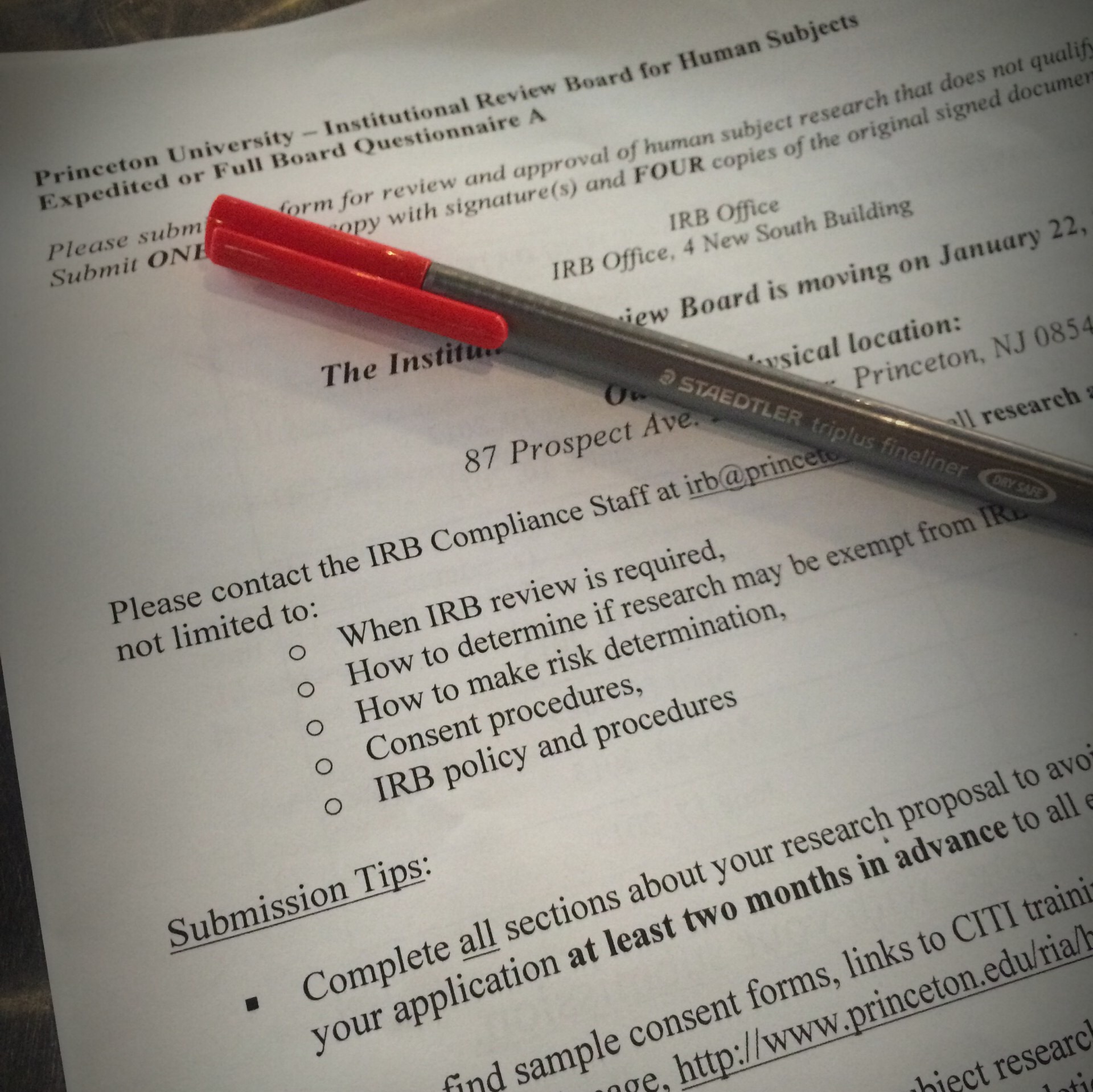
Ah, the Institutional Review Board. Set up to protect the rights of human subjects in research projects, it has an extremely integral role in upholding the standards of research ethics and morality. I’ll be the first to admit that the IRB application is nit-picky, especially for the low-risk research that most students will do. However, I then read about human experiments of years prior to the IRB’s establishment—like Tuskegee—and realize how truly important the IRB is and feel less like wanting to pull my hair out. If you don’t know what Tuskegee is, I suggest Googling it and you will have a new-found appreciation for the Institutional Review Board. You’ll finally understand exactly why the application is a gazillion pages long when all you’re really trying to do is send out an anonymous survey to a group of 35 kids. BUT, I digress.
If your independent research involves humans as experimental subjects in any way, including interviews and surveys, you will have to fill out an application to get IRB approval. The purpose of the review board serves to make sure that all of your methods are ethical and do not pose harm to the people with whom you are working. It seems long and arduous, but I promise you’ll survive.
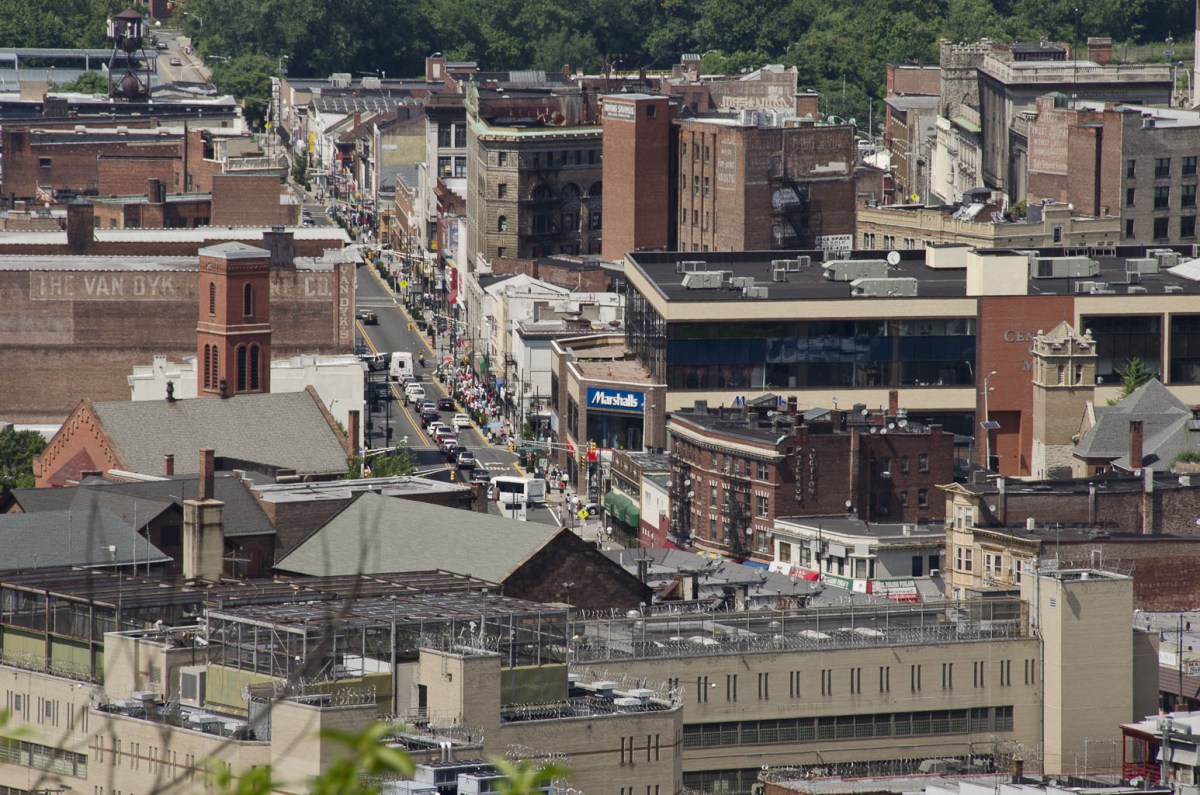
The view from Garrett mountain of Paterson today. Image copyright 2012 ALPHA PML LLC Pablo & Millie Lopez, from Alpha PML Visual Information Service (http://alphapml.com/2012/09/02/garret-mountain-reservation-view-of-downtown-paterson-nj/pml_2681_6831/)
Twice daily for seven years, I traversed the suburbs of Northern New Jersey on NJ Transit’s Main Line on my way to and from school. My journey began across from my home in the wetlands area of Secaucus and ended in the preened suburb of Ridgewood. I grew to memorize the sequence of towns I would pass in the voice of the train’s automaton announcer: Kingsland, Delawanna, Passaic, Clifton, Paterson, Hawthorne, Glen Rock, Ridgewood. I was fascinated by the changes in landscape from city to city, the most drastic of which occurred while passing through Paterson. Suddenly, the town station no longer overlooked comfortable suburban streets but rather looming factory remnants, blue rows of abandoned silk mills, and a bustling downtown area shadowed by mountains. The cultural makeup of the train shifted from a crowd of mostly-white businessmen to a multicultural diaspora of African-Americans, Peruvians, Arabs, and Latinos of all ages. Paterson was a sharp contrast to its upper class Bergen county neighbors, but I never understood why.
When I took my writing seminar on tragedy, I approached my final research project thinking about interpersonal relationships and wanting to write about something that was personally meaningful. I turned to public transportation, one of my favorite topics. I reread my blog about conversations with colorful commuters on New Jersey trains. Because I was already thinking about places of disconnect, my personal curiosity about Paterson spiked. How did it change from America’s wealthiest town to one of its poorest? What did residents experience, nestled in an otherwise pristine area of New Jersey? As in most research motivated by personal curiosity, I knew a bit of luck was key. I did not know whether literature on Paterson and theories I could apply to it even existed.