
It’s okay to fail. No, really, it is. You may feel that the achievements that brought you here have put you on a pedestal, destined to keep rising higher and higher, but someday that pedestal will break or crumble, and you must figure out how to keep going.
This is true especially in research. Having been involved in scientific research from the early days of doing science fair, to analyzing my data for my senior thesis, I feel like I have rather good authority to speak on failure. These are my four tips for coping with failure as you embark on your research journey.
Be Okay with Change
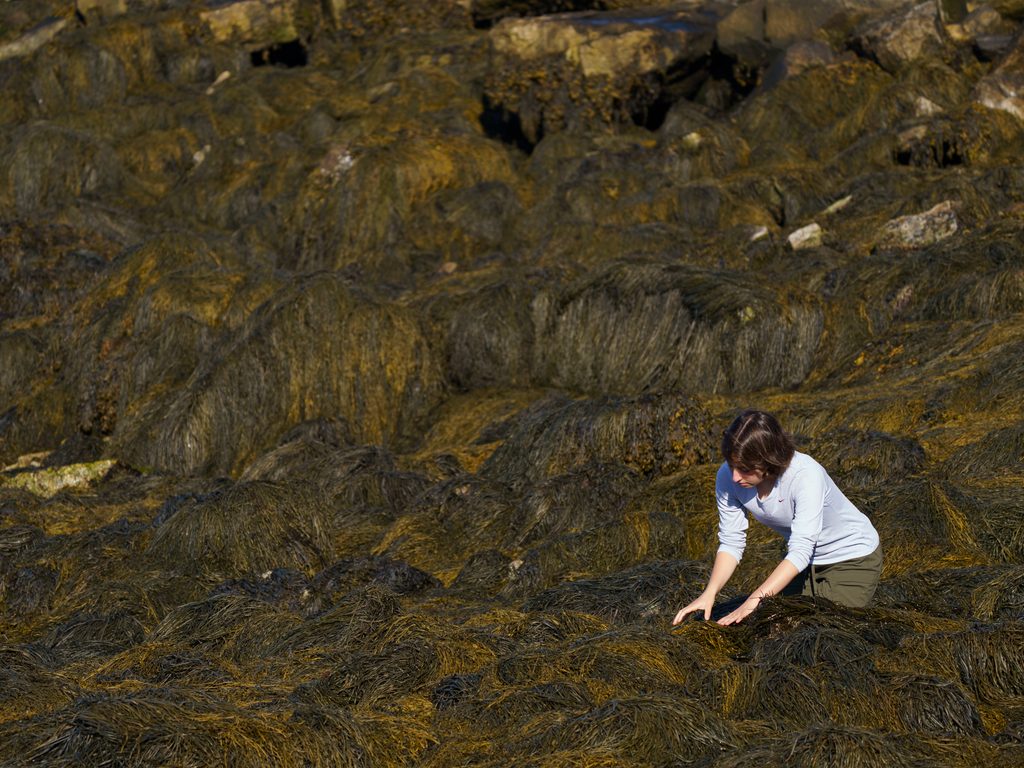
Firstly, you can’t expect that every part of your project will succeed. It’s very easy to propose and design an experiment, one that seems infallible and (partially) realistic. However, undertaking it, from start to finish, is another ordeal. For example, take my funding application for my senior thesis project. I constructed an elaborate experiment that involved me going to Shoals Marine Laboratory, a remote field station located on Appledore Island, Maine, and exploring the environmental conditions that would induce a behavioral reaction from three species of parasite-infected crabs. This included complicated behavioral monitoring, a series of immunological assays, and a plethora of analyses. This application succeeded in one regard – I got my funding! However, almost instantly, my proposal was rejected by the mentors who I’d be working with the whole summer. Why? It was too difficult. We removed the environmental part of the project and persisted. And then, about two weeks into my fieldwork, the behavioral component got removed because I had bitten off more than I could chew! This is generally the issue when less-experienced researchers are designing their research plan. So even when you make a plan for your research, be comfortable with the idea that it’s an ever-evolving process, and plans will inevitably change.
Invest in Good Mentors
Secondly, when these plans fail, it’s always good to have someone to lean on. Mentors, especially in research, are invaluable resources who will (mostly) have something helpful to say or do, or at least a direction to start. When I arrived at Shoals, I thought I would immediately start my infection experiment, and that it would proceed the entire summer. April Blakeslee and Amy Fowler, my on-island parasite ecology mentors, had a different idea. They introduced me to the different isles of Shoals and explained to me that the better logic would be to do a parasite survey, using three species of snails that different species of trematode parasites infect, which I could then use for my infection experiment. It would also make more sense to do a general crab-parasite survey as well, to see which islands have higher burdens of infection, and use crabs from the islands that are less infected. If my mentors had not brought up these very important points, my thesis would have been off to a very slow, erroneous start.
Try Again
Third, when your project fails, try it again, and look at it from multiple perspectives. It only becomes something to be ashamed of if you don’t try again at the first instance of failure. Another component of my senior thesis was to draw hemolymph (circulatory fluid in arthropods) from the crabs. The purpose of this was to monitor circulating hemocytes in the blood, which are good indicators of immune system strength. However, drawing blood (from any living creature) is difficult. To make matters worse, I am squeamish and afraid of needles. So altogether, this seemed like a recipe for disaster. At first, it was. Carrie Keogh, another wonderful mentor, had performed many a hemolymph draw. She instructed me how to hold the crab, how to delicately prick its walking leg, carefully insert a 23-gauge needle into the membrane, and draw out hemolymph. I tried to do exactly what she said. Of course, it didn’t work. The crabs squirmed in discomfort, making me squirm in discomfort, and I ended up just giving up on that crab. However, I reminded myself that this was important for my senior thesis, and over time, it clicked. I was able to draw hemolymph successfully from all of my crabs. If a goal is achievable, it might just take you a longer path to get there than others, and that’s okay.
Pivot (After Enough Failure)!
Lastly (and I don’t think this is emphasized enough!), pivot pivot pivot. There is absolutely no point in repeatedly trying something over and over again to just continuously fail and waste time. This is especially important in research, due to limited time to complete fieldwork/lab work, and more importantly, limited funding. My experiment was supposed to include three species of crabs, two invasives and one native. I have only been mentioning two crabs this entire article. Why? Because the native crabs were nowhere to be found. Every time I went out in the field, I kept an eye out for the native crab, hoping that it would show up in appropriate numbers (gotta love that sample size) for me to use for my experiment. And guess how many we found? One. One singular native crab, doomed to wander alone in the intertidal. For any sound research project, sample size is very important, especially when dealing with subjects that have natural variation. This is why studies on organisms always have a certain number of them that must be included for the experiment to be generalizable to the broader population. If I kept this one native crab and extrapolated results to the whole population, it would not have been good research. Despite removing them and changing my focus, I was still able to have an interesting project and a fulfilling summer.
Take it from me, an elderly senior, that it is okay to fail in research, and it is in fact the most important part of the process. Failure will push you in the right direction, and potentially open more doors. It might be painful and devastating in the moment, but in the long run, it (often) does more good than harm.
— Maya Cabrera, Natural Sciences Correspondent