Categories
Conduct Research Independent Work Plan Beyond Graduation Present & Publish Findings

“Transferable Skills” – The Answer We’ve All Been Waiting For

Whether you consider yourself a scholar or more of an artist, transferrable skills can help you achieve your dreams! (Photo of Antoni Gaudi's "Casa Batllo" in Barcelona, Spain. Photo credit: Jalisha Braxton)
Whether you consider yourself a scholar or more of an artist, transferable skills can help you achieve your dreams! (Photo of Antoni Gaudi’s “Casa Batllo” in Barcelona, Spain.)

As students, we frequently ask a particular question regarding our coursework: “How is this going to help me in the future?” While sometimes posed sarcastically, with a hint of disdain for whoever invented subjects like Calculus, our intention behind asking this question has always been to elicit a meaningful response that proves our coursework worthwhile. For some individuals who plan to go into academia after undergrad (myself being included), the correlation between our current coursework and our future occupation is highly apparent: writing literature reviews and research proposals now will help us write better ones in the future. No brainer. But what about the individuals who plan to work outside of an academic setting?

Interestingly enough, I recently discovered that many students at British universities receive a document from each professor listing the indispensable life skills they’ll develop through the completion of their coursework. These skills, referred to as “transferable skills”* for their usefulness in just about every occupation, encompass everything from thinking critically and negotiating to managing resources and communicating globally. This listing of skills not only seems beneficial for individuals looking to beef up their resume, but also for anyone trying to find purpose in their academic work.

Categories
Conduct Research Independent Work

Don’t Be Afraid To Try Something Old

As you might remember from my first PCUR post, it can be incredibly rewarding to pursue research outside your comfort zone.  If your time at Princeton doesn’t include at least one “just because” class, then you’re missing a few important experiences: first, the chance to expand your intellectual horizons; and second, the ability to navigate diverse styles of independent work.  I’ve consciously tried to apply this idea by taking one class in a new department every semester.  Yet after shopping six classes this spring, I settled on courses in History, African American studies, Politics, and the Woodrow Wilson School – four departments I’ve definitely been a student in before.

Yeah, I *have* seen those quotes a lot. That doesn't mean I'm any less excited about living up to their challenge
Yeah, I *have* seen those quotes a lot. That doesn’t mean I’m any less excited about living up to their challenge.

What happened? Well, it’s somewhat obvious: I chose the classes I expected to enjoy.  It didn’t hurt that they were all related to, or required by, my major and certificate interests. It also didn’t hurt to read their syllabi and recognize texts and ideas from previous classes.  In short, I felt comfortable with my schedule at the end of add/drop period… and it was a strange feeling.  As Princeton students, we have access to so many amazing opportunities that it seems wrong to get comfortable in particular academic areas, rather than challenge ourselves in other ways.

I missed something important, though, by framing a conflict between comfortable and challenging classes: there’s no dichotomy between the two.

Categories
Conduct Research Independent Work Plan Beyond Graduation

Tackling our Academic Biases

This week, I was having a standard lunchtime conversation with friends about our classes. The conversation veered to next fall’s course offerings, which will include the three legendary classes Practical Ethics, Constitutional Interpretation, and Politics of Modern Islam. Having recently read reviews of Constitutional Interpretation, I joked that it might be unwise to take all three simultaneously.

“This might be a very B.S.E thing to say,” one friend said, “but I don’t understand how humanities classes can be hard.”

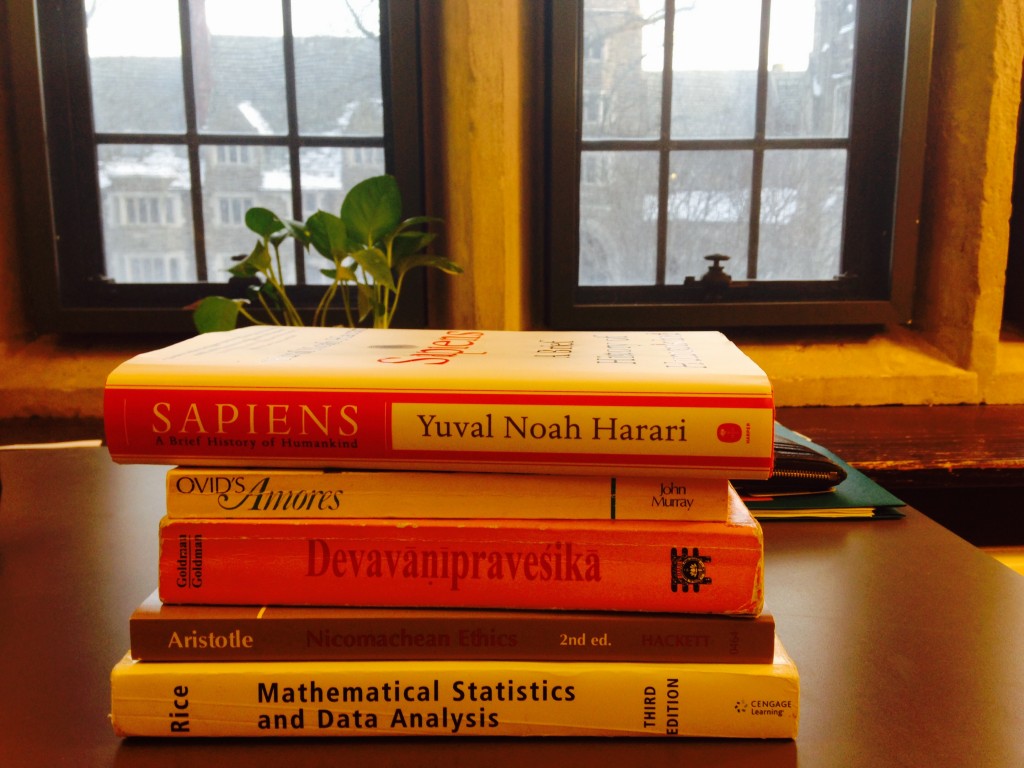
FullSizeRender-3
A sampling of my bookshelf!

As a philosophy major, I felt shocked, and then defensive. How could an entire set of disciplines be “easy,” unless a student is uninformed or pursuing it incorrectly? I felt like retorting that most of the engineers in my humanities classes did not read what was assigned, wrote papers the night before they were due, and failed to be productive precept participants. I bit my tongue. My thoughts were equally unproductive generalizations.

Categories
Independent Work Present & Publish Findings

Things I Don’t Thesis Without

This week’s post is a photographical account of the three main things I never really write my thesis without – the things getting me through the next month and a half, the things that are the only reasons I have any words on a page at all, etc.

A snack, and maybe a coffee: I’m not a huge caffeine person, but a small coffee and a banana usually does the trick when I need a small boost of energy after a long work period.

Categories
Conduct Research Independent Work Research Life

A Global Look at Educating Researchers

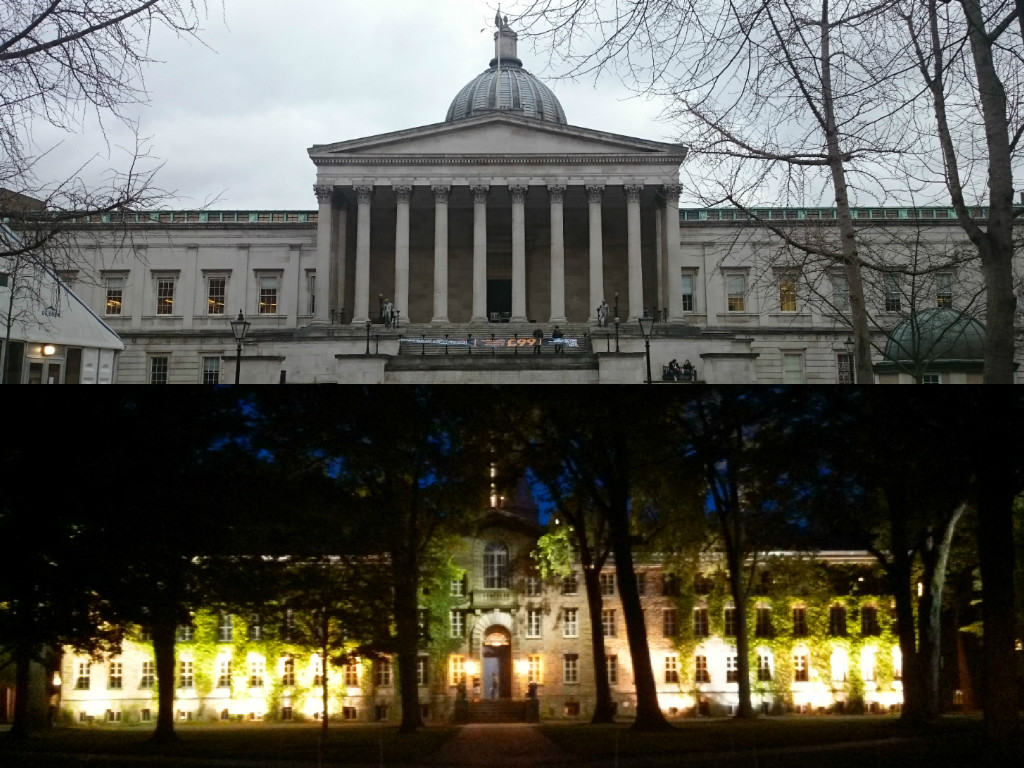
The curriculum differences between UCL and Princeton can almost be as stark as the contrast between night and day (photo credit: Jalisha Braxton)
The curriculum differences between UCL and Princeton can almost be as stark as the contrast between night and day. (In photo: UCL’s main campus building [top] and Princeton’s Nassau Hall [bottom])
A common question I’ve gotten since coming to the UK to study is “what differences have you seen between classes in the UK and classes back home?” I’ve given some thought to this question and have decided to map out some of the various differences I’ve noticed between the curriculum design and expectations for upper level Psychology classes at Princeton vs. at University College London (UCL).  Each system presents different strengths in developing student researchers.

Lectures & Course Readings

Princeton: Many of my Psychology courses at Princeton were structured around a pre-assigned textbook. This practice helped with giving the course an understandable and predictable composition, with each lecture matching up closely with the units of the assigned reading material. Although professors generally provided supplementary information not found in the textbook, common themes and key elements of the course could be identified through the textbook readings.

UCL: Every lecture I have attended thus far at UCL has been heavily based in current research literature. The assigned readings are the research articles themselves. In the lecture, the professor typically picks a topic related to the course, then discusses current research on the topic, emphasizing both the merits and shortcomings of various studies. It is then discussed how the studies interact with one another, showcasing how newer studies are able to strengthen or disprove claims made by previous studies through replicating or altering experimental designs.

Categories
Conduct Research Independent Work Present & Publish Findings

The Power of Fresh Perspectives

It often becomes clearer when you change your perspective…

As winter break rolled in, I finally had the opportunity to focus on my thesis and make substantial progress. However, as always, it wasn’t going to be easy.

Generally speaking, the problem sets assigned in class have a solution.  You know that if you focus and spend time on them, it is (at least in theory) possible to come to the correct answer and complete the problem set. The challenge with research, however, is the very real possibility that the ultimate solution is unattainable with the methods/data that you have available to you.

It was precisely this problem that I encountered over the winter.

Categories
Independent Work Present & Publish Findings

Page Limits: Balancing Quantity and Quality

A different kind of page limit, but still relevant: the number of pages you write determines the number of sheets you print. (Photo by Melissa Parnagian)
A different kind of page limit, but still relevant: the number of pages you write determines the number of sheets you print.

At times, the phrase “between x and y pages” seems tedious or even unnecessary, but there’s something inherently different about 5-7 pages of research versus 12-15.  And if we recognize that difference, it means page limits serve a purpose.  Think about how you react at either extreme of a page range: when your paper hasn’t met the minimum requirements, it’s easy to tell that you need more research; conversely, passing the maximum is an indication to scale back.

But not every issue is so easy to resolve.  What about finishing just below the maximum?  On a recent policy paper, I found myself barely squeaking below the maximum page limit… or, more accurately, using shorter synonyms to avoid hitting page z on an x-to-y assignment.

That remedy didn’t last long.

Categories
Conduct Research Independent Work Plan Beyond Graduation

Engineering a New Outlook: The BSE Path

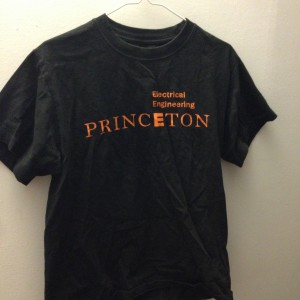
T-shirt
Deciding to bear the mantle bestowed by the Electrical Engineering T-shirt.

Last week, Melissa told us about her ruminations on and approaches to deciding a major. This week, I wanted to offer some of my own thoughts and reflections on why I chose to stick to the path to BSE two years ago.

To many people, engineering seems to be the hard way through college. Engineering classes notoriously lower GPAs, cause intense stress, and work you to the bone. I can’t deny I’ve had a generous share of that, as someone who’s far from the sharpest mind in electrical engineering. Sometimes it can really take a hit on my self-esteem—and it’s no lie that I’ve experienced first hand how engineering classes make you work at your limits, force you to think differently, and labor at solving problems that don’t have set answers. But that’s because the end goal is to make a coherent working system that will perform a task, which is often immensely complex, while working within physically possible limits. In other words, rather than only thinking and planning, the result is something that really works and that can interact with society in some meaningful way. And successfully creating such a system is a very satisfying feeling indeed.

The difficulty people associate with engineering often clouds that end goal.While it’s true that engineering certainly isn’t for everyone, engineering offers you a different outlook and approach to life that can benefit you far beyond the academic field.

Categories
Independent Work

GoPro: The Life of a Geologist

Research is often stereotyped as a boring intellectual pursuit, or for people who say things like “If my calculations are correct…” every day. But it certainly isn’t! Research is exciting, and often performed outside of the lab. For example, I spent the last summer hiking in the North Cascades, WA to examine the rapid exhumation of a rock unit along a major fault zone. Here is a short video montage of that field season…


https://www.youtube.com/watch?v=5g-Dss3ZhGw&spfreload=10

To learn more about what the geosciences can offer you, visit the department webpage, reach out to any of us in the department, or consider taking a class with us!

Up in the clouds (Photo by Sean Muleady '17)
Up in the clouds…

— Yuem Park, Natural Sciences Correspondent

Categories
Conduct Research Independent Work

Finding Passion in Past Semesters

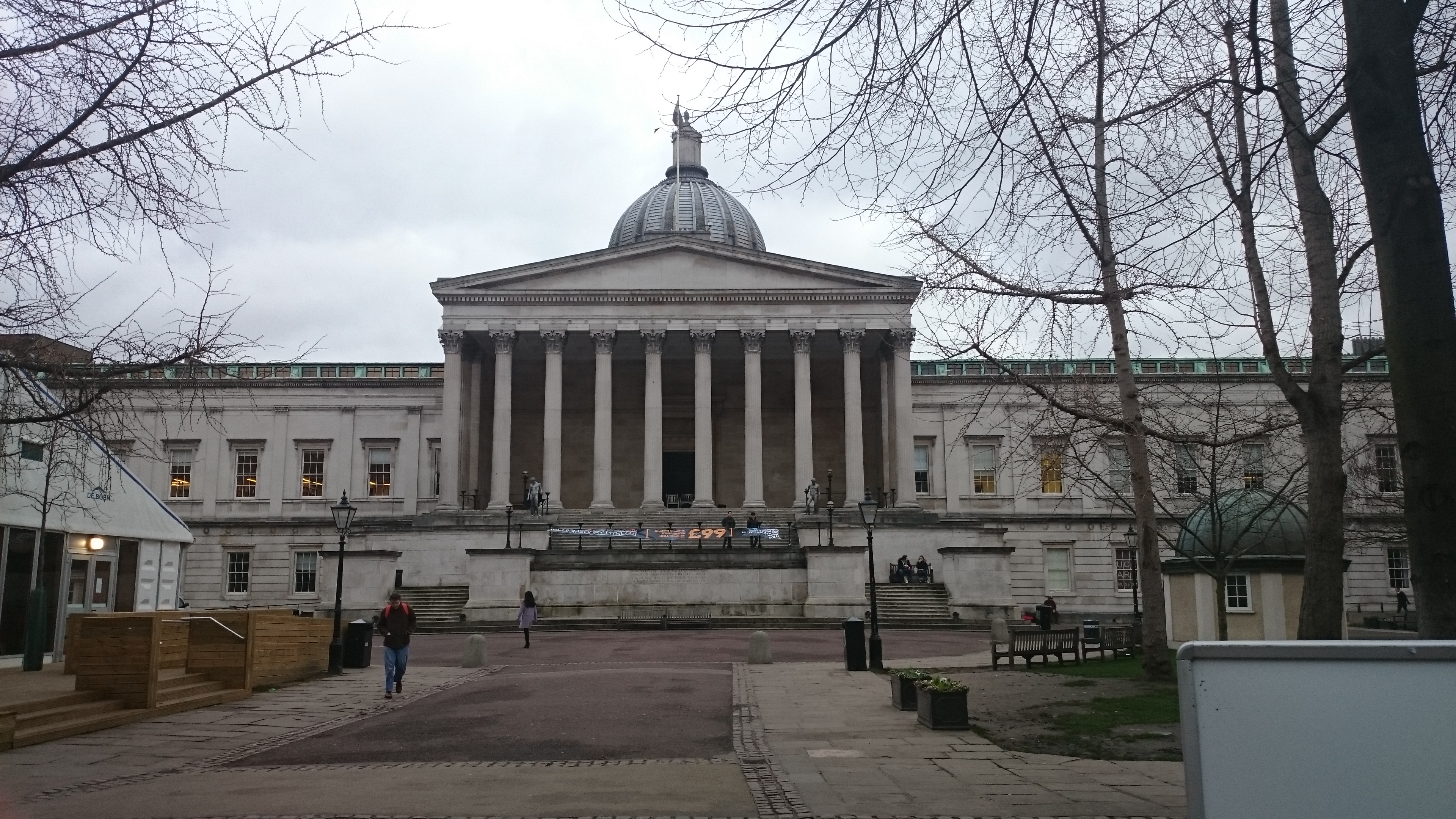
My home away from home; University College London's central quad!
My home away from home; University College London’s central quad!

Hello from London, England! This semester, I’ve left the comforts of the Orange Bubble, traveling 3,500 miles to study at University College London (UCL). While my spring semester in London began a few weeks ago, I know that back at Princeton, the new term is just beginning!

The start of a new semester is always refreshing – it’s almost as if we’ve been given a blank slate, a chance to start anew. I typically spend little to no time thinking about the past semester once a new one has begun, feeling as though the completion of final assignments signals the abrupt end to all thoughts relating to a particular course. However, this semester differed from past semesters for me.  One particular Dean’s Date assignment stayed on my mind long after its submission and ended up impacting me in an unexpected way.