
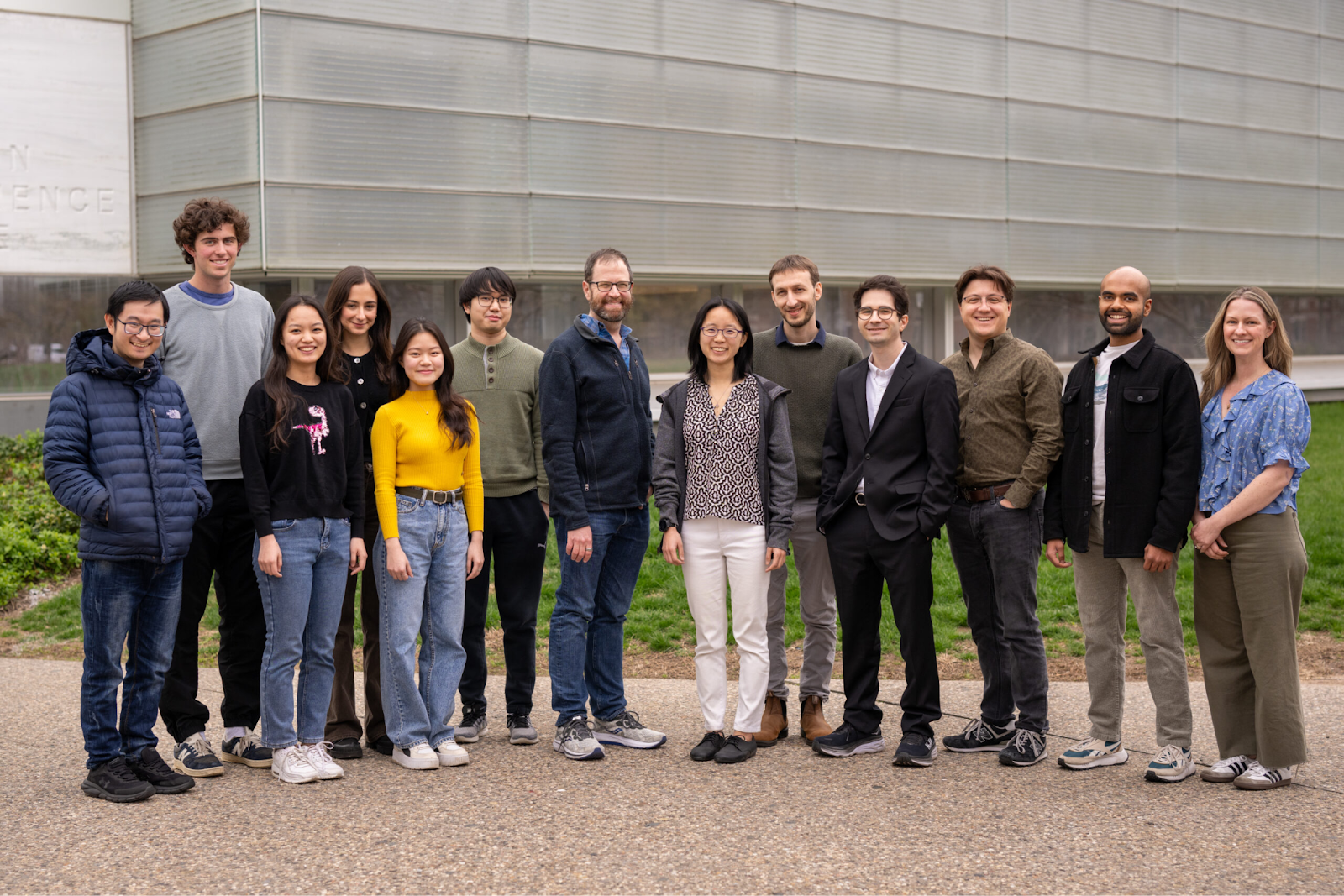
After the first meeting of the semester with my adviser, whom I’ve been working with since my first-year spring, I looked at the list of papers I had to read for my junior independent work but chose to open the small birthday card my adviser gave me on behalf of the lab. Seeing everyone’s “Happy Birthday” made me feel, more than ever before, like I belonged.
And I was growing up.
I was energized, ready to take on a new responsibility. Since the conversation I had with my PI over the summer, I had been excited to get started. Coming into Princeton interested in memory and potential ways to manipulate unwanted or negative ones, getting to use eye trackers to exert top-down control over what people look at and induce forgetting by weakening the activation of the related pathways based on the eye gaze pattern seemed like a sci-fi movie coming to life. I couldn’t wait to feel ownership over my own project and contribute to the kind of work my lab cares so much about.
After two years, I started to feel like I was equipped to excel on all fronts at Princeton.
But reality… hit.
Classes, assignments, exams, everything overlapped. Squeezing time to focus on papers or think about my project seemed impossible. Sometimes, when I got down the to-do list and finally reached reading papers for JP, I couldn’t even comprehend what the main hypotheses were. Of course, these were mixed with concepts I collected for years falling into place. But I still consistently felt that, after everything, it shouldn’t have been this hard.
But somewhere in the middle of all that inconsistency, I’m starting to notice real growth-not the big “Aha!” milestones, but the subtle successes. I started to understand a deeper layer of the papers’ arguments and to see patterns I had never noticed before. I found myself thinking about how to apply the papers’ findings to my own work and how to gain a broader understanding of neuroscience, as well as identifying weaknesses in the papers or ways to build on their research.
These skills translated to my higher-level seminar courses, in which analyzing and critiquing papers is a major component. I started to feel more confident raising my hand in class and voicing my thoughts—something first-year me would have debated over and over until the moment passed.
I let myself step away from my JP to spend time with friends and enjoy Princeton before coming back to it with a fresh mind. I learned to be motivated by a drive to understand my project and to make progress, instead of trying to reach the finish line. And small wins, like finishing an introduction paragraph or fixing a line of code, became rewards I picked up along the way, keeping me going.
Even on days when my JP makes me question if I actually know enough about neuroscience to do what I’m doing, I still go to bed thinking I’ll wake up grateful that this project exists in my life. And by the end of the process, I have a feeling I’ll grow into someone who finally knows enough, or at least someone who knows much more than I do now.
Returning to the same lab isn’t a straight line. It loops, it dips, it comes back around. But each time I circle through it, I’m somewhere new, and it’s exciting to see where the circle will lead me next.
— Angel Toasakul, Natural Sciences Correspondent
