Princeton’s resource network, like Firestone Library under construction, is so big and complex you could spend hours inside it but only see a small part, never knowing what you’re missing. Here are 3½ of campus’ most under-the-radar resources, and a guide to using them.
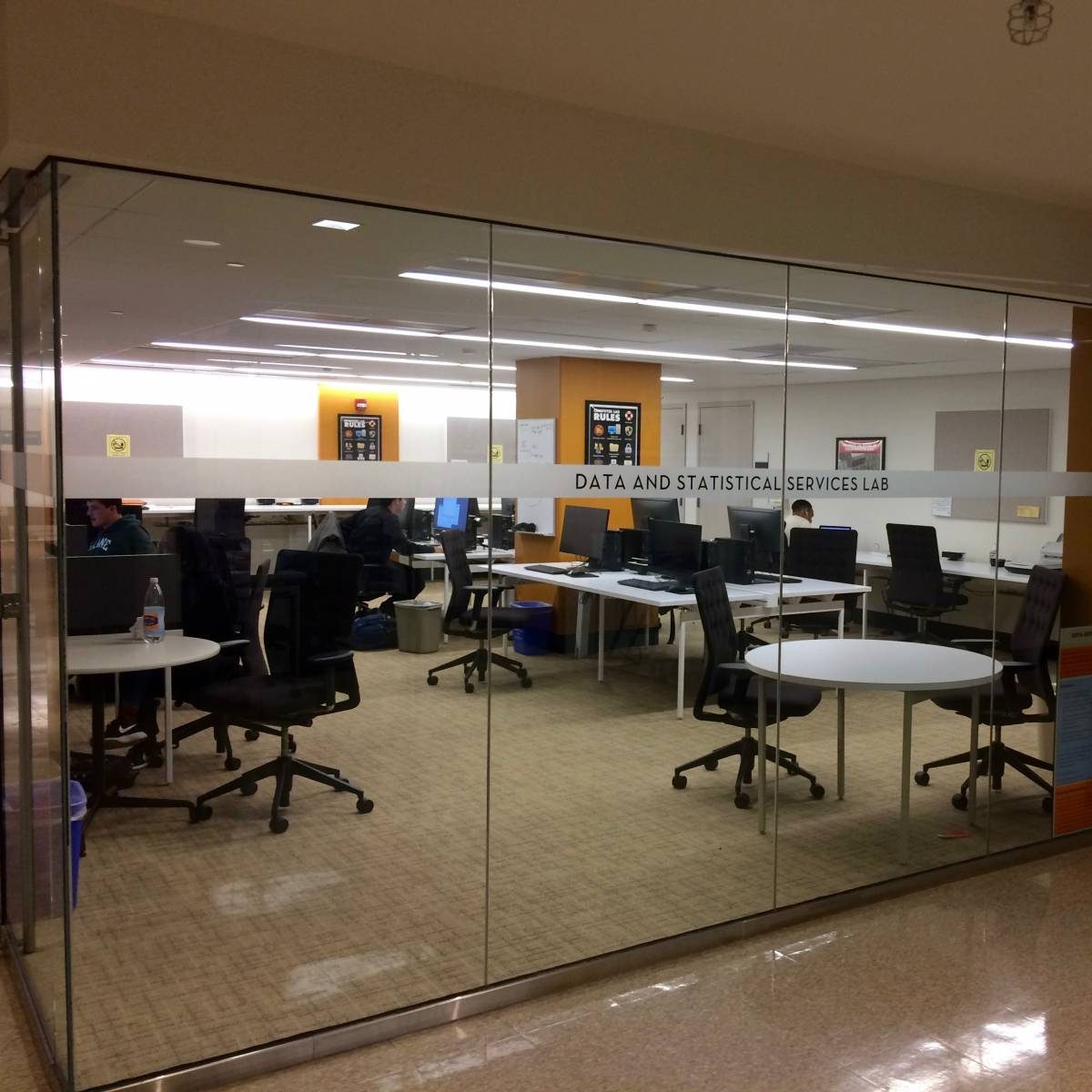
The DSS Lab in Firestone: literally underground.
1a. Data and Statistical Services: Lab edition What: The original inspiration for this post, the DSS Lab is literally underground. A well-lit room of big-screen PC’s, the lab is run by two incredibly friendly statistical consultants who can help you download, format, reshape, or analyze data. Where: The A floor of Firestone – see this map. How: The lab consultants’ schedule is available here. Walk-in hours are available from 2-5 p.m. on weekdays through December 16. Underground tip: For brief, specific questions, send an email to the consultants at data@princeton.edu.
Going into fall break, reality set in for myself and several other juniors in the Sociology Department as we wrote our first official proposals for our Junior Papers. While writing my draft, I had to answer several questions for myself and my professor. What was my choice of methodology? Where did I plan on finding my data? How was my research significant to others? And on top of those explanations, the most daunting question of all—what was my intended timeframe of completion?
My initial thought was that I should have plenty of time; the final paper isn’t due until January 10th and I already have a game plan for how I want to conduct my research. But as I began to create the deadlines for gathering my secondary sources, analyzing my data, writing the paper, and more, I soon realized that I needed to get started on several tasks within a matter of days if I didn’t want to end up scrambling at the last minute. So after deciding on my umpteenth deadline, I finally found myself going into a state I’m sure we are all familiar with: panic mode.
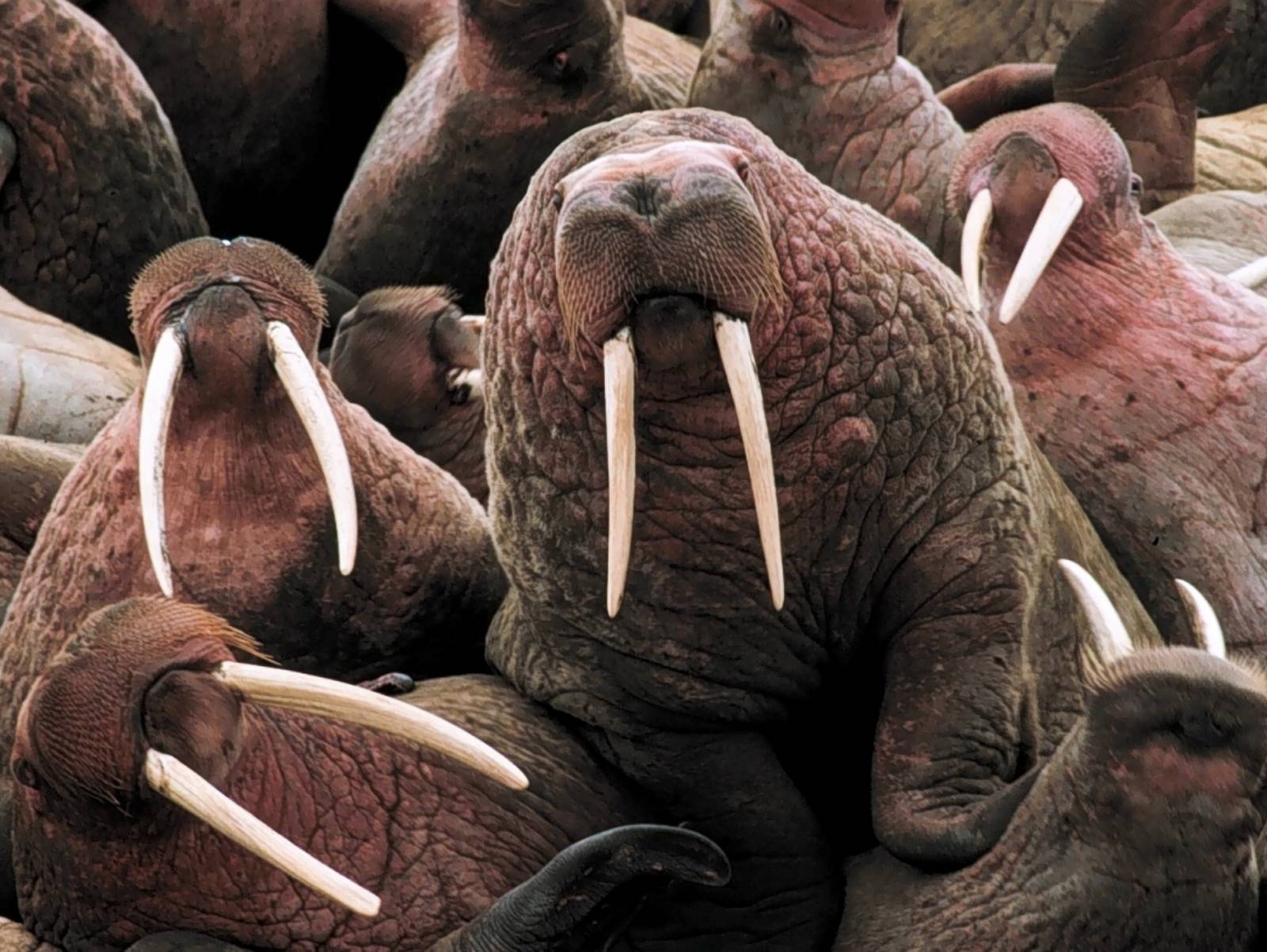
Friendliness aside, those are some great choppers.
This is what Amanda Wilkins, director of the Writing Program, told me at the beginning of this fall: not the kind of teeth that draw blood, but certainly the kind that instill a little fear.
When immediate priorities are vying for our attention and long-term project deadlines are in the faraway future – perhaps a final paper that is weeks away, a JP not due until Reading Period, or a full thesis not due before April of next year, for crying out loud – it’s easy to push the long-term tasks off to another day, and then another.
Friendly teeth: progress deadlines with bite.
Insert friendly teeth: the intermediate accountability standards, made and enforced to keep us on track between now and the distant future. Also known as progress deadlines with bite.
I have a year to write my thesis – I don’t want to be just getting started in March. Heck, I want to be done by March, and spend the last month before my deadline deciding between fonts.
Kidding. The only acceptable font for a thesis is Times New Roman, size 12.
And one other problem: I am almost never early.
Fun fact: tusks are actually specially-adapted canines! These teeth mean business.
Call me a chronic time optimist – I consistently underestimate how long it will take to get from outline to paper, or to walk across campus to meet a friend, or to shower, brush my teeth, do my readings, and teleport to class. Chronic time optimism runs in my family, and was reinforced growing up in Hawaii, home of “island time.”
But I’m working on it. And I’m here to report that so far, progress – on my thesis, at least – is going better than expected, thanks to the snapping jaws of three types of friendly teeth.
As I sat down to write my post this week, my mind naturally wandered to that big research project I’m completing alongside my fellow seniors. And yet, no matter how hard I tried, I couldn’t find anything novel to say about it. A few hours of trial and error alerted me to a simple fact: It wasn’t necessarily that I couldn’t find something to write about my thesis; it’s that I didn’t want to. I felt like it’d be nice to imagine undergraduate research without the long list of thesis-related tasks clogging up my reminders.
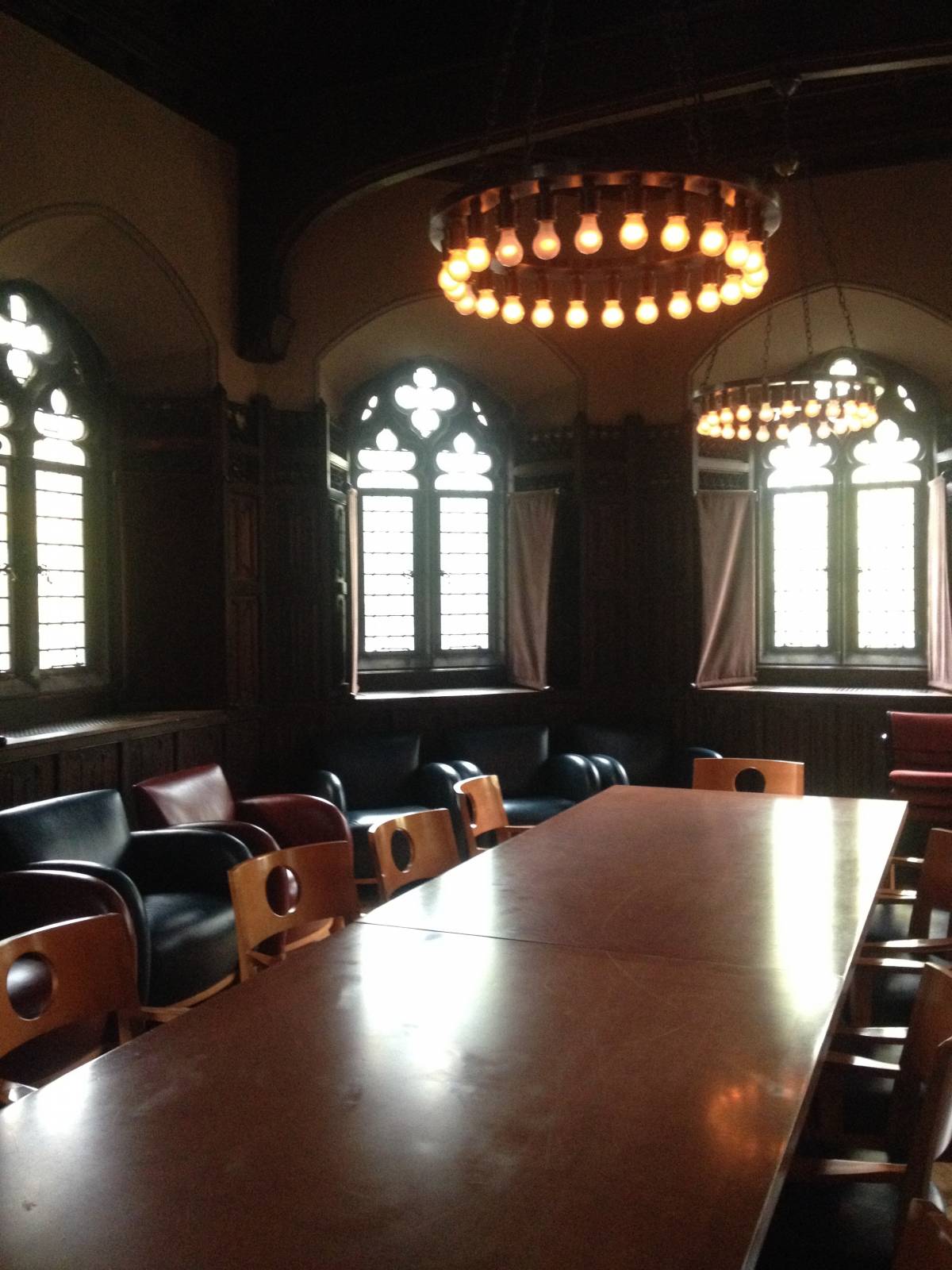
Look at this room full of seniors who want to talk about their theses!
Still, my post needed to be written. So I came up with what I thought was a clever solution: collecting one-sentence descriptions of other seniors’ thesis topics, in order to grasp the variety of research on campus. That might’ve been an interesting post, but it’s not what I’m writing about here. Why? Well, would you be surprised to hear that other seniors are also avoiding thesis-related talk? It seems like many seniors are disillusioned with the whole research process.
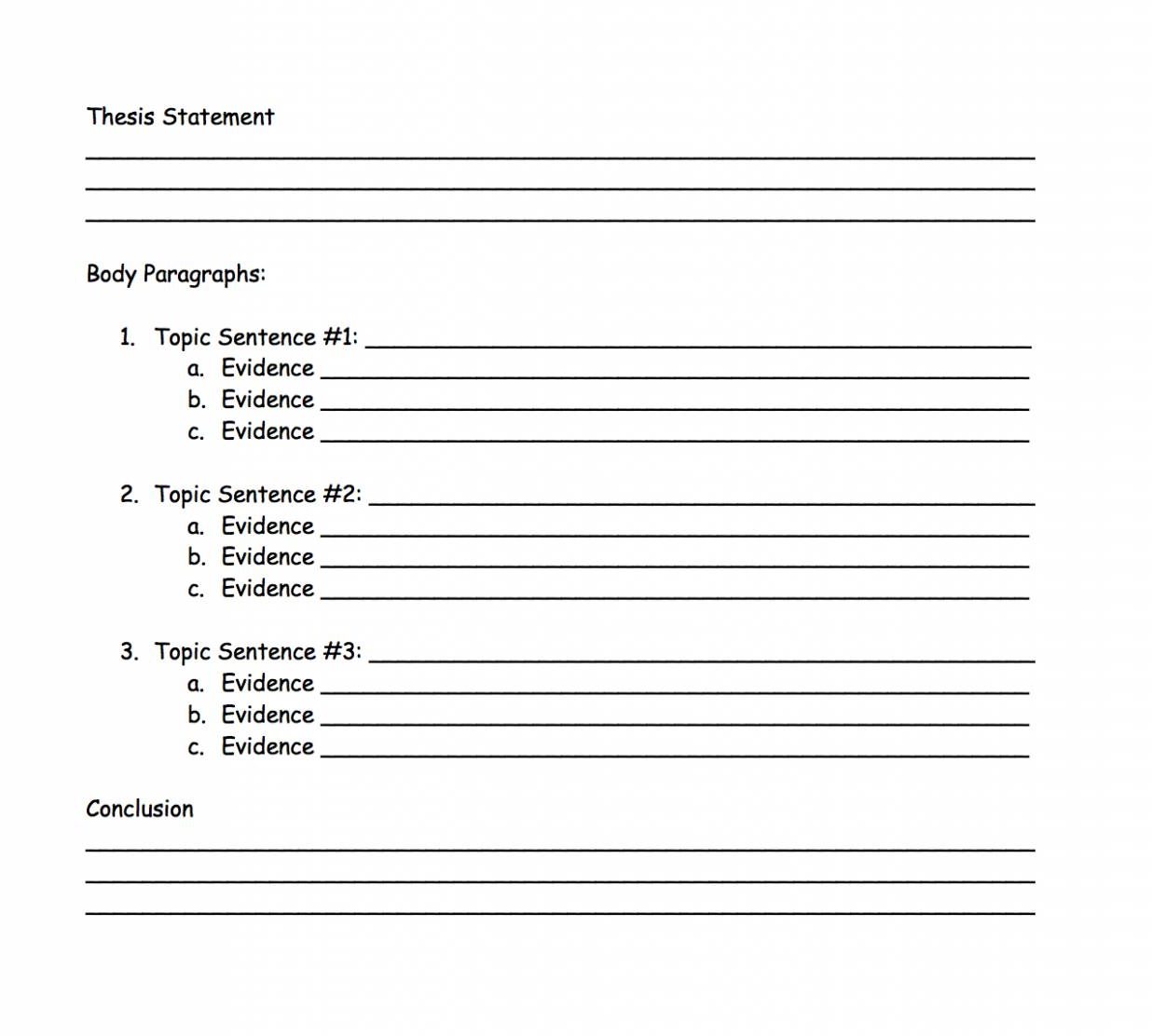
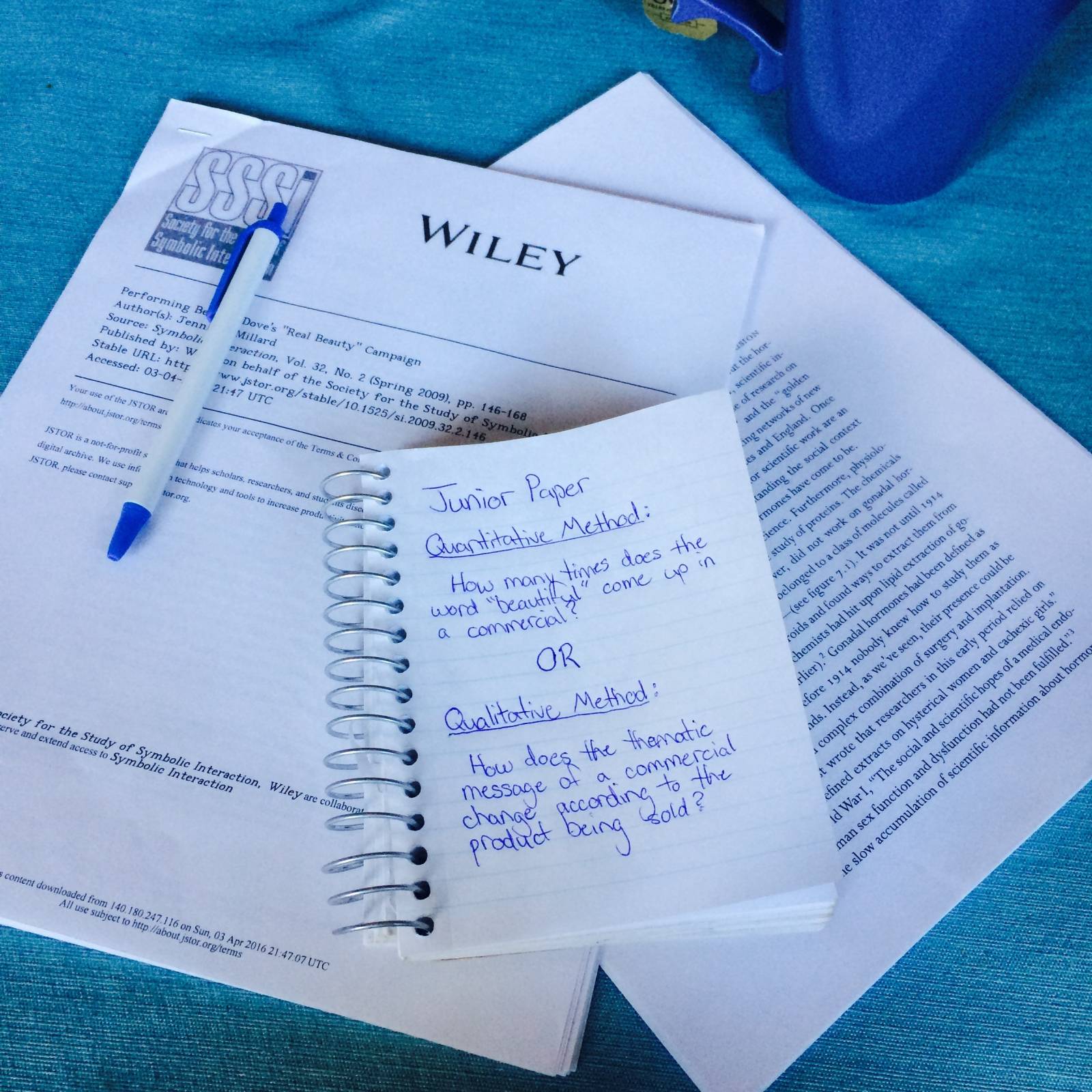
Deciding between a quantitative and qualitative research method!
It’s almost November now, and if you’re a junior, you’re used to everyone asking you the same question: How’s your junior paper going? If your experience has been anything like mine, your initial reaction may be, “It’s great!” I’ve finally come up with a JP topic that interests me, I’ve already talked to (and received incredible advice from) my professors, and I’m in the process of mastering my Magic Research Statement. Getting started on my JP feels like a walk in the park!
But as November creeps nearer, my reaction to the JP question is a little less confident and a little more like, “Ummmm……” For me, this pause and sense of apprehension grow from two measly words that have plagued the minds of researchers for years: quantitative and qualitative. Sure, I may know what I want to research, but that still leaves me with the challenge of choosing my research method. How does one go about choosing between quantitative versus qualitative research anyways?
I sat down last week over tea with Yun-Yun Li and Alice Frederick, who each did fieldwork last summer in foreign cultures and outside of their mother tongues. Last week, I shared Yun-Yun’s insights on finding a meaningful research question and working through self-doubt. This week, Alice takes us to another continent and another research topic. Here, she reflects on conducting fieldwork in a new language, and finding her feet as an autonomous researcher.
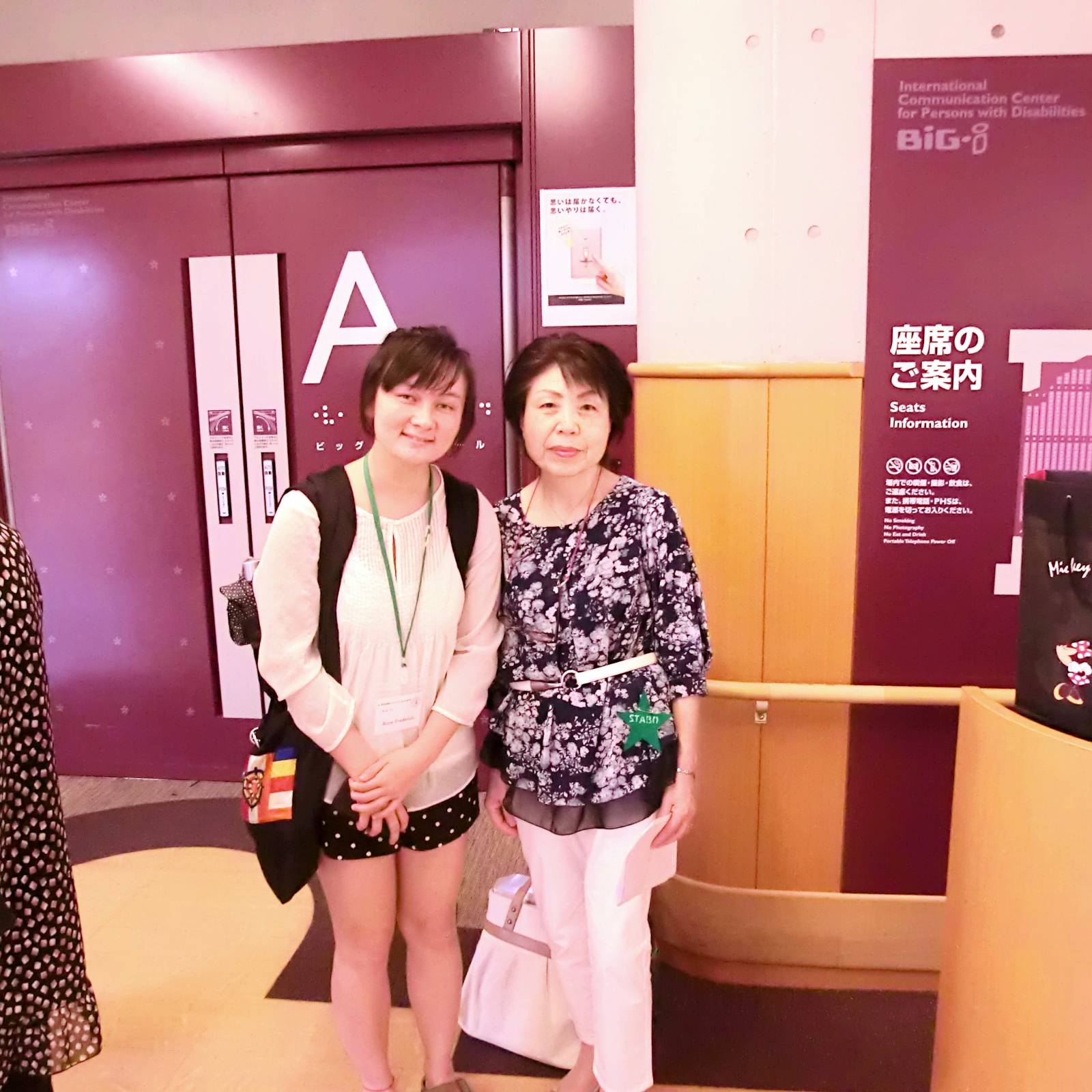
Alice (left) with her roommate at an Esperanto congress in Japan.
Alice is an Anthropology concentrator investigating the past and present of the international community of Esperanto speakers. She spent portions of her summer at – among other places – the central office of the Universal Esperanto Association in the Netherlands, and the Austrian National Library’s Department of Planned Languages in Vienna. Here are some excerpts from our conversation.
In my first few weeks of formal thesis research, I’ve just started to figure out what thesis-ing feels like. I’m not talking about developing a step-by-step plan for data collection and write up (two things that will come later). Instead, I’m talking about the feeling of knowing you have to complete a 75ish page independent project — and wanting it to be great.
It took everything in me *not* to fill this post with Hamilton songs… but one may have slipped in.
While I could describe this feeling with a series of adjectives, I’d much rather capture its essence with a list of songs. Yes, a thesis experience playlist — because all of us can relate to good songs, and most of us have no problem playing them over and over again (which means their message will last as long as it takes to get your work done). So if you want to know what thesis-ing feels like and stay motivated to actually do some of it, create a new playlist with these four jams:
We all know that trying to find a topic for a Junior Paper can feel like dragging your feet through quicksand. So when you eventually settle on the right topic, you feel like running to the top of a hill and shouting, “I’m unstoppable!”
…That is, until you stop and ask yourself, “Now what?” This is precisely where I found myself after determining that my Junior Paper for the Sociology Department would focus on gender progressive advertisements. Sure, I had finally discovered a topic that I was passionate about, but how could I transform that into a a reasonable research question?
Struggling to pick a research topic? We’ve all been there. Starting can be one of the hardest parts of research. There’s so much pressure to have a good topic that finding one becomes difficult. With that in mind, I’ve compiled some tips to ease this process.
1. Consider your personal interests. If this is a JP or thesis, you will be spending between a semester and an entire year delving into your topic. Make sure you like it! Finding something that genuinely piques your interest will help keep you engaged months down the road. I am lucky to have found Brazilian art therapy pioneer Nise da Silveira, whose work — after writing a JP about her and conducting my senior thesis research abroad on her — continues to keep me curious.
Crossing my fingers that my thesis topic continues to intrigue! After all, just this summer, even before stepping foot in Firestone, I accrued this stack of books!
2. Read a little about something that fascinates you. Interested in learning more about Mayan basket-weaving traditions? Find a few books or articles about it and start reading! Afterward, assess your feelings. Are you intrigued to learn more, or did you get bored halfway through? Read these signs — they can help you distinguish between topics that pique your interest at first, and those that will give you the stamina to keep reading months later.
3. Set up a meeting with your professors. I’ve written before about how helpful it can be to tap into what your professors might think. For my thesis, I knew that I was interested in a community project in Rio that used art to foster mental health, but wasn’t sure where to start. So I set up a meeting with a professor to talk about it. He suggested I look into Nise da Silveira, and I haven’t looked back since.
Fieldwork is often – at least in my experience – a perfect storm of challenge. Our time is limited, our advisers are distant, and we are immersed in unfamiliar cultures and experiences. Fieldwork has given me some of my most dramatic and overwhelming challenges – and also my most transformative learning experiences.
Yun-Yun (center) with her interview enumerator (right) and friend (left) in a Dai temple in Xishuangbanna.
I was one of many rising seniors who spent time in the field this past summer, collecting the data which will (if all goes according to plan) serve as the foundation of my senior thesis. I wanted to understand better how fieldwork shapes other seniors’ personal growth and research paths. This week, I sat down over tea with Yun-Yun Li and Alice Frederick, who each did fieldwork last summer in foreign cultures and outside of their mother tongues. We talked about the experiences and lessons we have brought back to Princeton after spending the summer in the field.
Yun-Yun is an EEB concentrator researching the social, economic, and environmental factors that affect rubber farmers in southern China. Here, we talk about how she found her research question and worked through self-doubt in the field.