Categories
Independent Work

Mount Illusion: Finding My Research Question…While Doing Research

Since the day I learned how to write a research paper, I always assumed I needed to use the same research question throughout my project. To me, the question seemed to be the metaphorical guiding light in the darkness of independent work, the go-to reference for determining what information is relevant or what can be put aside. It wasn’t until I started conducting my own study that I realized my initial assumption was wrong. It turned out that the more I learned about my topic, the more I learned about what I actually wanted to figure out. In hindsight, I now see that my search for a research question followed the path of Mount Stupid, or as I’ve renamed it, Mount Illusion.

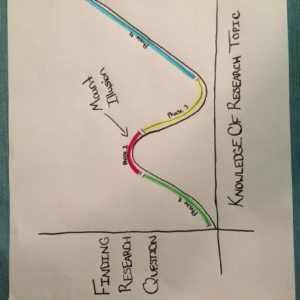
My journey over Mount Illusion to find my research question!

For those who are unfamiliar with this comic, Mount Stupid is a graphic that originally appeared on Saturday Morning Breakfast Cereal. The comic is an illustration of a chart in which the x axis measures one’s knowledge of a topic and the y axis measures one’s willingness to give his or her opinion on it. The small hump in the middle of the graph is called Mount Stupid, otherwise known as the place where people who think they know a lot about a topic are actually not that knowledgeable on the subject. 

In my case, I’ve repurposed Mount Stupid so that the y axis measures how close I was to finding my research question and the hump, Mount Illusion, measures when I believed I finally found it (needless to say, I was wrong). As the illustration above shows, I didn’t actually find my question until I was well into the research process. Here’s how I finally figured it out:

Categories
Independent Work

Back to Where It All Began

At one point or another, we’ve all logged into TigerHub more than we should have in a 24-hour period.

Reasons for this vary. Perhaps you were checking grades. Perhaps you were trying to switch classes. Or perhaps you were checking to see what room your classes were in — something that has surprising power over where and when you’ll grab lunch during the semester. It’s amazing how “Location: TBA” is suspenseful enough to justify repeated trips through the Central Authentication Service.

I can’t say I’m immune to the suspense. As Intersession faded away, and neither of my two classes had room assignments, I kept checking to see if they’d been posted.

The first finally appeared: HIS 361: The United States Since 1974 — McCosh 50

Then the second: SOC 223: Hustles and Hustlers – McCosh 50

Who among us hasn’t waited for all 400 students to leave McCosh 50 so they could take a picture?

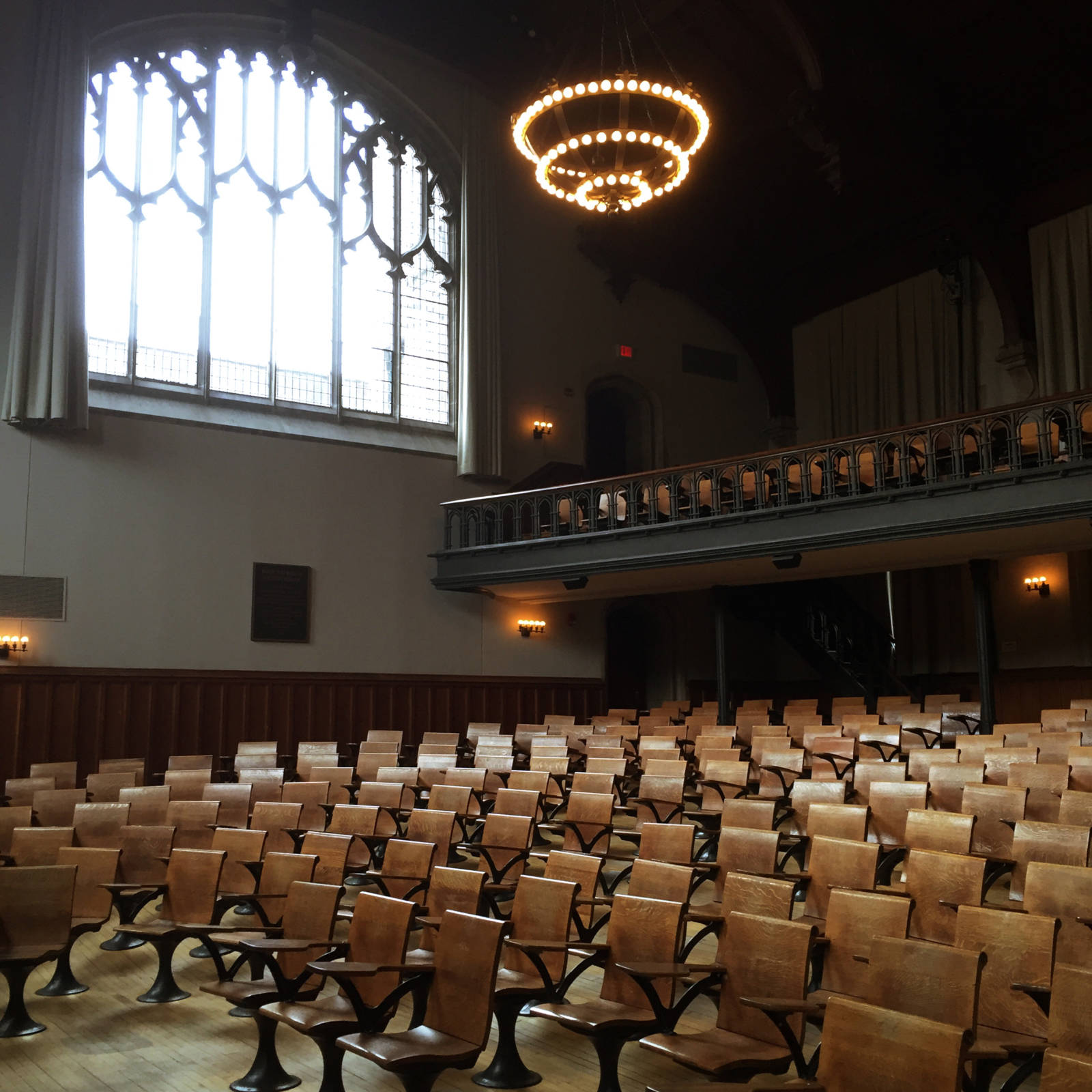
And just like that, I became a second semester senior with two classes in the same room, two hours apart. I found this to be an amusing coincidence. But it was also a nostalgic coincidence, because my last two Princeton classes would be in the same room as one of my first –I’d taken Econ 101 in McCosh 50 during my freshman fall.

Categories
Independent Work Present & Publish Findings

Research Mythbusters: Do we work best under pressure?


“We can all remember a time we procrastinated and it really paid off. We hang onto that like gold.”

My ears perked up. I was driving home from the supermarket when Dr. Tim Pychyl, director of Carleton College’s Procrastination Research Group in Canada, appeared on NPR to discuss “Why We Procrastinate.” My thesis, never far from my thoughts, immediately came to mind. I listened closely as Pychyl explained procrastination: what it is, why we do it, and whether it gives us what we want.

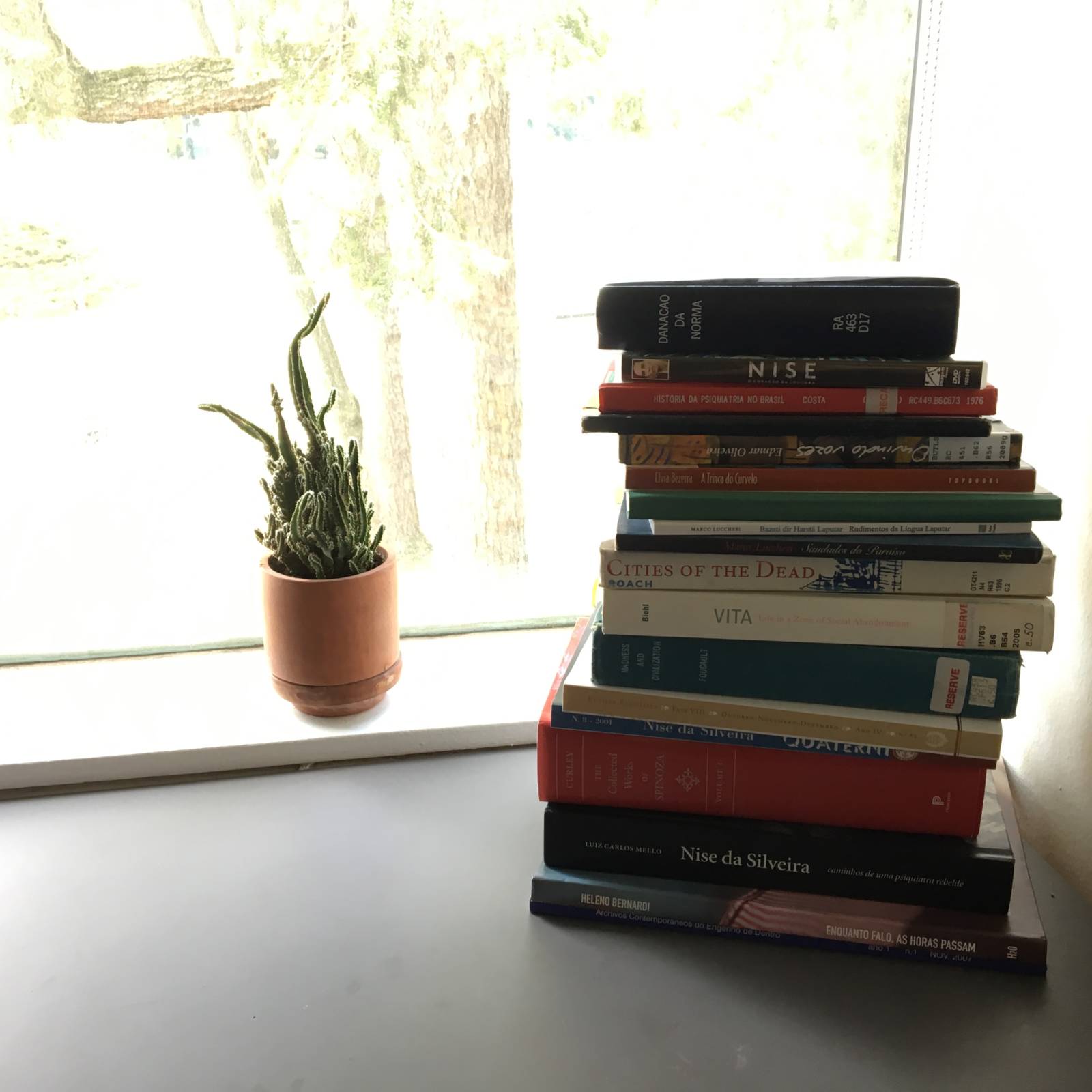
Update on my thesis stack: 18 books in my room (and another ten in my locker in Firestone)!

Pychyl highlights a common misconception: that we work best under pressure. I know graduates who wrote the bulk of their theses in the final two weeks, justified by the notion that productivity and creativity are most accessible when facing a tight time constraint. Stress, however, according to Pschyl, doesn’t produce the best work — it just forces us to complete tasks. He discusses an experiment where students were made to text in their feelings about work throughout the school week. Earlier on, students justified their procrastination with the common myth of last-minute creativity. However, as deadlines approached, nearly all wished they had started earlier.

So why is procrastination such a common practice? Pychyl says it has to do with rewards processing. If we do well on a task that we complete last minute, that behavior is reinforced. Success remains fresh in our mind, while stress fades in our memories. It masks the fact that we might have done even better — and slept a whole lot more — had we allowed ourselves more time.

Categories
Independent Work

Recycling Content: How to Expand Your Fall Semester JP for the Spring

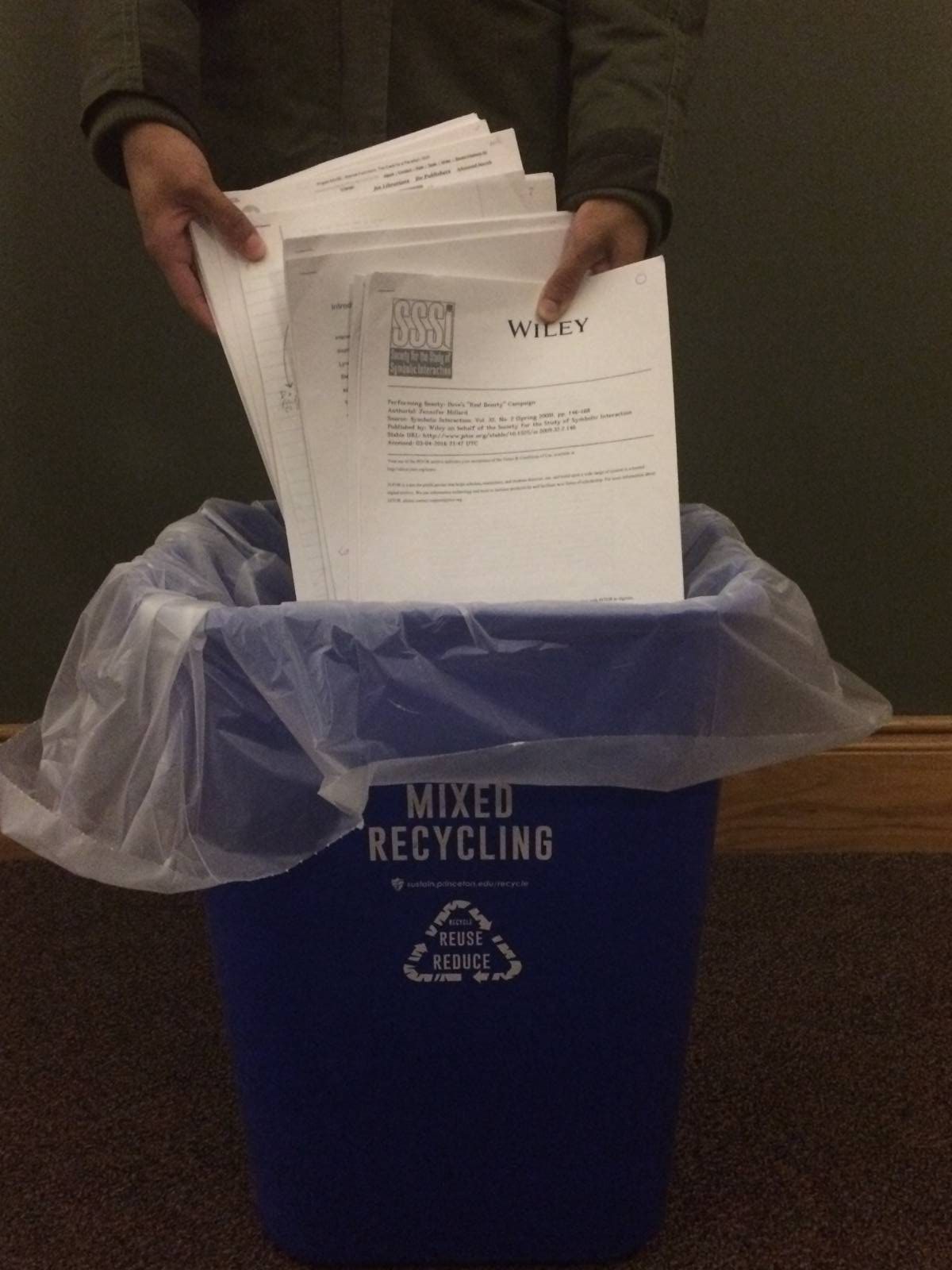
All of the sources I was about to get rid of…before I realized I could use them again!

One of the most rewarding parts of conducting independent research is finishing it. After spending several months finding a topic, looking for a research question, keeping track of sources, and writing up a semester’s worth of work, you can’t help but be proud (or simply relieved) to finally turn in your Junior Paper. That being said, there is a downside to completing your first independent project: having to start over. If you’re like me, you’re required to write another JP for the spring semester. And perhaps, also like me, you dread having to let go of your previous hard work and starting from scratch. Well, maybe you don’t have to!

The beauty of research is that there is no limit to how many times and ways you can study the same material. More importantly, building upon pre-existing work can help you better understand your topic and plan for future studies. This could entail conducting new research that tries to eliminate limitations from the original study or research that compares the results of the original study with the those of a new one. For that reason, with departmental permission, your spring semester JP could be an extension of your fall semester research! Here are three ways you could expand your old research:

Categories
Independent Work Present & Publish Findings

It’s all about YOU(r thesis)

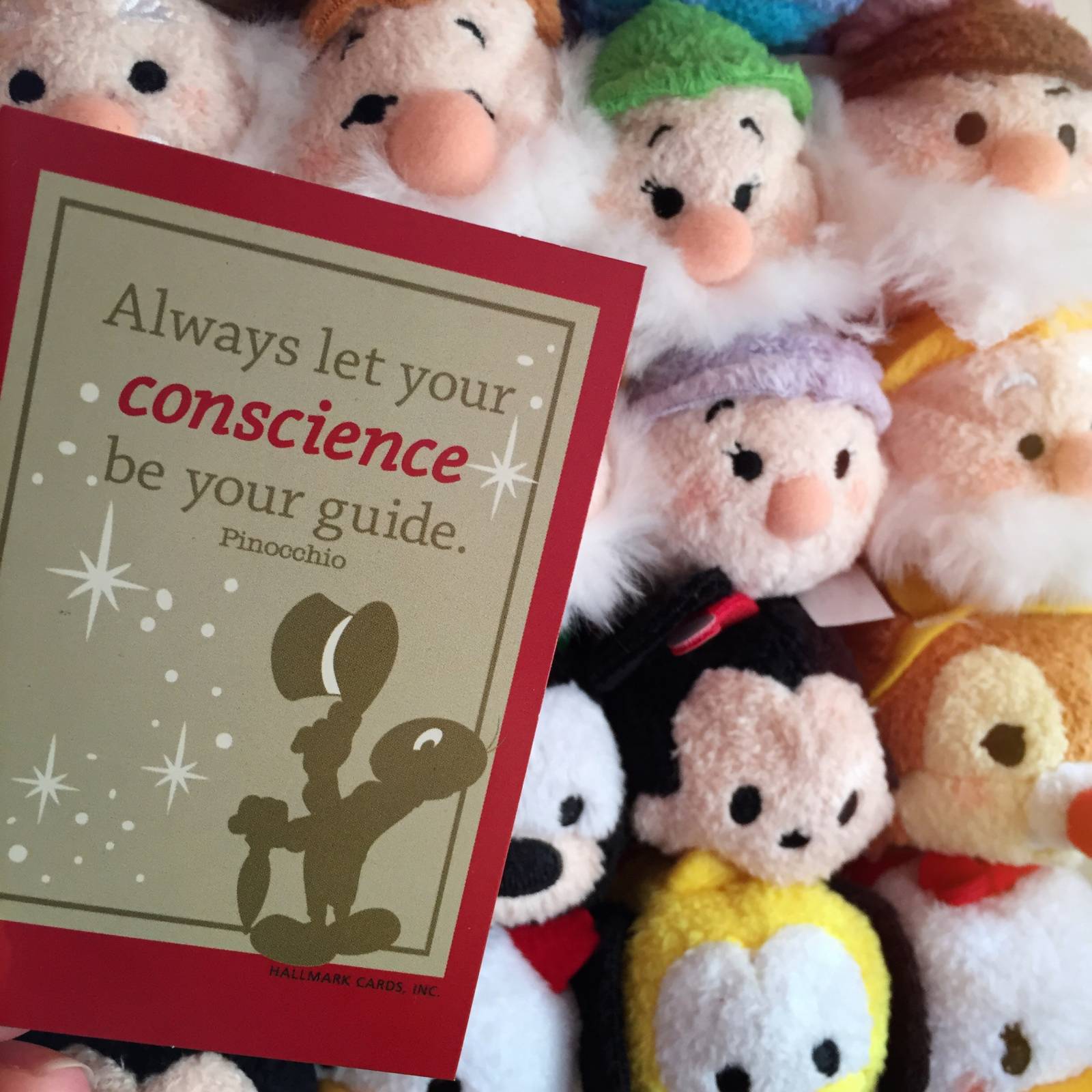
Your conscience usually tells you to put others’ preferences before your own. Consider your thesis an exception to the rule.

There are many circumstances in which you should put others’ preferences ahead of your own.

I’m going to go on record and say your senior thesis is not one of them.

As you know, your thesis is a major independent work project with your name on it. You pick the question and you conceptualize the answer. You are the star of the show. So, your thesis – or any research project with you at the helm – requires trust in your own intuition. The process is really all about you: what you know, who you know, and what you like.

Since understanding these aspects of yourself is important for your research (and your sanity), it’s worth thinking about each in detail:

Categories
Independent Work

Looking Back on Undergraduate Research: Dumpster Diving with Alex V. Barnard ’09

This semester, each PCUR will interview a Princeton alumnus from their home department about his/her experience writing a senior thesis. In Looking Back on Undergraduate Research: Alumni Perspectives, the alumni reveal how conducting independent research at Princeton influenced them academically, professionally and personally. Here, Taylor shares her interview.

~~~~~~

Alex V. Barnard, Class of 2009

Alex V. Barnard ‘09 was a Sociology Major during his time at Princeton. Now a graduate student in Sociology at the University of California, Berkeley, he studies the comparative politics of mental health in Europe and the U.S. In addition to attending graduate school, Alex continued to work on his thesis after completing his undergraduate education. He recently published all of his hard work in his new book, Freegans: Diving into the Wealth of Food Waste in America.What is a “freegan,” you may ask? Luckily, I had the opportunity to speak with the author himself. Here’s what Alex had to say in his interview with PCUR about how his thesis impacted his life: 

Categories
Independent Work

Why Independent Work is Different

And what is classroom learning good for, anyways?

It is Tuesday morning. From the back of the classroom, I squint at the pictures of fish being projected on the board, and scribble in a spiral notebook. Queen angelfish: yellow ring on head, I write as the instructor describes the species’ habitat. She flips to the next slide. Townsend angelfish, I write, less common.

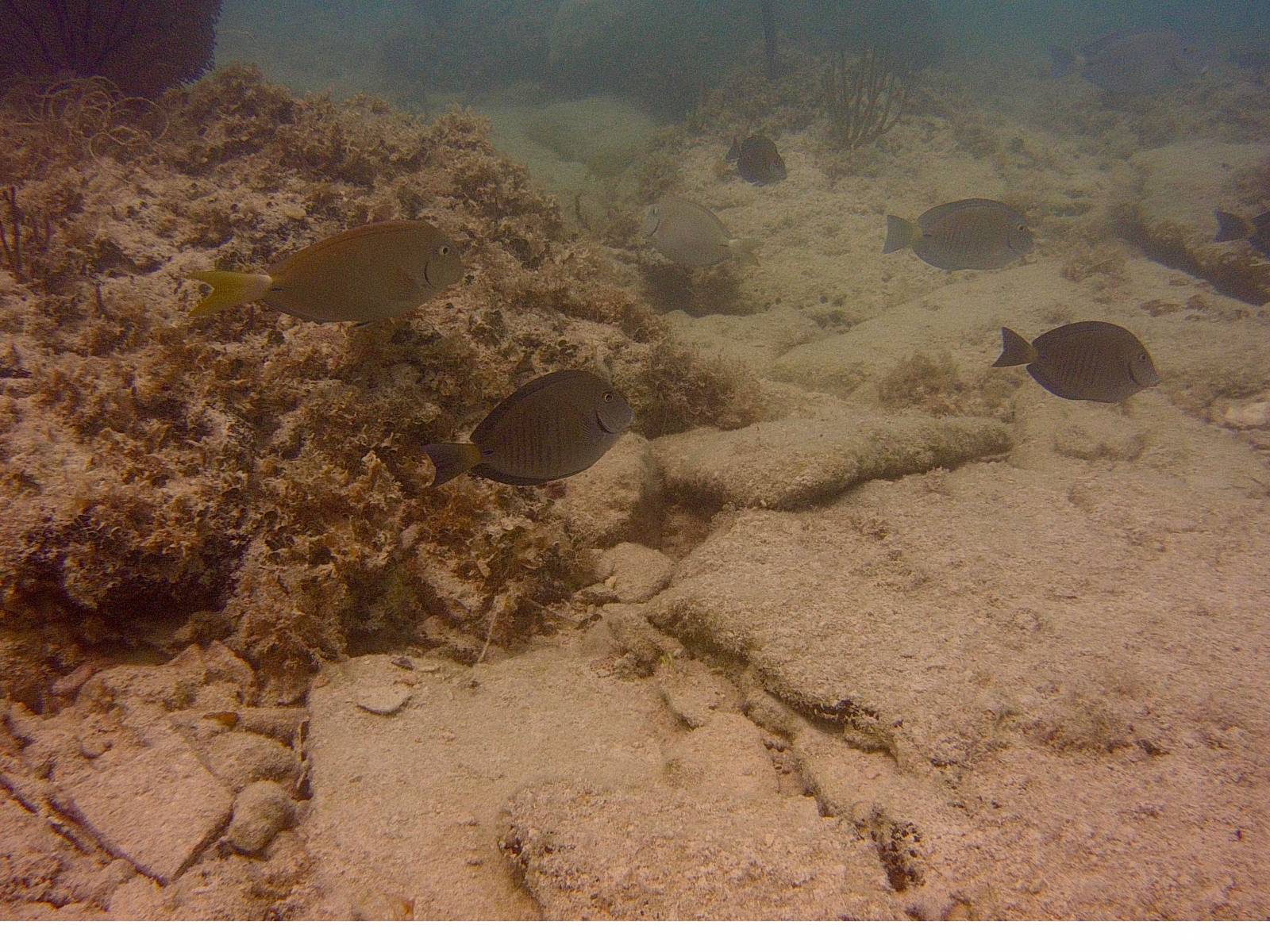
A school of doctorfish (Acanthurus chirurgus) near one of the reefs I studied last summer. Doctorfish can be identified by the dark vertical bars lining the middle of their bodies.

Slipping into the room, with its rows of desks, overhead projector, and professorial monologue – had felt like donning my own old, well-worn clothes. Sixteen years of traditional education have made this role as a student a familiar one.

Yet this time, the circumstances are unusual, and entering the room as a pupil feels suddenly bizarre. It is mid-June, my third week on the island of Bermuda. Just down the hill from this classroom, the turquoise ocean plays against the research station dock. I am at the Bermuda Institute of Ocean Sciences to conduct a field research project assessing how polluted groundwater affects the chemistry and ecology of near-shore coral reefs. Over breakfast, someone had mentioned that a summer course instructor would be lecturing her class on fish identification today. I have been planning to conduct fish surveys on the coral reefs I am studying, but (rather critically) first need to learn to identify all the fish. The timing of the lecture couldn’t be more perfect, so here I am: hunched over a table in the very back of the classroom, listening and scribbling notes like my thesis depends on it.

Categories
Independent Work Plan Beyond Graduation

Looking Back on Undergraduate Research: A Conversation with Shayla Reid ‘15

This semester, each PCUR will interview a Princeton alumnus from their home department about his/her experience writing a senior thesis. In Looking Back on Undergraduate Research: Alumni Perspectives, the alumni reveal how conducting independent research at Princeton influenced them academically, professionally and personally. Here, Dylan shares his interview.

~~~~~~

When I learned that Shayla Reid ’15 was in New Jersey for her winter break, I jumped on the opportunity to interview her for this blog. She currently works as a Fellow through Princeton in Africa at Young 1ove, an organization in Gaborone, Botswana that implements health and education programming for youth. A Spanish and Portuguese concentrator at Princeton, she was one of the people who convinced me to major in the department. And now, as I began to write my own thesis, I was excited to get her insights.

Shayla, back left, shares a fun moment with coworkers from Young 1ove in Botswana

Shayla’s thesis — “Mulher como protagonista”: Women’s Experiences with Parto Humanizado in São Paulo, Brazil — dealt with childbirth in Brazil, particularly the country’s high C-section rate. Though surgical intervention is only necessary when complications arise, in Brazil nearly 60-70% of all births in public hospitals are C-sections, and upwards of 90% in private ones. Though she was interested in the cultural reasons behind the high C-section rates, she also sought more personal experiences. Thus, as a Princeton Brazil Global Fellow, she spent the summer of 2014 in São Paulo. Paired with an adviser at the local university, she began to visit women’s health groups, interviewing women to see how they navigated the health care system in order to achieve fulfilling childbirth experiences.

Categories
Independent Work Present & Publish Findings

Frankensteining my Thesis: Writing Without an Outline

In middle school, I remember being told that the best way to write an essay is with an outline. We would receive five-paragraph-essay worksheets, complete with a thesis statement, sub-arguments, and important supporting information. It was direct, simple, and structured.

5-paragraphimage
Remember these outlines? Things were so easy back then. And, yes, your teacher probably used Comic Sans!

In this post, I hope to advocate for a different sort of writing. Outlines are certainly helpful organizational tools. But as I delve into my thesis, I find myself taking a more free-form approach. As I have previously written, I am writing on the legacy of pioneer Brazilian art therapist Nise da Silveira. Based on two months of ethnographic research, my thesis is about how da Silveira’s image is evoked and utilized by people who continue similar work. I have lots of interesting ideas, but no single, unifying argument. While writing an outline might be useful down the road, right now it would impose a limiting structure on my thought process.

Instead, I have decided to do what my friend Lily calls “Frankensteining.” To her, writing an essay is like creating Frankenstein’s monster: you have to find all the parts before you can sew them together and create a body. Lily explains:

“I think you need to Frankenstein when you’re developing any kind of complex argument because you can’t know what you’re going to say until you start figuring it out and seeing how different insights fit together. It’s writing as a nonlinear process — you don’t brainstorm and then write. They happen at the same time.”

Categories
Independent Work

Need to Keep Track of Sources? Create a Reference Guide

fullsizerender-3
My stack of sources keeps getting bigger!

It’s officially December, which means it’s one month closer to Dean’s Date. This also means that the time you have to gather your secondary sources, otherwise known as the preexisting literature on your research topic, is quickly dwindling down. I’m sure I speak for myself and several other independent researchers when I say that juggling multiple sources can be not only overwhelming, but also confusing. With so many articles focused on similar topics, how can one keep up with all of the new information?

Based on my professor’s advice, I created a handy-dandy excel spreadsheet to keep track of my secondary sources. Here are the important points I made note of for each author in my secondary source reference guide: