When you present at Princeton Research Day, you’ll be one cool tiger!
As you might have noticed, everyone’s talking about Princeton Research Day — but what is it exactly, and what can it do for you? In a campus-wide email about the event, Princeton Research Day was described as a chance to celebrate research on campus. Which, it is. But that premise might sound a little vague. Never fear, readers: To help you out, here’s a list of 5 cool things you can do if you apply to present at Princeton Research Day.
Just because it’s called “independent work” doesn’t mean that you’re alone. PCUR knows we’ve reached a very research-heavy time of the semester, and we have some words of wisdom for anyone tackling a new project – whether it’s your first or fifteenth at the college level. Watch below to hear our advice; and remember, if you have a specific question, we’re never more than a contact us form away.
Over the course of the semester, PCURs will explain how they found their place in research. We present these to you as a series called The Project That Made Me a Researcher. As any undergraduate knows, the transition from ‘doing a research project’ to thinking of yourself as aresearcher is an exciting and highly individualized phenomenon. Here, Emma shares her story.
~~~~~~
Every researcher has a moment when they realize that their scholarly voice and independent discoveries matter outside of the classroom. For me, this moment came when I took a year-long journalism course as a sophomore in high school. My high school self-identifies as progressive and implements a unique pedagogic approach that emphasizes learning by doing. The journalism course closely fit that theme; instead of reading sample pieces and discussing what defines good journalism, we immediately jumped into the process of writing articles.
The Fifth Avenue Entrance of St. Patrick’s Cathedral where I chose to conduct my research.
My first two articles—each about one page long—were relatively uncomplicated. I wrote about topics that I found interesting, but didn’t push myself to see my subjects in a new or distinct way. My mom was the only person I interviewed throughout the entire research process. The third assignment, however, called for much more involved and independent research. Our teacher instructed each of us to pick a topic of our choice and spend the entire second semester researching and writing about it. He explained that all of this work would culminate in a twenty-page New York Magazine-esque article due at the end of the year. Throughout the semester, we would only meet for a fraction of our class periods and the other time would be set-aside for us to conduct individual research off-campus.
I remember it like it was just yesterday. The steps to the scientific method: Question. Research. Hypothesis. Experiment. Analysis. Conclusion. I can actually still hear the monotonous voices of my classmates reciting the six steps to the content of the middle school science fair judges.
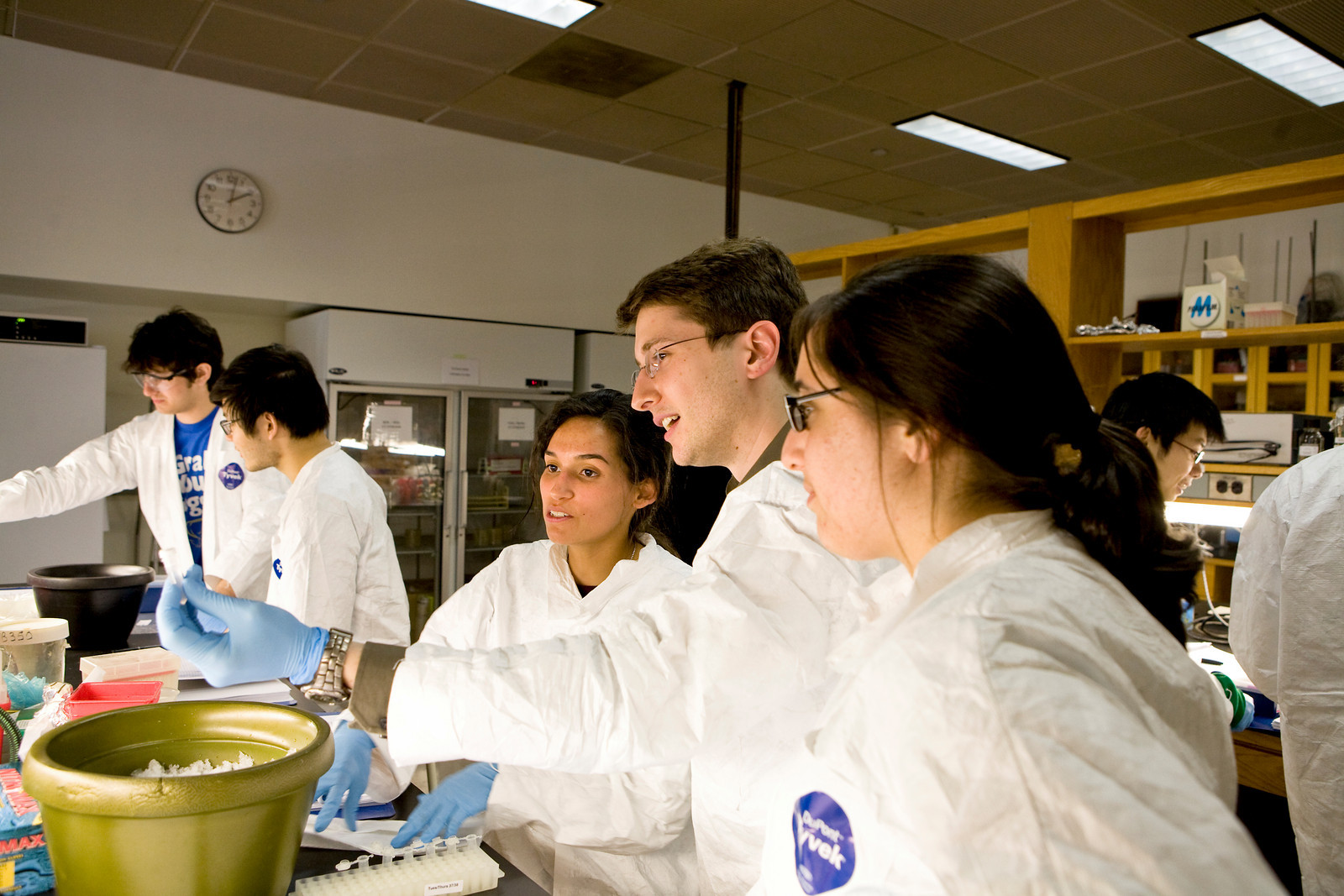
Princeton student researchers working at the Lewis Thomas lab.
For our middle school science fair, I had created a web-based calculator that could output the carbon footprint of an individual based on a variety of overlooked environmental factors like food consumption and public transportation usage. Having worked on the project for several months, I was quite content when I walked into our gym and stood proudly next to my display board. Moments later the first judge approached my table. Without even introducing himself, he glanced at my board and asked me, Where’s your hypothesis? Given the fact that my project involved creating a new tool rather than exploring a scientific cause-effect relationship, I told him that I didn’t think a hypothesis would make sense for my project. To my dismay, he told me that a lack of hypothesis was a clear violation of the scientific method, and consequently my project would not be considered.
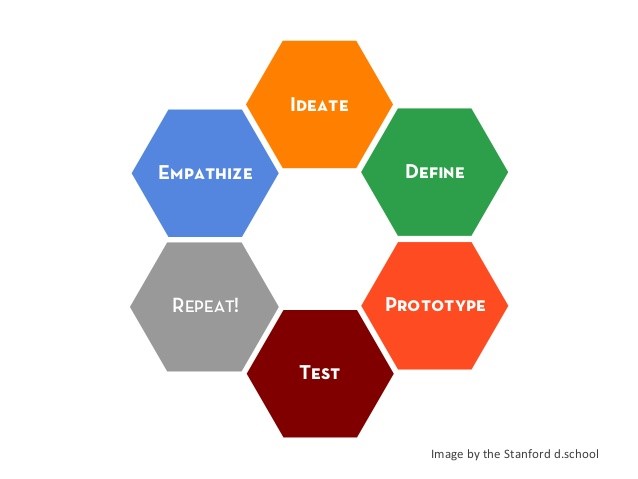
This was quite disheartening to me, especially because I was a sixth grader taking on my very first attempt at scientific research. But at the same time, I was confident that the scientific method wasn’t this unadaptable set of principles that all of scientific research aligned to. A few years later, my suspicions were justified when my dad recommended I read a book called Design Thinking by Peter Rowe. While the novel pertains primarily to building design, the ideas presented in the book are very applicable in the field of engineering research, where researchers don’t necessarily have hypotheses but rather have envisioned final products. Formally, design thinking is a 5-7 step process:
Princeton is known for its small classes, but imagine taking this to the extreme. Last semester, I took SOC 310, Gender and Development in Latin America. Total students: one.
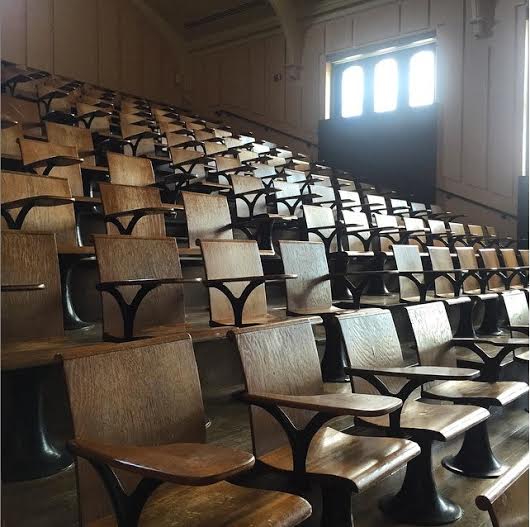
Not all classes fill up a lecture hall!
Following an odd turn of events last spring that saw all other students drop the course, I was handed an incredible opportunity: a one-on-one course crafted around my interests.
Much of the class was dedicated to discussing LGBTQIA themes in Latin America. There’s a lot I could write about, but for the purposes of this blog I will focus on one particular oddity. In several articles, I remember coming across the word “transvestite”. I am a peer educator at Princeton’s LGBT Center, and as I had learned in training, many consider this word to be pejorative and outdated. Shouldn’t a sociologist studying queer issues know better?
You’ve probably heard that research is more of a marathon than a sprint. That’s definitely true — Every independent project involves thorough planning and lots of stamina. But since we’re on the subject of analogies, it’s also true that research is an obstacle course. Think about it: There are challenges built into the research process, and sometimes they’re impossible to avoid. PCUR gets real about these roadblocks in our second Correspondent Convo. Watch below to learn which struggles are most common, and which strategies can help you reach the finish line.
Nothing beats an academic conference in sunny Las Vegas!
I am writing this blog while simultaneously unpacking my suitcase from one of the most eventful weekends of my Princeton career. Where did I go, you ask? Well, this weekend I flew to Las Vegas, Nevada, where I presented a research poster at the annual conference for the Society for Developmental and Behavioral Pediatrics!
Traveling to attend academic conferences is one of the many perks of being a researcher, and student researchers are no exception. These conferences allow you to expand your understanding of your field or related fields and network with people from around the world. While many students conduct research during their time at Princeton, however, the opportunity to attend and present at an academic conference seems almost illusory. If hectic class schedules and large conference registration fees aren’t enough of a deterrent, the fear of being inadequate/unprepared can quell even the most hopeful Princetonians from submitting their research abstracts to conference committees.
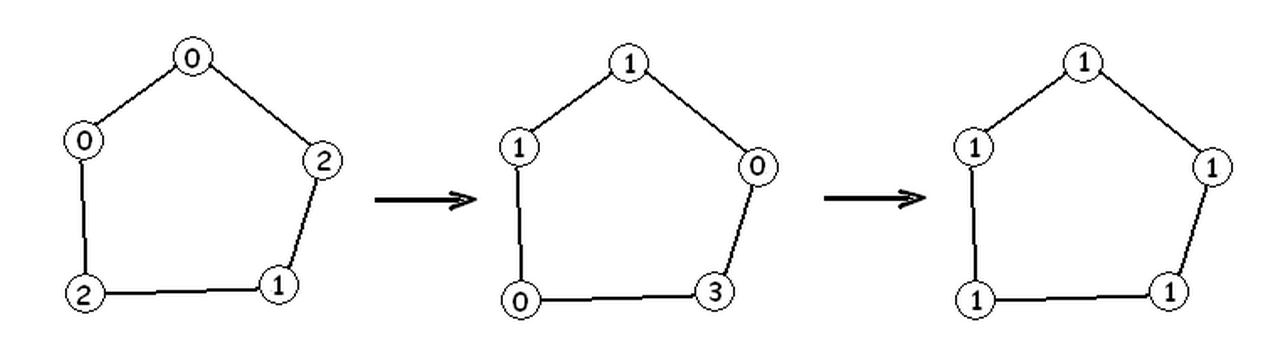
Problem 5 on my problem set was about distributing a pile of stones across vertices of a pentagon.
Creativity is something I’ve struggled with my entire life. Being the son of two architects, I was always expected to develop some sort of creative talent – even at a young age. Sadly, this talent never manifested itself, especially not in building design (I figured that out when my 2nd grade classmates labeled my gingerbread house as the ‘ugliest’ at a holiday party).
I learned very early in my life that I was more of an analytical and methodological person. While I wasn’t creative, I could follow a set of clear-cut instructions. I liked classes like math where everything had definitive answers. I enjoyed playing sports like tennis where mastery of a specific set of techniques defines what it means to be a good player. But when given the freedom to be creative, I used to panic. The music I composed for my piano class sounded awful. My dancing skills were subpar let alone my ability to choreograph. And I couldn’t write creatively no matter how hard I tried.
Then one day in high school, my entire perspective changed.
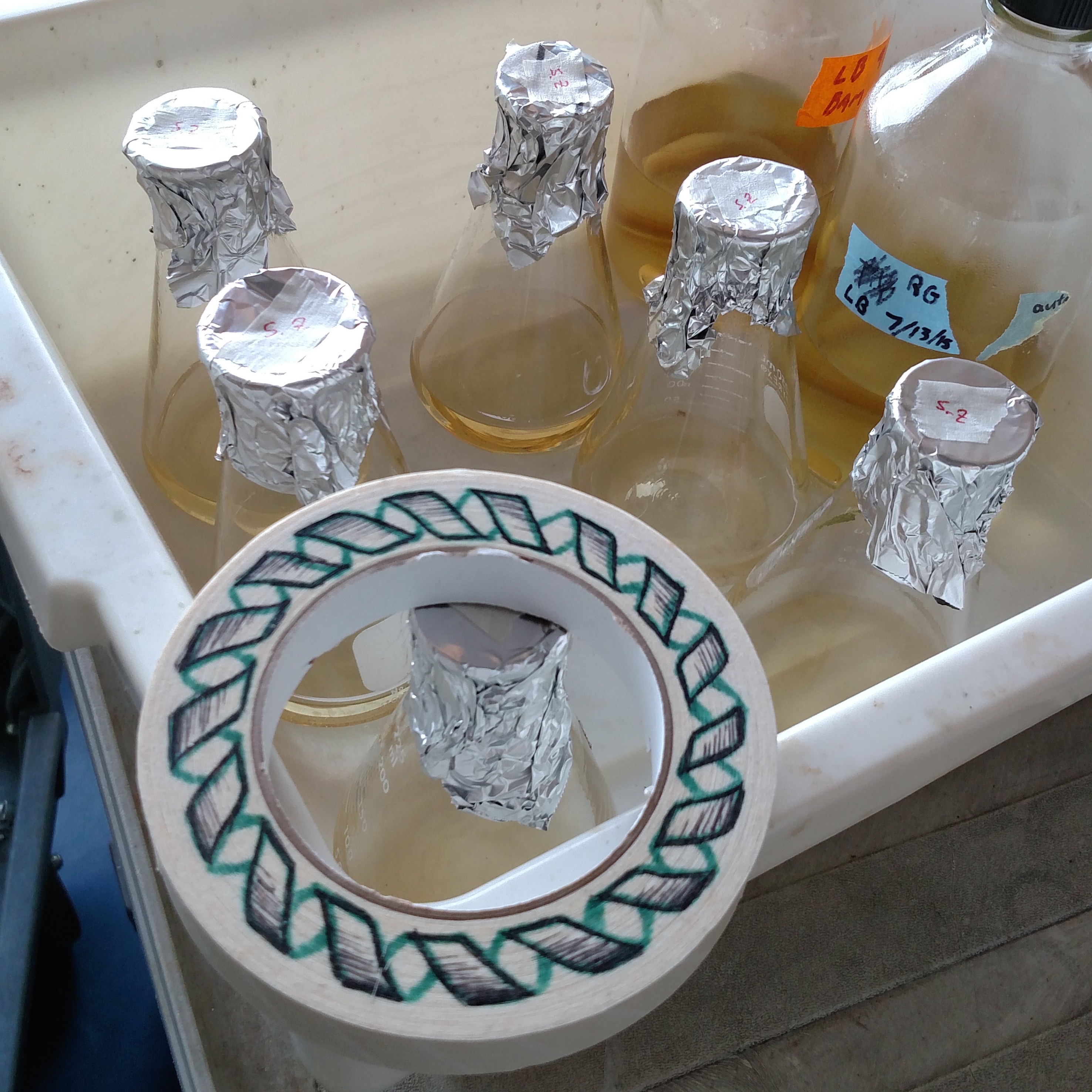
The doodles appear everywhere: on whiteboards, on lab notebooks, even on the autoclave tape. Impeccably shaded line drawings of a-helices, the protein structure nearly everyone in the lab works with. The “culprit”? Ann, the senior grad student in our lab. Her artistic skill is rare, or at least perceived as rare, in science. Rare enough that Grant, one of the post-docs in the lab, complains, besides a few exceptions, science is “full of nerds”, by which he means those without any creativity or broad interest. And that rarity is a shame, because science needs creativity. This isn’t just about a desire for amusing doodles, it’s about building a scientific community full of clear, intuitive thinkers who can communicate their discoveries.
This isn’t quite what’s usually meant by “biochemistry is more art than science”
Once upon a time, the protein-chemistry lore goes, everyone needed some artistic flair. Indeed, Jane Richardson, under whom my thesis adviser did his postdoc, is known as much for her artistic skill – hand-drawing so many diagrams of proteins in her field-defining papers that modern visualization software still largely uses the conventions she developed – as for her considerable scientific talent.
Now, due to that same software, and other software for visualizing other sorts of data, rapid and clean images of nearly any process, relationship, or other data are merely a few lines of code away. But when the graphics are automatically created with software, rather than by-hand, something is lost. It’s all-too easy to let visualization software become a crutch by presenting colorful pictures without paying mind to the aesthetic or narrative considerations of the medium.
At the beginning of last month, my Greek professor forwarded the class an email titled “The Aesthetics of (Greek!) Mathematics!” Within the email, he cheerily suggested that we attend this special lecture event at 4:30pm, “for a reminder of why we still want to learn Greek (and yes, math, too).”
After an afternoon of studying in Holder Courtyard, I dragged a friend along to McCormick to investigate. The Faber lecture, given by Professor Reviel Netz of Stanford University, was hosted by the Interdisciplinary Doctoral Program in the Humanities. Past lectures have also been interdisciplinary in nature, covering topics like “Orality and Sociality” or “Why do we Care about Dead Bodies?”
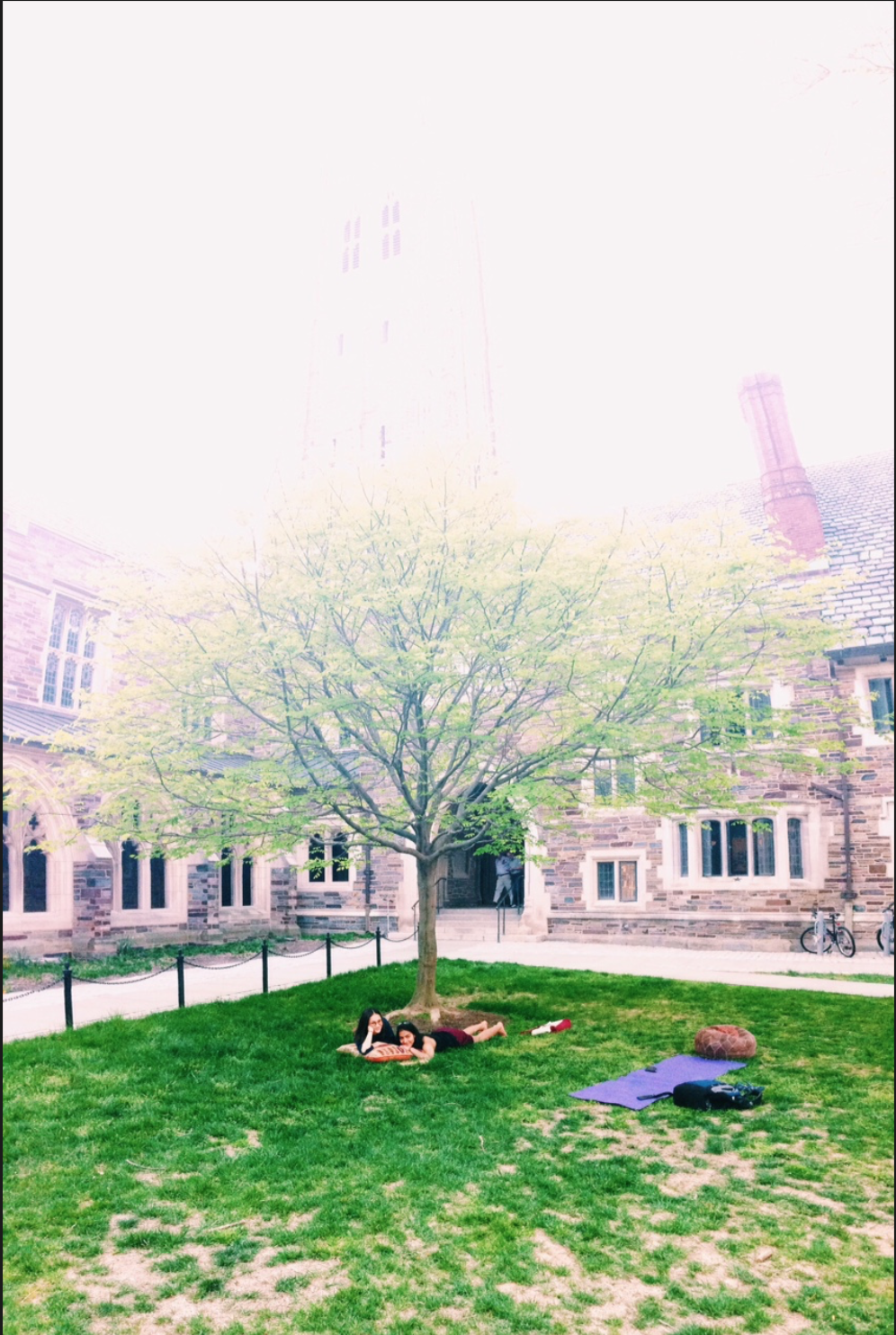
Springtime studying in Holder Courtyard!
The first thing I noticed was the diversity of the audience. Graduate students, professors, and a few undergraduates sat together in the room. I immediately recognized my linear algebra professor sitting with an art history graduate student, and behind my current philosophy professor. Next to me sat a group of people chuckling and exchanging jokes, who I later discovered were professors in the Woodrow Wilson School.