
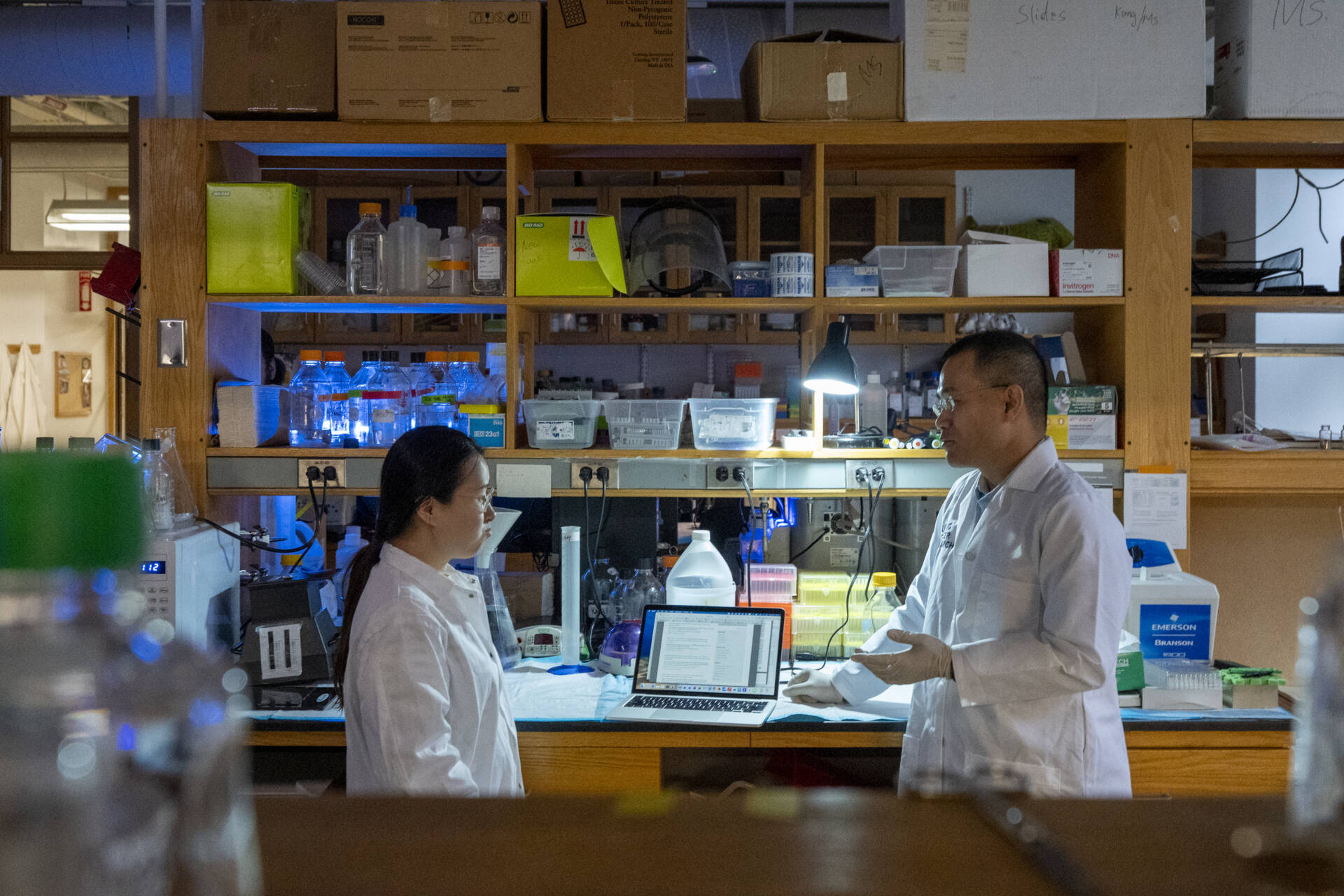
Everyone knows the old mantras: “don’t be too harsh on yourself” and “everyone makes mistakes.” When I joined a lab, though, not only were those mantras pushed to the back of my head, but they also collected dust and withered. In a lab setting, when you are aware of the money and effort other people have put into the research, and when you sometimes feel less skilled as an undergrad, your mistakes can feel like grave failures.
You may feel like those mistakes reflect poorly on you, which can be haunting if your PI is writing you a letter of recommendation or is going to become your senior thesis adviser. Not to mention the amount of money that you may be aware is going into research and reagents. These kinds of thoughts can settle heavily in your mind, especially if you’re a perfectionist—which, considering you’re reading this at Princeton, you probably are (at times, it can feel like a concentrated pool of perfectionists).
However, mistakes (borne of genuine confusion or slip-ups rather than intentional carelessness) are not your defining trait; they can also be a tool. These kinds of experiences can help shape your research experience in positive ways. For one, admitting your mistakes to your supervisor or PI shows honesty, instead of just continuing on with the research as is to save face. Your integrity does not go unrecognized.
Honestly, catching your mistakes indicates that you are sharp enough, even while carrying out a procedure, to recognize you’ve slipped up. Your lab is more concerned with good data, rather than data you got right on your first time. Research takes years; a mistake setting you back a couple of days is not the end of the world. In addition, your response to lab mistakes can apply to the real world. Once I started handling my mistakes in the lab with a clearer mind, I found that my responses to my other so-called catastrophes in life also became much more controlled and less anxiety-ridden.
Finally, having supportive and helpful lab members during any mistake you make can affirm to you that this is the lab or research group you want to join. Labs are not just about experiments, but about the people. If you are in a high-pressure environment, it may be difficult to thrive, and these mentalities are often exposed when you make a mistake. When you realize that your supervisor or PI is understanding, and sometimes even grateful you caught the mistake early on, you may feel more certain this is the lab and the people meant for you (that’s what happened with me, after all!). Your lab members should be understanding of the version of you that sometimes slips up and is less than a perfect, otherworldly being. Their true kindness shows in these moments, and not in the moments of carefully curated cold emails. And if it doesn’t—if the environment pressures you for a genuine mistake—it may not be the right one for you, and nothing proves that like a mistake.
The question then becomes: what defines a genuine mistake? Every situation is different, but I have learned over the years from various perspectives that genuine mistakes are ones where you have put in all your efforts and all your cautiousness:
- You asked questions when you were confused.
- You made sure you knew what every step meant.
- You took all the precautions you knew to take.
- You stayed focused and did not rush or act carelessly.
- And finally, you truly do not understand how it happened or how you could have forgotten something.
This is a limited list, but the last point is usually a defining one. If you seem to be unsure of how it happened, it is probably a genuine mistake. If it is more of a “forgotten” or “slip-up” mistake, it gives you a chance to ask why you forgot so easily. Is it lack of sleep? Stress? A bad time to be in the lab mentally? Are you juggling too much? These are not things we recognize right away; mistakes can be symptoms. Humans fumble and we need to relearn new methods. Sometimes, you won’t recognize that until you make a mistake.
I think the meanest bully we have is ourselves, and in a lab, where so much can feel at stake, this feeling can be exacerbated. I know the harshest voice I’ve ever heard is my own. I hope this article gives you a sense that things will turn out alright, and I hope it helps silence that bully in your head.
— Haya Elamir, Natural Sciences Correspondent
