
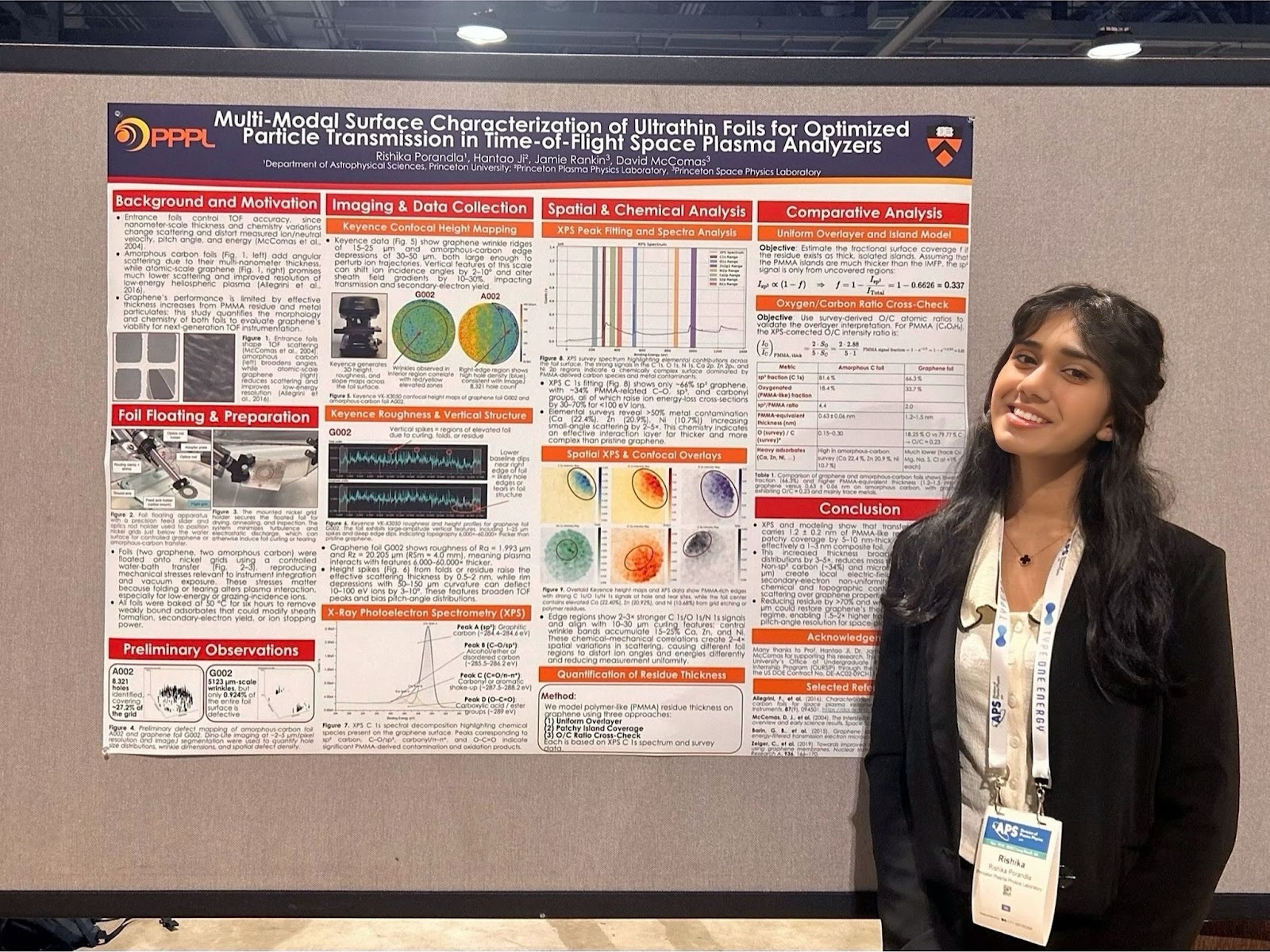
Funding acknowledgement: Received a student travel grant and outstanding student presenter award from the American Physical Society. Picture taken by Rishika Porandla.
At Princeton, research does not always look the way people imagine. It is not always telescopes pointed toward the sky or chalkboards filled with equations. Sometimes, it happens in quiet laboratories where the goal is to understand things you cannot even see, like streams of charged particles moving through space.
For Rishika Porandla, a member of the Class of 2028 majoring in astrophysics, this is exactly where her work lives. Her research sits at the intersection of space, plasma, and the instruments that allow scientists to study both.
First Impressions
Rishika’s work takes place across two different labs at Princeton, the Space Physics Laboratory and the Plasma Physics Laboratory. Although they focus on different environments, both are centered around understanding how charged particles behave in complex systems.
At the Space Physics Lab, Rishika works on space plasma instrumentation. In simpler terms, she helps study and improve the tools that measure particles in space, like those coming from the Sun in what is known as the solar wind. These particles cannot be seen directly, so scientists rely on carefully designed instruments to detect and analyze them.
One of the main tools she works with is called an electrostatic analyzer. It acts almost like a filter, separating particles based on their energy so researchers can understand where they came from and how they are moving. To improve these instruments, the Space Physics Group conducts beamline testing, where controlled streams of particles are directed through different materials to observe how they behave.
The work focuses on comparing graphene, which is an ultra thin layer of carbon atoms, with more traditional carbon foils. At such a small scale, even tiny structural differences can change how particles pass through a material or how much they scatter. These effects may seem subtle, but they can influence how accurately a spacecraft instrument collects data millions of miles away.
“It’s interesting how something at the nanoscale can completely change how we interpret data from space,” Rishika reflected. “You realize that even the smallest design decisions really matter.”
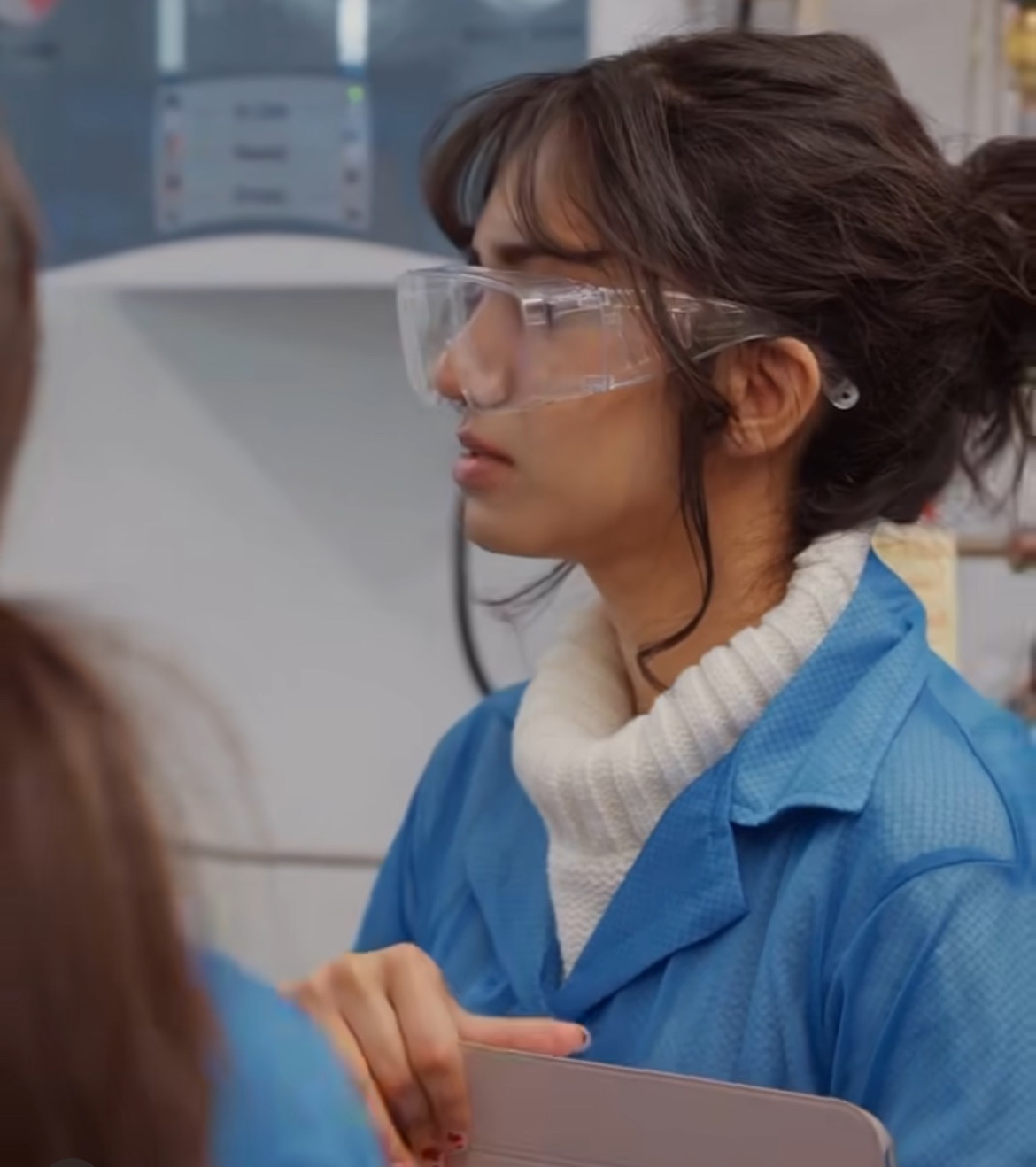
A Shift in Perspective: From Space to Plasma
At the Princeton Plasma Physics Laboratory (PPPL), Rishika’s work shifts into a more ground-based experimental setting. Here, she contributes to redesigning a hemispherical electron energy analyzer for the Department of Energy’s FLARE project, a device that measures how much energy electrons carry.
This instrument plays a key role in studying magnetic reconnection, a process where magnetic field lines break apart and reconnect, releasing large amounts of energy. This phenomenon occurs in events like solar flares and has real consequences for satellites and power systems on Earth.
Improving the analyzer requires attention to detail. Rishika evaluates aspects such as the shape of the entrance slit, the configuration of electric fields that slow down particles, and how precisely the detector is aligned. Each of these elements affects how accurately the instrument can measure energy, and even small adjustments can lead to meaningful improvements in performance.
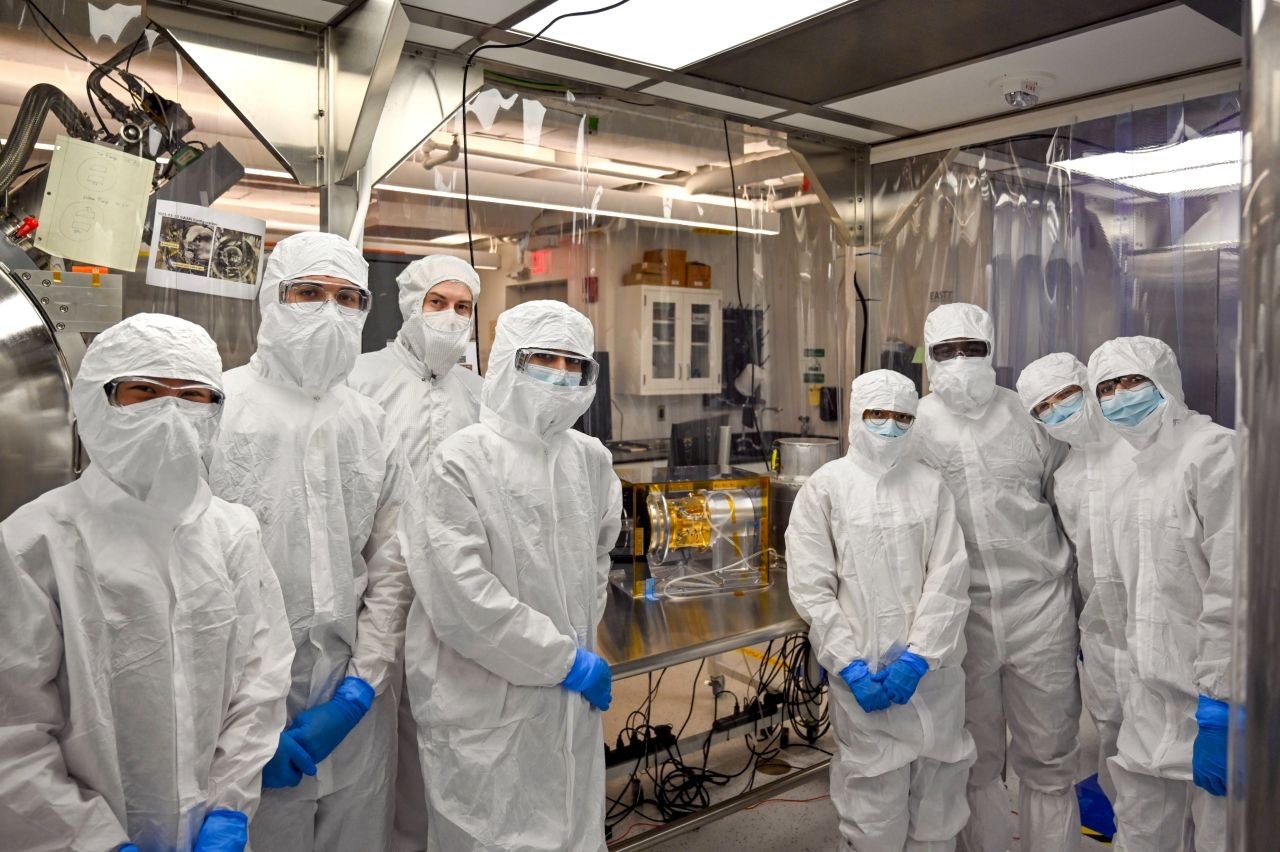
What Research Actually Looks Like
Working across both labs, Rishika began to notice a pattern. Research is rarely about following a fixed set of steps. Instead, it becomes an evolving process where even defining the right question can take time.
In systems with many variables, it is easy to try to control everything at once. But she found that real progress often comes from narrowing the focus.
“It’s easy to get overwhelmed by how many things are changing at once,” she said. “But progress usually comes from isolating the one parameter that actually drives the behavior you’re seeing.”
This shift in mindset changed how she approached challenges. It turned complex problems into something more manageable and allowed her to make clearer, more meaningful progress.
Building Confidence Through Multiple Approaches
Another important lesson came from how she validated her results. Instead of relying on a single method, Rishika combines modeling, experimentation, and visualization. Modeling helps predict how a system should behave, experiments test those predictions in reality, and visualization makes patterns easier to interpret.
When all three approaches point to the same conclusion, it builds confidence in the result. When they do not, it signals that something deeper needs to be understood. This process of cross checking allows her to move forward with greater certainty, even when working with systems that are not directly visible.
Looking Forward
Through her research, Rishika has come to see science not as a straight path, but as a process of refinement. It involves revisiting assumptions, adjusting methods, and gradually improving understanding over time.
Her experience has also shown her how much small decisions matter. The choice of a material, the angle of a detector, or the configuration of an electric field can all shape how scientists interpret the universe.
As she continues exploring the intersection of astrophysics and instrumentation, she is drawn to the idea that discovery does not always come from dramatic breakthroughs. More often, it comes from careful, iterative work that builds understanding step by step.
In the end, her work is a reminder that learning about space is not just about what exists beyond Earth. It is also about how we design the tools that allow us to see it at all.
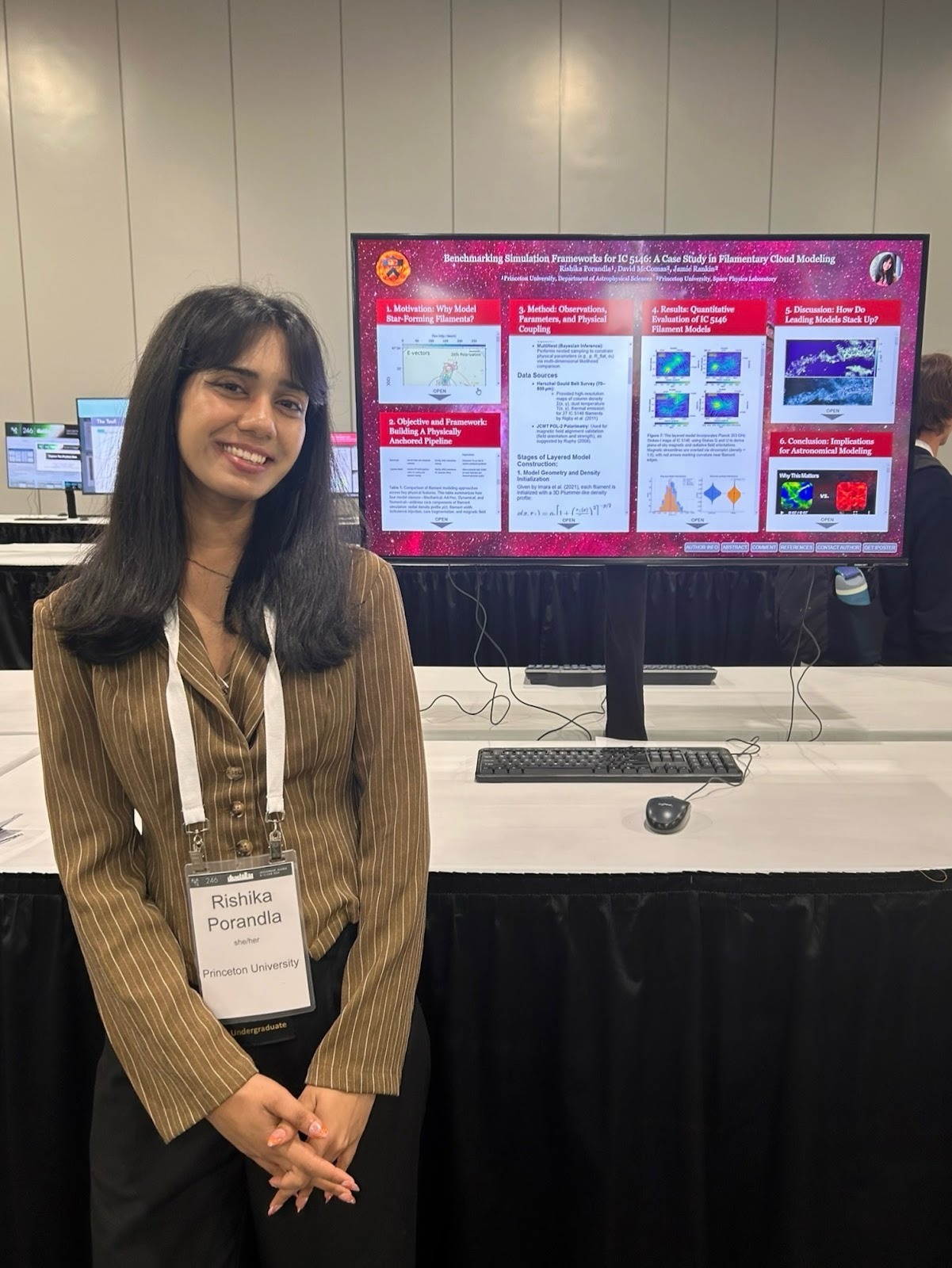
~ Aishah Shahid, Engineering Correspondent
