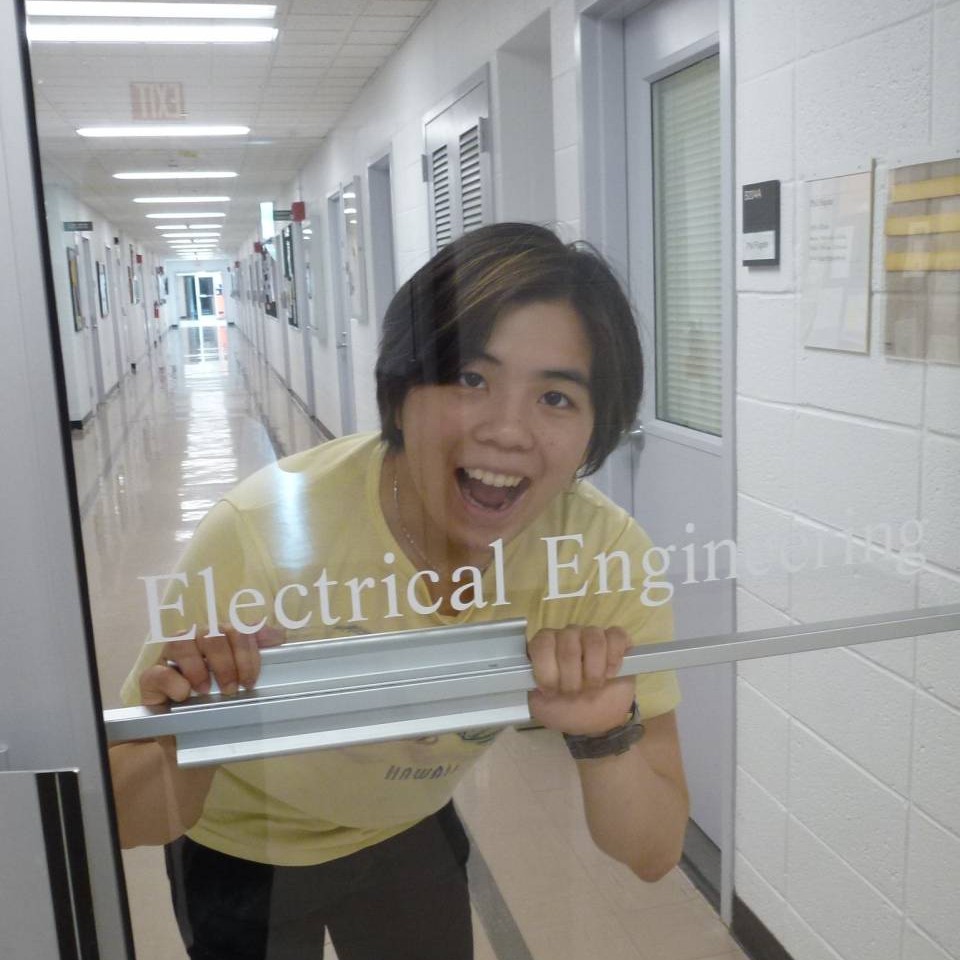
Electrical Engineering has been an arduous road, but I wouldn’t have chosen another major.
“Women aren’t meant for research. Get out of the research field while you still can.”
I heard those two sentences during the summer of my freshman year. I was at a summer research program, and the woman who told me this was the last person I would’ve have expected to discourage me from pursuing research. She was an associate professor from China working in the lab for a year and seemed very successful. But as it turned out, she had many buried regrets and concerns about her choice of profession and had come to question her own abilities as a woman researcher.
For Princeton sophomores, the start of second semester can seem like a last-minute mad dash to fulfill prerequisites, choose concentrations and solidify academic paths. Especially for sophomores who have not yet decided on a major, this period can be considerably stressful and overwhelming. While I am not quite in this boat—I have already decided to concentrate in the Woodrow Wilson School—I am facing a similar struggle as I try to settle on a specific track. (For those of you unfamiliar with the track system, Wilson School majors are required to choose a specific field of study under the overarching subject of public and international affairs.)
For sophomores, spring semester presents a crossroad in our academic careers. Design your schedule now to help you know which path to follow.
With the concentration decision deadline rapidly approaching, I’ve decided to treat shopping period as the ultimate academic research experience. Choosing your major really is a lot like tackling a research project. Potential research questions include what are your academic passions? In which areas do you excel? In what ways do you want to be challenged? With whom do you wish to work?
No matter how you look at it, spring semester is about making choices. The first few weeks involve choosing which classes to switch into (or, less happily, out of). The next few months will see sophomores choosing their major, and seniors choosing the direction of their post-graduation lives. Of course, there is one other choice embedded in this half of the year: what internship/program/job each of us will do over the summer.
So many resources, so little time…
Since most summer opportunities require some level of research skills, PCUR wanted to help you decide what kind of researcher you’d like to be between May and August (and possibly beyond). We created Resources for Researchersto point you in the right direction. Our new page – which you’ll also find in our menu bar – includes where to look for research programs, who to contact, and how to get funding. We’ve surveyed Princeton-sponsored opportunities as well as those from outside organizations. Whether you’re interested in science, engineering, health, government, policy, humanities, arts, or culture, there’s some useful information waiting for your perusal.
A final note: Resources for Researchers is not exclusively devoted to summer programs. It also covers fall-spring research opportunities and independently-designed projects. So, no matter what kind of researcher you’d like to be, take a look at the Resources available here – and make whatever choice feels right for you.
A sure sign of finals: Post-its of equations are everywhere.
With Princeton’s 3-week-long reading and finals period, January can seem like one long, unending study session. Thankfully, you’re not alone. There are always some friends by your side… and by friends, I mean desk friends: objects you can’t do finals without. Of course, it’s also a good idea to make time for your real friends during finals. As Kavi has explained, study groups are extremely effective, and they can help you approach studying with better mood. But for now, let’s focus on 4 desk friends that can really do wonders for your studying and your sanity.
With Dean’s Date barely behind us and thoughts of grades consuming every waking moment, it is easy to forget the real-world value of our courses. But, at the same time, it is not hard to find research opportunities that transcend the classroom and have clear consequences beyond your GPA.
Last semester, my roommate Morgan, a sophomore concentrating in Anthropology and pursuing a Global Health Certificate, participated in such a research opportunity through the Community-Based Learning Initiative (CBLI). I decided to interview Morgan for my PCUR post this week so that she can share her experience and inform other students about impactful research opportunities on and off campus.
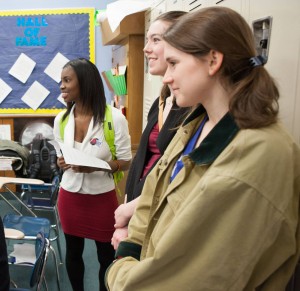
Students taking part in a CBLI project on education reform visit a local school to observe classes and hear from teachers and administrators.
Around this time last year, I took my first final exams at Princeton. Like many other freshmen, I left exam rooms in disbelief of how hard tests were, especially in some of my more quantitative classes. The time constraints, the amount of material covered, and the insightfulness required to answer questions always make Princeton exams challenging – something that every student learns quickly.
But what I didn’t pick up on was the incredible advantage of having a study group. In high school, exams weren’t as difficult, and consequently, I could get through classes by studying alone. I would sit in my room, take in all the material days before an exam, and feel confident that I knew it. During my first year at Princeton, I tried to emulate this same strategy but would just end up feeling overwhelmed. And for a long time, I couldn’t pinpoint any solutions to my stress.
As the weather gets cooler and finals period starts, a great way to escape loneliness is finding a study group!
Inspiration came during office hours last spring, when my friend and I went to pick up our math exams. Our instructor remarked that between us, we solved all of the problems on the test, even though individually we hadn’t performed as well. While walking back to my dorm, I thought about this more. If my friend and I had simply taken the time to study together, we would’ve not only done better on the test, but also thoroughly learned the material.
Over the course of the semester, PCURs will explain how they found their place in research. We present these to you as a series called The Project That Made Me a Researcher. As any undergraduate knows, the transition from ‘doing a research project’ to thinking of yourself as aresearcher is an exciting and highly individualized phenomenon. Here, Bennett shares his story.
~~~~~~
This is hardly the conventional idea of a research project: for one thing, I don’t remember it, and it’s hardly a lab or an archive project. But, unlike the writing seminar paper I wrote on Osama bin Laden, or my first lab experience with yeast genetics, this is a project every PCUR reader has gone through. So here’s baby Bennett, to take you through the first and most exciting research project any of us has participated in: discovering the world as an infant.
1. Bury Yourself In The Literature
I don’t mean that literally, silly.
You can’t start a research project without a deep background on the question you’re asking in the first place. That’s pretty difficult for an illiterate baby: the best I could do was crawl into the papers in my Dad’s briefcase, and hope some knowledge rubbed off, or that I would at least get a better understanding of how the world around me was shaped. If you’re literate, then you’ve got a huge advantage: read everything you can (even if you don’t understand it all at first – we’ll get to that later).
Reading Period is probably one of the most unique times of the Princeton semester. Fall semester’s Reading Period is particularly special (or brutal, some people would say), because it comes after winter break and makes January one long month filled with studying and finals. But after four years of enduring the looks of pity and shock from friends and family, it’s somehow been growing on me. The prospect of having work over break is still stressful, but I’ve come to strike a balance between work and relaxation and even enjoy parts of Reading Period—and winter break, too.
As final exams and paper deadlines approach, I find myself constantly questioning if I am spending my time efficiently. During exam periods, I often wonder how much time I should spend catching up on readings that I skimmed throughout the semester. It’s hard to finish every reading on time when professors assign hundreds of pages per week — and it’s almost impossible to catch up over reading period. Right now, this issueis particularly salient in my sociology class, which requires a 5-page-essay as a take-home exam. How can I review relevant material effectively and efficiently when I also have three other courses to focus on?
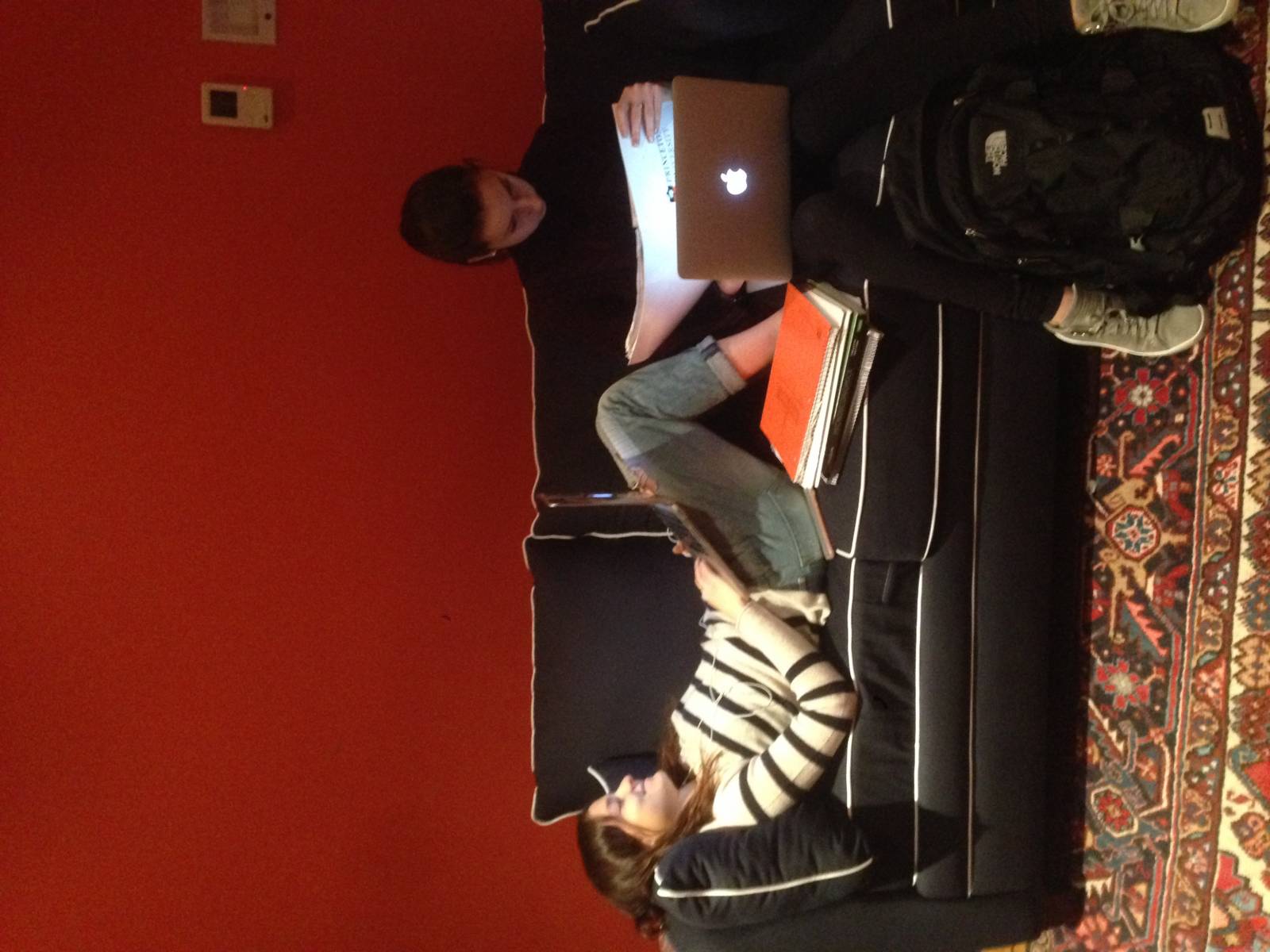
Here I am stressing about my take-home exam while my twin sister–who took finals before break–watches Netflix. It’s not at all fair, but at least I have my Quick and Dirty Blueprinting Guide to help me!
Happy New Year! In the January spirit of new-year-new-you, PCURs are sharing their Research Resolutions – things we plan to do, or do differently, in 2016. Take a look at what we hope to have in store:
Dylan, Humanities Correspondent: “This year, I’m going to make reasonable weekly goals to more efficiently tackle my independent work.”
Stacey, Engineering Correspondent: “This year, I’m going to branch out. My thesis is multidisciplinary, so I’ve been making an effort to engage in the geochemistry side of things as well as the electrical engineering side — and there’s still so much I need to learn in the coming year.”
Emma, Social Sciences Correspondent: “This year, I’m going to determine the policy area I wish to focus on as a Woodrow Wilson School major. This decision will shape my future independent research, so I want to make sure that I pick a policy area that engages and challenges me.”
Kavi, Engineering Correspondent: “This year, I’m going to start brainstorming new projects and ideas (based on my personal research interests) that I will allocate time to each week. Hopefully by reaching out to project-relevant departments, I can secure funding and have a few finished prototypes by the end of this year!”
Bennett, Natural Sciences Correspondent: “This year, I’m going to find the most personal of “real-world” applications for my research: a real-world job. I may not stay a scientist, but my research skills will stay with me forever.”
Vidushi, Humanities Correspondent: “This year, I’m going to start early and consult with mentors often throughout the drafting process! This will make for a more productive and fulfilling research experience.”
Zoe, Natural Sciences Correspondent: “This year, I’m going to spend at least five minutes on my research every day. I’m committing to small, consistent steps, and to keeping my questions in my thoughts.”
Melissa, Chief Correspondent: “This year, I’m going to change my approach to research questions. I’ve learned to let the question evolve as sources tell the story.”
Jalisha, Natural Sciences Correspondent: “This year, I’m going to stay organized throughout the thesis process by giving myself mini deadlines that are realistic for my life.”
What are your research resolutions? Let us know here, and keep us posted on your progress!