If you’re a sophomore at Princeton, this is an important semester. In April, you will finally declare your concentration, which may seem like one of the most daunting decisions you’ve had to make here. Will you lose out on opportunities by choosing one major over another? Will one department make you happier? Will another stimulate you more intellectually?
Today, I’m a junior happily enrolled in Spanish and Portuguese (SPO). But last year at this time, I was struggling with these same questions, and almost declared myself a Sociology (SOC) major. Ultimately, making the choice came down to seeking out advice and reflecting on what was best for me.
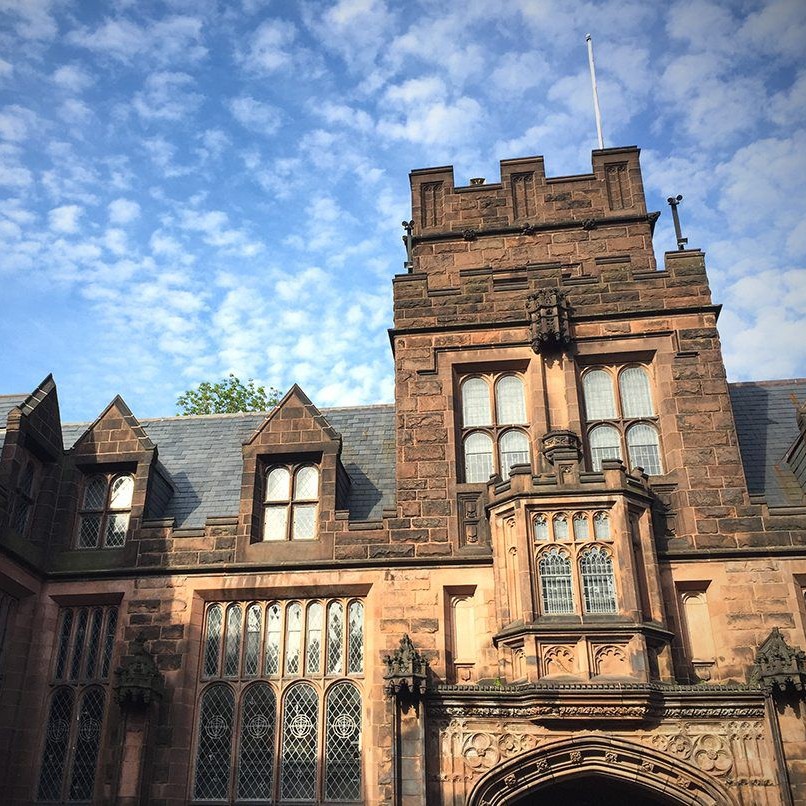
One great part of being a Spanish and Portuguese concentrator is how much time you spend in the most beautiful building on campus, East Pyne!
I’ve spent the past two weeks in New Zealand on a steady adventure rush.
Scarcely a day has passed without me sleeping under the stars, exploring a beach, or hiking up a mountain. Today, however, was my first time exploring the study part of my study abroad experience — the first day of class.
I attended a computer science course on artificial intelligence, philosophy of biology, and another course on Pacific geopolitics in the 21st century. Initially, these seemed very similar to classes I’ve taken at Princeton: They all follow a lecture/precept format, with a few papers or projects and exams at the end of the term. The language of instruction is English, and there are a few international students in each class. But, to my surprise, I had never felt so out of place in a classroom before.
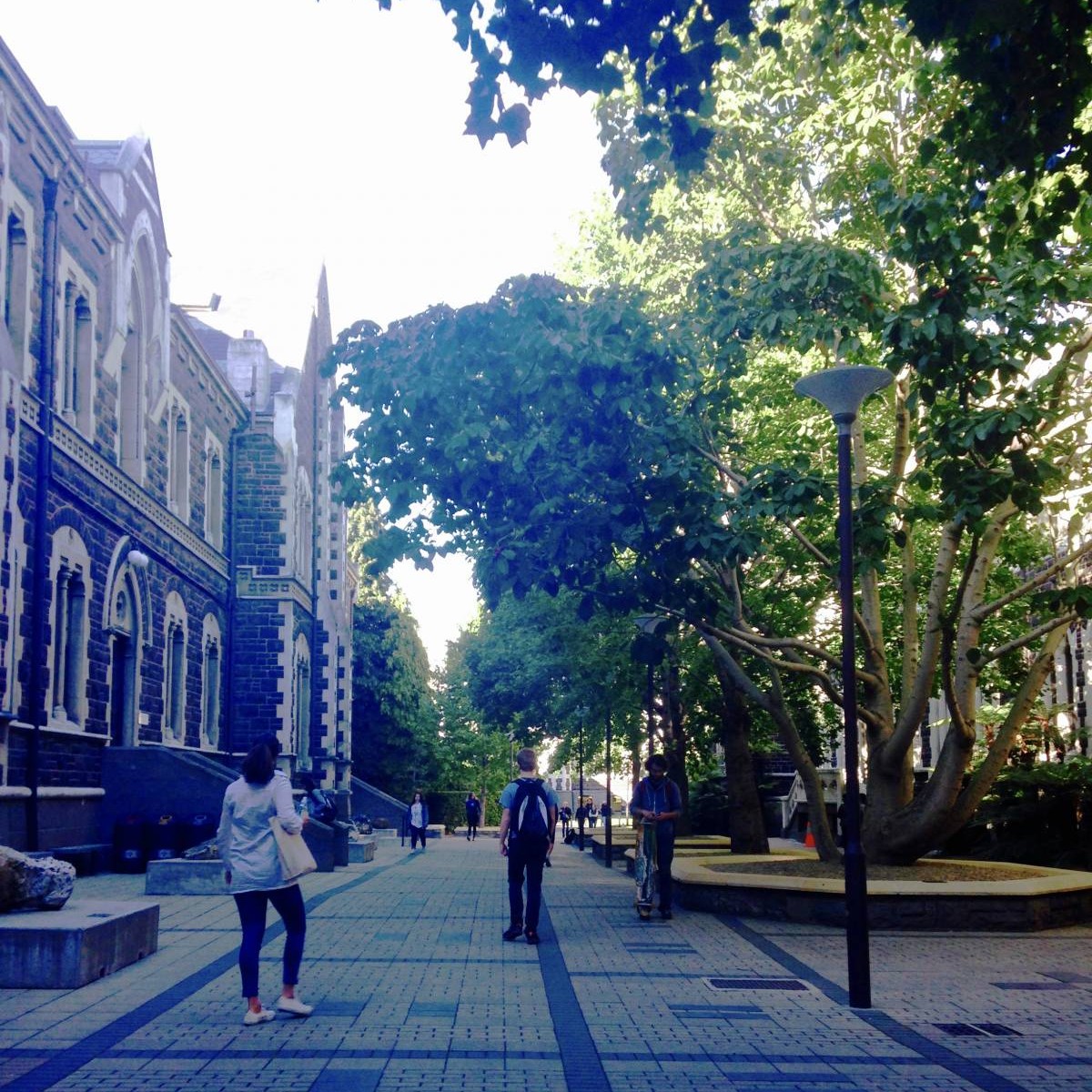
The walkway along one of Otago’s oldest buildings, on my way to class this morning!
Every year, students across the country come to campus for HackPrinceton, the biannual hackathon event that boasts thousands of visitors. While I’ve never attended a hackathon in my life, quite a few of my friends attend them regularly. They gather in small teams to work on technology and engineering projects (colloquially called “hacking”) at the event, which culminates in group presentations of the projects they’ve created. I’ve noticed that the hackers who are involved in research or entrepreneurship find the hackathon experience especially rewarding. So, this spring, I plan to try out my first hackathon at HackPrinceton. In preparation for the April 1-3 session. I decided to learn a little more about hackathons and how they relate to research in general.
Here’s a snippet of my Q&A with 2015-16 HackPrinceton Directors Zach Liu ’18 and Monica Shi ’18, who helped run the incredibly successful HackPrinceton Fall 2015.
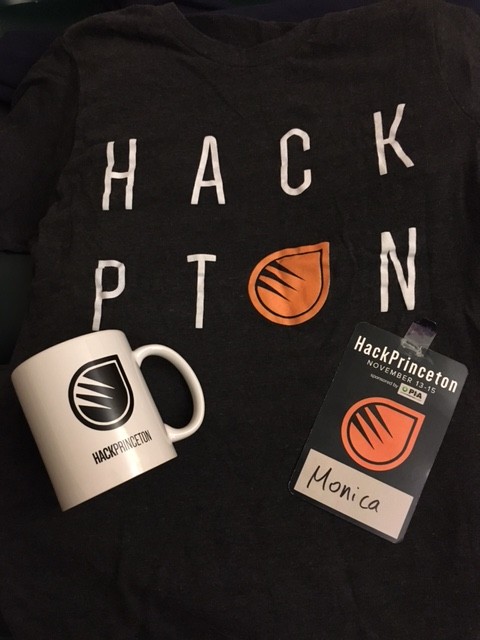
A great perk of being a HackPrinceton competitor – lots of free swag! Swag Credit to Monica!
Me (Kavi): What exactly is a Hackathon?
Monica: Essentially it’s an event where people come together to think of and build projects. Traditionally, these projects are divided between software and hardware, but there are hackathons for other things – like design projects. It’s a great way for people to learn about programming and technology by getting together with a group of like-minded students to build a project for 24-36 hours. It’s kind of like a marathon where you have any and all the materials you need to build your project. The hackathon organizers will do their best to make sure you’re able to hack with all the resources you need – including all the food you need to keep you satisfied. At the end, teams get feedback from a panel of judges, and the top projects win awesome prizes!
Princeton’s Dance Department and Robotics Program might seem like polar opposites to the average student: The former attracts the most creative and artistically inclined of the student body while the latter is deeply math-science oriented. Over the past three weeks, however, I have seen one student challenge these assumptions by bridging the arts-science divide.
Dana Fesjian ’17 is an undergraduate in the Electrical Engineering (ELE) Department, who is participating in a Lewis Center for the Arts initiative called Performance Lab. Known informally as P-Lab, this initiative allows dancers to explore independent work that connects dance with a different field. The culmination of this exploration is a performance in early March where the participants showcase their choreography and explain their independent work. Dana—whom I dance with in Princeton University Ballet—is using sound-sensitive robots to create dance movements and patterns that will eventually be performed by humans. She asked me to be one of the dancers in her project and I happily agreed to do so.
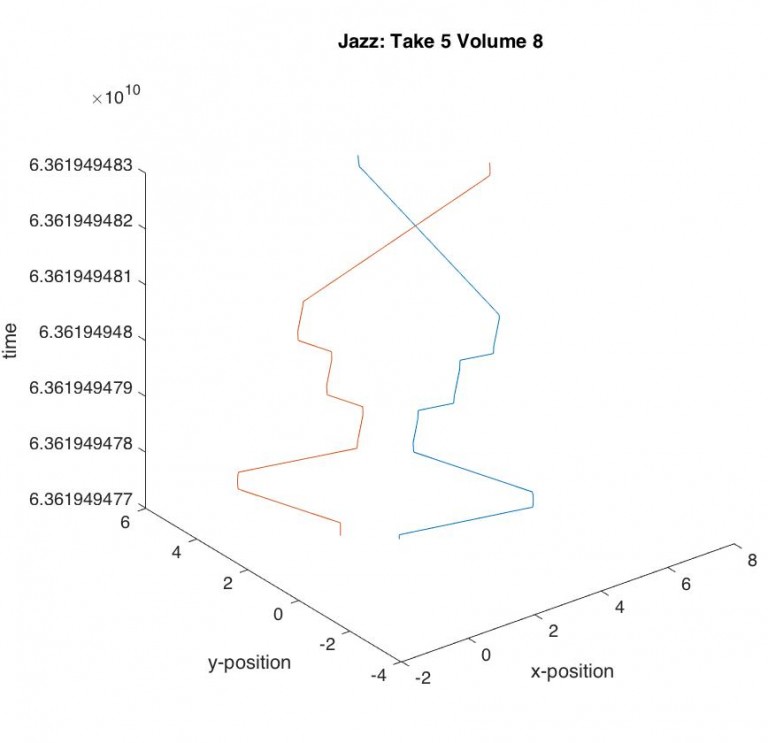
Dana’s robots reacted to sound signals from a jazz song to map out the pattern above. In her P-Lab piece, the dancers will trace this exact pattern and five other ones created using different songs.
Throughout our rehearsals over the past three weeks, I have had the chance to learn more about Dana’s independent work, and decided to cover her experience for my post this week.
MTurk is a great way to collect data from human subjects!
Mechanical Turk, more commonly known as “MTurk”, is a popular site created by Amazon to help researchers collect data from human subjects. As a student who had never heard of this site before starting my thesis, I’ve decided to share my knowledge about what the site is and how it can be helpful for independent research at Princeton.
What exactly is MTurk?
MTurk is basically a marketplace where researchers can upload various tasks and have other people complete them for money. These tasks range from having people take a survey to having people grade responses or transcribe segments of text. Basically, anything that someone can do on a computer can be turned into a task on MTurk.
Over the course of the semester, PCURs will reflect on the professors, advisers, and friends who shaped their research experiences. We present these to you as a series called Mentorship in Research. Most undergraduates have met, or will meet, an individual who motivates and supports their independent work. Here, Stacey shares her story.
~~~~~~
I learned a great deal about conducting research during my first research project, even if making a proper poster was not one of those skills.
I really didn’t want to stay for the awards ceremony at the science fair that day, but Mrs. Sabherwal insisted. I told her I had to go to my clarinet lessons. No luck. I asked my mom to plead my case. No luck. She only offered, “It’s okay if you miss your lessons today”—and so, defeated, I waited at the fair.
And what an arduous wait it was. I couldn’t sit still—I just wanted to leave, and I was starting to get hungry. They kept calling names and more names. Names and more names. Were they done yet? I left and used the bathroom. But there was a flurry as I emerged, hands still damp with residual sink water—come quick, they told me, they’re calling your name! The highest award in the district science fair! Impossible. It turns out that Mrs. Sabherwal had confided in my mom about the award and expressly requested that I remain.
Mrs. Sabherwal was like that—always looking out for her students, no matter how frustratingly obstinate. She pushed me to become a researcher even when I didn’t realize I could be one.
Greetings from Dunedin, New Zealand, my home till June this semester as I study at the University of Otago!
I flew in yesterday morning after a quick orientation in Auckland, where I met the other students in my study abroad program, run by the Institute for Study Abroad at Butler University. During the orientation, our friends and mentors from New Zealand (called “kiwis”!) stressed the importance of taking at least one class related to the culture, languages, or history of New Zealand. In retrospect, this seems obvious– but I hadn’t thought about this throughout my Princeton course approval process.
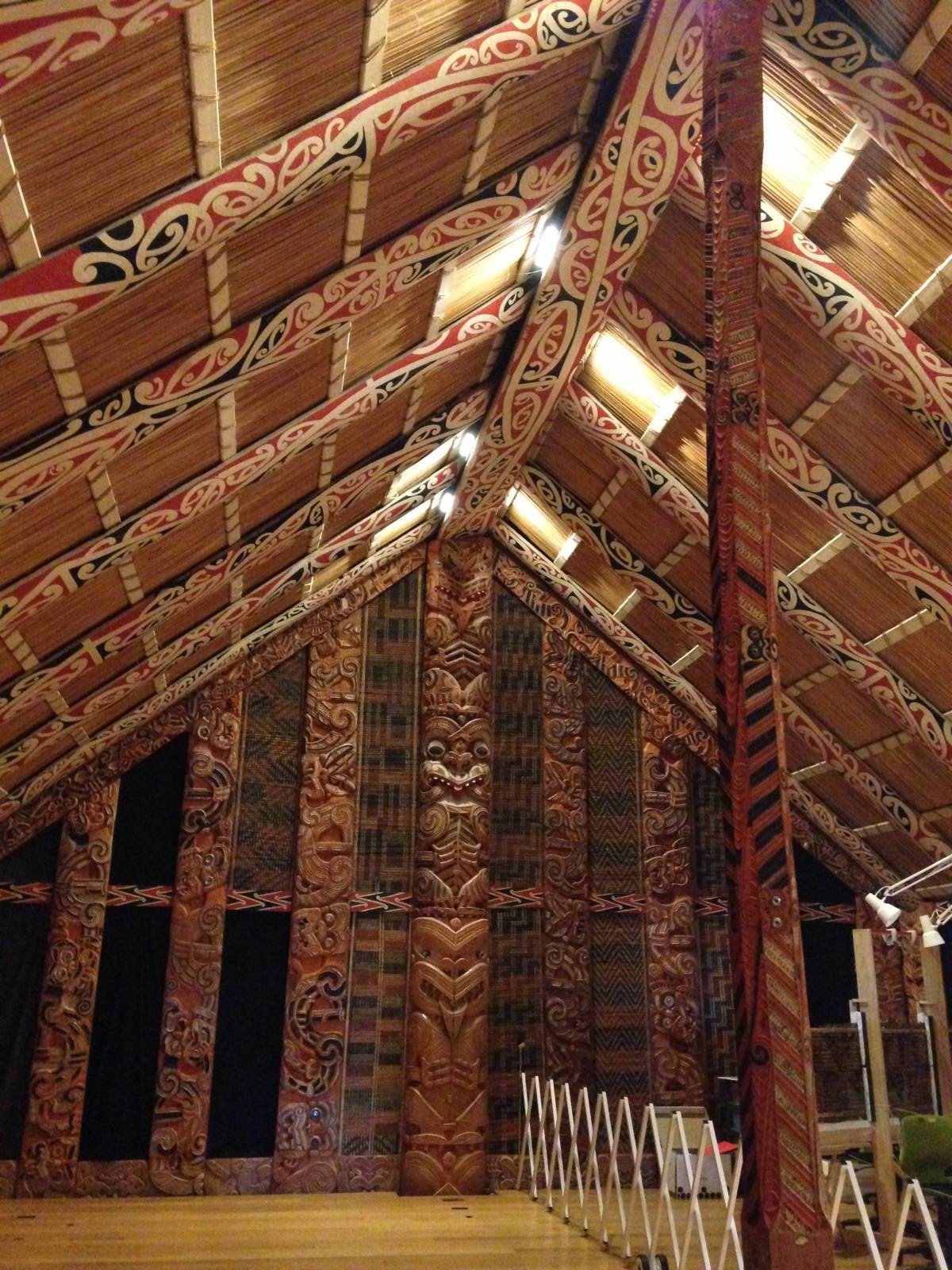
A peek inside a Maori meeting house in the Auckland War Memorial Museum! Image by Vidushi Sharma.
To this date, I have asked myself this question over a hundred times, and still haven’t come up with a particularly satisfactory answer. My curiosity started in middle school when one of my teachers put into practical perspective my new ambition to become a chemist. It was my first lesson on risk and reward. The risks of pursuing a career as a chemist were plentiful and the reward was limited (in terms of both career and financial success).
But I didn’t let that sway me, and in high school, I continued to stay true to my beliefs. My closest friends and I worked in labs for nearly two years. We wrote several research papers, ran a student-led research magazine, and spent long nights in the lab working on our projects (which ranged from making new optical fiber cables to biodegradable nitrate filters).
It’s hard to believe that it’s been 4 years since my friends and I last presented our lab research projects.
Yet today it’s entirely different. Every single one of us has drifted away from the passion that bonded us. And, while it may be that our interests have evolved over time, we are all aware of the unspoken but overarching reason behind the change. We tend to blame the hours and the frustration involved in being a researcher; but in all honesty, we always loved working long hours on experiments that failed 90% of the time. We were mentally invested in our projects. It’s the financial stability of the profession that has cut our ties with the lab.
Pinpoint a research question. Develop a clear thesis. Support that thesis with foolproof evidence. Discredit any rebuttals.
This is how many of us approach research papers — because ever since elementary school, teachers have told us to pick an argument and stand by it. I have completed assignment after assignment using this strategy, but recently I had the opportunity to break out of the single-argument box and experience a new writing technique.
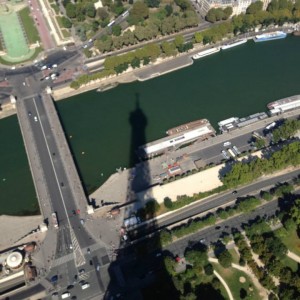
This is a picture I took from atop the Eiffel Tower while on vacation in France. Little did I know that what an important role French culture and ideas would play in expanding my approach to research.
For my French class last semester, I had to write a final paper about a current event of my choosing in the style of a typical French essay. My professor explained that in France, academic writing commonly diverges from the structure I described above. Students are encouraged to report on current events by investigating all of the different perspectives, components, and opinions at hand. Instead of crafting a specific argument to articulate and support, students offer thorough descriptions of multiple perspectives, the reasoning behind them, and their sources. As the paper develops, the writer must depict the similarities and differences of each perspective and describe how they interact to affect each other and to shape the greater context.
I’m reading The Lives of a Cell, by Lewis Thomas – a biologist who did his undergraduate degree at Princeton before becoming a renowned science writer and getting Lewis Thomas Labs named after him. It’s a beautifully philosophical piece of writing, as Thomas draws parallels between the miniscule cellular networks which give us life and the massive, invisible human networks which give that life meaning. But what jumped out at me wasn’t one of the many scientific tidbits with which Thomas peppers his writing, but a quote Thomas uses from an essay by physicist John Ziman: “A typical scientific paper has never pretended to be more than another little piece in a larger jigsaw—not significant in itself, but an element in a grander scheme. This technique, of soliciting many modest contributions to the store of human knowledge, has been the secret of Western science since the seventeenth century, for it achieves a corporate, collective power that is far greater than any one individual can exert.”
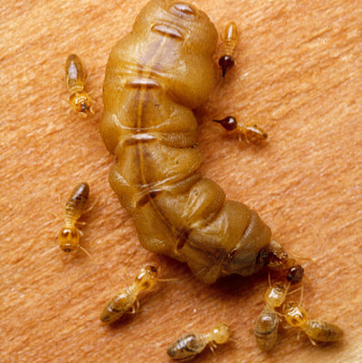
Termites: conceptually beautiful, but physically rather gross
Thomas, ever the biologist, goes on to compare the collective effort of scientists to the collective effort of termites building a nest. And indeed, if you’re okay with being compared to translucent-brown grubby insects, that’s an apt comparison. For this is how the scientific enterprise moves forward: incrementally with millions and millions of individual papers (and now, in the age of big data, individual genetic sequences, chemical structures, geological maps, or other data points). But, especially early on in your research career, it’s important to remember that, however wonderful the collective efforts of termites are, research is much more than that.