Categories
Conduct Research Independent Work Present & Publish Findings

Pushing forward

Last week, Zoe wrote about research in the face of despair from external factors. How can you not push forward, she asked, when in your work is hope for a better future?

late_night_squarejpg
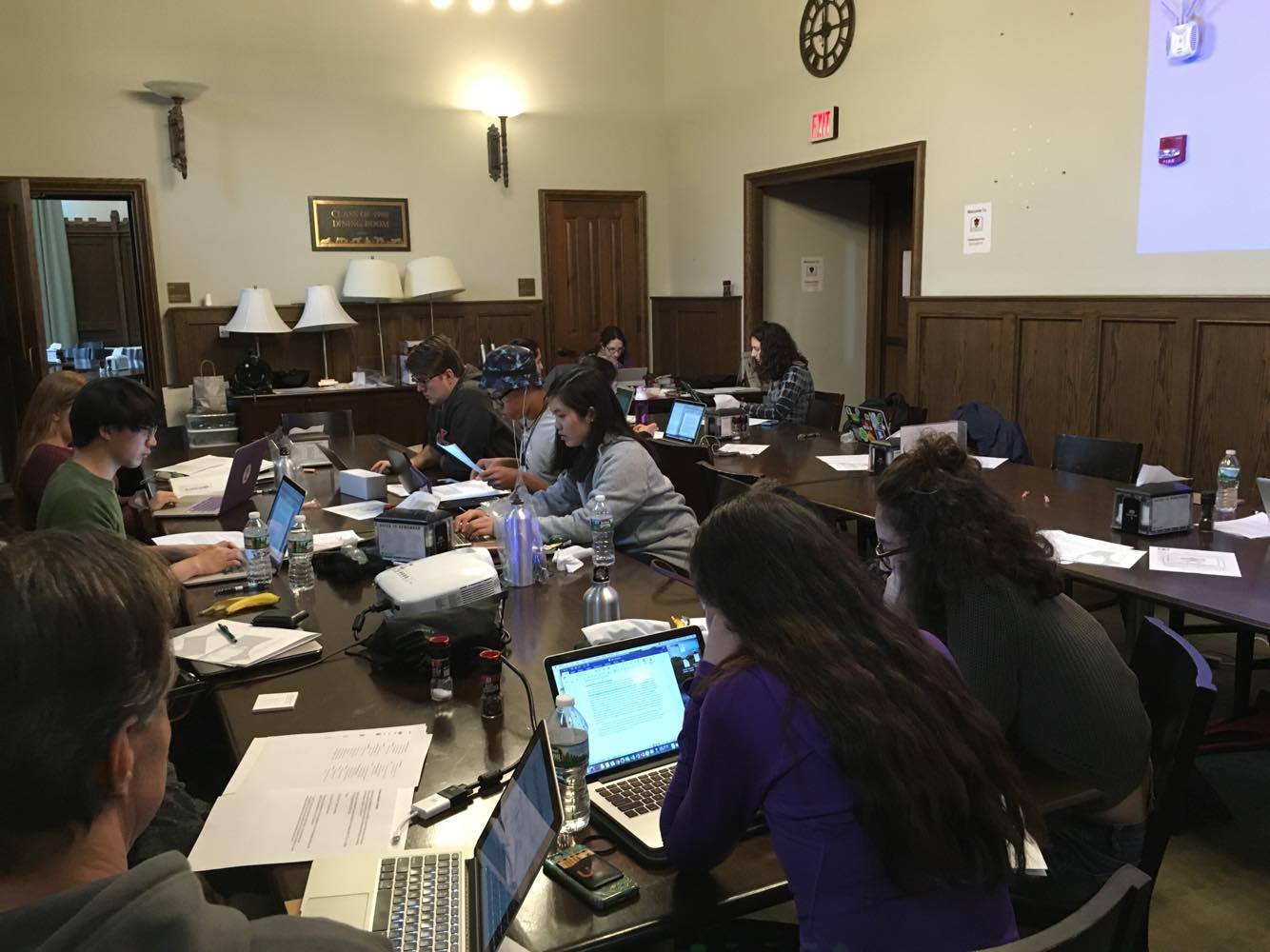
Late nights in Frick – an all-to-familiar scene for me and many other thesis students.

This week, I tackle inner despair: How can you push forward when in your work you see no hope?

My thesis project holds no immediate promise of hope for the reefs, or of curing some plague, or of fantastic future technology. The motivation for basic biochemical research comes from its intrinsic beauty, and the hope of applications long in the future. I was incredibly excited about my thesis project at the beginning – I was asking fundamental questions about the origin of life; I had the potential to create something genuinely new. Inevitably, though, my project hit obstacles – both technical problems and scientific difficulties indicating misconceptions in my original idea.

So, the thesis I’m currently writing looks nothing like the thesis I imagined last spring.

Categories
Conduct Research

Mentorship in Research: Getting by with a little help from my friends

Over the course of the semester, PCURs will reflect on the professors, advisers, and friends who shaped their research experiences. We present these to you as a series called Mentorship in Research. Most undergraduates have met, or will meet, an individual who motivates and supports their independent work. Here, Emma shares her story.

~~~~~~

Shout out to my friends for helping me make smart decisions.

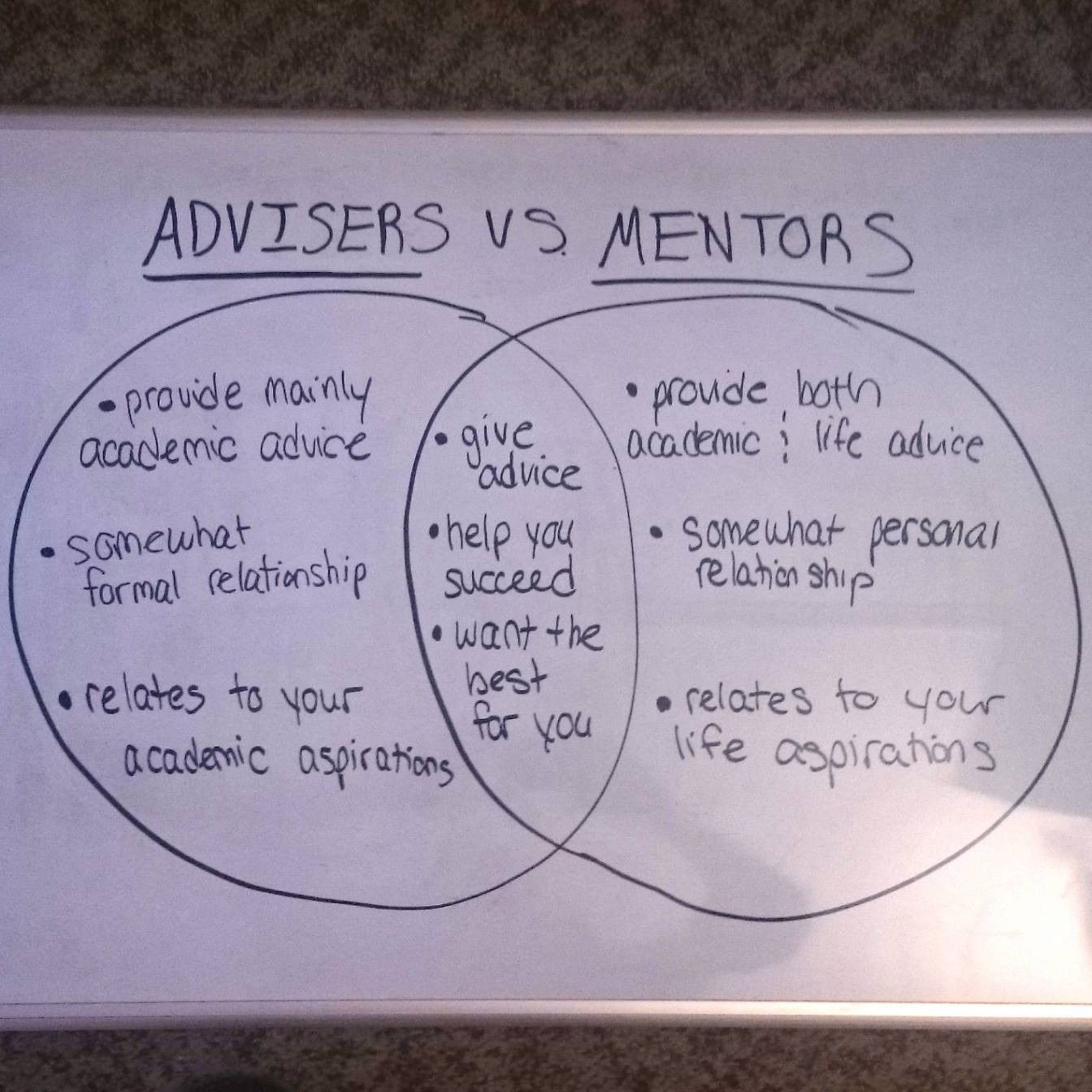
While many professors and advisers have offered me invaluable guidance throughout my academic career, my most helpful and memorable mentorship experiences have actually been with friends. Not that my friends and I often sit down and have formal discussions about our research paths. Rather, most of their advice comes in the form of consolations when I’m feeling unsure of my decisions regarding work and research.

I know what you are thinking. “Is support from friends really a form of mentorship?” I understand why this might seem confusing at first, but I truly believe that friends can often be the best mentors. My friends probably know better than anyone else what interests and excites me. Unlike with a professor or adviser, I don’t feel the need to impress my friends or worry about their impression of my choices. Plus, my friends are the ones who listen to all of my complaints about projects or commitments I’m not interested in. Seeing me at my best and my worst gives them valuable insight: They wouldn’t let me take on a project they didn’t think I would find engaging (if for no other reason than because they don’t want to hear me complain).

Categories
Conduct Research Independent Work

Underclassmen: Make the Most of Thesis Season!

March Madness takes on a whole new meaning for Princeton seniors, who are working hard to stay ahead of upcoming thesis deadlines. With submission dates as early as next week, many seniors spent their spring breaks finishing up data collection, editing their drafts, and attending thesis-geared events (like bootcamps).

IMG_2328
The pollen on my doorstep scared me multiple times over break.

I spent my break watching basketball, being terrified of pollen every time I left my house, and sleeping for over 12 hours a day… But, now that I’m back on campus I thought it would be a good idea to ask seniors a few questions about their projects. Until this semester, I knew almost nothing about the thesis process that defines senior life in the months before graduation. Previously, most of my conversations with my senior friends would go something like:

Me: Hey, how’s the thesis coming along?

Senior: (Groan)

Me: You’ll get through it! Only a few more weeks!

And so I thought it might be time for me to ask more meaningful questions (given that my previous interactions only seemed to remind everyone of all the work they had left).

Categories
Conduct Research

Dredging the River: Why We Enter the Field

This spring break, I remembered why I love going to the field.

I am currently taking Latino Global Cities, a Spanish class about how Puerto Ricans — both on the island and in diaspora communities — form and maintain identity in an increasingly globalized world. Over Spring Break we travelled to Puerto Rico to begin to understand the Caribbean island beyond the palm trees and hotels. We visited communities and attended discussions about the lived complexities of an American colony in a “post-colonial” age. These issues can only be fully understood with first-hand experience that can both complicate and concretize concepts that seem so distant in books.

Practicing what my professor calls “anti-tourism” — a more critical kind of travel — we visited Fanguito, a conglomerate of eight poor urban communities in San Turce, outside of San Juan. There, Melba, a local activist, guided us around the community with her 6-week old baby in tow, who represents the 5th generation in her family to live in the community.

IMG_4036
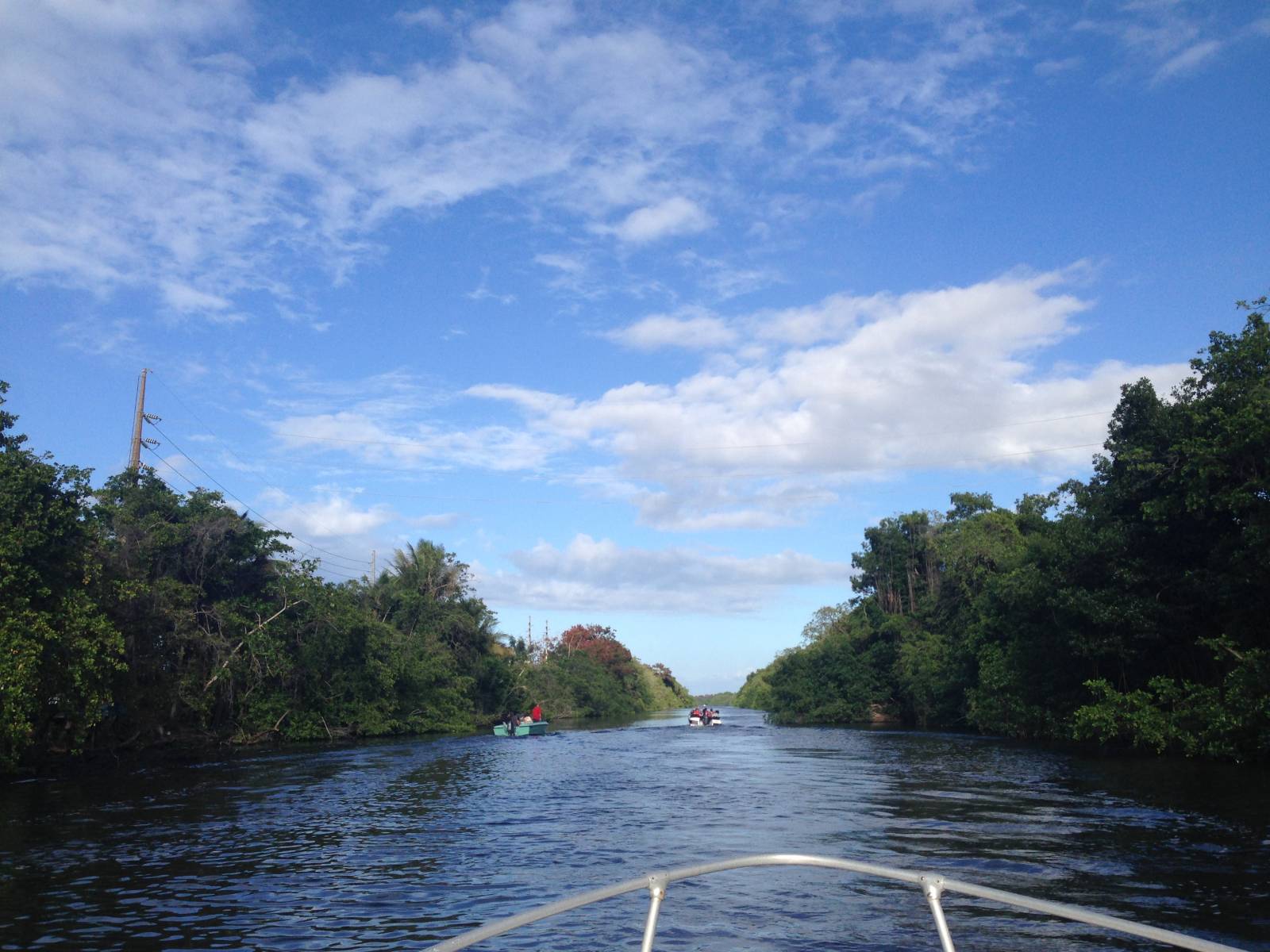
Photo taken on a boat ride on a nearby, navegable waterway that feeds into Fanguito’s river.

Melba told us about her community’s most severe problem: water. Located on the Caño Martín Peña, far from the island’s tourist-filled beaches, Fanguito sits on one of Puerto Rico’s most important, and most polluted, waterways. Melba took us to the river to see the bags and water bottles strewn everywhere. It reeked of sewage, and she explained how toilets and sinks run directly into the water. This is a health hazard for everyone — plants, animals, and humans. Furthermore, the pollution has caused parts of the river to dry up, so that it is no longer navigable by boat.

Categories
Conduct Research Present & Publish Findings

Presenting Like a Pro: Three Tips for the Freshmen Research Conference and Princeton Research Day

Often, the second half of the semester calls for students to present their research findings in class, or in front of professors/advisers evaluating independent work. Presentations are a different kind of assignment than, say, fifteen-page research papers — and they require a different set of skills. At this time last year, I found myself facing a new and unexpected presentation project: My fall writing seminar professor had asked me to revisit my final research paper and present it at the Quin Morton ‘36 Conference.

Engaging your audience during a presentation can seem like a daunting task, but with some thoughtful preparation, you’ll be sure to command their attention.

Now called the Mary W. George Freshmen Research Conference, this event is an opportunity for freshmen to share their writing seminar research with a wider audience through ten-minute presentations. I encountered many challenges while breaking down my paper—a feminist perspective on evaluations of sexuality in films— into slides and bullet points. However, I also learned a lot about presentations through the process. While this year’s participants are gearing up for the conference in early April, students presenting at Princeton Research Day are in the midst of similar preparation. In light of these upcoming events, and since many students will have to present their research as spring semester comes to a close, I have decided to offer some advice on research presentations. Below I throw in my two (three) cents on the topic.

Categories
Conduct Research Independent Work

A survival guide for major declaration season

The EEB department dinosaur in Guyot Hall: pretty much the best thing ever.

There are some things that department websites just don’t tell you.

For example: The History Department holds its mandatory senior thesis planning meeting one hour after spring junior papers are due. (“People hadn’t slept for days!” a friend told me recently.) The Spanish Department, on the other hand, hosts monthly department-wide dinners.

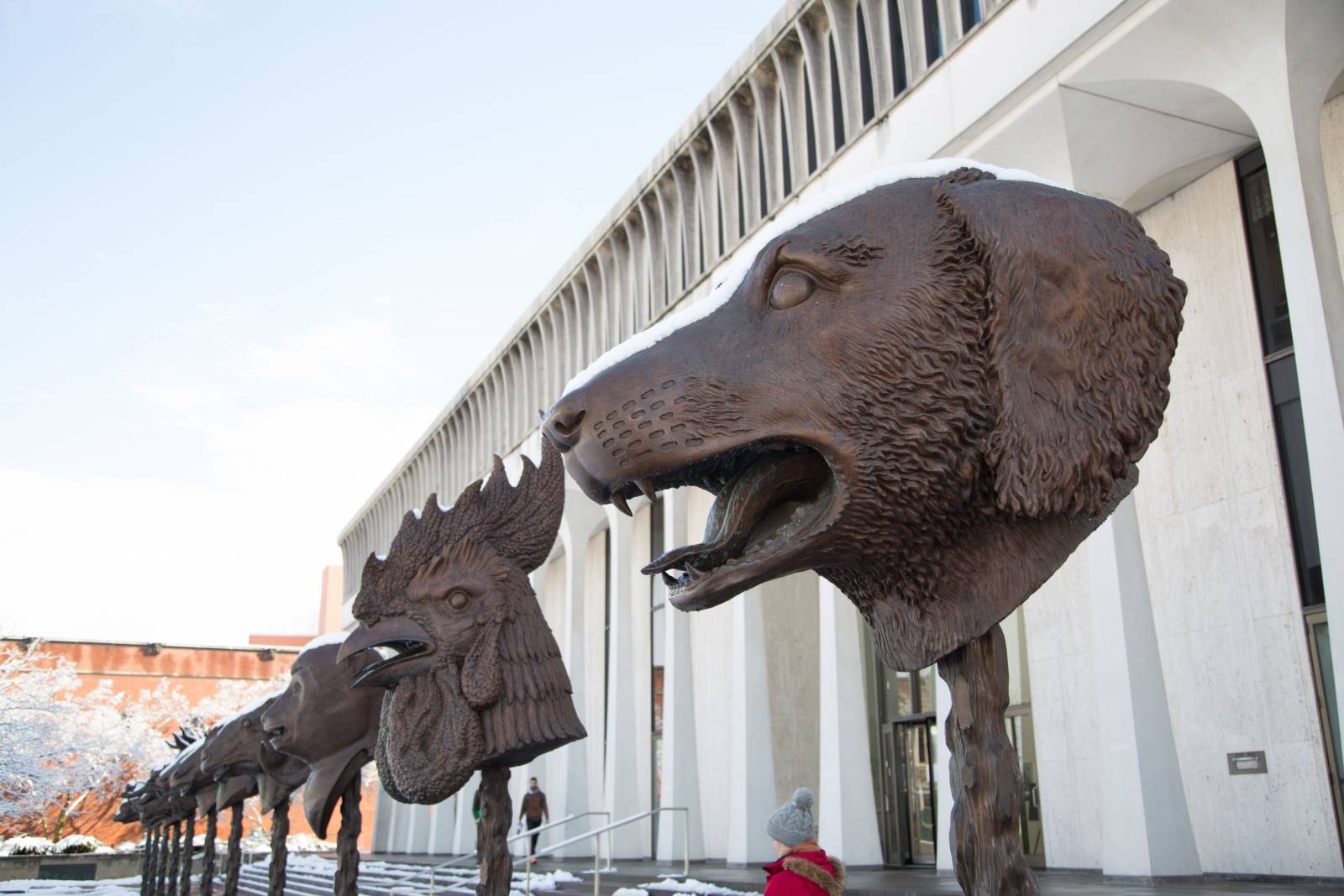
...though, if I were choosing my concentration by architectural and archaeological perks, I'd say the animal heads of WWS come in a close second.
…though, if I were choosing my concentration by architectural and archaeological perks, I’d say the animal heads of WWS come in a close second.

I am amazed — unfortunate scheduling and free food aside — by how much I didn’t know when I chose my major. Talking to other upperclassmen, I get the feeling that I’m not the only one. We all seem to have bumbled through the process, some better-informed than others. When April rolled around, we all picked something and moved on.

Surely, there’s a better way to sift through the options. Looking back at major declaration season, here are the three questions I wish I’d known to ask.

Categories
Conduct Research Present & Publish Findings

Fighting Imposter Syndrome and Finding My Confidence at Princeton

Even though they said I belonged, I felt like I was hiding a flawed interior - that I was an imposter among the many high achievers.
Even though they said I belonged, I felt like they had only seen the veneer over a flawed interior – that I was an imposter among the many high achievers.

When I was a freshman, President Shirley Tilghman stood on the stage in McCarter Theater and told us, a crowd of alert and excited newly enrolled students: “If you’re wondering whether you belong here, you do. We don’t make mistakes.”

I wanted very hard to believe that. I was in awe of all of my classmates who seemed so talented and brilliant. I loved talking to them, but at the end of the day, I felt inadequate. I spent a lot of time wondering whether President Tilghman’s words really applied to me.

Categories
Conduct Research

A Major Decision: Choosing Your Concentration

If you’re a sophomore at Princeton, this is an important semester. In April, you will finally declare your concentration, which may seem like one of the most daunting decisions you’ve had to make here. Will you lose out on opportunities by choosing one major over another? Will one department make you happier? Will another stimulate you more intellectually?

Today, I’m a junior happily enrolled in Spanish and Portuguese (SPO). But last year at this time, I was struggling with these same questions, and almost declared myself a Sociology (SOC) major. Ultimately, making the choice came down to seeking out advice and reflecting on what was best for me.

8.6789.1024.20151010_Campus_JF_ (11)
One great part of being a Spanish and Portuguese concentrator is how much time you spend in the most beautiful building on campus, East Pyne!
Categories
Conduct Research Research Life

Being Uncomfortable in the Classroom

I’ve spent the past two weeks in New Zealand on a steady adventure rush.

Scarcely a day has passed without me sleeping under the stars, exploring a beach, or hiking up a mountain. Today, however, was my first time exploring the study part of my study abroad experience — the first day of class.

I attended a computer science course on artificial intelligence, philosophy of biology, and another course on Pacific geopolitics in the 21st century. Initially, these seemed very similar to classes I’ve taken at Princeton: They all follow a lecture/precept format, with a few papers or projects and exams at the end of the term. The language of instruction is English, and there are a few international students in each class. But, to my surprise, I had never felt so out of place in a classroom before.

The walkway along one of Otago's oldest buildings, on my way to class this morning! Image by Vidushi Sharma.
The walkway along one of Otago’s oldest buildings, on my way to class this morning!
Categories
Conduct Research Independent Work Present & Publish Findings

Q&A with HackPrinceton Directors

Every year, students across the country come to campus for HackPrinceton, the biannual hackathon event that boasts thousands of visitors. While I’ve never attended a hackathon in my life, quite a few of my friends attend them regularly. They gather in small teams to work on technology and engineering projects (colloquially called “hacking”) at the event, which culminates in group presentations of the projects they’ve created. I’ve noticed that the hackers who are involved in research or entrepreneurship find the hackathon experience especially rewarding. So, this spring, I plan to try out my first hackathon at HackPrinceton. In preparation for the April 1-3 session. I decided to learn a little more about hackathons and how they relate to research in general.

Here’s a snippet of my Q&A with 2015-16 HackPrinceton Directors Zach Liu ’18 and Monica Shi ’18, who helped run the incredibly successful HackPrinceton Fall 2015.

A great perk of being a HackPrinceton competitor – lots of free swag! Swag Credit to Monica!

Me (Kavi): What exactly is a Hackathon?

Monica: Essentially it’s an event where people come together to think of and build projects. Traditionally, these projects are divided between software and hardware, but there are hackathons for other things – like design projects. It’s a great way for people to learn about programming and technology by getting together with a group of like-minded students to build a project for 24-36 hours. It’s kind of like a marathon where you have any and all the materials you need to build your project. The hackathon organizers will do their best to make sure you’re able to hack with all the resources you need – including all the food you need to keep you satisfied. At the end, teams get feedback from a panel of judges, and the top projects win awesome prizes!