Categories
Conduct Research Research Life

Live Uncertainty- Learning Abroad in Brazil

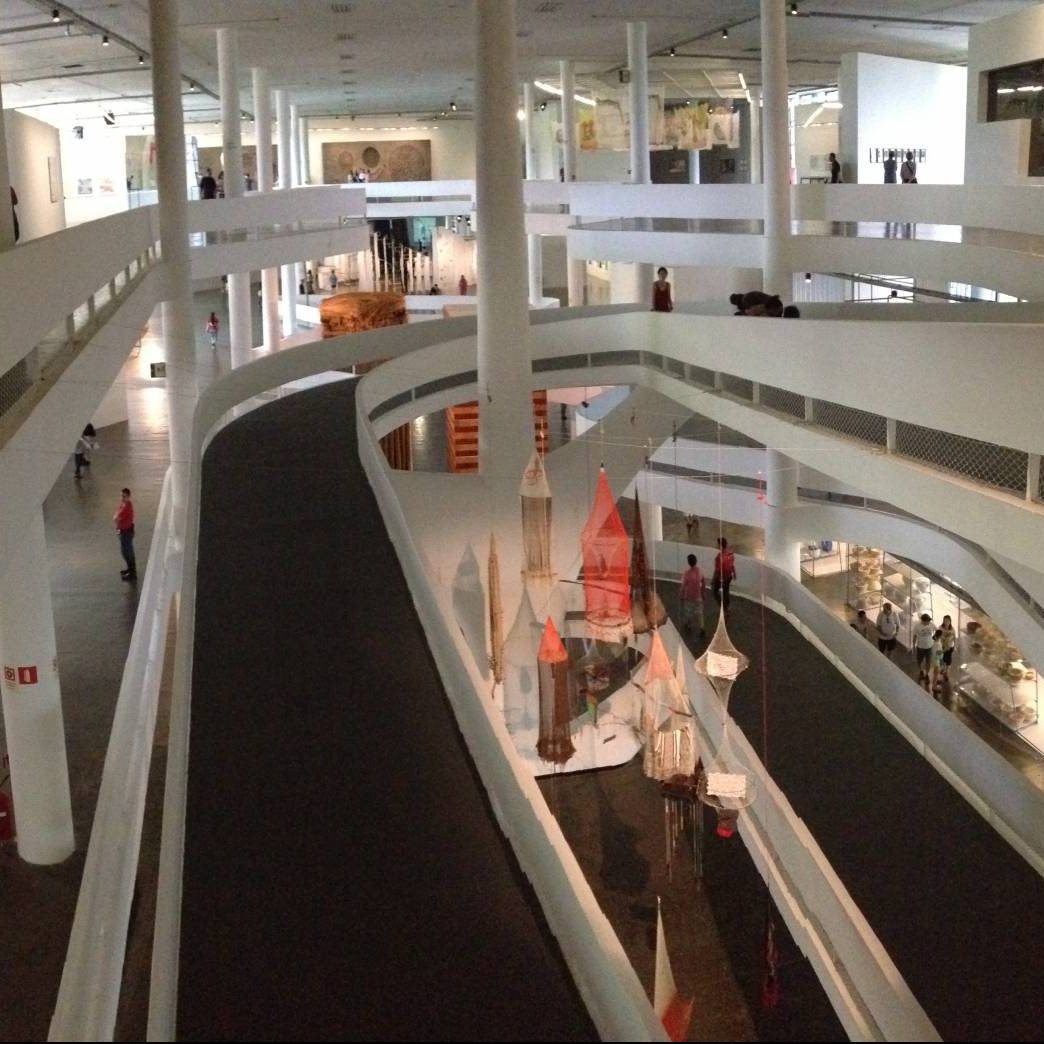
I spent my fall break last week in São Paulo, Brazil, visiting a variety of art museums and community spaces with a focus on the 32nd São Paulo Bienal, themed Incerteza Viva—live uncertainty. The trip was part of my art history seminar, Contemporary Art: The World Picture. University-sponsored travel, whether through classes, workshops, or independent work, has been the highlight of my Princeton experience, and my time in Brazil was no exception.

A view of the São Paulo Bienal from above!
Categories
Conduct Research

Escaping the Orange Bubble Without Leaving Campus

I made a goal this year to take more time to relax and gain new perspectives outside of campus. This means different things for different people. For me, it entails jumping on opportunities to step away from the insulation and pressures of Princeton. As much as I love going to NYC and Philly for daycations, SEPTA and NJ Transit costs add up, both in time and money.

astrobinoculars-3
Astronomy is a science-y but accessible hobby!

Instead, I’ve been actively looking for alternative ways to escape campus, without ever setting foot off of it. Let me explain.

Since I study French and International Relations, my schedule is packed with humanities and social sciences classes. This leaves little room for natural science courses. Therein lies a problem—I’ve had a passion for space since I was a kid. But I don’t have the room in my schedule or the prerequisite knowledge necessary to take an astrophysics course. Solution: I bought several books to feed my curiosity. Reading about astronomy allows me to momentarily escape the limits of my Princeton schedule while cultivating a longtime personal interest.

Categories
Conduct Research Present & Publish Findings

Balance in the Bubble- And Outside of it, too

This fall has been my most enjoyable semester at Princeton thus far by an incontestable margin. My days seem rich and balanced. In the span of just a few weeks, I have made meaningful new friendships and picked up a few new hobbies–swing dancing, playing guitar, and longboarding, among others. I’m happy.

In stark contrast, a year ago, I was perhaps the most stressed I’ve ever been at Princeton. I felt like I was running from one assignment to the next. Often, when people asked what I did during a certain week, I’d be at a loss. I don’t have less work now than before—fellowship applications, a thesis, and four courses keep my plate full. So what changed?

My view this weekend, rock climbing in Vermont with friends I met in New Zealand!
Categories
Conduct Research

Deconstructing Gender-based Myths of “Innate Brilliance”

I excelled in math in high school, rising to the top of the tiered class track and dabbling in multivariable calculus before college. I, however, immediately and subconsciously faltered in confidence when I reached Princeton. I was deterred from trying a proof-based math class by the thought that these were only for “math people” –  students who had excelled in extracurricular math competitions from a young age or who already had exposure to “real math” beyond AP calculus. The kinds of students, who, when presented with a problem, could scribble across a blackboard and find the answer with a spark of genius.

That student wasn’t me, and so I decided that I must not be a “math person.” I still took college math, but instead of enrolling in a proof-based class, I pushed through Math 201 (multivariable calculus) and 202 (linear algebra), required courses for engineers. The exams were still notoriously difficult, and it wasn’t unusual for average scores to hover around 65%. This seemed to me like a strategy the department used to allow it to separate star students from “the rest of the pack.” Linear algebra during my freshman spring was the last math class I took in college.

Three years later, I’m studying philosophy –  a subject with gender ratios comparable to mathematics. Many people know about the lack of females in STEM departments, but this issue slips under the radar in fields like philosophy and music composition. Philosophy professor Sarah-Jane Leslie’s research helps connect the dots.

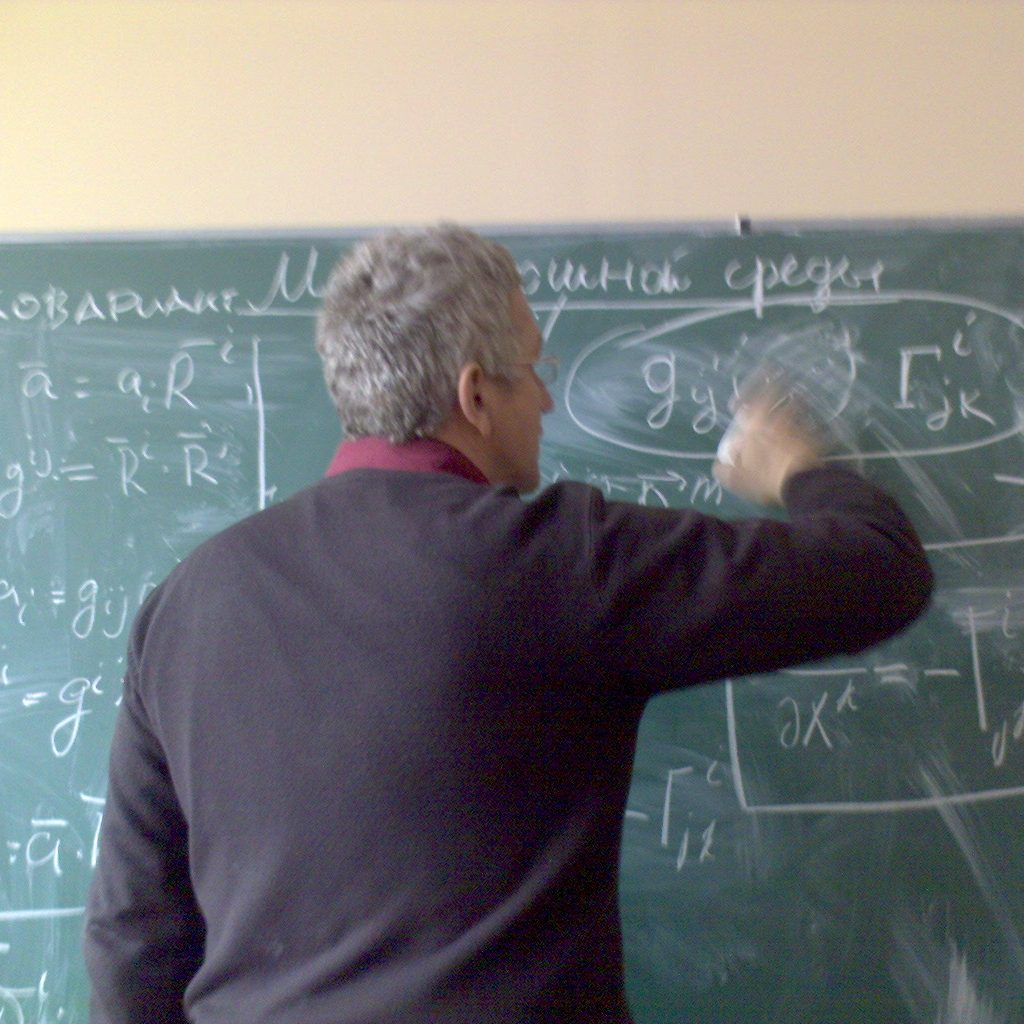
What I imagine when I think 'mathematician' -- a wise man with a spark of brilliance that spills onto the board. Image by Dimitry Dzhus, Creative Commons.
What I imagine when I think “mathematician” — a wise man with a spark of brilliance that spills onto the board. 
Categories
Conduct Research Research Life

My Lesson in Research Rehearsal

After eight amazing weeks in Europe, I’m back in the U.S. and just starting to process my time abroad. Interning at the European Roma Rights Centre taught me so much about Roma people and the systematic racism many of them face. I also learned about efforts to combat this racism through litigation and advocacy. I greatly value the knowledge I gained through this experience — and now, as I prepare for another year of research at Princeton, I’m also thinking about the process behind the knowledge. Some of the most useful and thought-provoking lessons from my time abroad concerned how to effectively prepare for field research.

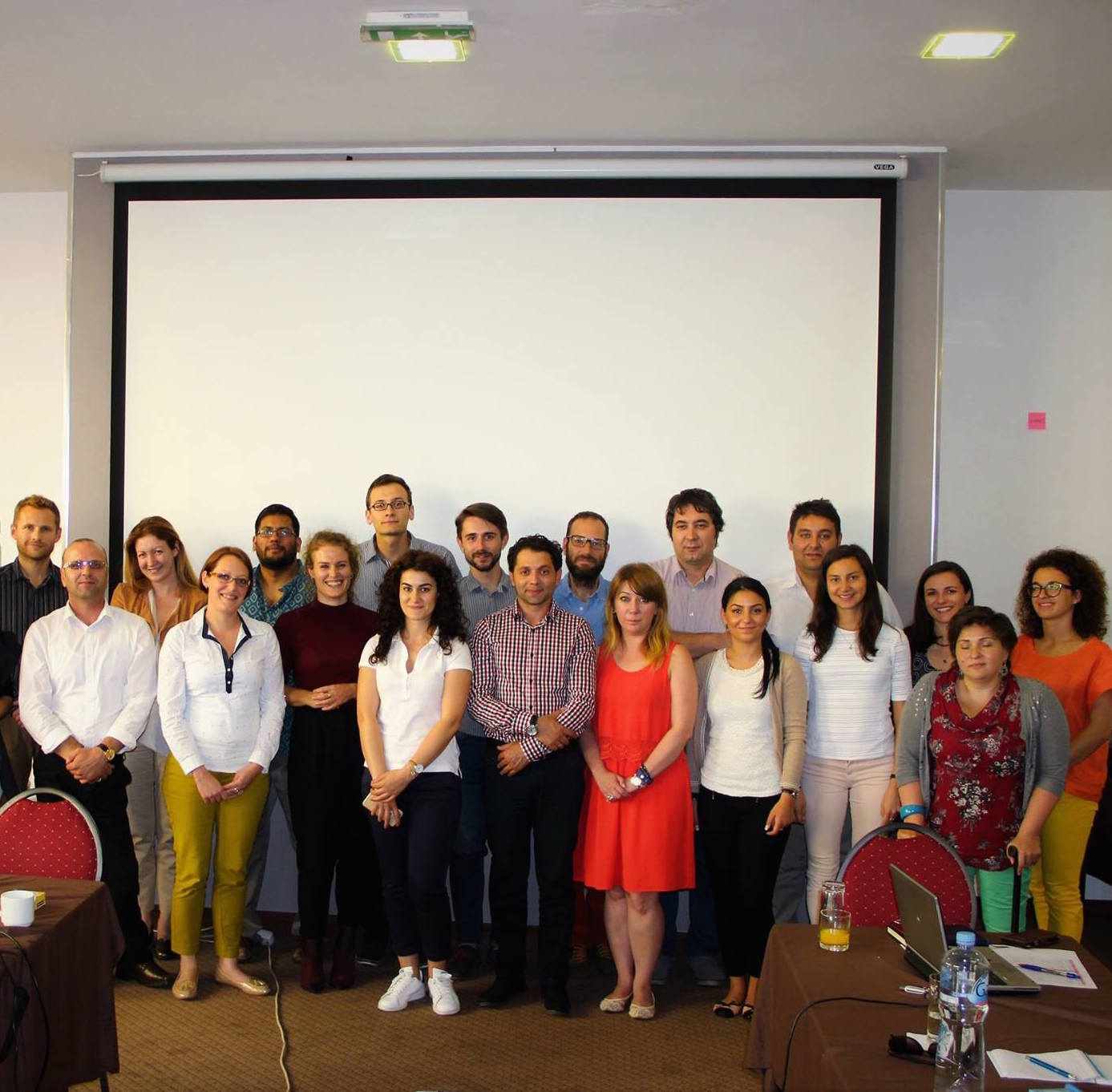
Here I am in Belgrade, Serbia with the other conference participants, all of whom work with organizations that research statelessness in Central and Eastern Europe.

During my second-to-last week in Budapest, I went with four colleagues to a conference in Belgrade, Serbia. The three-day conference functioned as a training workshop to prepare seven organizations to conduct field research on stateless Roma (Roma individuals who aren’t legally affiliated with any nation.) These organizations were based in countries all throughout Eastern Europe and the West Balkans, where statelessness is a particularly significant issue among Roma populations. The ERRC led the workshop — and I got to play a role in the research trainings.

Categories
Conduct Research Independent Work Plan Beyond Graduation

Why I Want to Remember Some Painful Memories at Princeton, Too

IMG_8456
Seniors have been forcibly reminded of graduation by senior checkout, where we’ve had to pick up our cap and gown among a long list of other things. 

I’ve handed in my thesis and my lab notebooks to my advisor. I’ve cleaned up the equipment I’ve piled in the corner of the methane sensor cabinet in the lab. I’ve explained my system, with all its lingering imperfections, to my group members. I’ve told them to give my lab screwdriver a new home.

That was how my time in the Princeton University Laser Sensing Lab came to a close. Graduation seems to be a time to celebrate all our successes, and to (already!) feel nostalgic for the good times we’ve had at Princeton. That’s natural. But after such a long and difficult journey, only remembering where I’ve gone right seems oddly one-sided. I wouldn’t be capturing some of the most important takeaways from Princeton if I only remembered the happy times.

Categories
Conduct Research Independent Work Present & Publish Findings

Five Reasons to Download Mendeley Desktop!

As thesis season draws to a close, the last group of seniors are proofreading their final drafts and preparing for the moment they become #PTL forever! Often, the very last thing seniors review is their very, very long bibliography. Bibliographic sources are primarily used in literature reviews, which summarize the relevant work and background in a field. While bibliographies may serve as the last page of theses and research papers, they can also prove to be a huge headache for the researcher who has neglected them. Among several other potential issues, missing in-text citations and/or incorrectly citing sources can negatively impact the credibility of a research paper. Keeping an organized bibliography throughout the whole research process can work wonders to prevent this kind of confusion.

Two summers ago, I learned this lesson firsthand when I spent hours trying to find and cite sources for the intro section of a chemistry research paper. My lab supervisor suggested I download an application called Mendeley Desktop, and it has probably ended up saving me hundreds of hours since then.

13120774_10154207651538804_1152846791_o
Imagine trying to cite all of these sources by hand! With the help of Mendeley, you won’t have to!

Mendeley is an online and desktop program that lets users upload research papers, publications, journals, etc. and manage them in an organized library. It is probably best known for its referencing features, which help users generate citations by simply uploading the relevant research papers. In high school, that’s what I primarily used Mendeley for; my research partners and I created our own account where we stored all of the relevant literature in one library. But just last week, I re-downloaded the latest version of Mendeley and was pleased to see some awesome new features. Below, I’ve detailed the top 5 features that I find most useful:

Categories
Conduct Research Independent Work

What’s Life Like in the Engineering Lab?

IMG_8364
The lab is also very dark — because we don’t want any reflected light on our newly hooked-up detector!

On the surface, the products of engineering seem incredible. You can make iPhones, self-driving cars, and robots that swim inside your bloodstream. But what makes engineering incredible is also what makes it hard. You’re manipulating the very rules of nature to work in your favor, and nature doesn’t always want to do what you tell it to.

Still, sometimes the magic of the end product conceals the hours of drudgery in the lab. I used to think of it almost as a given: You spend long hours in the lab, and with enough time, something always pops out from the other end.

Unfortunately, that idea doesn’t take into account the endless frustrations of engineering. They’re a very real and very unavoidable part of lab research. With a week to go before my thesis deadline, everyday problems in the lab have become even more agonizing. Here are a few quotes I picked up in lab that sum up what’s going on this week.

Categories
Conduct Research Plan Beyond Graduation

Mentorship in Research: Advisers vs. Mentors

Over the course of the semester, PCURs will reflect on the professors, advisers, and friends who shaped their research experiences. We present these to you as a series called Mentorship in Research. Most undergraduates have met, or will meet, an individual who motivates and supports their independent work. Here, Jalisha shares her story.

~~~~~~

While mentors and advisers may seem similar, they can actually play very different roles in helping you succeed!

For the past few weeks, I’ve been thinking about advisers and mentors, trying to determine whether a distinct difference exists between the two. From my personal musings, I’ve concluded that the two are very different — It seems mentors invest more time and energy into learning your strengths, weaknesses, interests, and passions so that they can help you succeed. I decided to ask around campus to see what other students had to say about the topic, and found that many others had similar opinions:

  • Sophomore Malachi Byrd said that advisers push you academically while mentors tend to meet you where you’re at.
  • Junior Kushal Dalal remarked that mentors take you under their wing and go beyond the role of an adviser.
  • Senior Dennisse Calle stated that, unlike advisers, mentors take every part of your life into account

These conversations made me question the relationships I’ve formed with Princeton professors. While I’ve had many wonderful advisers who have helped shaped me academically (and who I’m extremely grateful for), very few of these relationships felt personal enough to call them “mentors”.

“How could this be?” I thought to myself after coming to this realization. “Did I miss out on the opportunity to be mentored by some of the greatest academics in the world?”

Categories
Conduct Research

Hackademics and Principedia: Upgraded Course Evaluations

This past Saturday, I ventured to Whitman Dining hall for a delicious Saturday Brunch (featuring my favorite breakfast burritos)…but, more importantly, I went to the McGraw Center’s Spring 2016 Hackademics workshop. Hacakademics is a relatively recent initiative that helps Princeton students crowdsource in-depth analyses of the courses offered here. Each participant in the “hackathon” contributes by choosing a course that hasn’t already been documented during previous Hackademics, and analyzing it in-depth to help students who plan to take the course in the future.

13010280_10154155245883804_700363204_o
On Saturday, I joined 20 other students at Whitman Private Dining Room to participate in the McGraw Center’s Spring Hackademics Workshop!

The workshop started with Nic Voge, the associate director of McGraw’s Learning Program, giving us an overview of how the hackathon would work. He talked about the need for great course analyses and introduced us to Principedia, the online database of all the course analyses done at past Hackademics. Previously, I thought that the only organized resources we had for choosing classes were the mandatory course evaluations on TigerHub. While those course evaluations are helpful, they frequently present readers with conflicting pieces of undetailed information; I could really see the motivation behind Principedia. Plus, all Hackademics participants got to take lots of cool swag — and they raffled off two coffee machines!