Categories
Independent Work

De-Mystifying the Black Box Part 2: Research Abroad and Narrowing Everything Down

I went to Paris! Not just for fun—although it’s a dope city—but to get some thesis research done to narrow down a topic. In the first part of this series, I mentioned how I submitted an application for funding to research advertisements in museum archives and libraries in Paris. My goal was to narrow down the initial research question I had at the very beginning of my research process: how Public Service Announcements (PSAs) subvert the capitalist practices within traditional commercial advertising. My goal was to see the advertisements that inspired the French theorists I’ll be drawing from in my thesis. But, alas, there was one problem—when faced with an entire archive of advertisements, where do I even begin??
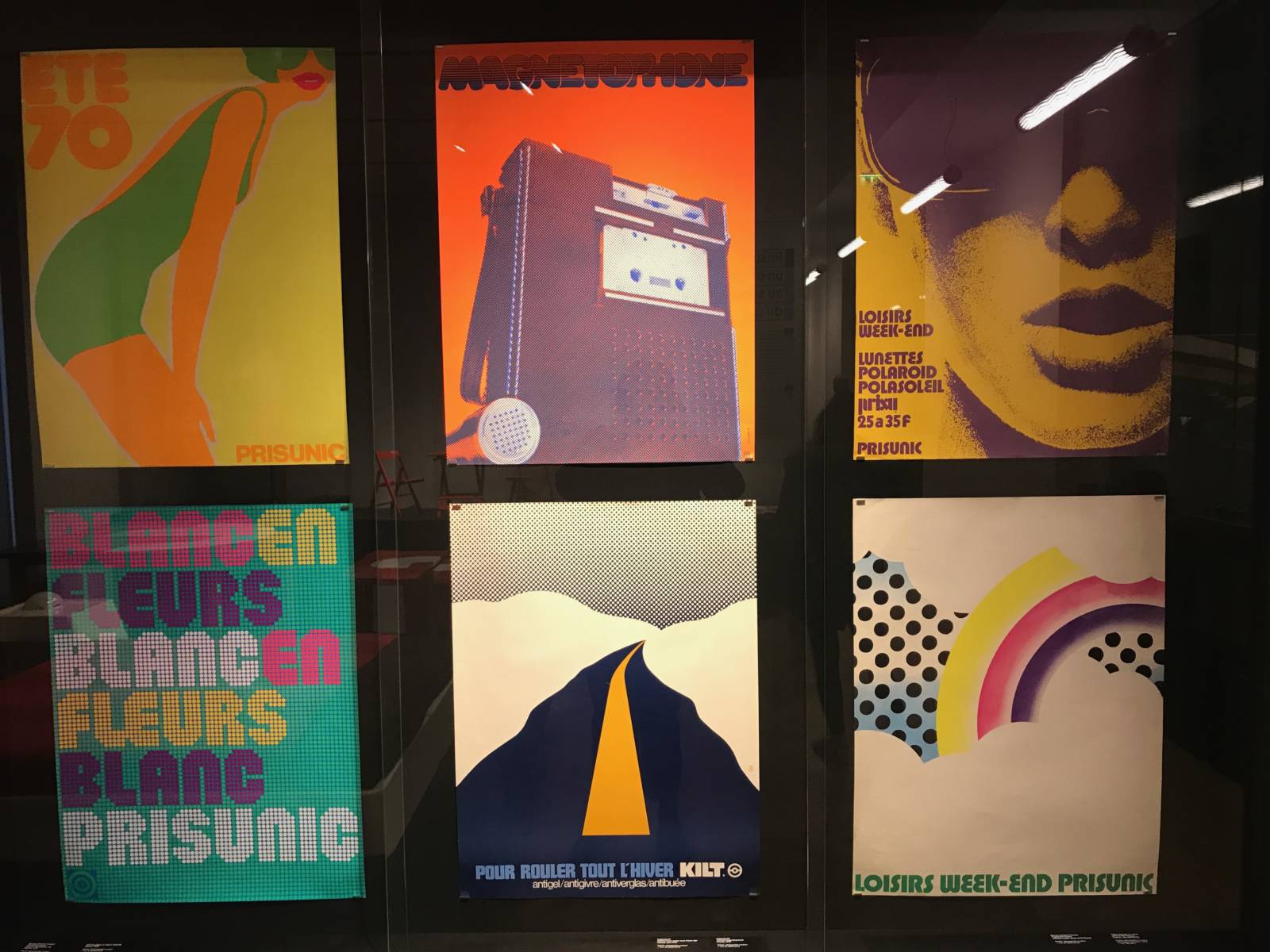
Some pretty iconic French ads I was inspired by at the Museum of Decorative Arts

I spent most of my time at the Bibliothèque Forney, a library specializing in design and the decorative arts. I emailed ahead of time to speak with one of the librarians, who wanted to get a sense of my argument and which advertisements he could direct me into researching according to my response. After explaining my general thesis topic and the research I had done in my previous two JPs (pro-tip: explaining a thesis topic in a foreign language is a good marker for how well you understand it—or rather how much you don’t), he responded bluntly: “You really need to narrow this down.” My face fell. That’s exactly what I was trying to do, the very reason I was in that library. I didn’t have a corpus of ads, which is what I was in search for in Paris. I had kind of hoped to look at a vast layout of ads and just be naturally drawn to an era, a medium, a theme, or product, but I quickly realized it was far too unrealistic to be able to survey three hundred years of French advertisements and just hope that a few of them would speak to me so I could write eighty pages about them. The librarian asked me how much time I had to write my thesis, suggesting one to two years, and I chuckled, slightly panicked, and said “six months.”

Categories
Present & Publish Findings

How to Get Work Done Without Even Trying: Passive Brainstorming for Essays and Final Assigments

In addition to this lovely position as a blogger for PCUR, I am also a Learning Consultant at McGraw. (*shameless plug*: Learning Consultations at McGraw are individual hour sessions with a student (like me!) where you come up with strategies on how to best handle your studies at Princeton). Last year, a couple consultants volunteered for the inaugural episode of McGraw’s podcast, “Making Learning Audible,” where we talked about finding balance between work and relaxation over winter break. During winter break in my first year at Princeton, I put a lot of pressure on myself to study intensively for exams but ended up just overwhelming myself and doing nothing. Any attempt to actively work on my essays to reach my high standard of getting super ahead on my Dean’s Date papers was met with instant exhaustion.

Get this level of electric brainstorming activity done without even thinking about it!

However, I said in the podcast: “For my sophomore winter break, I learned from that, and all I wanted was just a good place to start when I got back. I did not put a lot of pressure on myself. I let all the work that I had to do be kind of passive and if something came to mind that I really liked I would jot it down and get back to it”.

In this post, I’ll unpack what I meant by “passive work.” Active brainstorming, in my experience, is choosing to set aside time to sit down and build an essay or open-ended question on an exam from scratch. So, what does it look like to stretch out this brainstorm period so when you sit down to write, the paragraphs basically form themselves? Here are some tips on how I’ve been able to cut down on brainstorming time and get down to business:

Categories
Independent Work

Demystifying the “Black Box” Part I: Holy Moly I Have to Write a Thesis

This is it. After an R3, two JPs, and the countless research papers in between, I’m expected to craft the 15,000 to 20,000-word magnum opus of my Princeton career. And I have to say, I still don’t really know how it’s all going to go down.

There’s something I like to call the “black box” of every Princeton student’s research career. You’re given a massive independent research project to undertake, then some wizardry happens in Firestone, a lab, or studio, and voilà everything is complete! This second “magical” step is the black box: no one from the outside can see what goes into the project’s actual assembly. We only see stress as a side effect of this mystical process, and then a final product. Throughout the year, I hope to demystify this black box by revealing my own thesis-writing process: the highs, lows, brainstorming, writing, and of course, the research.


The “black box” metaphor is actually computing jargon for a system only understood in terms of inputs and outputs, with its inner workings remaining mysterious. To paraphrase one of my favorite movies Se7en, “What’s in the [thesis] box?” We’ll find out together!
So what does writing my thesis look like in its initial stages? Right now I’m still brainstorming and narrowing down my thesis topic, which will be about how Public Service Announcements (PSAs) subvert the capitalist practices within traditional commercial advertising, using some French theory as a lens (shout out to the Department of French and Italian!). Fortunately and unfortunately that’s a broad topic with nearly infinite directions, so I’m working on figuring out more specific direction.

I’m beginning this process by looking at my JPs, which also dealt with my thesis topic, but used a small number of specific examples. Both papers were divided into sections where I argued different points, and while re-reading them, I’m treating each section as if it were its own paper related to my thesis. I’m asking myself questions like: Assuming I had ten more pages to write for each section, which other theories could I incorporate to corroborate the arguments I was making? How can I specifically incorporate the topic of capitalism? How would different theorists critique my arguments, and how can this inform a strong rebuttal?

Categories
Independent Work Present & Publish Findings

Trusting My “Nugget”: Committing to Initial Ideas

Do you remember that old SAT advice of committing to your first multiple-choice answer? I have realized that choosing not to second-guess yourself applies to much more than standardized tests, and this realization has been an integral part of my research experience at Princeton.

Your intuition is as valuable as this pure Australian gold nugget!

When I’m confronted with a writing task, like seeing an essay prompt for the first time, thinking of my JP for this fall, or even this blog post (#meta), it is tempting to let myself panic and frantically begin brainstorming. But, before all of that chaos begins, an immediate seed of an idea always pops into my head. I call it my “nugget.” It could be a tidbit from a conversation I had with a friend, a theme I had been following in class, or, most recently, a side-note I had made over the summer about a potential JP topic.

However, I’ll often ignore my nugget as quickly as it appears. I’ll abide by “first is worst” logic and assume that the first idea I think of to start a research project cannot possibly be as developed as the result of hours of brainstorming. So, I’ll put myself through the ringer searching for other topics. But, almost inevitably, the products of these intensive brainstorming sessions fall short, and I circle back to my initial idea.

Categories
Present & Publish Findings

January Already? How to Begin Preparing for a Final Essay WAY in Advance

I surprised my inner procrastinator this week and thought about my final essay for my junior seminar a week and a half before midterms. I had written about an interesting theme in my Blackboard response, and thought in passing that it could make a good topic for an extended essay. I didn’t take this thought too seriously at first, because with finals being months away, I didn’t want to add any extra stress overthinking

Don’t be alarmed! You don’t have to have your final essay together now, but even giving it a passing thought early on is helpful.

everything. But then I realized that thinking long-term about finals, even casually, could actually make Dean’s Date a lot less stressful. I then made a mental note of this potential essay topic and planned on consistently revisiting it as I progressed through the course.

Several difficulties come with courses that have final papers. Some prompts are open-ended, leaving you to find a relevant and interesting research topic related to the course with little guidance. Others are more specific, requiring you to tailor a semester’s worth of information and synthesize it into a

Categories
Conduct Research

From Perfection to Passion: An Update

Last February I wrote a post about reconciling my love for STEM with my humanities major. The summer before my junior year, I made a compromise with myself: take at least one quantitative course a semester. I thought this to be the most realistic plan to stay on track with my French major while keeping a promise to cultivate my inner Neil DeGrasse Tyson. I’m kicking off this plan with taking Intro to Data Science this fall.

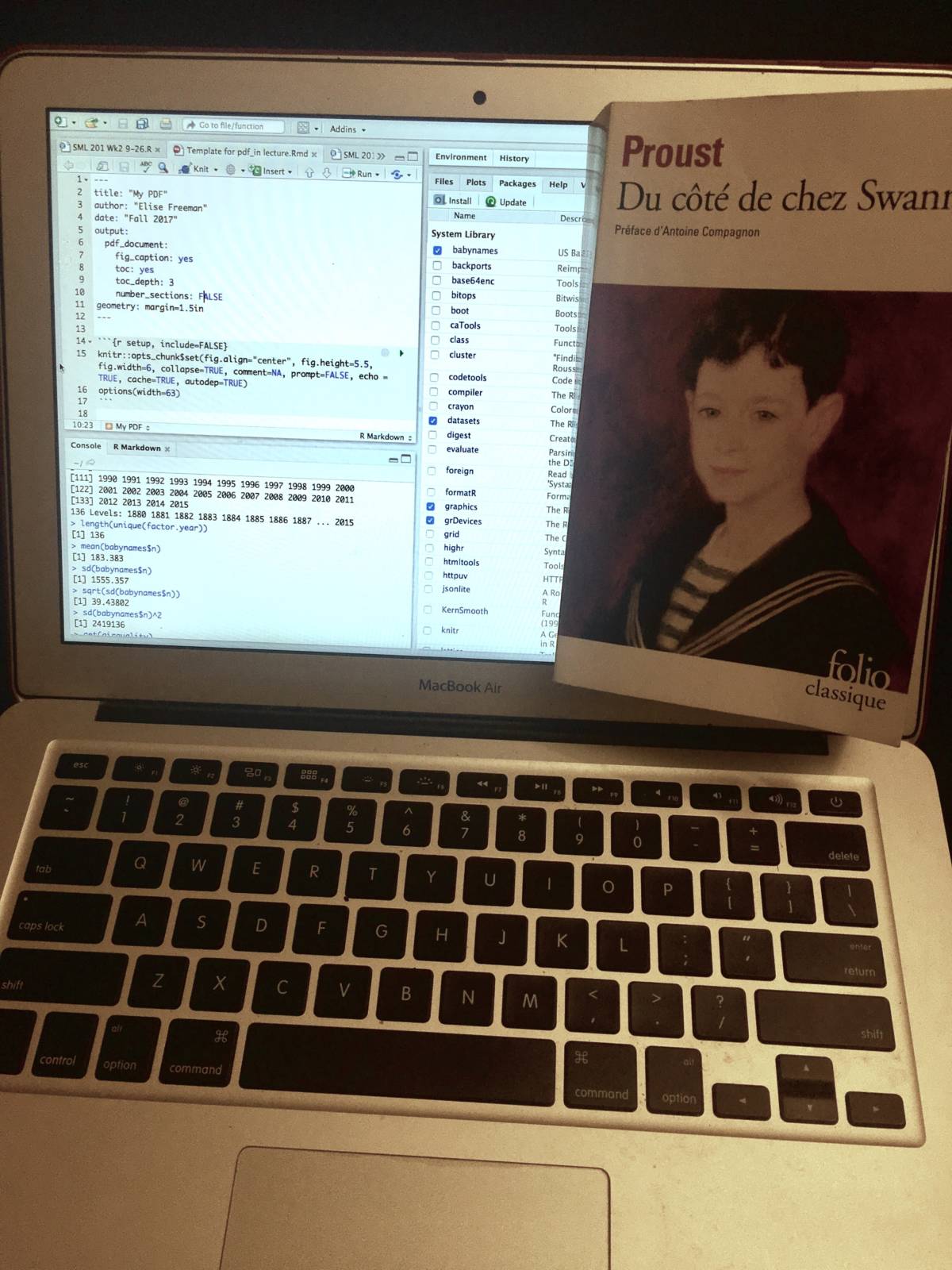
RStudio and French literature get along better than I thought!

This compromise is useful on an academic level, given my new interest in Digital Humanities, a field that combines both humanities and technology. I am hoping to prime my quantitative side to explore this field, potentially for my senior thesis.

Categories
Conduct Research

What is Digital Humanities? An Interview with Jean Bauer, Associate Director for the Center for Digital Humanities

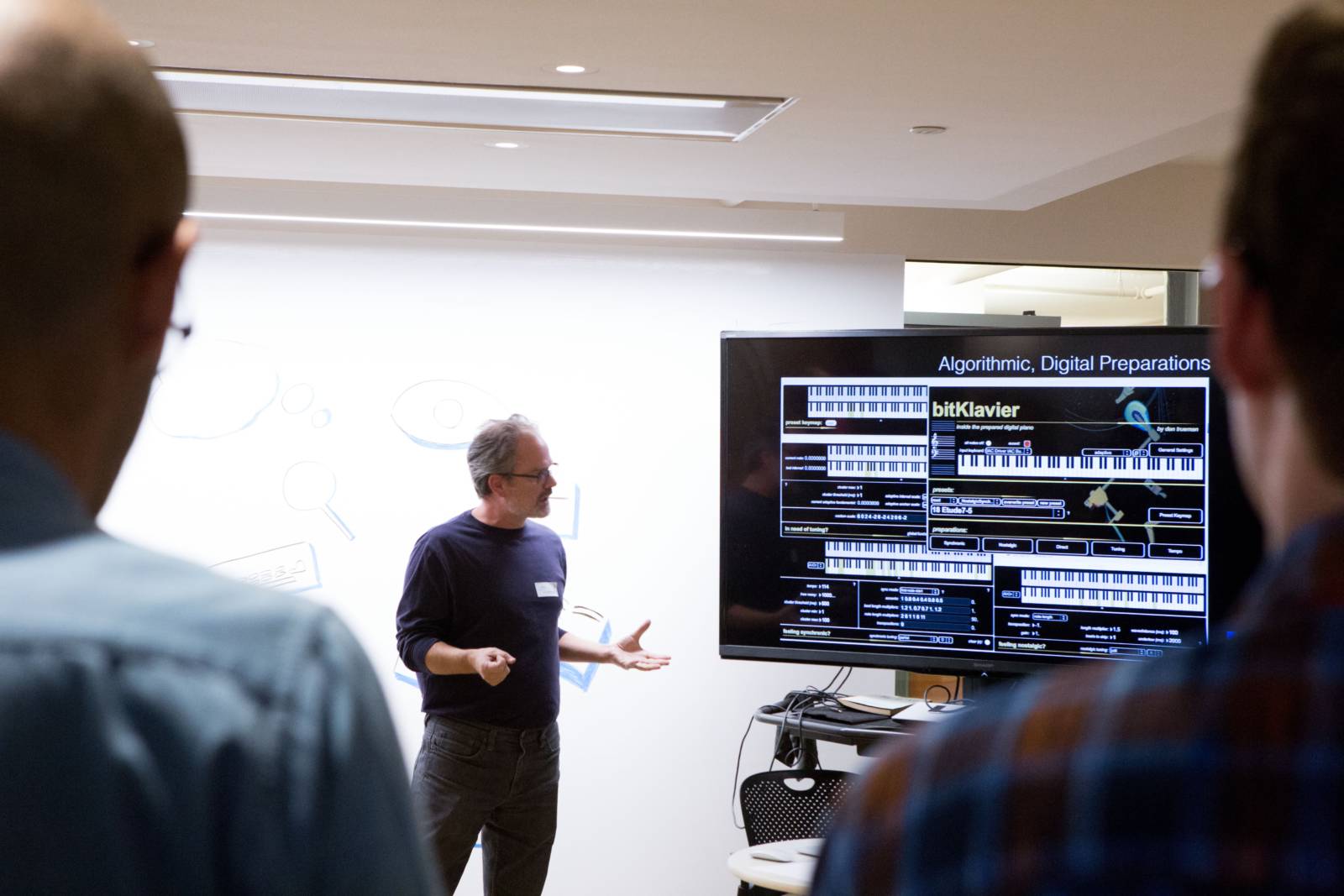
A researcher presenting a project at CDH’s open house last year

Last spring, my friend, now alum, told me she was going to study Digital Humanities at Stanford in the fall. This was the first time I heard of the field. She had discovered it through the Center for Digital Humanities (CDH) at Princeton, an interdisciplinary research center dedicated to embracing technology as a way to understand the human experience. I spoke with Jean Bauer, Associate Director for CDH at Princeton, to see what this seemingly contradictory field was all about, and how students can engage with it.

Elise Freeman: For people who aren’t familiar with the field, can you give an explanation of what Digital Humanities is?

Jean Bauer: Digital Humanities is an international community of scholars who are interested in one of two things, or both of them. One way to get into Digital Humanities (DH) is to look at the record of the human experience and put that in conversation with digital computational methodologies that are being developed primarily but not exclusively in Computer Science. Think of things like network analysis, geospatial analysis, and data visualization and see what new questions you can ask of those sources and if there are any older questions that you can get a little more purchase on. That’s one kind of DH. The other kind is taking the training that we get as humanities scholars and using it to critique current technology and the ways in which it does or doesn’t account for things like disability, queer identity, race and other factors.

Categories
Present & Publish Findings

In Between the Lines: A Guide to Reading Critically


A good example of how I mark up my readings as I go

I often find that Princeton professors assume that we all know how to “read critically.” It’s a phrase often included in essay prompts, and a skill necessary to academic writing. Maybe we’re familiar with its definition: close examination of a text’s logic, arguments, style, and other content in order to better understand the author’s intent. Reading non-critically would be identifying a metaphor in a passage, whereas the critical reader would question why the author used that specific metaphor in the first place. Now that the terminology is clarified, what does critical reading look like in practice? I’ve put together a short guide on how I approach my readings to help demystify the process.

  1. Put on your scholar hat. Critical reading starts before the first page. You should assume that the reading in front of you was the product of several choices made by the author, and that each of these choices is subject to analysis. This is a critical mindset, but importantly, not a negative one. Not taking a reading at face value doesn’t mean approaching the reading hoping to find everything that’s wrong, but rather what could be improved.
Categories
Conduct Research

Me, Myself and I: My Favorite Study Buddies

Me studying with all of my friends! 

Recently I have been thinking a lot about the environments in which I work best, and I have made some important self discoveries that have allowed me to be more focused and productive in my work. A couple months ago I wrote a post about how my peers have shaped my Princeton experience. I’m someone who values social interaction, and I think dialogue and exchange of ideas are absolute necessities within an academic environment. Conversations with my friends can be a saving grace when I’m in an especially tough spot. However, this semester I’ve given myself a lot more time to be alone, and that has contributed positively to my Princeton experience.

Categories
Conduct Research

Keeping Calm Before the Storm

I’m not overly stressed right now … and it feels weird. Last semester, I got used to the combo of my procrastination and taking three seminars, so I was always drowning in last minute readings and response papers. But this semester, things changed: I’m deliberately managing my time better because I don’t want to experience the frenzy I went through in the fall.

A very accurate photo of me maintaining my cool during the semester

It feels odd not to be under crushing stress. It’s almost as if I fear things will get gradually harder and I won’t be able to keep up. That said, I discovered I really like this calm state I’m in. I’m more focused and engaged, probably because I’m making an effort not to put myself in the same procrastination- stress-burning out cycle. My work is getting more demanding each week, but I’m still maintaining an equilibrium.

I realized I’d like to maintain this mentality as long as possible, especially when midterms and finals weeks hit. Here are some tips I have–whether you feel crushing pressure or just feel like you’re coasting through–on how to stay relaxed and optimistic even as your work becomes more demanding.