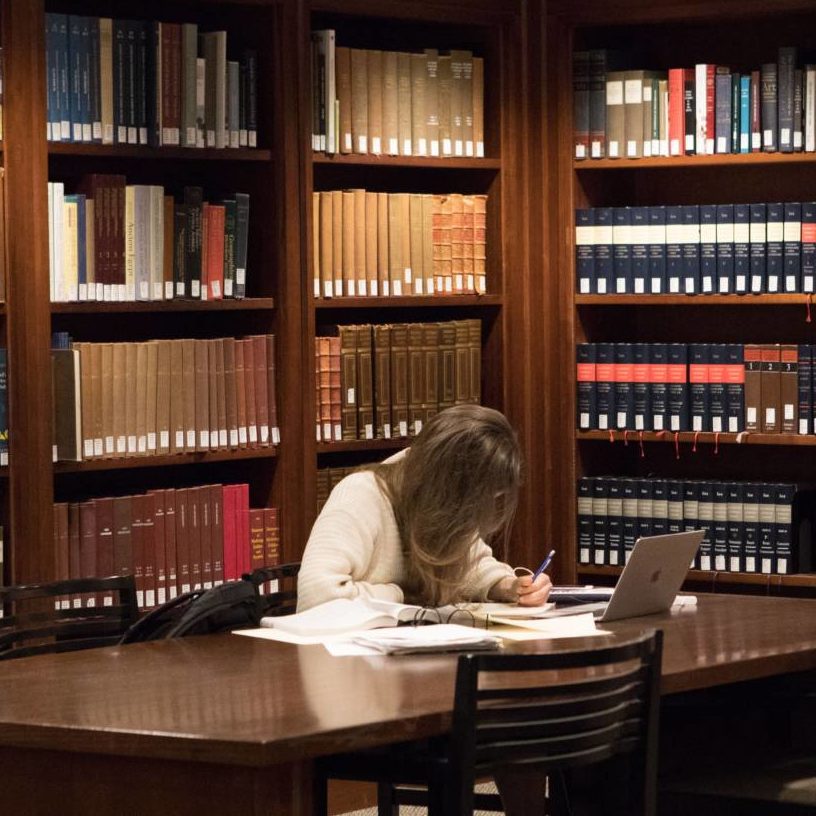
Nothing screams legal research more than hefty, leather-bound tombs and dark wood furnishings.
While Princeton doesn’t have a law school (at least, not anymore), a number of University departments offer interesting courses in legal theory, history, and philosophy. Students in these courses—especially those new to legal studies—may find themselves overwhelmed by strange Latin words and mountains of footnotes. Fortunately, there are a number of online and University-provided resources specifically geared toward legal research, which anyone writing a paper concerning law would be wise to use. The following is a rundown of some of my favorites from my time in POL 316: Civil Liberties with Professor Robert George.
The developmental social neuroscience lab studies how neural changes promote social, emotional, and cognitive development
As early as November of my freshman year, I remember hearing conversations around campus about summer plans. These conversations were not about the anticipation of vacation and relaxation, but rather the frantic and stressful search for the perfect summer opportunity to pad their resumes. It was safe to say that I was freaking out.
But this pressure motivated me to learn about my options, which ultimately allowed me to further explore my interests and participate in an incredibly rewarding research opportunity. After many meetings with my amazing academic advisers and career advisers at Career Services, I secured a position as a research assistant at a developmental neuroscience lab at UNC Chapel Hill.
This position consisted of nine consecutive weeks of unpaid, nine to five workdays, and the occasional shift on evenings and weekends. Sound draining? Yes, but I loved every second of it. Don’t get me wrong, it was a lot of work. But what was so enlightening about the experience was the fact that I actually enjoyed doing the work. I found something I was passionate about and I had the opportunity to engage with it every single day.
The first day was a blur—meeting everyone in the lab, getting familiar with the lab space, moving into my office (my own office!!!), and running around campus collecting my various parking permits and ID badges. After taking care of these logistical details, I hit the ground running.
During tenth grade, I began working as a research assistant at a Chemical and Biological Engineering lab at Princeton—a project I continued until we published a paper early this year. This lab performed computational research using extremely complicated algorithms. As a tenth grader, I had none of the basic knowledge I needed: no chemistry, biology, or coding.
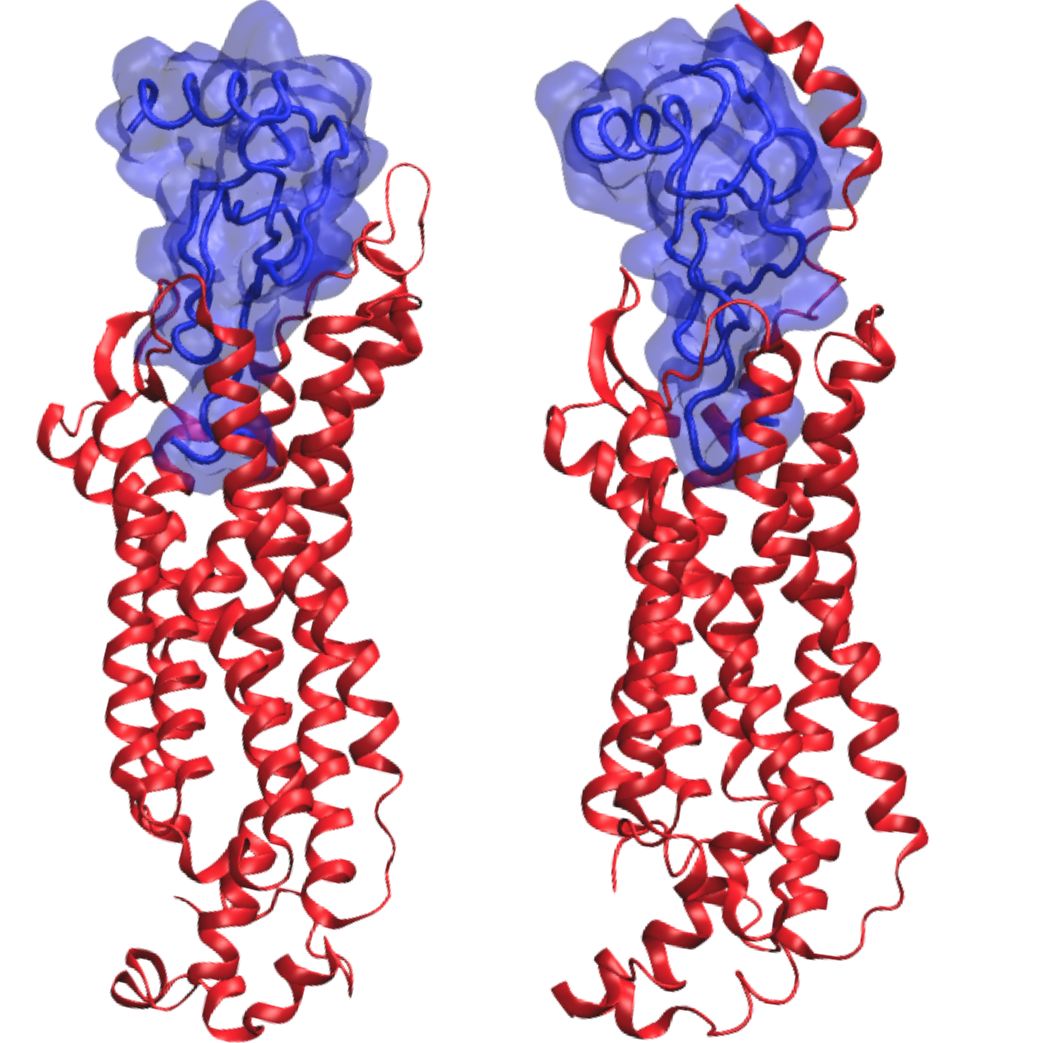
The 3D folding structures I generated for HIV-1 receptor proteins and their ligands–one of the projects I worked on.
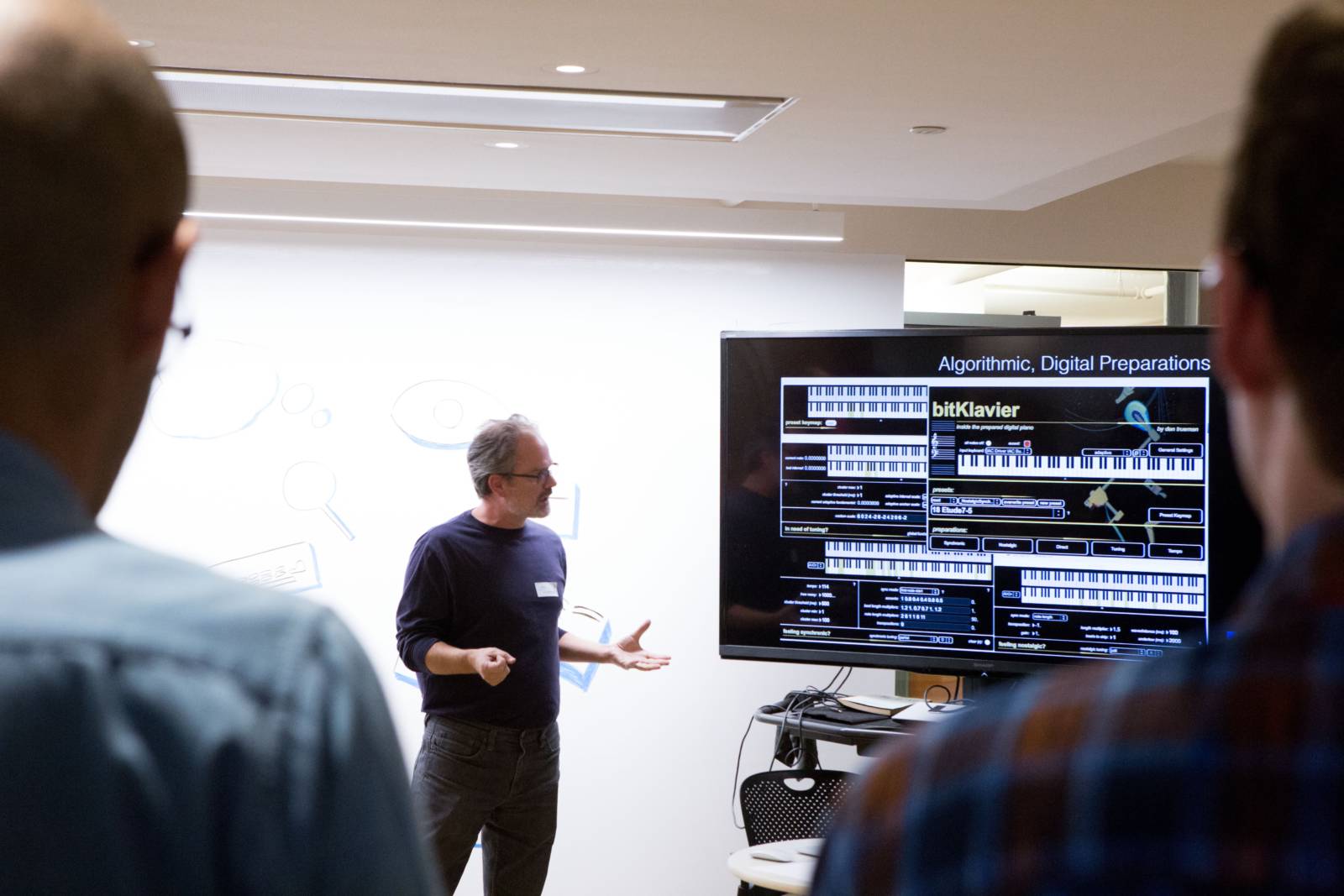
A researcher presenting a project at CDH’s open house last year
Last spring, my friend, now alum, told me she was going to study Digital Humanities at Stanford in the fall. This was the first time I heard of the field. She had discovered it through the Center for Digital Humanities (CDH) at Princeton, an interdisciplinary research center dedicated to embracing technology as a way to understand the human experience. I spoke with Jean Bauer, Associate Director for CDH at Princeton, to see what this seemingly contradictory field was all about, and how students can engage with it.
Elise Freeman: For people who aren’t familiar with the field, can you give an explanation of what Digital Humanities is?
Jean Bauer: Digital Humanities is an international community of scholars who are interested in one of two things, or both of them. One way to get into Digital Humanities (DH) is to look at the record of the human experience and put that in conversation with digital computational methodologies that are being developed primarily but not exclusively in Computer Science. Think of things like network analysis, geospatial analysis, and data visualization and see what new questions you can ask of those sources and if there are any older questions that you can get a little more purchase on. That’s one kind of DH. The other kind is taking the training that we get as humanities scholars and using it to critique current technology and the ways in which it does or doesn’t account for things like disability, queer identity, race and other factors.
I enrolled in GEO/WRI 201, Measuring Climate Change: Methods in Data Analysis & Scientific Writing, last Fall to challenge myself and learn how to integrate field work, scientific analysis, and writing. Although I already had cursory experience in these areas thanks to a Freshman Seminar on Biogeochemistry in the Everglades and a summer of assisting ecological fieldwork in Mozambique, I had never created and executed my own field project from start to finish. In my naiveté, I presumed that although the course would be difficult, I would conduct research that had a clear and established “finish-line”—and that I would reach it.
My project centered around quantifying changes in vegetation cover in Utah over the past twenty years using satellite imagery. The first couple months of the class were frustrating and I floundered across the deadlines. Most of the science courses I had taken offered a framework: a set of given questions with specific, correct answers. In real research, I found, you must create the questions—and they don’t necessarily have “correct” answers.
Successful research is based on convincing motive that builds off of key literature to contextualize and explain the broader importance of a specific research question.
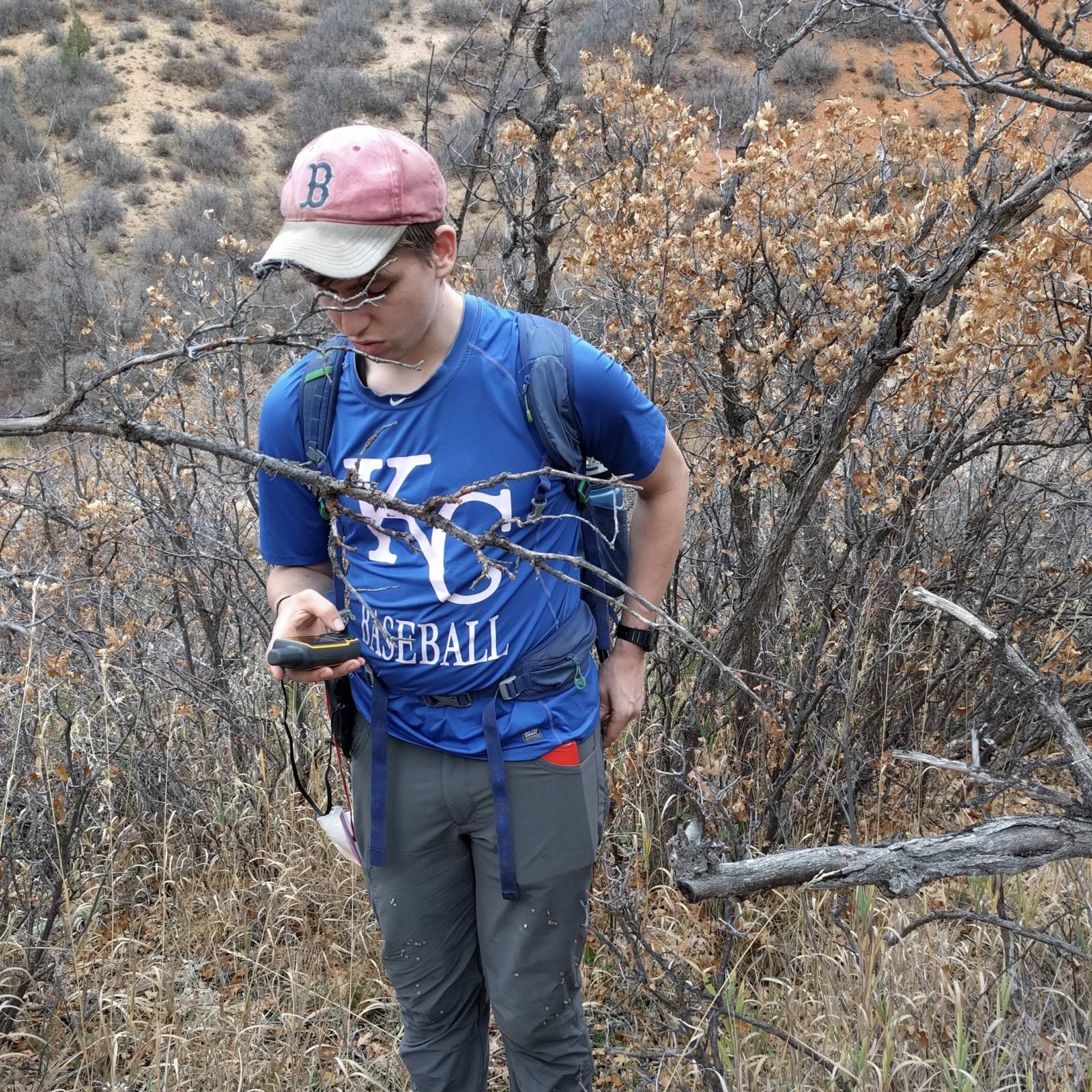
The Author takes a GPS reading in Spanish Fork Utah. Unfortunately, the field work never even made it into the paper…
Despite my struggles, the project seemed to be coming along. Using images from multiple Landsat satellites, I created a beautiful figure showing a steep decline in vegetation tightly correlated with rising temperatures and decreasing rainfall. Genuine results linking changing climate to remotely sensed vegetation! I was thrilled.
However, after weeks of writing and data analysis, I discovered that the seemingly important trends I was writing about were–to put it bluntly–garbage. In a peer review session, another student in the class hypothesized that the apparent decline in vegetation might be simply an artifact of comparing imagery from different Landsat satellites. I scoffed–but I also started to worry.
When you’re about to graduate, you spend a lot of time thinking about the future. But you also spend a lot of time thinking about the past.
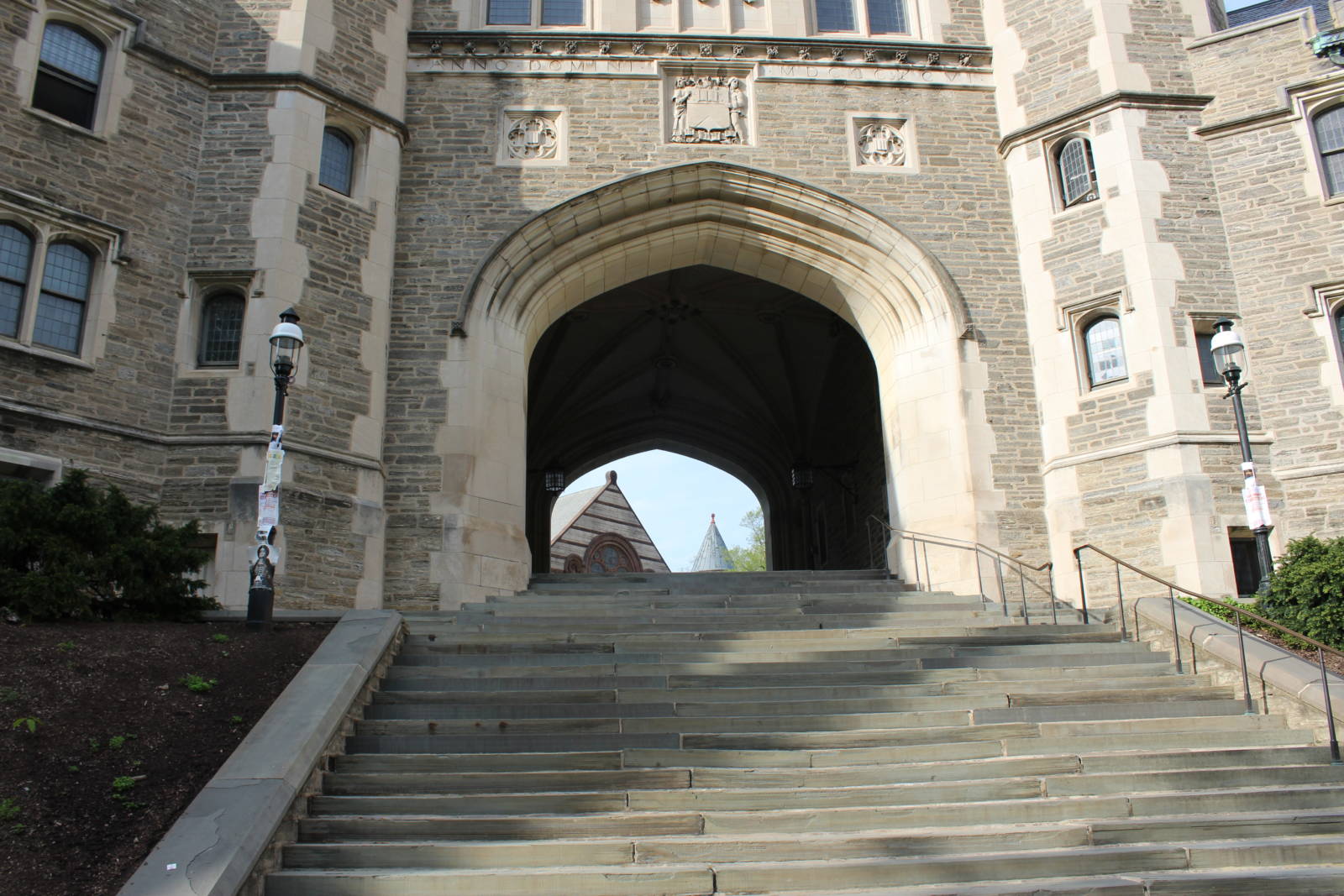
Metaphorical steps were climbed in the journey that inspired this post. Literal steps were climbed to get pictures for it.
Often, this can slip into abstract nostalgia (which I am certainly guilty of). Other times, however, this is focused on something oddly specific. Something you spent a lot of time on. Something like … well, PCUR.
Over the past few days, I’ve thought a lot about the posts I’ve written since my sophomore year. I figured it would be fun to retrace my research journey with the benefit of hindsight.
Recently I have been thinking a lot about the environments in which I work best, and I have made some important self discoveries that have allowed me to be more focused and productive in my work. A couple months ago I wrote a post about how my peers have shaped my Princeton experience. I’m someone who values social interaction, and I think dialogue and exchange of ideas are absolute necessities within an academic environment. Conversations with my friends can be a saving grace when I’m in an especially tough spot. However, this semester I’ve given myself a lot more time to be alone, and that has contributed positively to my Princeton experience.
February 28. I’m sitting in the basement of Guyot Hall, grinding dried algae with a mortar and pestle.
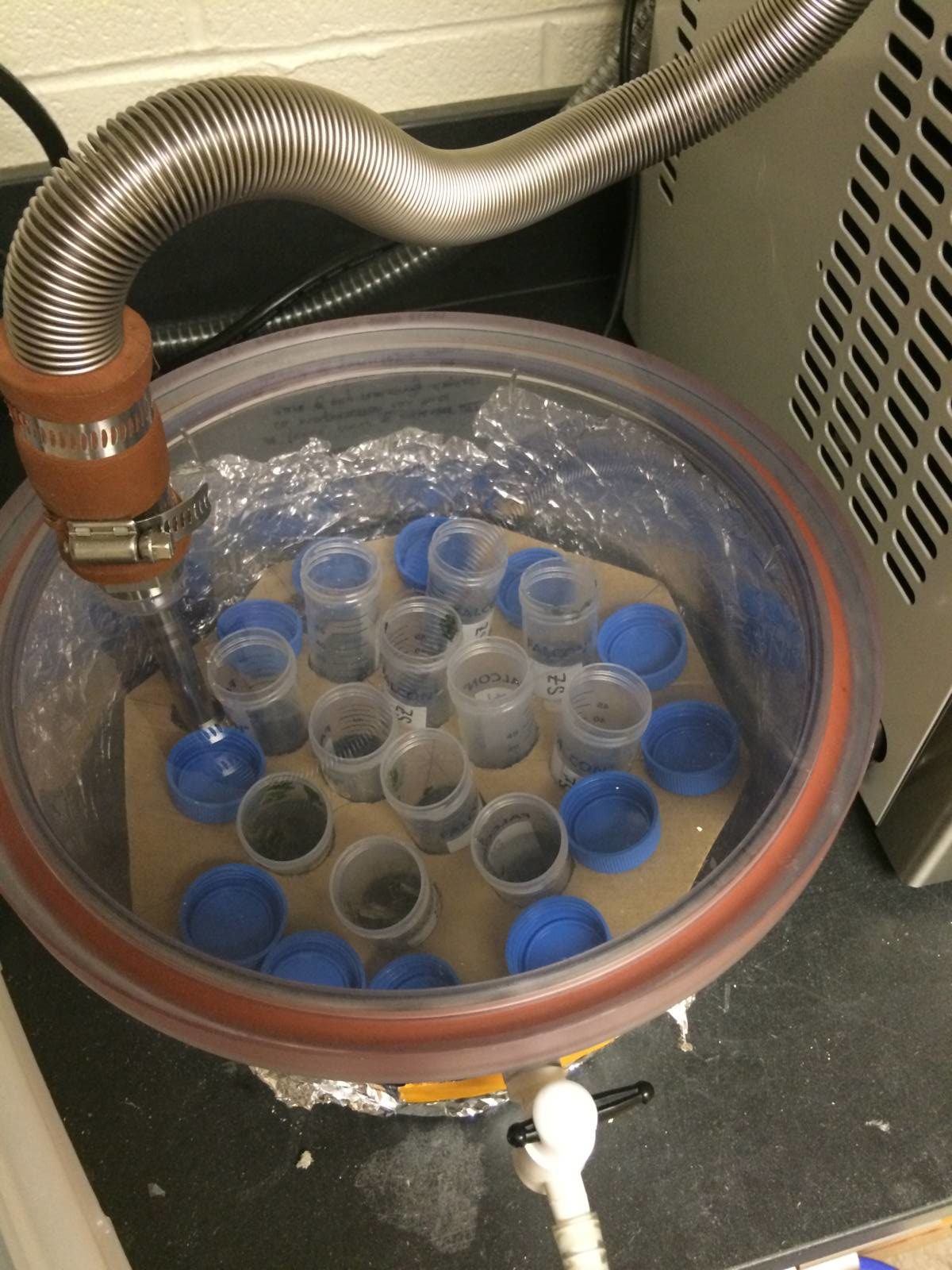
Vials of algae in the freeze-drier – the first stage of analysis.
At this stage, Caulerpa racemosa, the Green Grape Alga, no longer looks its name. In its natural habitat, Caulerpa’s short stalks bob in the water like clumps of balloons. Its round “leaves” are clustered around the stalks just like green grapes, if grapes were the size of pinheads. But by now I’ve freeze-dried these samples so they are shriveled and stiff, and once I’m done grinding them, the plants are reduced to a uniformly fine olive-green powder.
This is what science looks like for me this winter. It’s not simmering test tubes or even statistics: just the incremental alchemy of water samples and crusty Caulerpa into numbers with the potential to tell a reef’s story.
At a recent job interview, I was asked to talk about the lessons I’ve taken away from my research. One image that came to mind was that of my water samples: the hundred or so bottles that I filled in the ocean in Bermuda, carried back to Princeton in a cumbersome cooler, and spent much of this winter analyzing in the lab. Lined up in the freezer, the bottles are identical but for their labels. These bottles contain the most important data I have – and, for months, they’ve looked exactly like identical bottles of water.
But identical they are not. After many a long lab day, I have numbers to crunch – each bottle associated with nutrient concentrations and nitrogen isotope data that begin to tell the reef’s secrets. These nutrient data represent the raw materials available to plants and animals on the reef. The isotope data help determine where those raw materials have come from, and what organisms are using them. In my thesis, I am studying how nutrient pollution coming from human sewage changes the geochemistry of Bermuda’s reefs, affecting reef organisms, like Caulerpa, that use those nutrients. This has the potential to shift the ecosystem’s balance: nutrient enrichment puts reef-building corals at a disadvantage, threatening the intricate, biodiverse communities – of anemones and angelfish and everything in between – that corals support.
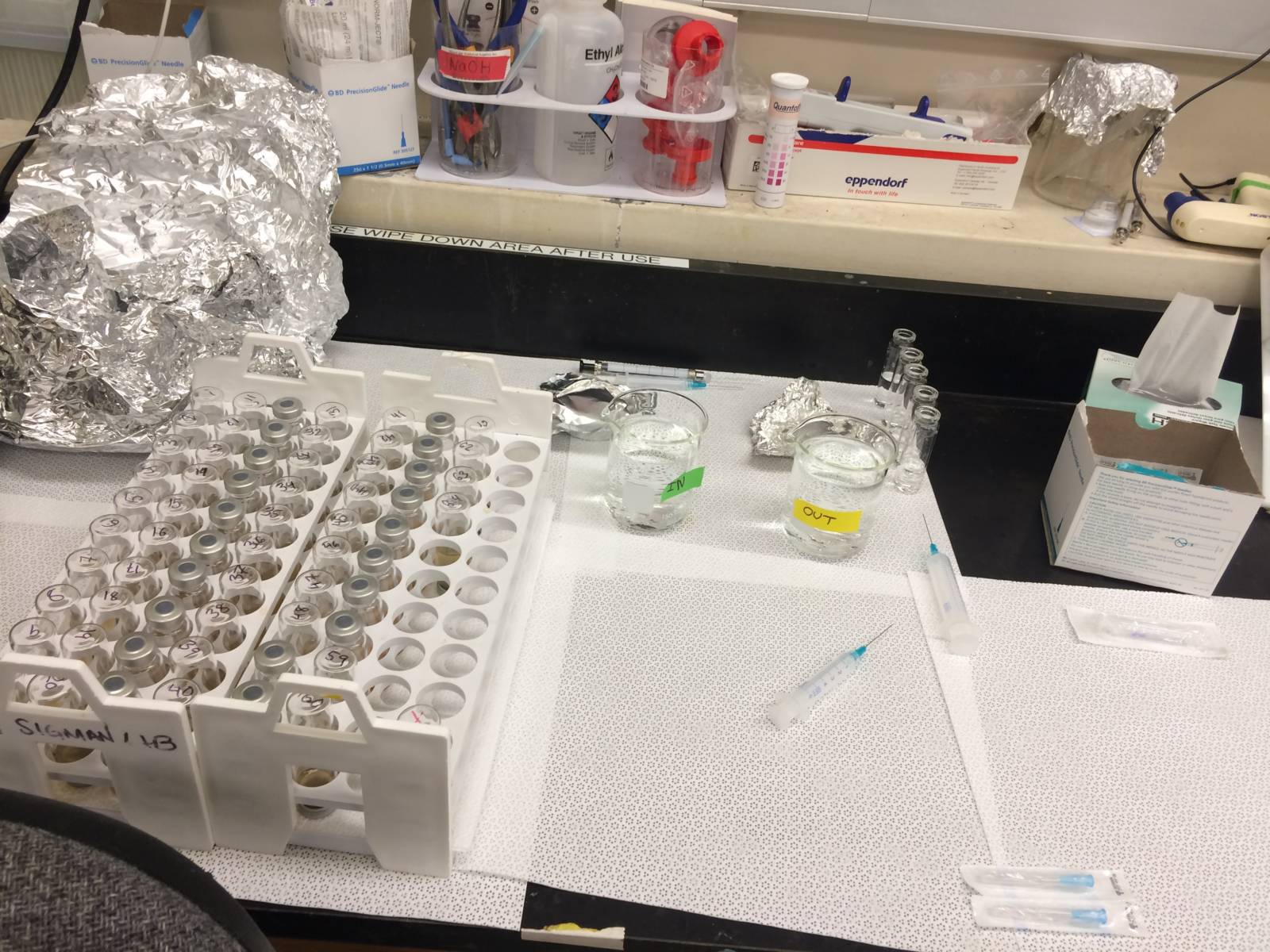
A set of water samples mid-way through vial injections for isotopic analysis.
I’m not overly stressed right now … and it feels weird. Last semester, I got used to the combo of my procrastination and taking three seminars, so I was always drowning in last minute readings and response papers. But this semester, things changed: I’m deliberately managing my time better because I don’t want to experience the frenzy I went through in the fall.
A very accurate photo of me maintaining my cool during the semester
It feels odd not to be under crushing stress. It’s almost as if I fear things will get gradually harder and I won’t be able to keep up. That said, I discovered I really like this calm state I’m in. I’m more focused and engaged, probably because I’m making an effort not to put myself in the same procrastination- stress-burning out cycle. My work is getting more demanding each week, but I’m still maintaining an equilibrium.
I realized I’d like to maintain this mentality as long as possible, especially when midterms and finals weeks hit. Here are some tips I have–whether you feel crushing pressure or just feel like you’re coasting through–on how to stay relaxed and optimistic even as your work becomes more demanding.
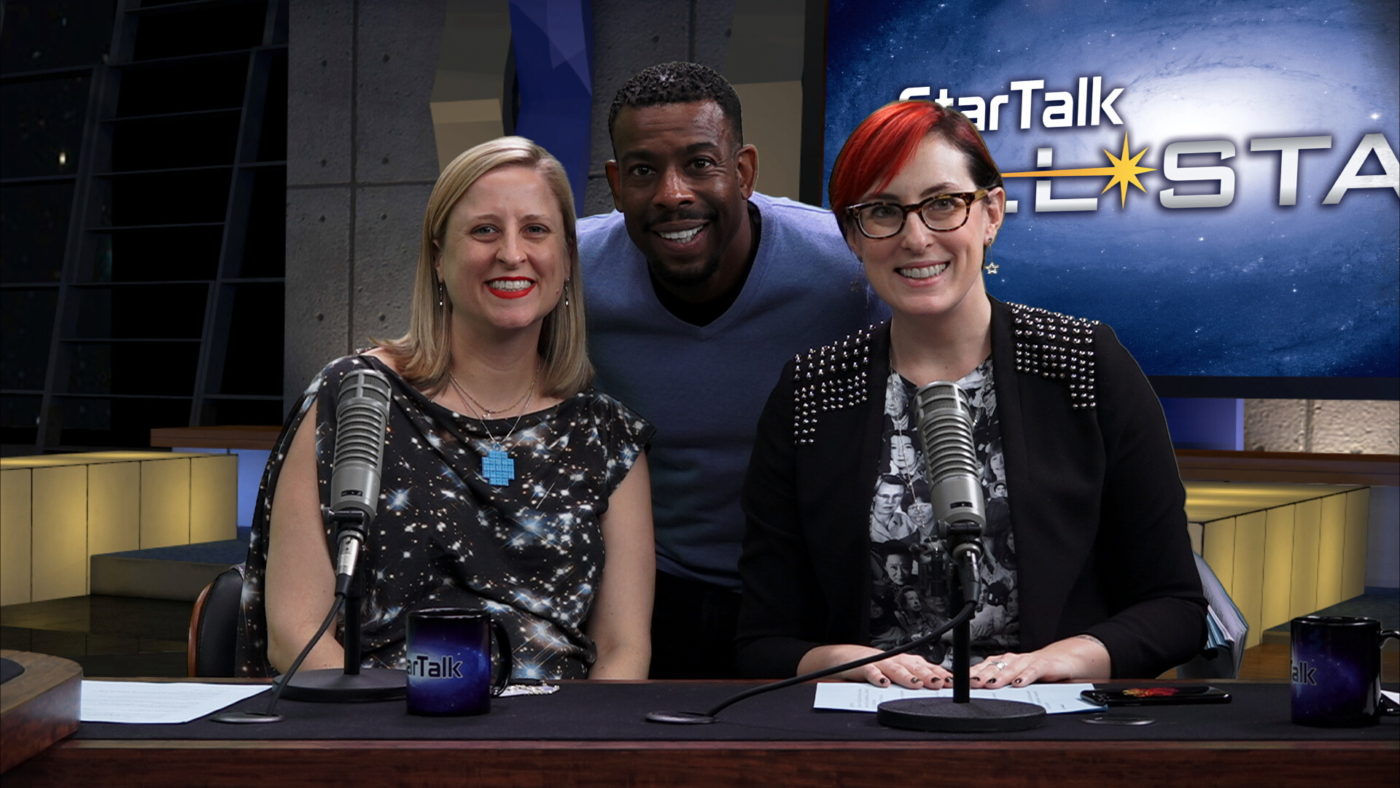
While listening to an astrophysics podcast, I stumbled into an epiphany about my course of study at Princeton. It was Neil DeGrasse Tyson’s StarTalk, and two female astrophysicists had been invited on the show to discuss women in the field. About halfway through the episode, I asked myself why I wasn’t pursuing astronomy as a major, especially since I’ve had a fascination with space since childhood. I circled back to high school for an explanation. I had gotten an A- in pre-calculus for the year, and since I was immersed in the high school mindset of perfectionism, I convinced myself I wasn’t good enough at math to pursue anything in the STEM fields. My fellow PCUR blogger Vidushi wrote about how this same feeling I had of lacking “innate brilliance” creates gender gaps in fields like astrophysics. She writes, “Women who don’t see themselves as innately brilliant mathematicians, musicians, or philosophers often do not give themselves the chance to pursue these disciplines.”
Astrophysicists Emily Rice (left) and Summer Ash (right) with StarTalk co-host Chuck Nice
When it came time to apply to Princeton, I looked for things I thought I’d be “better” at, and that’s when I started looking into social sciences. I was attracted to the interdisciplinary nature of politics and had always enjoyed French in high school, so I decided to pursue these once I got to college. This course of study has not been easy by any means; however, I sometimes felt like I had settled into these fields because I wasn’t confident enough to pursue other ones. Complaints from my peers about the difficulty of the math and physics courses necessary to study astrophysics overwhelmed me, so I denied myself the opportunity to explore them. I also had this realization at the end of sophomore fall–right before having to declare a concentration in the spring. If you’re struggling with what you want to study at Princeton, hopefully I can give you some encouragement!