There’s a lot of information to remember for finals– learn how to keep it all straight.
With finals season approaching, a sense of dread sets in every time I take notes in lecture—how am I supposed to remember all of this information at once? Often the prospect of beginning the study process is so overwhelming that organizing all the information seems almost impossible.
As I mentioned in one of my previous posts, I’ve realized that a lot of my psychology research and coursework have provided many useful tips to make studying as effective and efficient as possible. I have compiled a few here to help you get started and hopefully feel more comfortable diving into studying when reading period comes around.
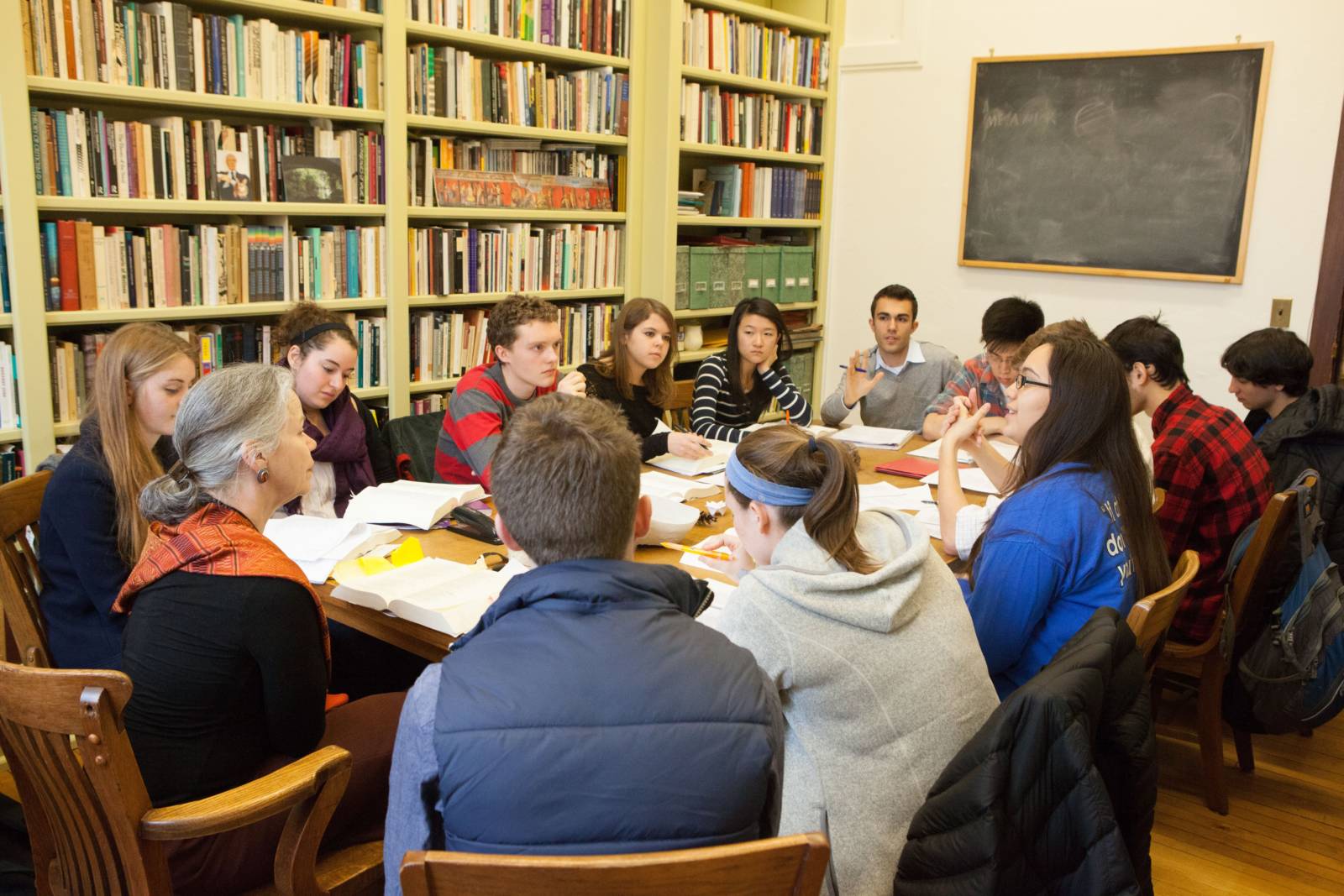
Your choice of concentration will definitely impact your precept experience–another reason to make this choice carefully!
My fellow A.B. sophomores, this post is directed at you (not my already-declared B.S.E friends). Whether you feel like your time at Princeton has dragged on or flown by, we now find ourselves at a crossroads. Next semester, we commit ourselves to something in a way that we have never quite done before: we declare a concentration.
Sophomores are generally in one of several stages with regard to major declaration by this point in the year. Some are dead set on a particular concentration. Others are relatively confident about which department they’ll choose, with some degree of uncertainty. Others still are rather split between or amongst several departments. And finally, a portion of the class might have very little idea about what they’ll choose in April. I personally find myself somewhere in between the second and third groups above. I’m deciding between a concentration that is comfortable and familiar to me, and one that would present more of an academic stretch–I haven’t taken many classes in the department, and in general, know less about the subject.
In my last post, I wrote about finding meaning in my academics through a research oriented class with local impact. This week, I am focusing on how another student is using research to make a positive local impact–not through taking a pre-existing course–but by creating a reading course that fit her specific academic goals. (If you are interested in reading courses, you can learn more about them here!)
This fall, Geosciences major Artemis Eyster ’19 is leading GEO 90_F2017 “Analyzing Ecological Integrity: An Assessment of Princeton’s Natural Areas,” a course she designed that centers around geological and ecological field research on Princeton’s campus. The eight students enrolled in Analyzing Ecological Integrity (AEI) are tackling field research projects such as measuring the bathymetry of Lake Carnegie to assess the rate of erosion on campus lands, gauging water-quality in campus streams, and surveying invasive plant species in campus woodlands. Artemis leads weekly class meetings to discuss course goals, review progress, and plan ahead, with the assistance of course advisers GEO Professor Adam Maloof and WRI Professor Amanda Irwin-Wilkins. I interviewed Artemis to better understand her motivation for creating the course and her experience taking charge of her academic work to make a positive impact on our campus.
What do you consider to be the purpose of this reading course?
AEI is about better understanding Princeton’s natural areas through rigorous scientific research and using our findings to articulate relevant land-use recommendations to the University. I believe that, as students going here, we should take responsibility for the land and environment around us. If we have the ability, we should use our scientific skills to help the University make decisions that protect our campus’s ecology. Another priority of the class is to record baseline measurements and design methodologies so that future student researchers have a strong framework they can expand upon either in classes or independent work.
“It is empowering to be able to identify something that I think is important and then go make it happen.”
How did you develop the idea for this reading course?
[GEO Professor] Adam [Maloof] saw a natural resource assessment report provided to the University by a professional consultant and thought that students could advance such assessments with high quality scientific measurements and greatly expand upon the work currently being done by the University. I love fieldwork, and I thought other students would also be excited to do impactful research on campus. Creating the class was a way to harness that excitement into commitment so that we would be able to get research done over the course of the semester.
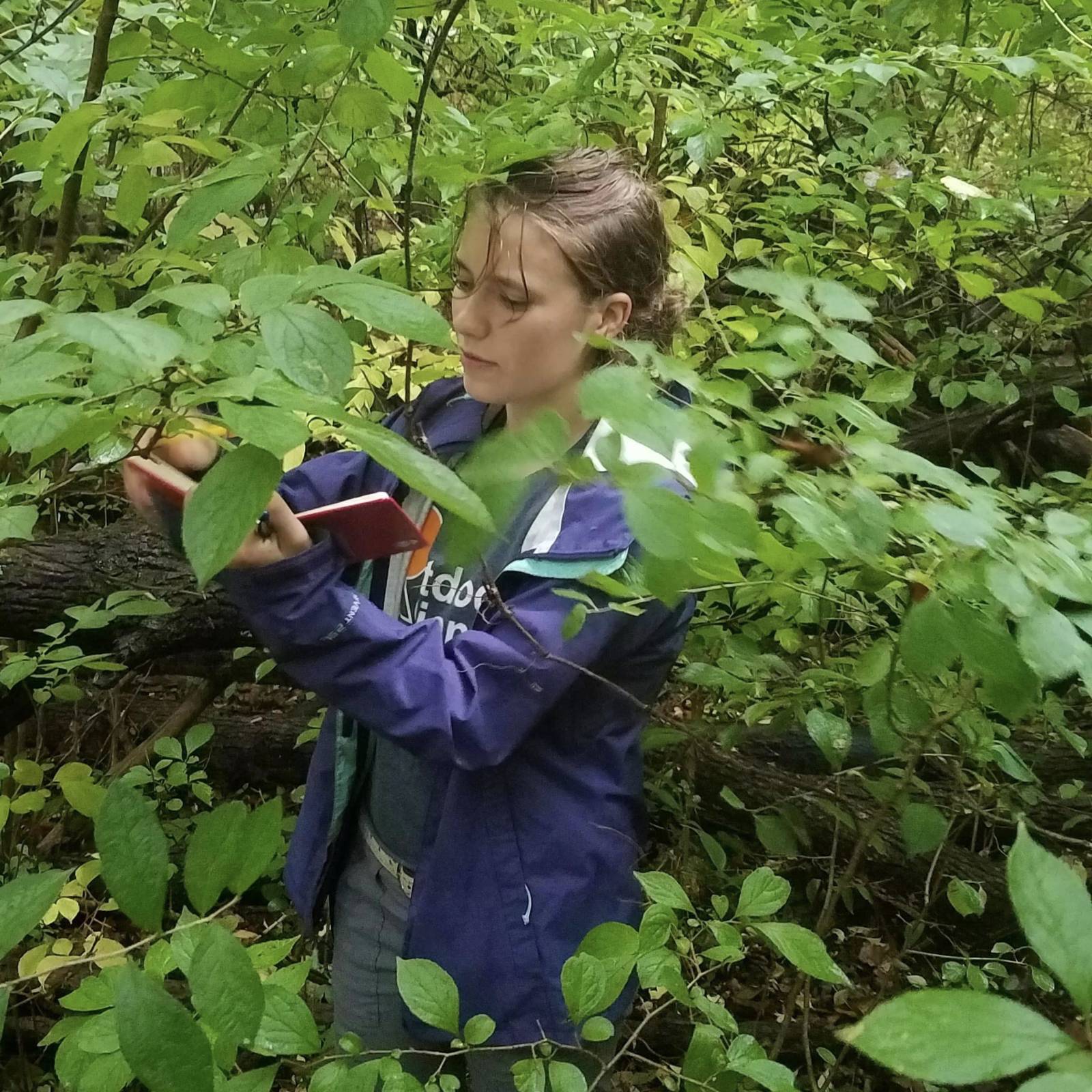
One of the perks of AEI is that field work is a major component of the course. Here, shrouded by leaves, Artemis records notes during a vegetation survey of campus lands.
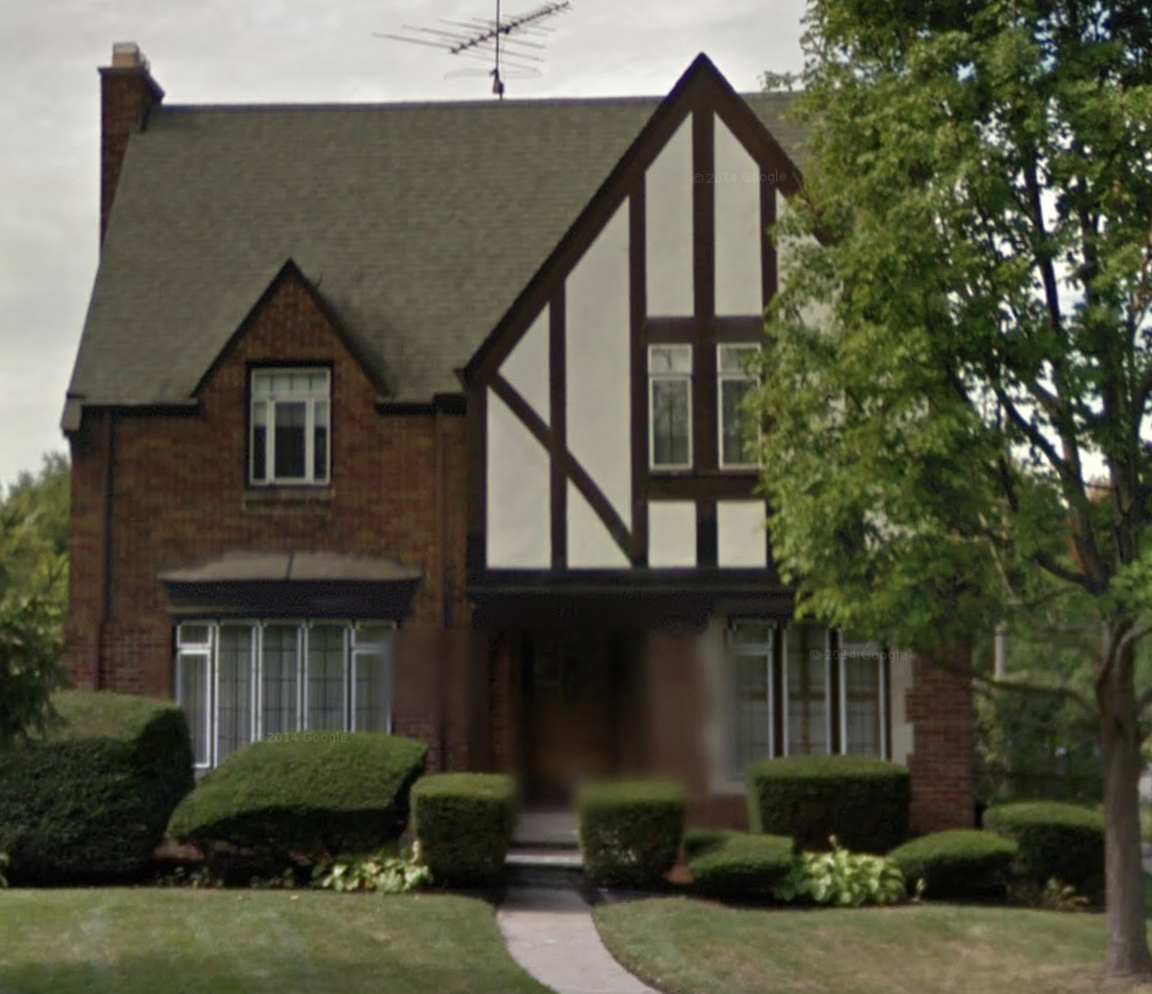
The author’s grandparents moved into this house in Grosse Pointe Park, Michigan.
Research allows us to uncover the uncomfortable truths about our surroundings, or even our homes. I’m currently in AAS 350, an African American Studies class with Professor Keeanga Yamahatta-Taylor about the politics and policy of housing in the United States. It’s something that might seem straightforward at first — how complicated is building a house? But in reality, American housing policy and attitudes towards housing often perpetuate and preserve racist biases in the ways in which we build our communities.
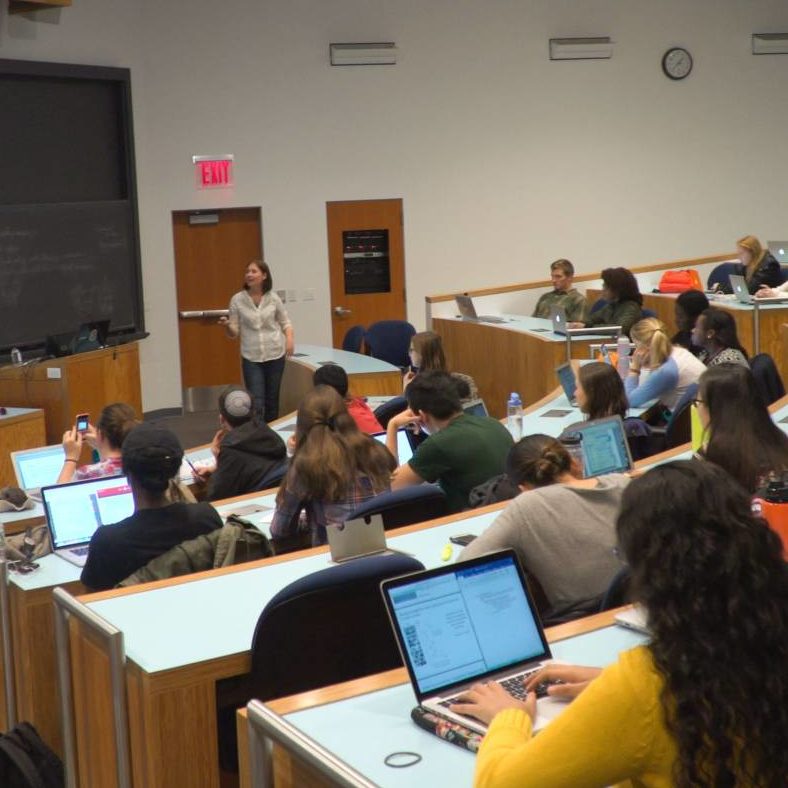
Sitting in the back of a lecture can make your professor seem distant. Reaching out via email, discussed below, can help you get to know them better.
In my last post, I ended with a suggestion: reach out to faculty members. This post is an assortment of advice on how to go about doing that. More precisely, this post is about how to get in touch with faculty for the first time. Yes, dear readers, today we discuss the joy that is the cold email.
There are several situations in which cold emailing can be in your interest. You might want to get to know the faculty member better, or to do research with them. You might also want their advice on research at other institutions, summer programs, or independent work. Whatever your individual case, however, certain general principles apply when reaching out to faculty.
If cold emails are new or intimidating to you, fear not. The advice contained below will (hopefully) make this menacing task feel much more manageable.
At least once a week, without fail, I will stop in the middle of the p-set I am working on, or the paper I am writing, and think “what is the point of this?” Sure, the pursuit of knowledge may be a reward unto itself, but I don’t want my academic goals to be purely selfish–I want my course work at Princeton to benefit others. To this end, I have sought engaging research-based courses that can have a positive impact on people’s lives. These classes combine my academic interests with my desire for meaning, and provide a concrete ‘point’ to my course work.
Sure, the pursuit of knowledge may be a reward unto itself, but I don’t want my academic goals to be purely selfish–I want my course work at Princeton to benefit others.
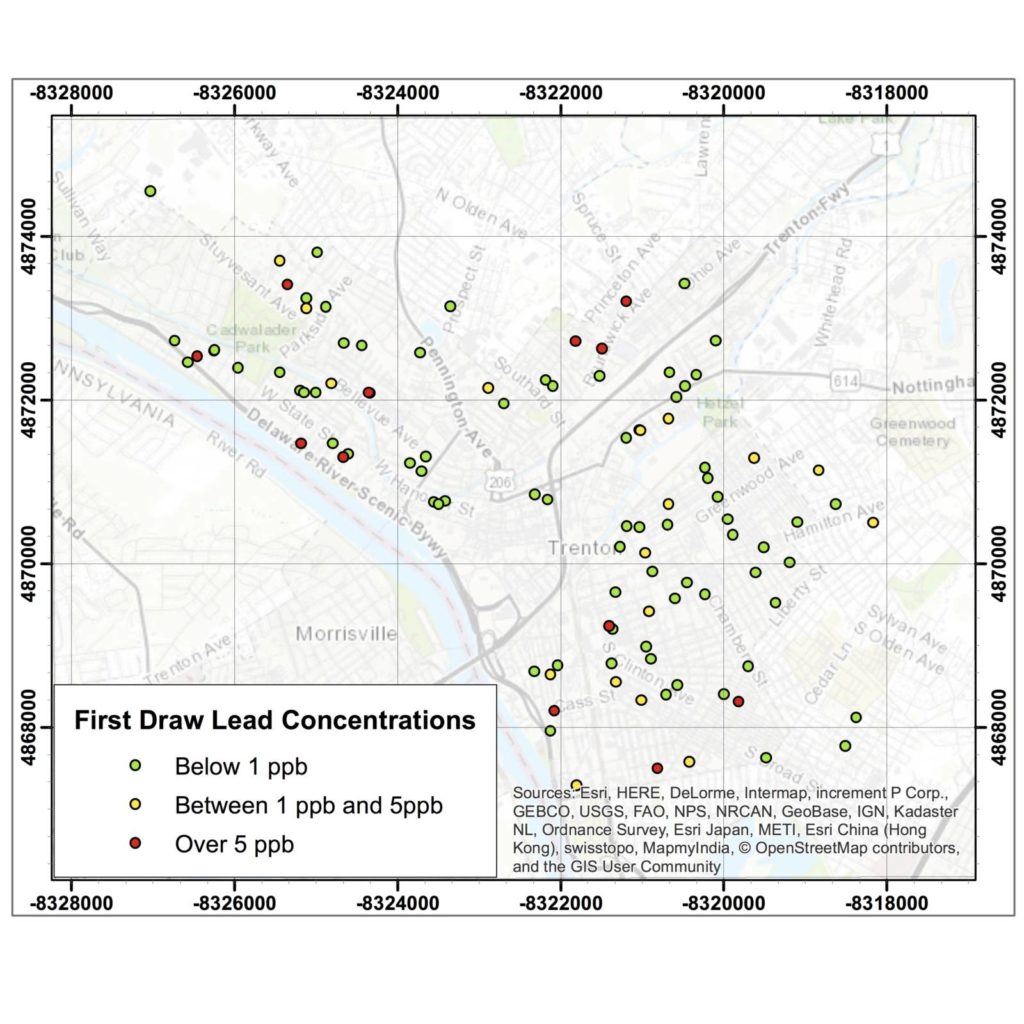
Last Spring, I participated in GEO 360, Geochemistry of the Human Environment, a course focused on providing chemical analyses of tap-water, paint, and soil for low-income residents of Trenton, NJ. Only 11 miles south of our orange-bubble along the towpath, Trenton is one of the poorest cities in the state and has a serious and systemic lead problem. Lead exposure is caused by the deterioration of lead paint into dust and the leaching of lead from pipes into drinking water. While lead paint was banned in 1978 and installation of lead piping was discontinued in the mid 1980’s, lead is still ubiquitous in Trenton where 90% of homes and buildings were constructed prior to 1978. As homes in the city age, the lead within them becomes mobilized and hazardous, and residents often do not have the financial means to keep their homes safe.
This map shows our measurements of lead concentration in parts-per-billion for water samples from homes around the city. Although most homes do not have high water-lead concentrations, there is no ‘safe’ amount of lead. (Map grid is UTM N zone 18)
Our class worked alongside Isles, a non-profit Trenton organization that has tested over 2,000 homes for lead and provided remediation work–all free of charge–over the past three decades. We assisted Isles with field work by collecting samples, and measuring paint and soil lead in urban residences. We then analyzed hundreds of tap-water samples, measuring elemental concentrations with a mass spectrometer and conducting multivariate analyses to quantify the correlations between metals within samples. Our work helped Isles identify at-risk homes in order to provide them with lead paint remediation and/or water filters.
At Princeton, ‘finding your way’ can seem as daunting as escaping the Labyrinth. Even when things are going well, I find myself asking thinks like: What are the best courses to take next semester? What should I do next summer? What should I do with my life?
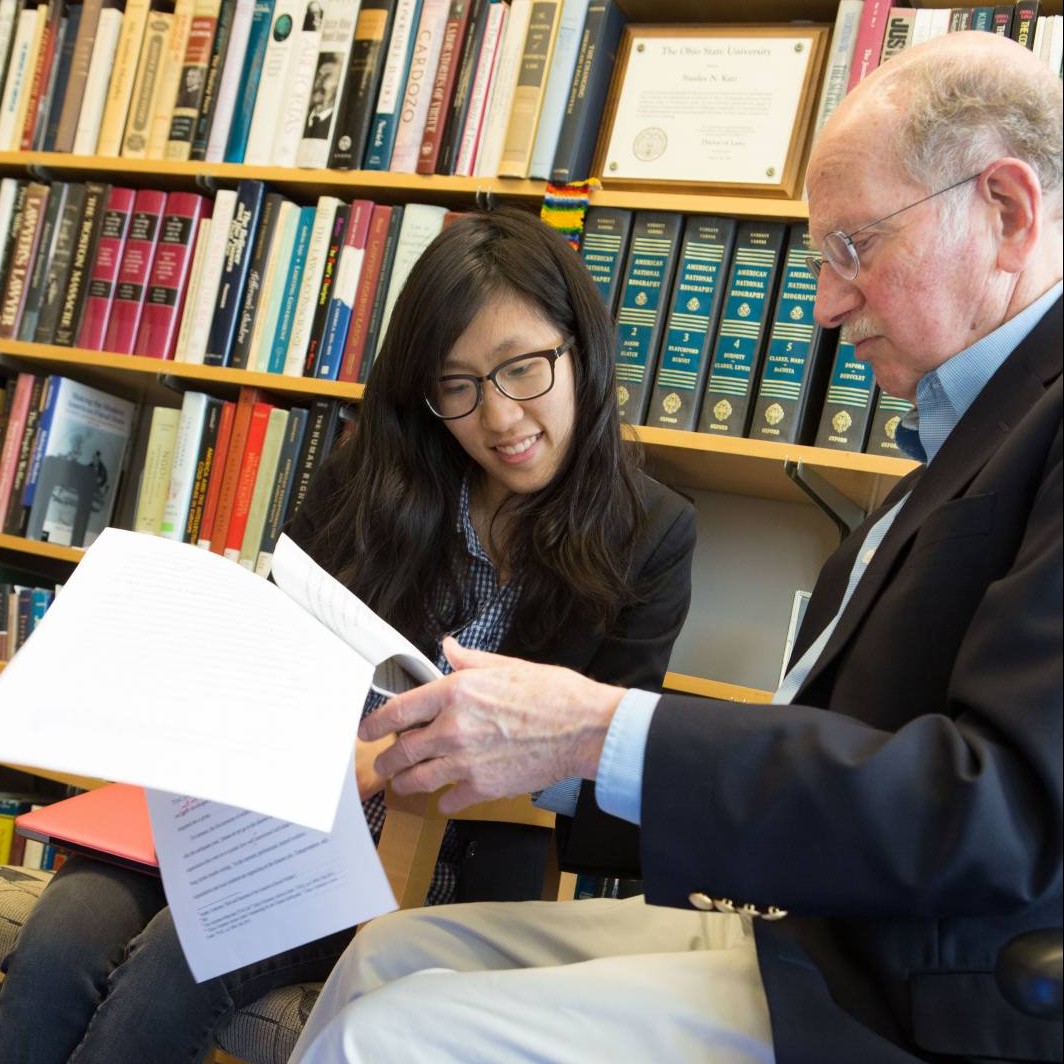
Developing a relationship with a mentor can be one of the most personally rewarding aspects of academic life at Princeton.
Questions like these don’t have easy answers, and as best as I can tell, we shouldn’t expect to wake up one day with everything figured out. But chipping away at these questions is important, and I’ve found it much easier to do so with some guidance. Where do we get guidance, though?
Enter the mentor. The mentor is your wiser half, your sensei—the person who guides you through this mysterious world with sage advice and unflagging support.
I have never liked open-ended projects. The ones that ask you to “pick one concept and explore it” or “pick something that interests you and expand on it” always overwhelm me. How can I pick just one thing to focus on from a semester-long course that I took for the explicit reason that I was interested in all of the subject matter?
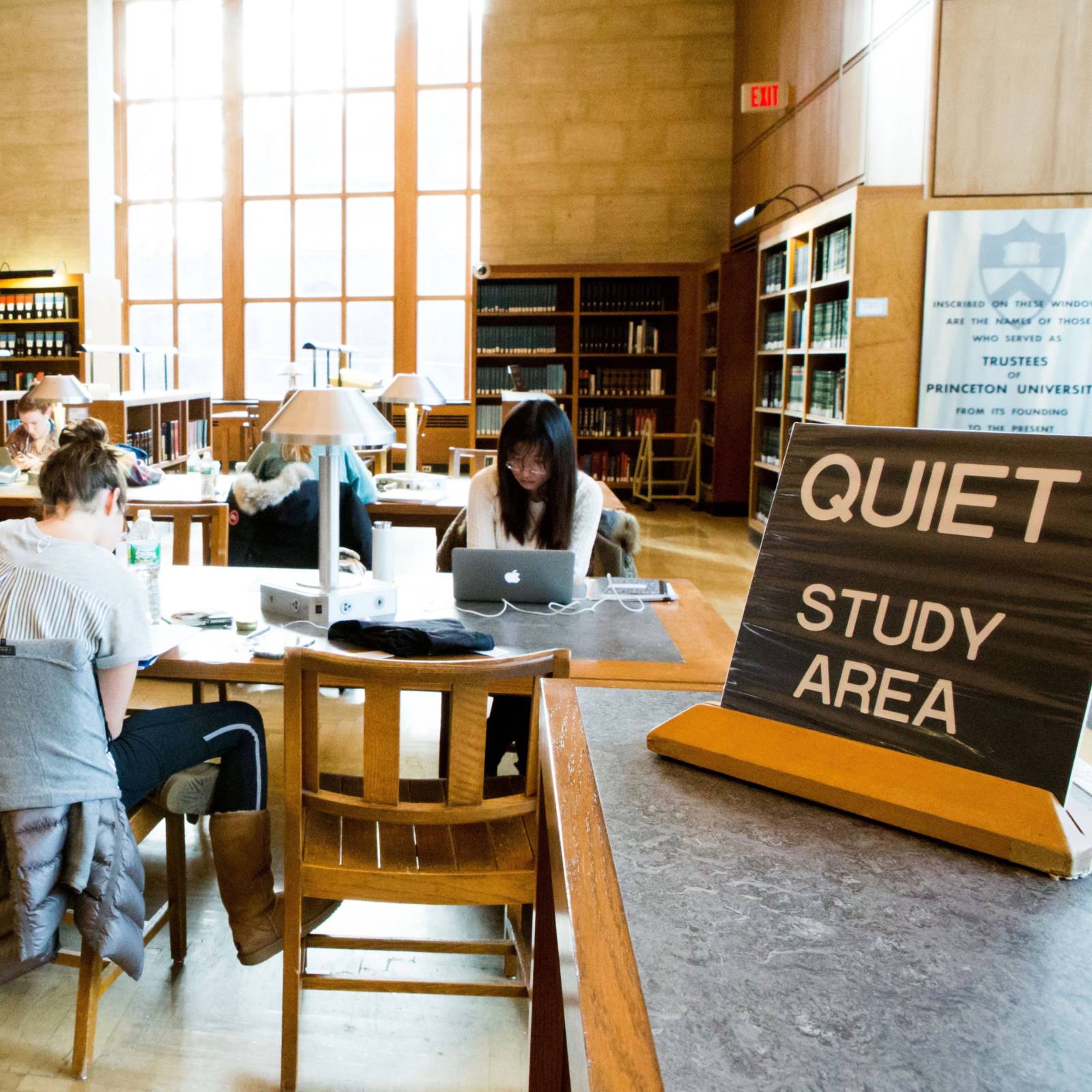
Determining the most effective study strategy is on many students’ minds with exams approaching
Last spring, I was faced with one of these final projects in my cognitive psychology course. We were asked to pick one of the central concepts in cognitive psychology, identify a question and hypothesis related to it, and design an experiment to test it. The first thing I did was read over my notes from the semester to try to find something I was particularly interested in but…plot twist…I was interested in pretty much everything, so I needed to come up with a different strategy.
I decided to reverse engineer my search for a topic. What is a question I want to answer? What would I be interested in learning about right now? What is relevant to me at this moment? Well, at the time we were coming up on finals season, so naturally studying was all I could think about. How could I most efficiently study for all of my upcoming exams? Luckily, learning and memory are fundamental concepts in cognitive psychology so I was on my way to developing a successful, interesting, and relevant project. A project that not only appropriately connected to the material in the course, but one that I could apply to my day to day life.
A continuation of my last post, in which I describe my experience starting to work as a research assistant at a Chemical and Biological Engineering lab here at Princeton. My work began in 10th grade and ended early this year.
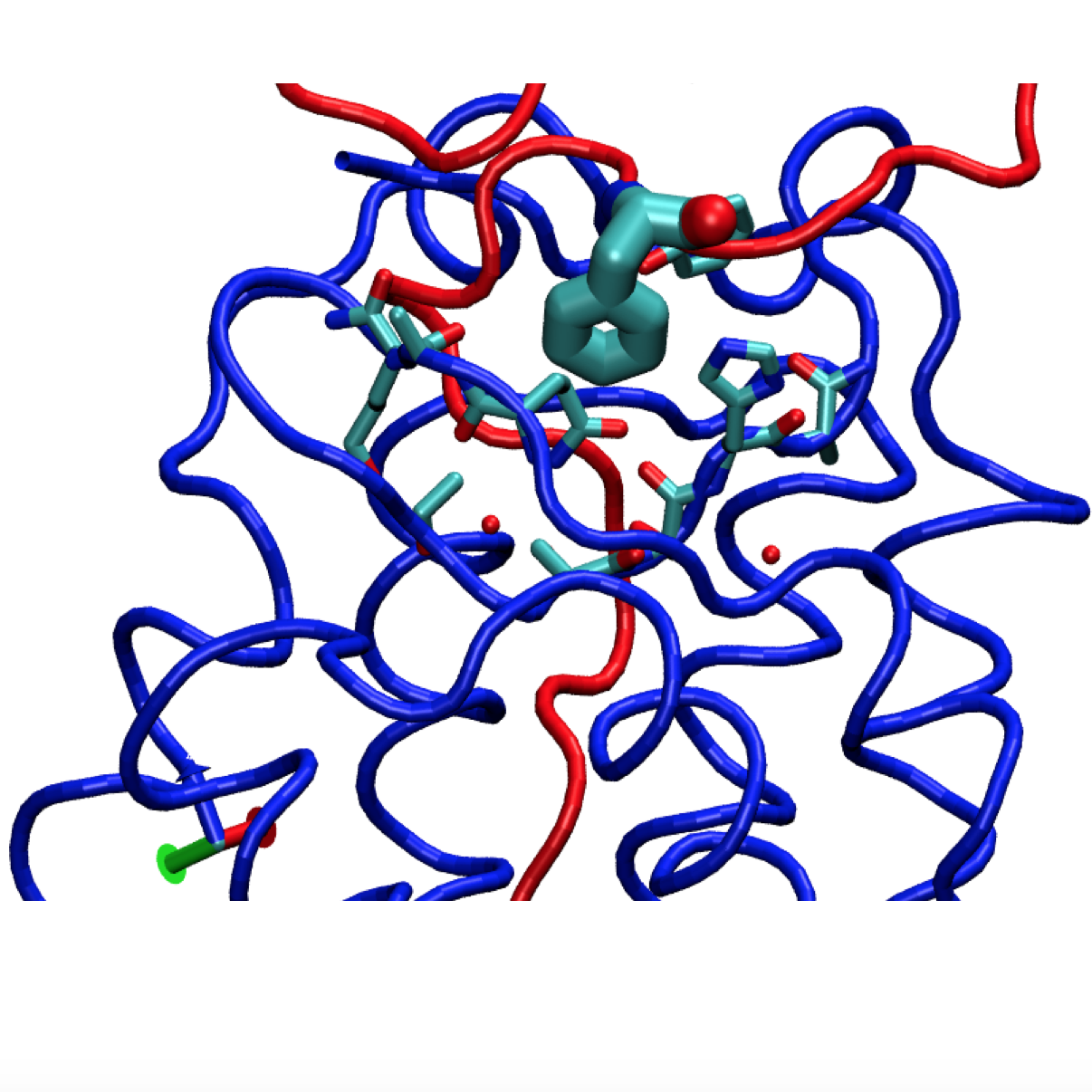
Several months in, I felt like I was finally getting my footing. I had expanded my knowledge enough that I could understand, and make meaningful contributions to, the research project. I was working on computationally modeling the 3D structure of one of the protein receptors that HIV-1 uses to infect human cells. This receptor can bind either to HIV-1 or to other proteins (ligands), and when these ligands are bound to the receptor, they block the entry of HIV-1. By modeling these structures, we hoped to design a synthetic protein that could block HIV-1 infection by binding to the receptor.
A closeup of some of the sidechains of the protein structure for a receptor and ligand.
A few days after I returned home for the rest of the summer, I opened up an email from my post-doc supervisor and felt my heart skip a beat.
“Please write the introduction for our paper on modeling the structures of HIV-blocking proteins over the next two weeks.”
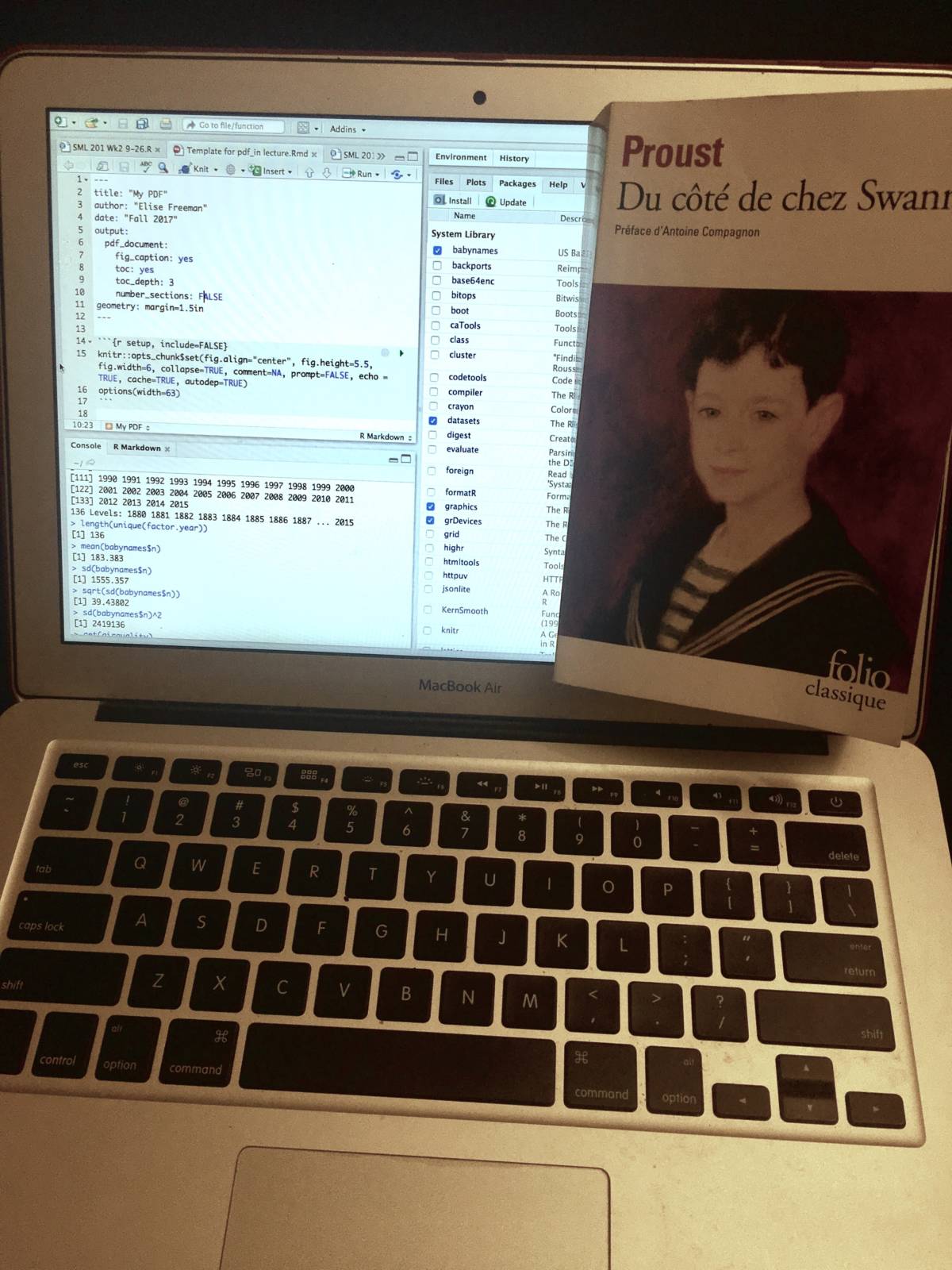
Last February I wrote a post about reconciling my love for STEM with my humanities major. The summer before my junior year, I made a compromise with myself: take at least one quantitative course a semester. I thought this to be the most realistic plan to stay on track with my French major while keeping a promise to cultivate my inner Neil DeGrasse Tyson. I’m kicking off this plan with taking Intro to Data Science this fall.
RStudio and French literature get along better than I thought!
This compromise is useful on an academic level, given my new interest in Digital Humanities, a field that combines both humanities and technology. I am hoping to prime my quantitative side to explore this field, potentially for my senior thesis.