A Lab Tucked in the Depths of the E-Quad

Unless you’re an engineer, you’ve probably never stepped inside the E-Quad. Usually, you’re lucky if you get to the E-Quad at least once before you graduate!

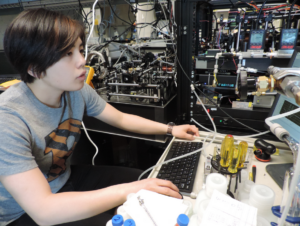
But never fear — you can visit the E-Quad digitally, too. Today I’d like to bring the E-Quad to you and take you on a tour around the lab I work in, the Princeton University Laser Sensing (PULSe) Lab.

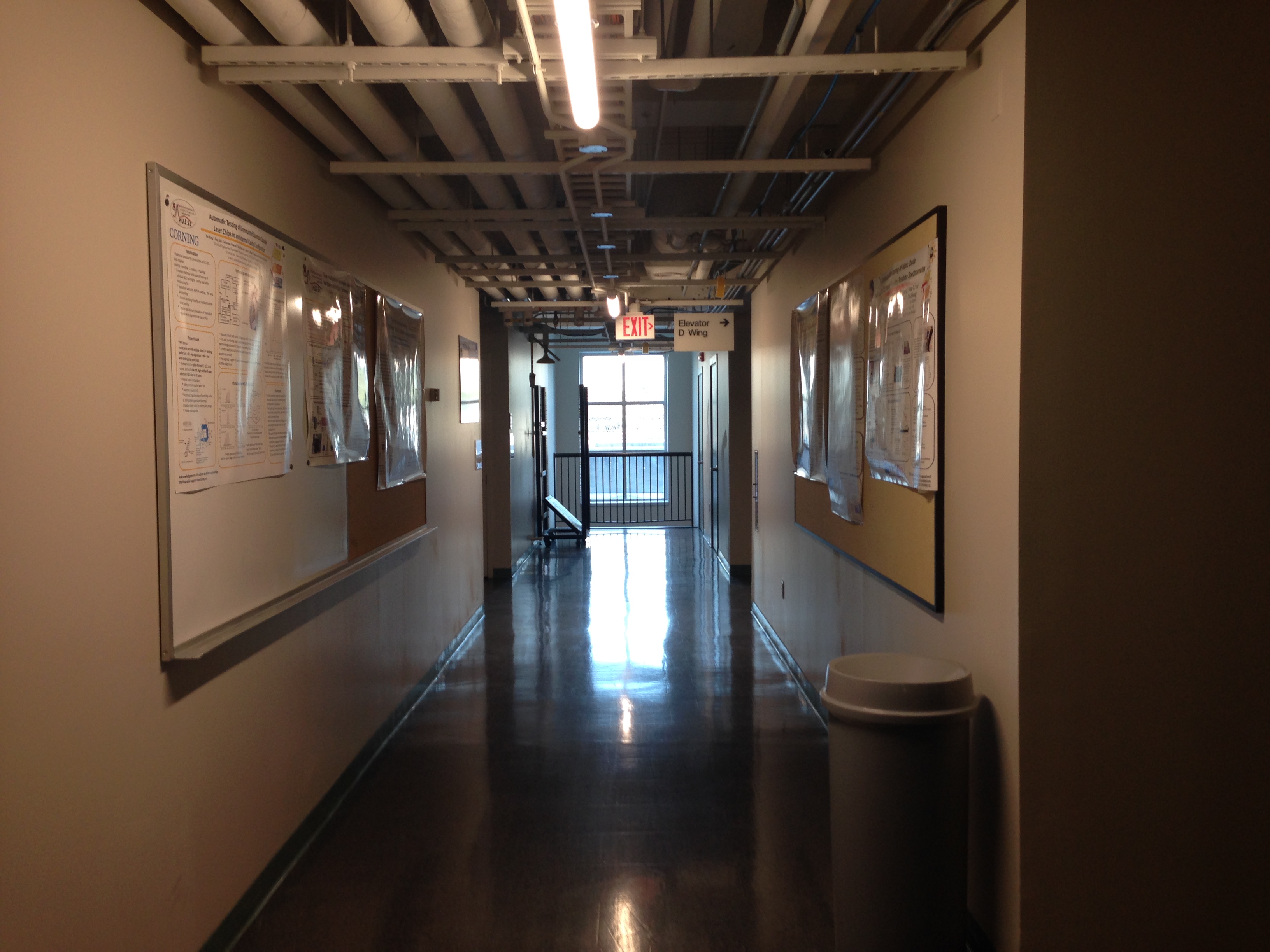
2015-05-04 18.34.05
A walk down the J-Wing in the E-Quad.

It all starts with a walk down a hallway on the third floor of the J-Wing of the E-Quad. It can get especially dark at night, since the lights here are energy-saving and only turn on when someone is walking by. Continue reading A Lab Tucked in the Depths of the E-Quad

Draft to Deadline: The Sophomore Experience

IMG_4252
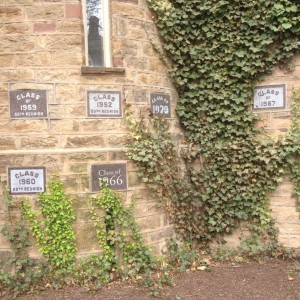
2017 is not the first class to be in this position.

Sophomore year is the awkward transitional phase of the Princeton experience. When you arrive on campus in September – propped above the new freshmen – you feel empowered by your first-year revelations: how to divide your time among classes, where to find accurate reviews about said classes, and how to get to said classes in under ten minutes. At the same time, however, you have not yet earned the title of “upperclassman,” which brings with it the junior papers and senior theses you were admitted to write. It is both freeing and confusing to be sandwiched between these two extremes.

It’s also unbelievable (at least for me) that sophomore year can actually come to an end. I entered the 2014-15 school year with expectations — a draft, if you will, of how to balance prerequisites with broader passions. Now we’re approaching the deadline. And besides using a research analogy in the preceding sentence, I found that research was a huge part of sophomore life. It turns out that the awkward phase is the perfect phase to get comfortable with your own research expectations, before you begin to apply them more intensely. Continue reading Draft to Deadline: The Sophomore Experience

Learning from What Isn’t

With May finally here, we’ve reached the home stretch of the 2014-15 school year. Make no mistake: This is an achievement. You deserve to celebrate. Grab an extra fro-yo cone next time you’re in the dining hall, and enjoy knowing the machine has more handles than there are weeks remaining in the semester.

IMG_3593
Here’s hoping your fro-yo cone turns out better than mine.

After that *debauchery*, ease back into the research world with a reflexive book – like Verlyn Klinkenborg’s Several Short Sentences About Writing, which was recommended in my African American Studies class last semester. As the title makes clear, it’s a series of short sentences about how to approach the writing process. Klinkenborg replaces oft-repeated mechanical suggestions with much more useful ideological ones. My favorite appears on page 29: “Every sentence could have been otherwise but isn’t.”

Following Klinkenborg’s words, every sentence in your research papers is a deliberate choice. Every argument could have reached a different conclusion, but did not. As you question, test, and analyze facts in your independent work, a crucial step is to recognize why you chose a particular arrangement of information. This goes beyond mere adherence to a thesis. Why did you pursue one research lead, and not another?   Continue reading Learning from What Isn’t

Moving Forward by Looking Back: Revisiting Old Posters, Papers, and Texts

2015-04-01 11.31.18
A couple of the posters that hang outside the lab.

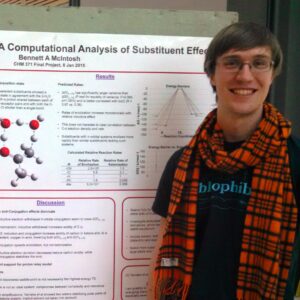
Deep in the darkest depths of the E-quad, there is a lab I go to—a lab where I run all my optics experiments, run tests with the breath analyzer instrument I work with, and that I have come to know and love during the past year. The entrance to the lab actually includes a space for presentation posters, which show off the work of graduate students and past interns. Usually I’m in a rush to get in or out and don’t spare these posters a second glance. But last week, for some reason or another (perhaps because I was feeling less stressed than usual), I decided to take some time to  look at them.

When I did, I was surprised. What had seemed to me before like a mass of incomprehensible jargon and tangle of convoluted science was now something more tangible—here were key words I had encountered over and over again throughout the past year, concepts I had heard about many times in group meetings. Even within a mix of phrases that were still not so familiar to me, I could at least grasp what the projects were about and start to see what was so relevant and interesting about these projects. I even found the work that described the novel technology behind the breath analyzer instrument I currently work on, and I felt good being able to understand that poster in its entirety.

It’s kind of strange. Even though I had looked at these posters before, that was back when I had first joined the lab, more than a year ago. Continue reading Moving Forward by Looking Back: Revisiting Old Posters, Papers, and Texts

To those still in Thesis Life…

Those tanks can be flipped soon... (Photo by Yuem Park)
Those tanks can be flipped soon…

Congratulations to all seniors who have finally attained the legendary PTL! After four challenging (but hopefully rewarding) years, you deserve the relaxation that post-thesis life affords you.

But there are still many seniors who can only dream of such relaxation. And, as “#PTL” floods social media and the black tanks rapidly turn orange, it’s hard to not feel a twinge of jealously for our carefree friends.

Don’t let these friends distract you from the final push! These last few day are crucial for your thesis. As with all deadlines, the final approach is almost always the most work-intensive (even if you’ve been working diligently throughout the year).

In an attempt to keep you all motivated, here are a few words of advice: Continue reading To those still in Thesis Life…

Some Quick Tips on Making Figures

Part of a figure I am working on.

For my fellow seniors – the end is in sight.

At least in theory, we’re at that stage when we’re polishing up our theses, making sure that our words make sense and our figures are intelligible.

But, it is also important to make sure that our theses look nice – nothing shouts amateur more than a pixelated figure hastily scribbled freehand in MS Paint.

Don’t know where to begin? You’ve come to the right place. Below I’ve briefly outlined a few quick tips to making your thesis look like the work of a seasoned professional… even if it’s not. Some examples are tailored more toward those with quantitative data, but hopefully there is enough below to be useful to anyone, whether you’re making bar graphs, diagrams, or anything in between!  Continue reading Some Quick Tips on Making Figures

Join PCUR: Five Reasons to Become a Correspondent

IMG_3610
One arch for each reason, courtesy of Whitman College.

As PCUR’s inaugural year comes to a close, we have good news and better news. The good news is we’ll keep blogging next year, to help guide you with our personal research stories.  We’re excited to continue advising you from draft to deadline.

The better news is we’re looking for new members – and since anybody is welcome to apply, you must be excited, too. Why should you submit an application to join us next year?  Here are five of infinity reasons to that effect:

  1. You’re reading this blog

If you clicked on a link about undergraduate research, then research is obviously on your mind. And since you’re still reading, you must have spare time to think about independent work. Interest + time = great PCUR posts.

  1. You’ve had (any) research experience

Whether analyzing specimens in the field, collecting data online, or writing a term paper, you’ve learned from participating in a research project.   Your insights could help someone get to or get through a particular stage of independent work – and we’d love to know how. Continue reading Join PCUR: Five Reasons to Become a Correspondent

Realizing the Global Impact of Princeton Professors

The work of Princeton professors is recognized around the world! (slide credit: Bahador Bahrami. photo credit: Jalisha Braxton)
The work of Princeton professors is recognized around the world! (slide credit: Bahador Bahrami)

Something incredible happened the other day in class here at University College London (UCL). My psychology professor was lecturing on the topic of attention and awareness when, suddenly, a familiar name appeared on the screen: Matthew Botvinick, Professor of Psychology at Princeton University! I was struck with surprise, amazement, and joy at seeing his name on the board, feeling fortunate to have taken a neuroscience course with him the year before. A sense of pride washed over me as my European classmates & I learned about one of Professor Botvinick’s experimental studies on conflict monitoring. However, I also felt a wave of regret. Why had I not known about this study before? Shouldn’t I, a student in the Psychology Department at Princeton, know about the amazing research that my professor had conducted?

Most students at Princeton are well aware of the fact that the school’s faculty members are highly accomplished. However, while the merits of some professors are published by CNN on a daily basis, the accomplishments of other professors are less publicized. Nonetheless, many of the individuals who stand before us each and every day have and continue to produce incredible research that is highly regarded around the world.

Continue reading Realizing the Global Impact of Princeton Professors

Finding the Department that Fits

Last year, around this time, I felt extremely unsure about my academic path at Princeton. I had always known I wanted to study something interdisciplinary, preferably combining my interests in science and the humanities. Cognitive science, which combines neuroscience with philosophy, seemed like the perfect fit. However, as Princeton had no neuroscience major and no cognitive science program, I wasn’t sure which department or program would allow me the appropriate amount of support and flexibility to do interdisciplinary research that bridged science and the humanities.

IMG_6641
During the spring of last year, I started to think about how to make Princeton a better academic home for myself!

For a while, my go-to departmental options had been computer science or economics. After talking to students and attempting to contact department representatives, I became worried about whether these departments would offer me the interdisciplinary flexibility to do the research I wanted. I thought about other university programs, like Stanford’s Symbolic Systems, which “focuses on computers and minds: artificial and natural systems that use symbols to communicate, and to represent information” (see more here: https://symsys.stanford.edu!) Sometimes, I wondered if I should consider transferring to another school.

One simple step at the end of spring semester of my freshman year reassured me about my options at Princeton and has kept me on the right track ever since. Continue reading Finding the Department that Fits

Asking for Help: A Question of Foolish Pride?

P1220492
While pride might not necessarily cause us to build lavish palaces as some of our ancestors did, it could have other not-so-subtle effects on our daily lives.

“What did you do?”

Ever since I decided to reach out my audacious hand and tweak a couple things with the breath analyzer system for my research project, I dreaded hearing this question from my graduate student mentor. The tweaking had started as a simple desire to become more proactive in solving problems, but, as we know from tales like this, it did not end quite as I would have liked.

Despite having worked in my current lab for nearly two years, I still often feel like there are more things than ever that I don’t know how to do, more problems that I don’t know how to solve. As I’ve previously posted, I’ve been fighting a constant uphill struggle to get over my aversion to asking for help since coming to Princeton. Although I’ve become aware of it, I’ve recently realized there’s another factor that can get in the way of trying to rectify my aversion to asking for help: hanging onto what is often just foolish pride.

One day a couple weeks ago, I spotted some odd behavior with the breath analyzer system I currently work with for my independent work project. I wasn’t exactly sure what was wrong with it, but I had asked for help so many times before that it was starting to feel like too many times. Besides, we had done the procedure several times before. So I decided it was worth it to try fixing it by myself. Continue reading Asking for Help: A Question of Foolish Pride?