Get a jumpstart on independent work with the Writing Center!
Want an organized JP or Senior thesis? Doing a quantitative research project? Want funding to support your great ideas? Sign up for the workshops below!
— This week —
Back by popular demand!
Defining your Research Question: Quantitative Projects in STEM and the Social Sciences
Thursday, March 1, 4:30pm -5:30pm
Guyot 100
Are you writing a quantitative JP or struggling with the introduction or discussion of your thesis? This workshop will help you frame your project’s direction and next steps by:
• defining and refining a specific, actionable research question
• learning how to leverage secondary sources in relation to your data
• identifying the role and impact of your project in your field
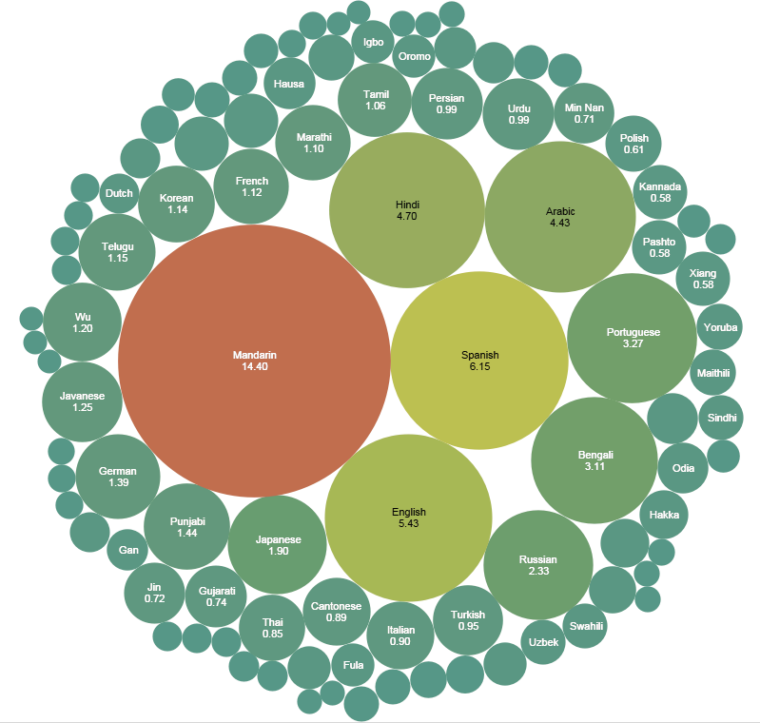
According to its website, Princeton offers courses in about twenty modern languages. Sounds pretty comprehensive – until you consider that the world has literally thousands of distinct living languages.
World languages by proportion of native speakers
As I start preparing for my independent work next year, I’m thinking a lot about language ability, especially as it relates to primary source access. For non-Anglophone historical research, facility in the region’s language/s is essential to original scholarship. Personally, I’m interested in Eastern European Jewish history. The good news: I only really need one language to study primary sources from this period. The bad news: it’s not one of the twenty offered on campus.
This past July, Joe ‘Stringbean’ McConaughy set out to break the speed record for hiking the Appalachian Trail. Carrying a 25 pound backpack and eating 8,000 calories a day, Stringbean initially planned to average 50 miles per day and finish the 2,181-mile trek from Georgia to Maine in only 43 days. Twenty two days in and halfway to Maine, he felt confident that he was on track to break the record of 46 days. However, his pace slowed dramatically in the mountains of New Hampshire, and when day 43 came, Stringbean still had 151.5 miles to go and under 70 hours to beat the record.
As my third Fall semester comes to a close, I find myself in a place similar to McConaughy’s. I started working on my Junior Paper in September with a well-defined research path and have worked consistently for the past three months, meeting with my adviser every week. Yet, with a full draft of my JP due in only four days, I have fallen far behind my planned timetable.
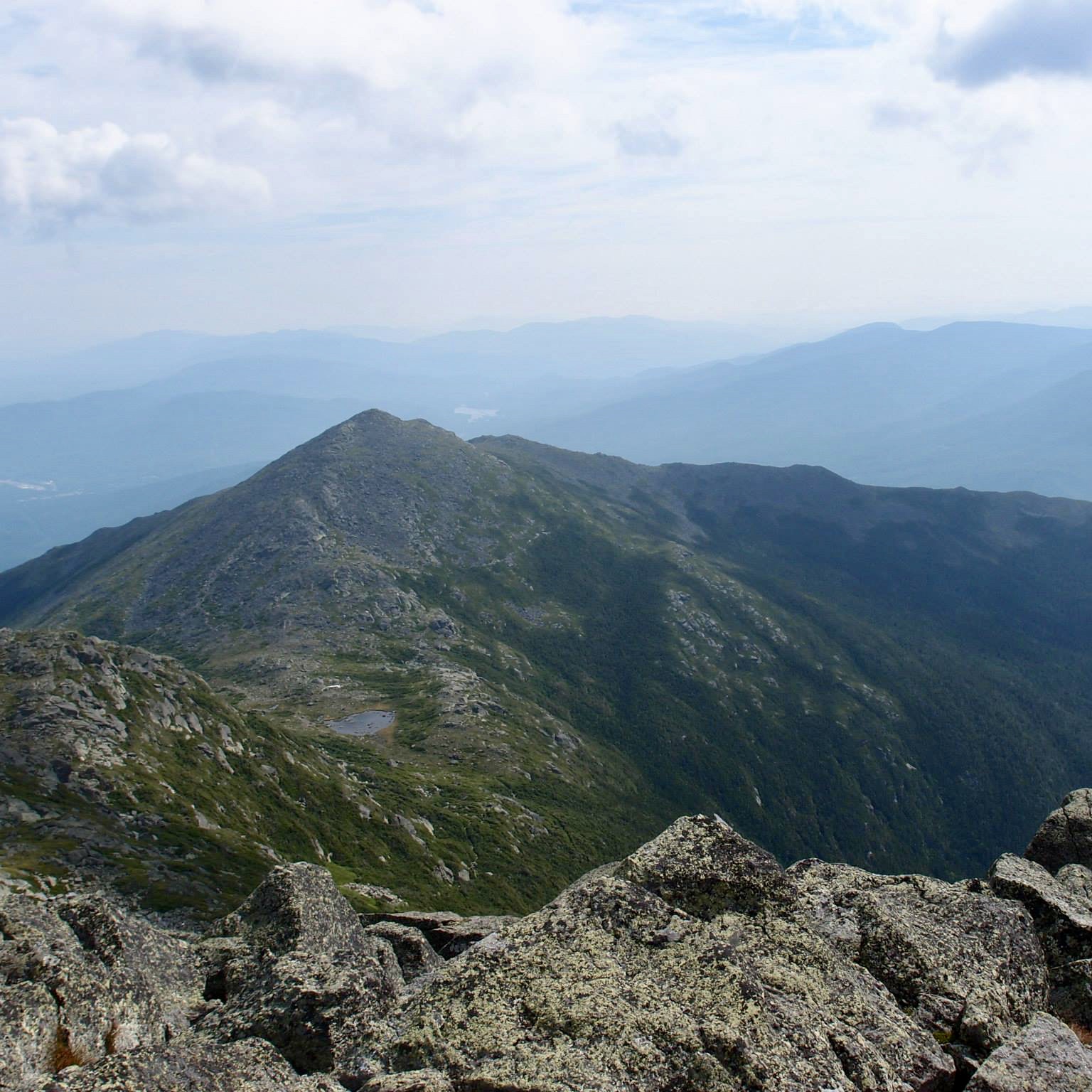
The view overlooking the Appalachian Trail as it winds north into Maine shows nothing but rugged mountains. Like hiking 150+ miles in three days over this type of terrain, writing a quality research paper days before the deadline requires a herculean effort.
There will be a time for reflecting back on why I fell behind my JP plans this semester and how to adjust my study habits and work strategies to get a better start in the Spring–but that time is not now. It is now day 43 and we have 70 hours and 151 miles left to go. If you have fallen behind in your independent work like me, now is the time for the final push. So here is my strategy for beating my JP draft deadline in four days:
Do you remember that old SAT advice of committing to your first multiple-choice answer? I have realized that choosing not to second-guess yourself applies to much more than standardized tests, and this realization has been an integral part of my research experience at Princeton.
Your intuition is as valuable as this pure Australian gold nugget!
When I’m confronted with a writing task, like seeing an essay prompt for the first time, thinking of my JP for this fall, or even this blog post (#meta), it is tempting to let myself panic and frantically begin brainstorming. But, before all of that chaos begins, an immediate seed of an idea always pops into my head. I call it my “nugget.” It could be a tidbit from a conversation I had with a friend, a theme I had been following in class, or, most recently, a side-note I had made over the summer about a potential JP topic.
However, I’ll often ignore my nugget as quickly as it appears. I’ll abide by “first is worst” logic and assume that the first idea I think of to start a research project cannot possibly be as developed as the result of hours of brainstorming. So, I’ll put myself through the ringer searching for other topics. But, almost inevitably, the products of these intensive brainstorming sessions fall short, and I circle back to my initial idea.
There are many opportunities to apply for funding!
If you are an upperclassman, at this point in the semester, you’ve probably met with your adviser, decided on your research topic, and come up with a game plan for beginning your independent work. That said, you may still need to figure out one final detail: getting research funding. Not only does the Student Activities Funding Engine (SAFE) now have several applications open for Winter and Intersession research, but applications for spring funding will also be opening relatively soon. Even if you aren’t in the midst of writing a thesis, SAFE also lists opportunities for students who need funding for internships, summer study abroad programs, and independent projects. If this is your first time applying for funding and you’re worried about writing a convincing proposal, you’re not the only one. That’s why PCUR attended the Writing Program’s “Crafting Your Research Proposal” workshop to bring back some pointers. If you weren’t able to make it, here are the fundamental guiding questions to help make your research statement as clear and effective as possible:
What I’m most passionate about is immigration. How do people move? Why do they move? And what can we do to assist immigrant communities? While I’m not an immigrant myself, I’m the child of Chinese immigrants who came at a time when Chinese immigration was almost entirely restricted on a racial basis. When my grandparents came to America, only 105 Chinese immigrants per year were permitted entry into the United States. While I acknowledge that I speak from a position of natural-born citizenship, it is the struggles of modern undocumented immigrants that truly fuel my desire to research this field of policy.
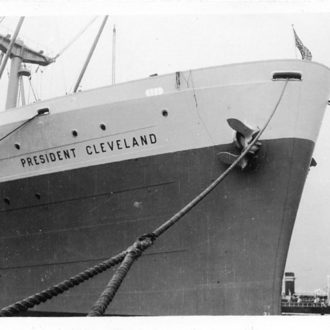
The author’s grandfather came to America on this ship in 1949.
Kristin Hauge ’18, Music Major with Certificates in Musical Performance and Teacher Prep
Kristin Hauge is a senior from Westfield, New Jersey majoring in Music while pursuing certificates in Musical Performance (Piano) and Teacher Preparation. Not only does she participate in a number of ensembles on campus (e.g. Princeton Pianists Ensemble, Sinfonia, and Glee Club), she also has been composing music since high school. And instead of your traditional research paper, Kristin composed an entire composition for her independent work her junior year. If you’re used to conducting studies in the social sciences like me, you’re probably wondering what research is like as a music major. Thankfully, Kristin took some time away from her numerous rehearsals to answer a few questions:
The research process comes full circle — less than a year after finishing my Woodrow Wilson School task force as a junior writing a Junior Paper, I’m now serving as a Senior Commissioner for a task force about federal policy and poverty reduction in the United States. The job of the Senior Commissioner is to help lead class discussions, to assist juniors in the research process, and to collate everyone’s junior papers into a final briefing book at the end of the semester. Having been through the whole task force process before, it gives me a unique perspective to help guide juniors through their first steps into independent work.
At some point in your Princeton career, you will likely have to write a long paper replete with a table of contents and extensive bibliography, possibly containing complex mathematical equations, and/or multiple figures and tables. For many students, especially those in the social sciences or humanities, writing a research paper using word processing software like Microsoft Word will be the fastest and most intuitive method (especially with the help of automated citation tools). However, for other students, formatting all of these features using regular word processors will be inefficient, or worse, create unsatisfactory results.
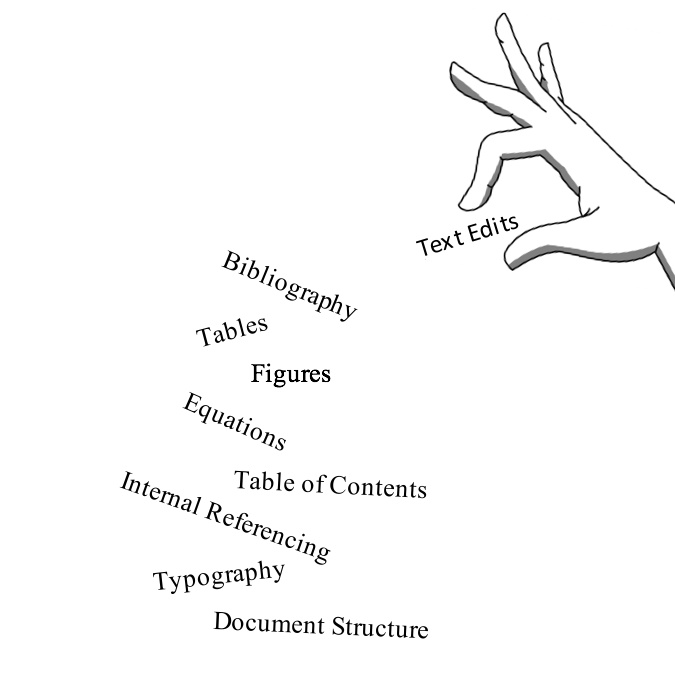
Formatting the different parts of your paper should not be a precarious balancing act! LaTeX automatically formats and coordinates all of these features so that edits are seamlessly incorporated into the document.
For these types of projects, you may benefit from a typesetting system capable of consistent structural layout, superior typographical quality, support for scientific equations, internally referencing figures and tables, and automatically compiling large bibliographies. Enter: LaTeX.
LaTeX is a free open-source typesetting system that uses code and text to generate a PDF document. It allows you to explicitly define formatting options so that document structure remains consistent. Although the workflow is completely inefficient for writing short documents, when it comes to large and complex papers, LaTeX can make life a lot easier. For projects like Senior Theses, many departments at Princeton even have LaTeX templates with correct formatting built-in. While struggling to get a handle on LaTeX last year, I learned some useful strategies that will help you vault over the learning curve:
With the end of the semester and summer around the corner, it is hard to keep track of work when all you want to do is spend time outside. That said, there are still ways of staying on top of your daily tasks while keeping your plans to lounge in the grass. As opposed to giving tips on how to make your work sessions as efficient as possible, this week, I’d like to recommend a few apps to help manage your work.