2015 shattered temperature records worldwide. This year’s El Niño has been making headlines in the coral reef community since early this summer, as record-high temperatures hit coral reefs more severely than scientists have ever seen before. Yet even knowing these facts, I was not prepared for the devastation I saw at home in Hawaii over winter break.
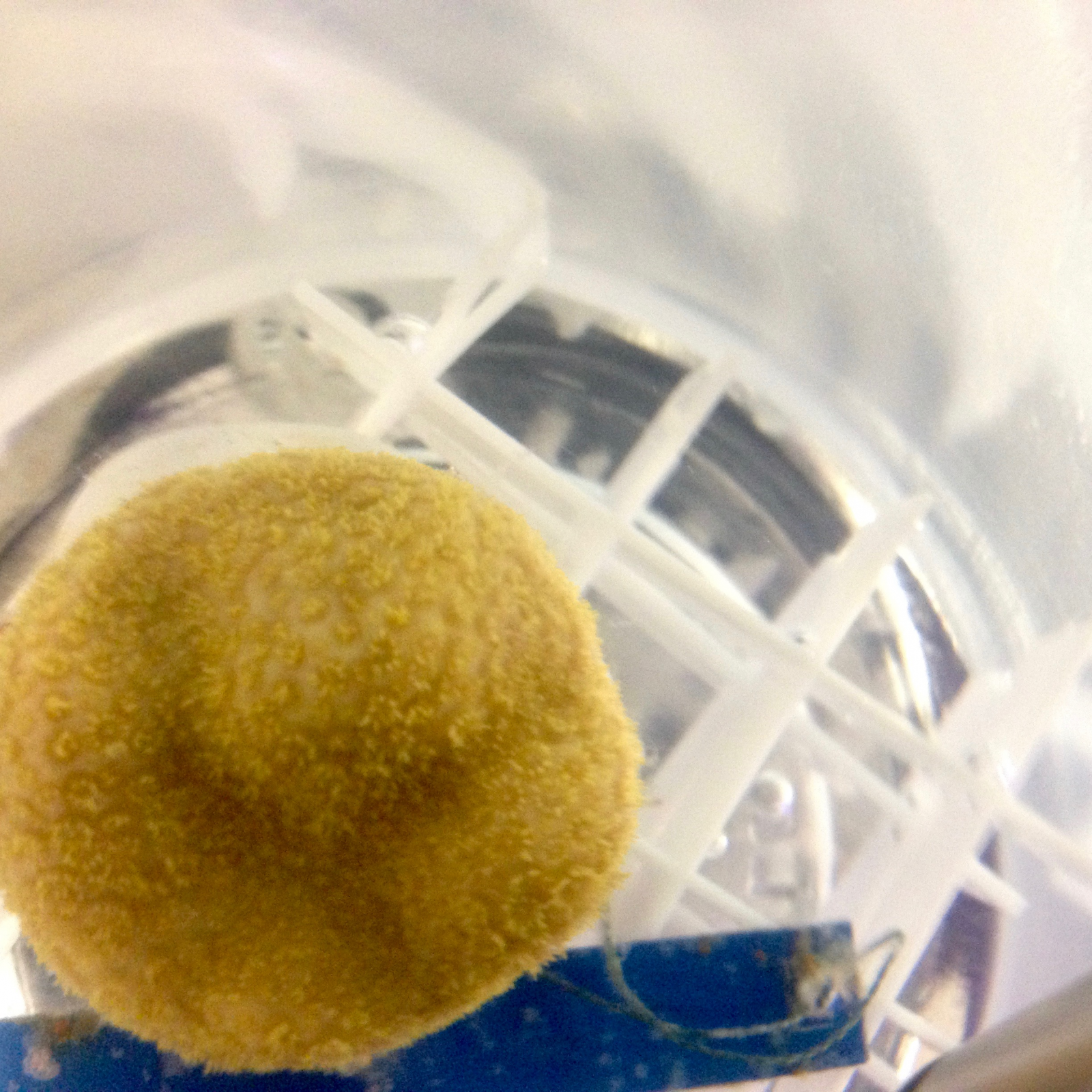
A healthy coral sample (Porites astreoides) from a bleaching study in Bermuda last summer. The tiny flower-like circles are polyps – each one is a coral individual, which together comprise the colony. The coral itself is white – the bright yellow color comes from its symbiotic zooxanthellae.
The population of Pocillopora meandrina, the cauliflower coral that once dotted the coastline of Kailua-Kona, my hometown, has been decimated. The reef is left with the feel of an evacuated city: the coral heads are like abandoned buildings, their skeletons lifeless and vacant. Lacking the organisms that sustained them, they slowly begin to crumble.
Happy New Year! In the January spirit of new-year-new-you, PCURs are sharing their Research Resolutions – things we plan to do, or do differently, in 2016. Take a look at what we hope to have in store:
Dylan, Humanities Correspondent: “This year, I’m going to make reasonable weekly goals to more efficiently tackle my independent work.”
Stacey, Engineering Correspondent: “This year, I’m going to branch out. My thesis is multidisciplinary, so I’ve been making an effort to engage in the geochemistry side of things as well as the electrical engineering side — and there’s still so much I need to learn in the coming year.”
Emma, Social Sciences Correspondent: “This year, I’m going to determine the policy area I wish to focus on as a Woodrow Wilson School major. This decision will shape my future independent research, so I want to make sure that I pick a policy area that engages and challenges me.”
Kavi, Engineering Correspondent: “This year, I’m going to start brainstorming new projects and ideas (based on my personal research interests) that I will allocate time to each week. Hopefully by reaching out to project-relevant departments, I can secure funding and have a few finished prototypes by the end of this year!”
Bennett, Natural Sciences Correspondent: “This year, I’m going to find the most personal of “real-world” applications for my research: a real-world job. I may not stay a scientist, but my research skills will stay with me forever.”
Vidushi, Humanities Correspondent: “This year, I’m going to start early and consult with mentors often throughout the drafting process! This will make for a more productive and fulfilling research experience.”
Zoe, Natural Sciences Correspondent: “This year, I’m going to spend at least five minutes on my research every day. I’m committing to small, consistent steps, and to keeping my questions in my thoughts.”
Melissa, Chief Correspondent: “This year, I’m going to change my approach to research questions. I’ve learned to let the question evolve as sources tell the story.”
Jalisha, Natural Sciences Correspondent: “This year, I’m going to stay organized throughout the thesis process by giving myself mini deadlines that are realistic for my life.”
What are your research resolutions? Let us know here, and keep us posted on your progress!
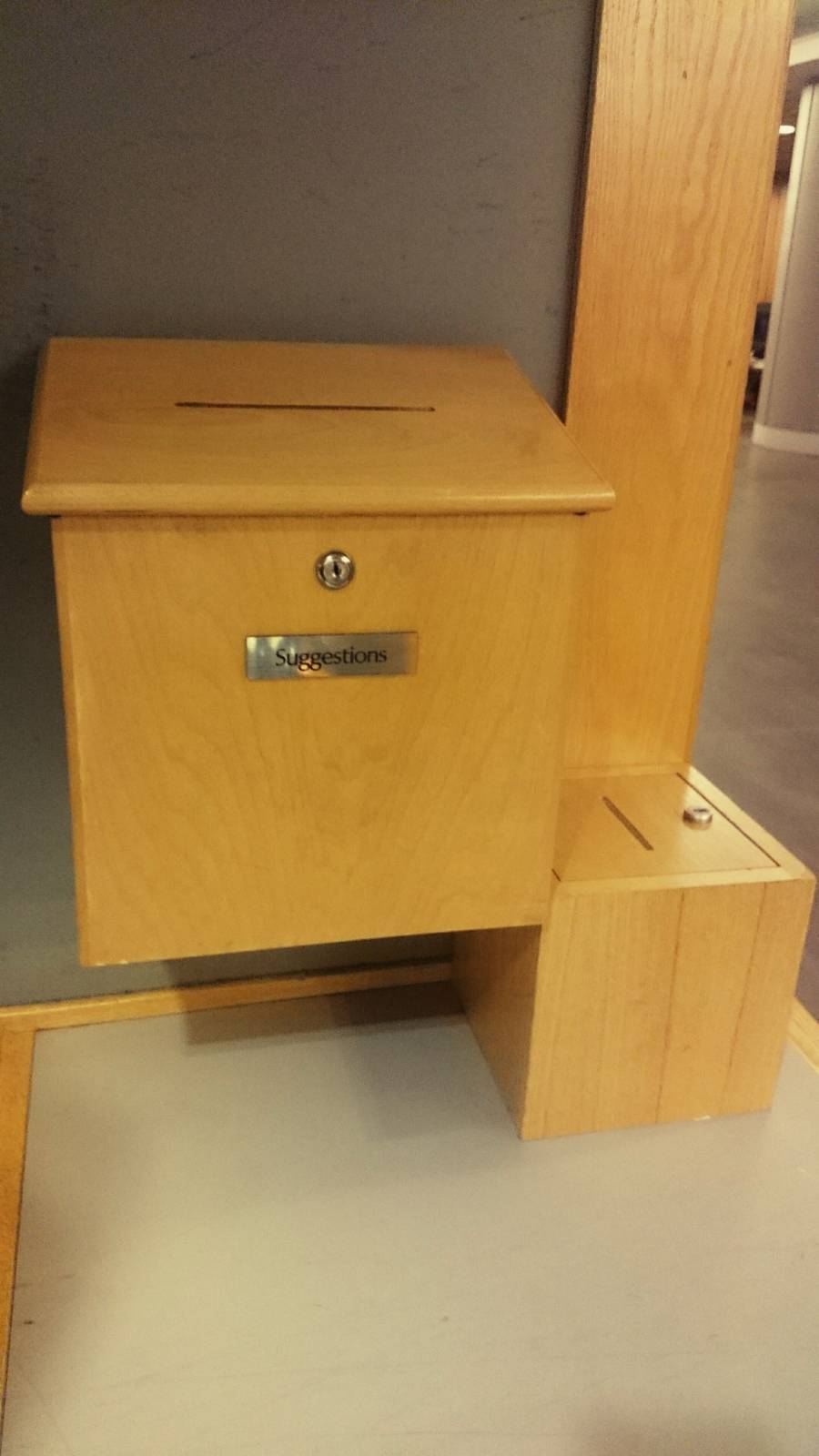
Suggestions and feedback are an extremely important part of the University’s growth! Have you ever noticed this suggestions box by the Welcome Desk in Frist?
With Princeton ranked as the No. 1 school in America, it’s easy to assume that everything here is the best that it can be: We have great professors, amazing resources, and will graduate with a degree that is highly esteemed around the world. Surrounded by all of the University’s accolades, we oftentimes forget how important the student voice is to the University’s growth and development. Over these past few weeks, however, I’ve discovered how integral students are to improving academic and social life here on campus.
It’s JP crunch time! Many students like myself are working feverishly on campus on their junior papers as winter break approaches. This week, I’m going to share advice about the single most useful resource I’ve found on campus as I work through my own junior paper: Princeton professors. Scheduling a meeting or two with faculty relevant to your work, whether you know them or not, will help you greatly in your path to a great research paper.
First, some background: many departments have different guidelines and setups for junior independent work. Most departments require two junior papers; some require one. In the philosophy department, all juniors take a small (4-5 person) topical junior seminar in the fall to guide them into the process of writing independently. This fall’s topics were Consequentialism & Common Sense Morality, Newcomb’s Problem, and Skepticism, Reason, & Faith. In seminar sessions, students discuss issues central to these topics.
I spent my semester in Consequentialism & Common Sense Morality reading Shelly Kagan’s Normative Ethics and debating features of the text with my classmates. The literature was vast, spanning metaethics (what are the fundamental bases of ethical theories? are they valid?), normative ethics (what are relevant factors that make actions good or bad?), and applied ethics (what are answers to moral questions people face in their lives?). Any one of these categories holds thousands of unanswered, often-debated questions. So by the second half of the semester, when it was time to choose a junior paper topic, I felt predictably lost.
I’d be lying if I said I’ve never gotten lost on campus…but feeling lost on a research paper is much scarier!
My wonderful mom keeps sending me pictures like this – this one captioned, “incredible morning sunrise!” I’m pretty excited to go home.
In a few days, I’ll be home in sunny Kona, Hawaii. I haven’t been back since June, and by now I’m hankering to feel the warm Pacific on my skin. I’m going to eat homemade chocolate truffles, free-dive with my dad, catch up with old friends…and also write an entire junior paper, and review a semester’s worth of organic chemistry. Gulp.
Last Friday, hoping to figure out how to juggle it all, I attended a workshop at the McGraw Center: Balancing Work and Play During Winter Break. Here are five essential take-aways:
When you present at Princeton Research Day, you’ll be one cool tiger!
As you might have noticed, everyone’s talking about Princeton Research Day — but what is it exactly, and what can it do for you? In a campus-wide email about the event, Princeton Research Day was described as a chance to celebrate research on campus. Which, it is. But that premise might sound a little vague. Never fear, readers: To help you out, here’s a list of 5 cool things you can do if you apply to present at Princeton Research Day.
Just because it’s called “independent work” doesn’t mean that you’re alone. PCUR knows we’ve reached a very research-heavy time of the semester, and we have some words of wisdom for anyone tackling a new project – whether it’s your first or fifteenth at the college level. Watch below to hear our advice; and remember, if you have a specific question, we’re never more than a contact us form away.
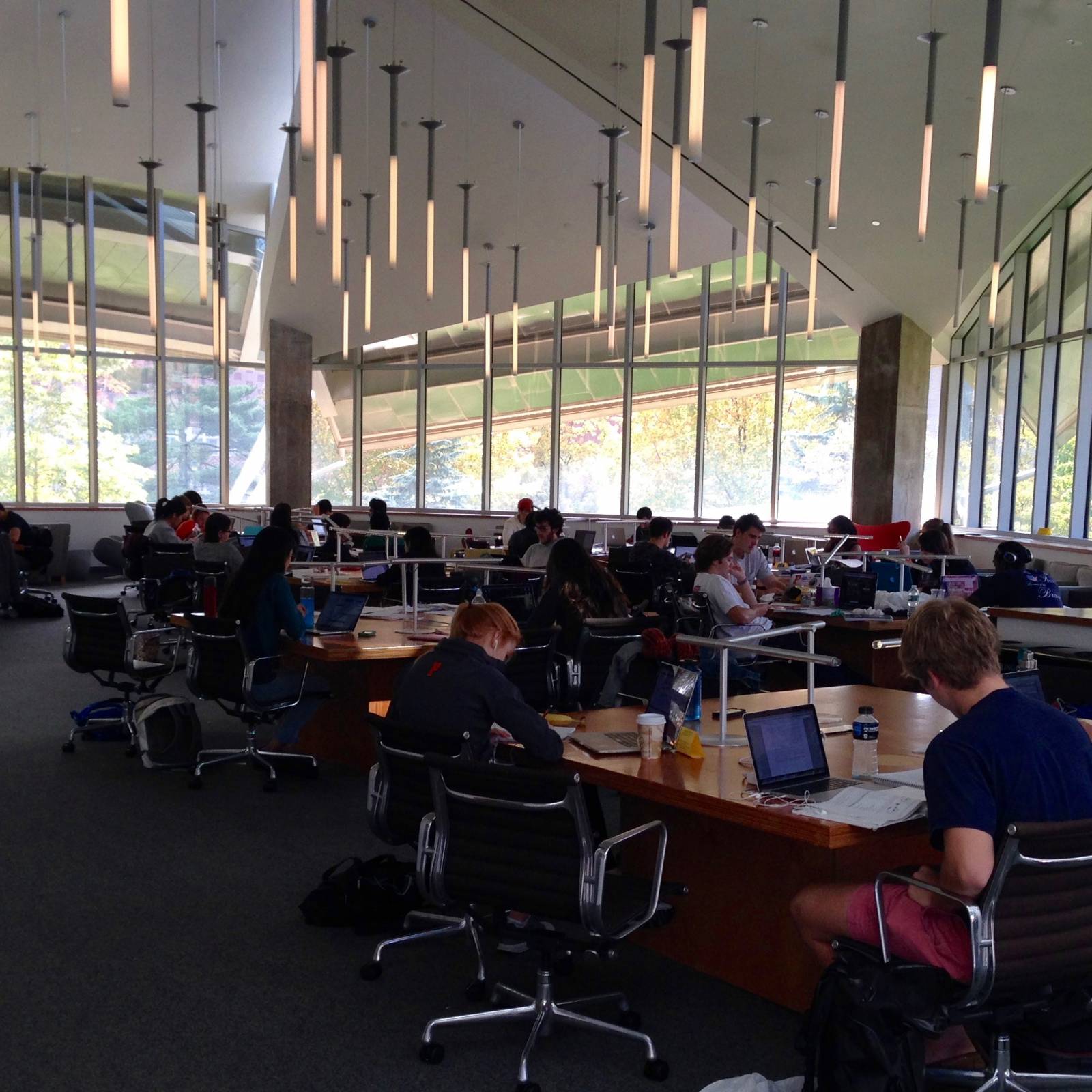
The Sunday before midterms: the Lewis Library Tree House, my favorite study spot, is packed.
Fall midterms creep up on me every year. Like the steady accumulation of unfolded laundry in my closet, and the growing pile of readings on my desk, midterms approach incrementally – and then they pounce.
I’m trying to practice honesty, which is sometimes harder than it sounds. So, here’s some real talk: this week is a struggle.
On top of the commotion of midterm exams and assignments, I have other, more long-term responsibilities that need attention: beginning background reading for a final project; meeting with my adviser to discuss future research plans; and tackling the freezer full of summer samples that sit on my conscience, unanalyzed. During weeks like this one, staying on top of such tasks overwhelms me more than anything. They incur the deep, gnawing fear that perhaps, this time, I’ve really bit off more than I can chew.
I said I was practicing honesty, right?
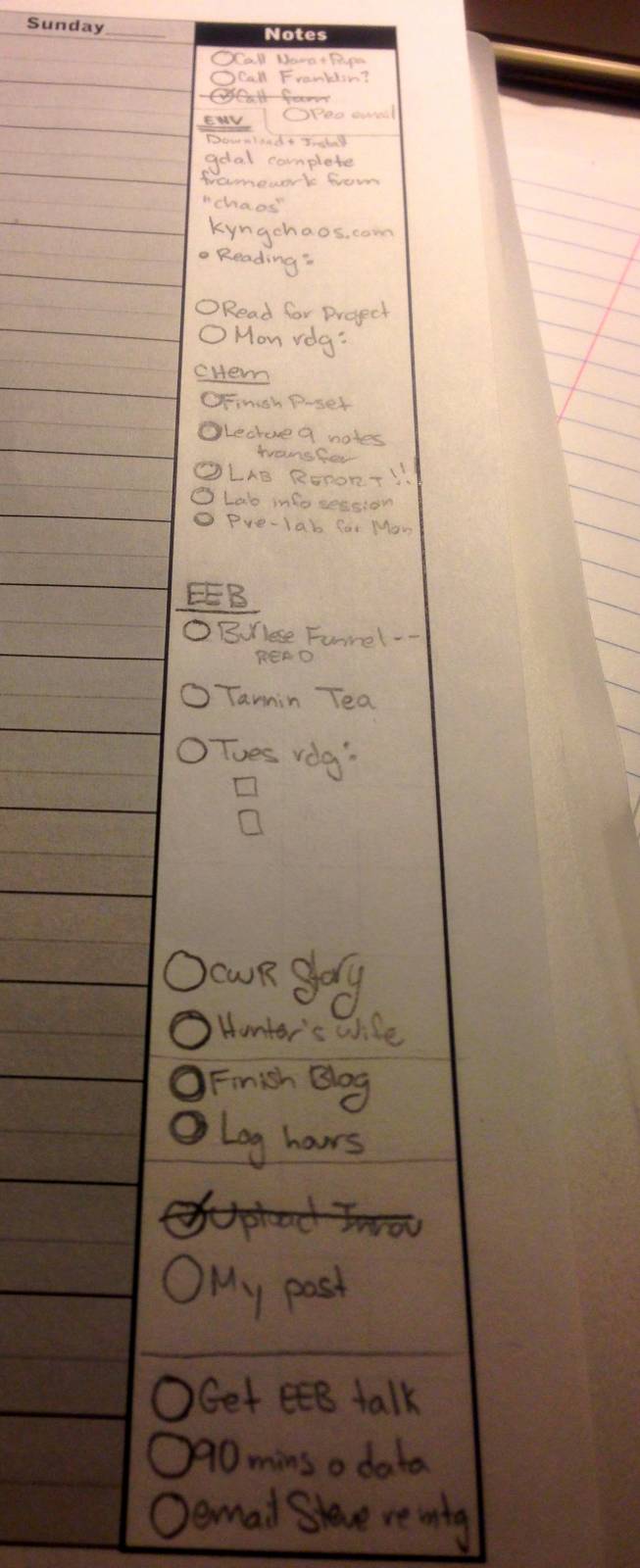
My to-do list this week. I find it calming to see everything on one page…sometimes.
I don’t have encouragement, tips, or success stories to offer this week. But I do have honesty and some reassurance: if balancing school, research, extracurriculars, and sanity seems, this week and others, near impossible – I agree.
Why is research so hard? Perhaps because it forces us to confront the unknown. We deliberately embrace questions we don’t have the
If there is anything I have learned from junior independent work, it’s the following: Pace yourself!
Juchitán’s main market, located in the central plaza, is perhaps the city’s busiest area. On breaks from research, I would come here to try local foods and people watch.
I’m writing my JP about Juchitán de Zaragoza, a city of around 70,000 in the state of Oaxaca, Mexico. For those interested in issues of gender and sexuality, Juchitán is notable for the indigenous Zapotec culture’s acceptance of a third gender identity, “muxhe” (pronounced “moo-shay”). Additionally, many visitors to the city, noting thestrength and visibility of women in the society, have declared Juchitán a matriarchy. I spent some time there this summer, and visited a few organizations to talk to activists about the problems facing their communities, hoping to explore why perceptions of Juchitán as a queer and feminist paradise don’t match up with the city’s reality.
Last week, as I approached a deadline for class, I was forced to face a reality I’d put off since returning to campus: I had to transcribe the hours and hours of interviews recorded in Juchitán. Word for word — with every “um”, “uh” and “like”. The chore was doubly daunting because the interviews were in Spanish — my second language. Then I’d have to translate them into English.
You’ve probably heard that research is more of a marathon than a sprint. That’s definitely true — Every independent project involves thorough planning and lots of stamina. But since we’re on the subject of analogies, it’s also true that research is an obstacle course. Think about it: There are challenges built into the research process, and sometimes they’re impossible to avoid. PCUR gets real about these roadblocks in our second Correspondent Convo. Watch below to learn which struggles are most common, and which strategies can help you reach the finish line.