
Historiographies are historical analyses of the historical scholarship written about a given subject. Rather than just identifying gaps in a scholarly conversation, historiographies analyze how that historical literature has been produced and how it has changed over time. Writing a historiography gives you the chance to make a historical argument about how the knowledge in your field has developed and evolved. However, approaching a whole new field of literature as an undergraduate researcher can be overwhelming. Here are some strategies I’ve used to parse historical literature and write historiographies for my independent work.

The first step I take when starting a historiographical review is to read widely. Most historical topics have been explored by scholars from various disciplinary backgrounds and historical traditions. If you silo yourself into one field or debate too early, it’s easy to miss major voices in the scholarly conversation. I usually start looking for literature by searching for keywords related to my research topic in the library’s catalog. I also like to speak with the library’s subject specialists and my research advisers, because they usually help point me toward literature that I wouldn’t have thought to look for on my own.
Once I’ve assembled a wide list of literature, I start by reading each source deeply, paying attention not just to what each author is arguing, but also to the sources that they use when building their argument. Scouring the footnotes of a historical work can help you see which scholars are in conversation with each other, where they agree, and where they disagree (which can be an especially valuable place to add your own insights). As my sense of my topic grows, it gets easier to determine which sources are the most relevant and need to be read closely and which can be skimmed.
As I’m reading, I’m also always annotating each source. As I see connections across texts, I highlight and add notes about the connections I’m seeing. Taking notes along the way (usually in one shared document) saves me a lot of time when I later begin to synthesize and write up my findings.
During the reading and note-taking process, I also use a citation manager to help me keep track of which sources I’ve read and my thoughts about them. Princeton students have free access to many different citation managers, but for historical research, my favorite is Zotero. Installation is simple, and all you have to do to add a source to your Zotero library is click a browser extension button. When it’s time to write, Zotero will also generate a bibliography and footnotes/in-text citations for you according to any major style guide.
Once I’ve read a wide range of literature and feel ready to start analyzing, I like to organize my data. Even though historiographies are generally found in humanistic research, I like to think of each historical argument as a piece of data that I will use to support my historiographical argument. I even often use spreadsheets to help organize this data into different categories. Each column represents a different historical argument that an author might make, and each row has biographical information about each piece of literature, including, for example, who wrote it, when it was published, and who it was published by. This helps me to visualize different broader trends in the scholarship.
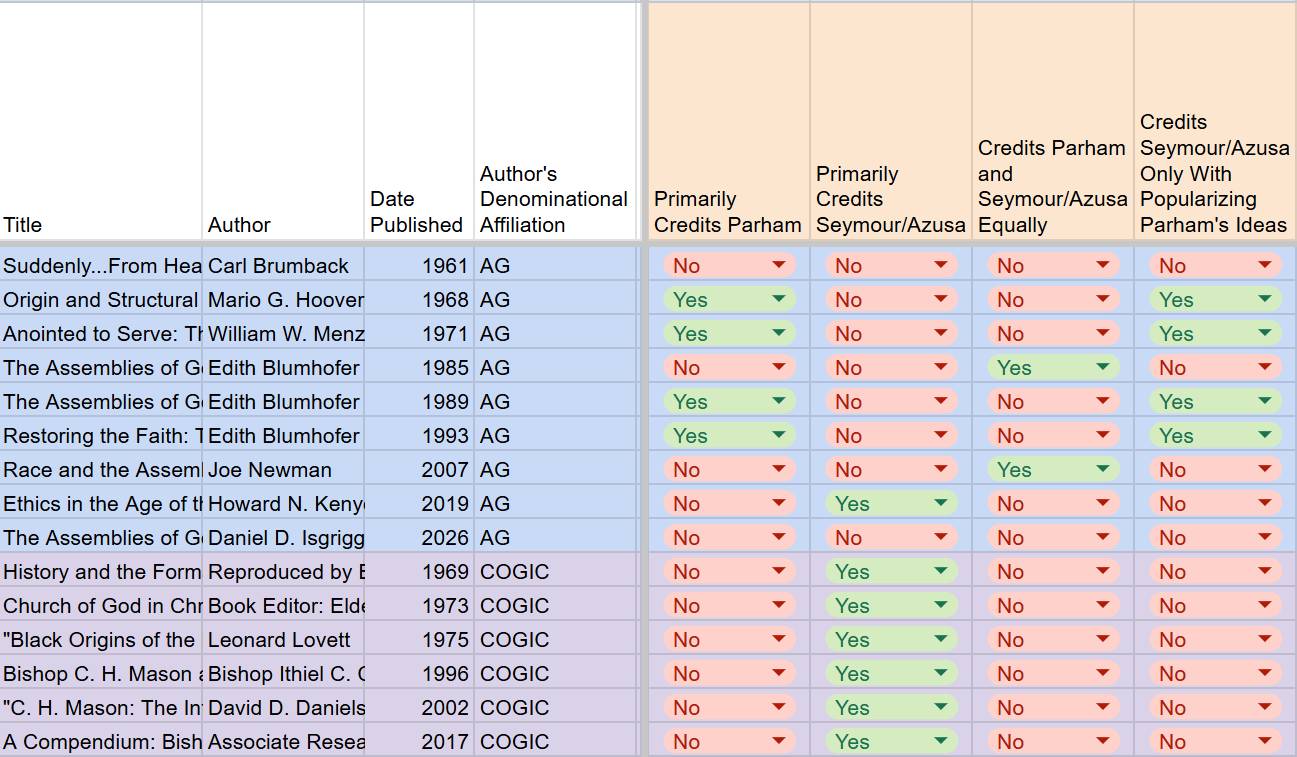
When I have my sources and notes organized, I analyze my data, choosing which historiographical trends are most relevant to the broader argument of my project. With that information, I begin outlining and drafting my historiographical review. In the review, I try to be attentive not just to what each author argues, but to how they make that argument, considering the primary sources and literature they cite. I also like to keep my adviser (or another expert in the field) in the loop as I draft, because they can usually offer helpful insights about the literature.
Literature and historiographical reviews are the backbone of any research project. Approaching a new field with curiosity, organizational tools, and an eye for historiographical trends can help ensure that your project is well-situated within the broader work of your academic field.
— Alison Fortenberry, Social Sciences Correspondent
