If you were to take a tour of Princeton’s campus, your tour guide would point out various things that are unique to Princeton’s campus. For example, we have the third largest university chapel in the world, and Frist Campus Center used to be Einstein’s laboratory. But, something that is incredibly special about Princeton’s campus–and I feel we don’t talk enough about –is the fact that Princeton has an amazing art museum directly on campus.
The Princeton University Art Museum (PUAM), whose collections hold works by artists ranging from Cézanne to Basquiat, is a great spot for tourists and community members to visit. However, it is arguably an even greater spot for students.
This week I share a little bit about my experiences at the art museum and interview Juliana Ochs Dweck, the Andrew W. Mellon Curator of Academic Engagement, to talk about the different ways the PUAM can serve as a resource for research and studies at Princeton. After all, as Dweck notes about the university museum, “the whole point is to be a teaching museum.”
I hope I’m not the only one that feels like their Thanksgiving break went by far too quickly. For this post, I wanted to reflect on my Thanksgiving break — on what went well and what didn’t go so well — so that I can make the most of the upcoming winter break. Hopefully, this reflection will be useful for any of you who also felt extremely stressed that Sunday right after break.
Let’s start with the good. Like many of you, I went home to visit family and had a great time spending time with them and doing things like simply hanging out on the couch and reading. I also was *finally* able to catch up on sleep, so I felt physically rejuvenated. In short, break started off great.
Every year, the Andlinger Center for Energy and the Environment organizes a conference where students, faculty, and industry professionals discuss research and innovations related to clean energy and other environmental solutions. The event features keynote speakers, faculty panels, poster presentations, amongst other sessions to introduce and highlight the work of different professionals. The purpose of this event is to educate students and professionals on new advances in energy technologyand to encourage even further research.
This year, I attended my first annual meeting, where I learned more about the clean energy research at Princeton and in New Jersey. In this article, I will reflect on some of the highlights from the event.
Phil Murphy’s Keynote Address
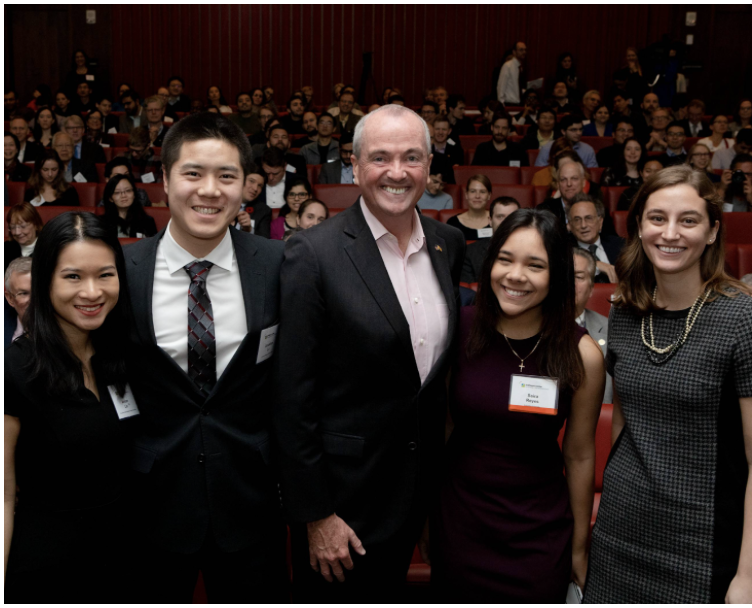
Along with fellow students from New Jersey, I met with Phil Murphy as he spoke about our role in energy and environmental research in the state.
This year, the keynote speaker was Phil Murphy, the Governor of New Jersey. In his speech, Murphy addressed challenges in clean energy reforms, and suggested that innovation is essential to create environmental advances. He encouraged people to work together, because at these conferences, individuals can share ideas. Others can then step in and say “we can help.”
At the address, I sat next to fellow students from New Jersey, the CEO of Public Service Enterprise Group (PSEG), Ralph Izzo, and the Dean of the School of Engineering and Applied Sciences, Emily Carter. Seeing individuals from different backgrounds coming together around a common goal reminded me of the importance of collaboration in research. While one lab cannot solve all of the energy problems in the state, the efforts of multiple people can. As institutional researchers, we are responsible for driving innovation and developing new technologies in our fields, thus it is important for us to collaborate in the lab and across the academic sector.
Faculty and Industry Panels
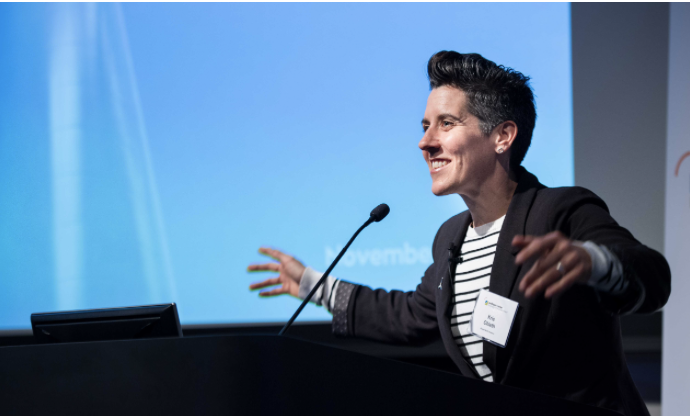
Kris Ohleth from Orsted speaks about current work on wind energy developments in New Jersey.
Amongst the discussions, faculty in various departments spoke about their research. Representatives from other universities and companies such as Orsted and ExxonMobil were also present to speak about energy visions and advances at their companies. The topics discussed ranged from ocean wind turbines to innovative approaches to produce biofuels and even new technologies for clean transportation. These panels were useful to observe where we stand in energy research and where we plan to go.
Poster Presentations
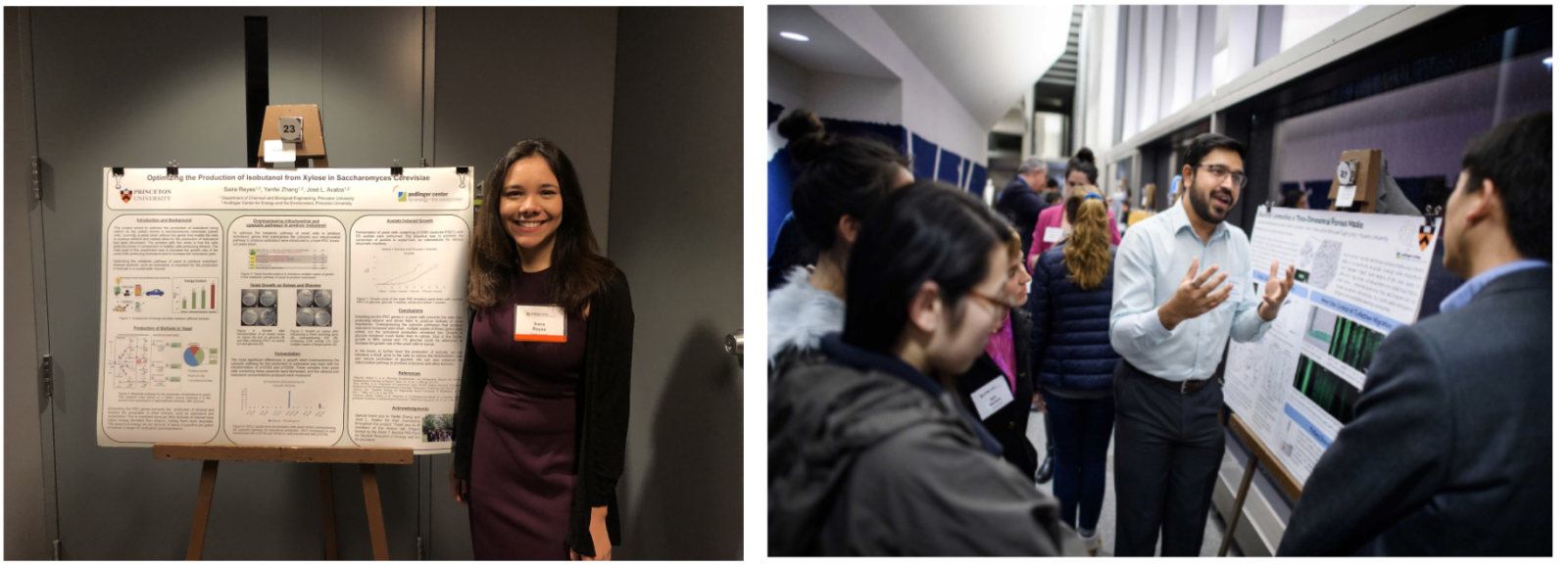
The event concluded with poster presentations where undergraduates, graduate students, and postdocs presented their research.
Undergraduate students, graduate students, and postdocs from different engineering and natural science departments presented their research in a symposium-style poster session. I presented on the research I did during my summer internship with the Andlinger Center.
Throughout the event, I spoke with some of the presenters situated around me. I heardfrom a postdoc in the mechanical engineering department, Guang, about research in fluid dynamics to harvest energy. I also heard from a senior in the chemistry department, Gabriella, about electrochemistry reactions related to energy. In addition to learning about interesting research, I learned that Guang had been a TA for MAE305, a course which I am currently taking, and Gabriella had taken multiple courses in the Portuguese department, where I am interested in getting a certificate.
As I heard this, I thought back to what Phil Murphy had mentioned. The purpose of academic conferences is to connect people and encourage collaborations. Not only are we researchers, we are also students that continue learning from others.
—
The Andlinger Center Annual Meeting is designed to further conversation on research and innovation. Regardless of your academic background, these issues impact the community as a whole, and it is important to learn about the future of energy and environmental concerns.
If you could not attend (or even if you did), I hope that my reflections serve to inform you about some of the conference highlights and I encourage you to attend events at the Andlinger Center throughout the year. In addition, learning through collaboration in research is not limited to the science field. You can also look for similar events and opportunities to learn through collaborative research in other departments by visiting the Office of Undergraduate Research event calendar.
Working ahead prior to a break is another way to maximize your “off time” and enjoy a respite from the demands of academic life.
As we are all undoubtedly aware, another break is coming up. Thanksgiving break, actually! Excitement is in the air as cherished plans for relaxation and the celebration of gratitude inch ever closer. Whether you’re going home or sticking around campus, I’m sure you’re looking forward to this break as much as I am.
There’s just one problem: right on the other side of this break are the final three weeks of the fall semester. And if your course schedule is anything like mine, those will be three rather busy weeks! So, with break coming up and the final pre-winter break sprint right behind it, this is a perfect time for you, me, and everyone in between to come up with a game plan for what’s ahead.
In addition to this lovely position as a blogger for PCUR, I am also a Learning Consultant at McGraw. (*shameless plug*: Learning Consultations at McGraw are individual hour sessions with a student (like me!) where you come up with strategies on how to best handle your studies at Princeton). Last year, a couple consultants volunteered for the inaugural episode of McGraw’s podcast, “Making Learning Audible,” where we talked about finding balance between work and relaxation over winter break. During winter break in my first year at Princeton, I put a lot of pressure on myself to study intensively for exams but ended up just overwhelming myself and doing nothing. Any attempt to actively work on my essays to reach my high standard of getting super ahead on my Dean’s Date papers was met with instant exhaustion.
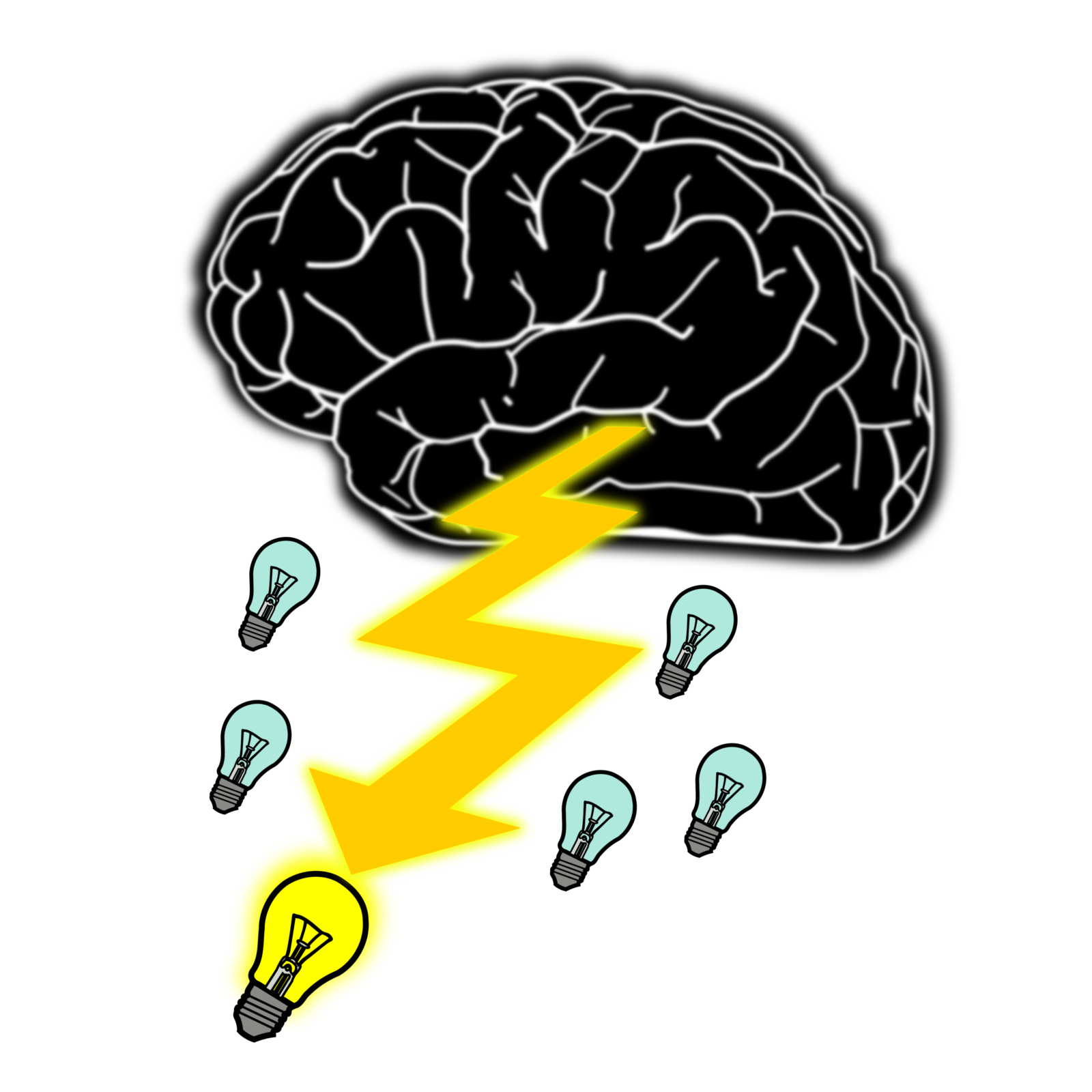
Get this level of electric brainstorming activity done without even thinking about it!
However, I said in the podcast: “For my sophomore winter break, I learned from that, and all I wanted was just a good place to start when I got back. I did not put a lot of pressure on myself. I let all the work that I had to do be kind of passive and if something came to mind that I really liked I would jot it down and get back to it”.
In this post, I’ll unpack what I meant by “passive work.” Active brainstorming, in my experience, is choosing to set aside time to sit down and build an essay or open-ended question on an exam from scratch. So, what does it look like to stretch out this brainstorm period so when you sit down to write, the paragraphs basically form themselves? Here are some tips on how I’ve been able to cut down on brainstorming time and get down to business:
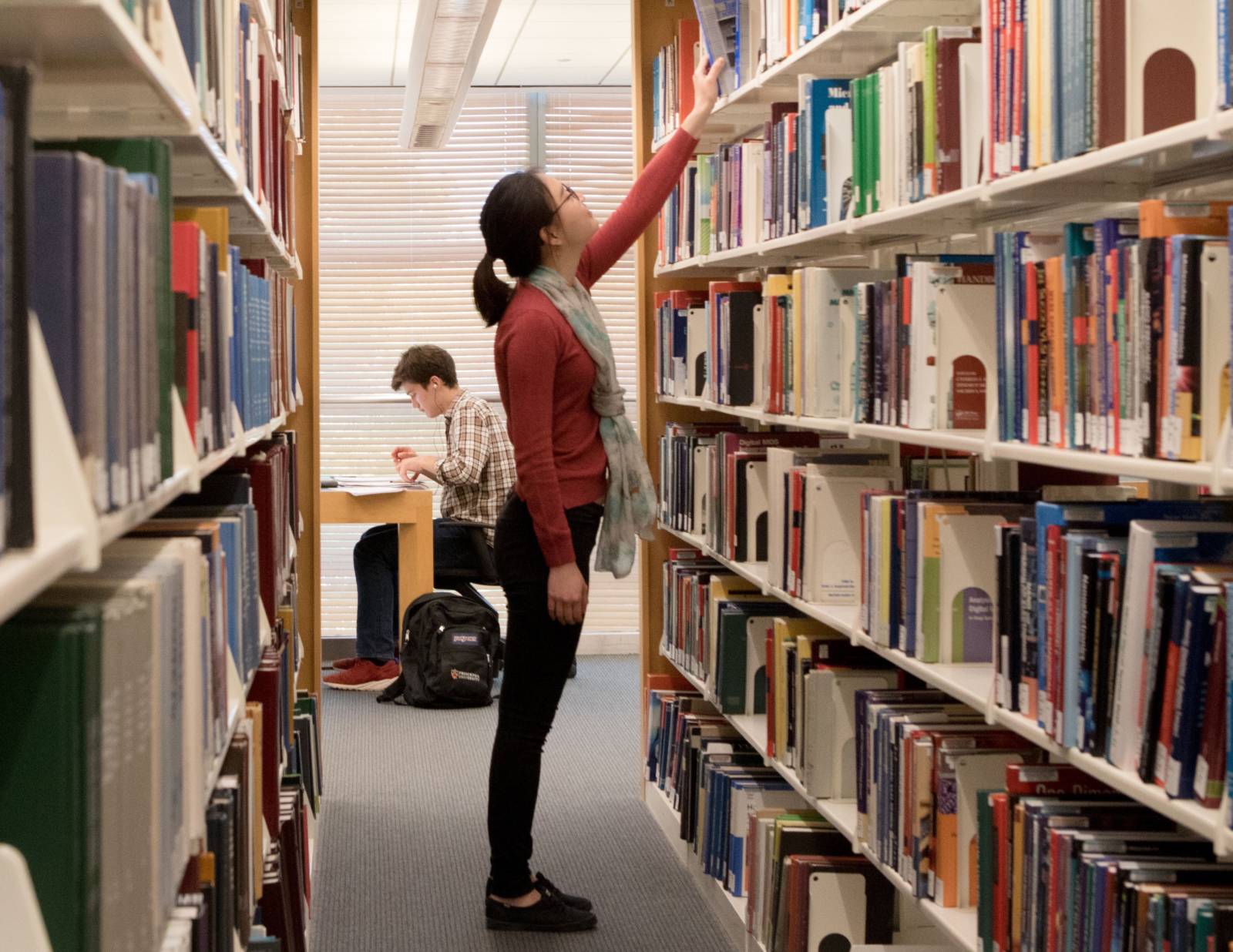
Personally examining the items around a book you’ve found is a great way to find related works on a given subject.
For many first year and sophomore students, fall break is a true respite from the academic demands of college life. For many juniors and seniors, however, it is a time of simultaneous relief and moderated despair as Princeton’s independent work requirements loom large. This is the position I find myself in. So gather round, friends, it’s time to talk independent work—specifically, how I found a general research area for my first JP. New to the JP game as I am, I feel rather unqualified to offer advice on how to “conquer” it or plan a totally coherent project right from the start. This will not be that kind of post. Rather, I’ll share some thoughts on beginning my own JP research process, which should illuminate some of the methods I used to cut down the uncertainty around my project and to find something like a workable topic. While I hope this is a useful guide for anyone facing the JP, I should note that it will probably be the most applicable to those in departments where fall independent work is not structured around a research seminar.
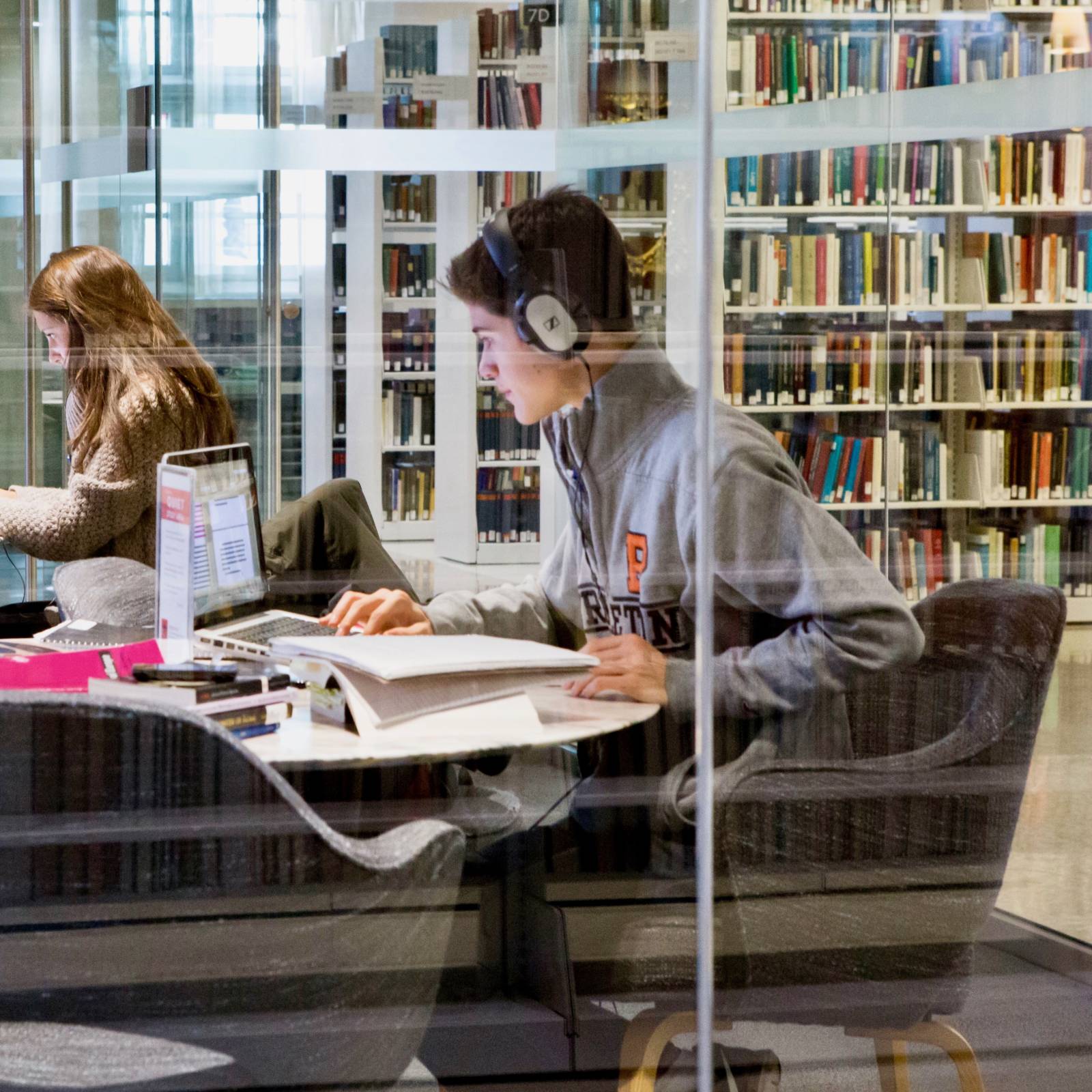
At this point in the semester, you’ve most likely gotten into a pretty standardized routine, and each week can begin to feel a little monotonous. Try changing up your study spots to reenergize your daily routine.
The Frist Campus Center is a popular study spot on campus.
It’s not hard — there are so many great locations to study on Princeton’s campus. While libraries are a good option, there are plenty of other locations as well. It’s great that there are so many places to study, but this can also make it overwhelming to decide where to go.
In this post, I’ll suggest some of the potential study locations on campus based on the type of work that you have to get done. Find the situation you best identify with, then match your situation “letter” to the suggestions farther down.
If you read my previous post, you’ll remember that I recently went through the process of picking my JP topic. If you’re reading this post, you’ll see that I’m going through this process for a second time after realizing my first topic wasn’t going to work out–my professor told me my topic was too general and not empirical enough. Hearing this was a shock, because I had spent so much time developing my first topic that my enthusiasm and excitement made me blind to the paper’s flaws. However, hearing this negative feedback made me realize I had to take a step back and look at my paper with fresh eyes.
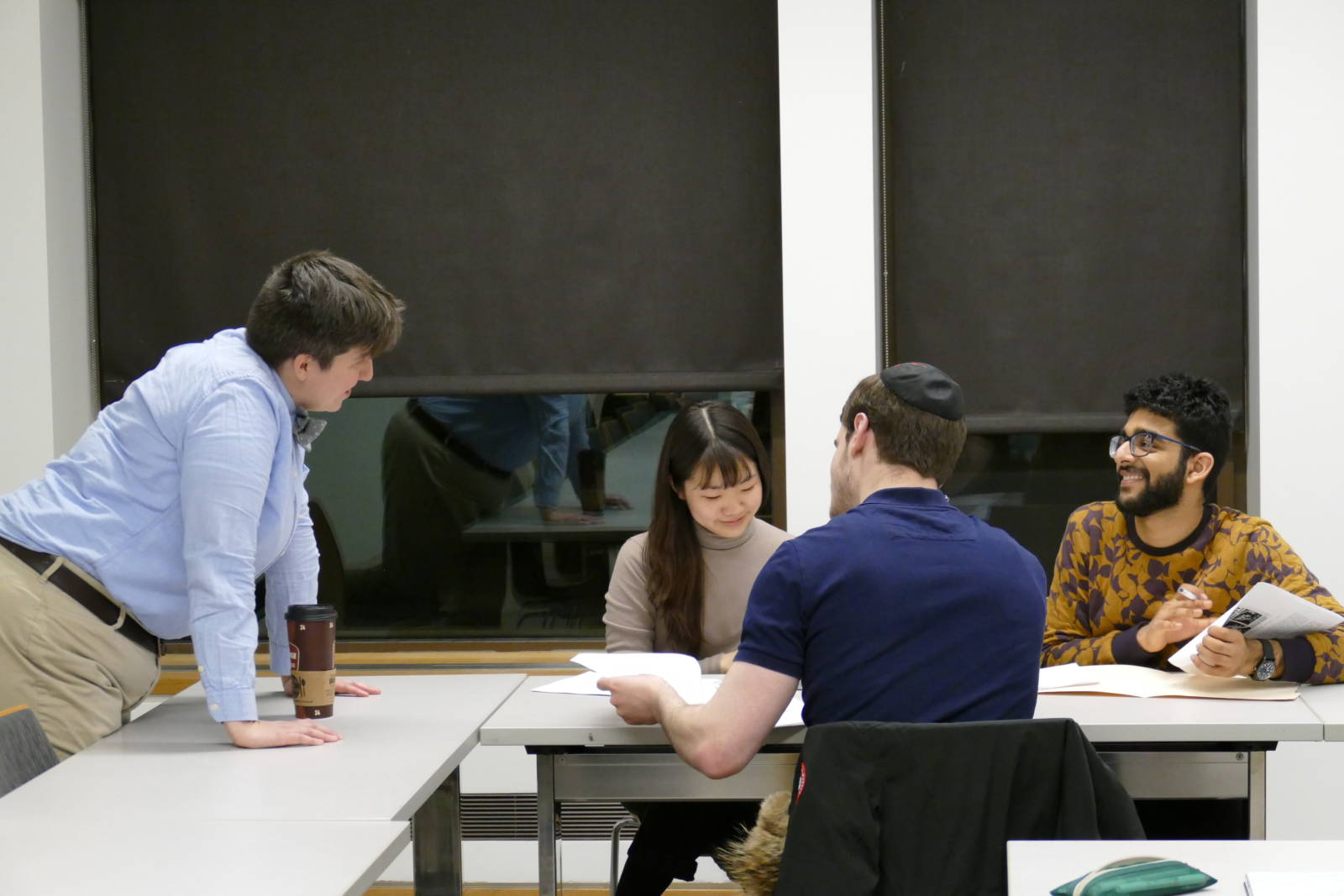
Students engaging in discussion in Writing Seminar
Writing seminar is a unifying challenge for all first-years at Princeton.
If you are currently overwhelmed by the terms “motive”, “scholarly conversation”, and “literary sources”, you are probably tired of hearing “just get through it” when asking others for advice on how to navigate writing sem.
Although writing sem will probably challenge you more than any type of writing you did in high school, managing the coursework does not have to be overwhelming. Here are a few tips that helped me reduce the stress of writing seminar and gain the most from my experience:
Writing seminar is a demanding and rigorous rite of passage at Princeton. The packed schedule, along with the constant writing and peer editing, makes it seem like you’re taking two courses instead of one.
The Mary W. George Freshman Research Conference is a great resource for current and future writing seminar students.
But for all you first years, I promise (as a *hopefully wiser* sophomore) that there’s a lot that you can get out of this one course that Princeton requires all first years to take. Although writing seminar is a trying class, it really is the basis of writing for all your future classes at Princeton. (I know, I know, I sound like your writing seminar professor. I’m sorry!)
I still remember the dread I felt when I first heard about the R3, or revised essay #3. For the R1 and R2, the argument was, to a certain degree, provided by the professor. The R3 asked me to develop “an original argument,” and the possibilities for the research topic seemed endless. I had no idea where to start. How was I going to write this?