Categories
Independent Work Present & Publish Findings

The value of harsh editing: “Killing your children”

When you’re struggling to begin a paper, perhaps the last thing on your mind is the possibility that you might have too much to write about. But sometimes when you’re struggling to start, it’s not because you don’t have enough to write about, but because you have too much. Have you ever found yourself with so many competing ideas bouncing around in your head, each clamoring for expression, to the point that your writing has no focus?
editing
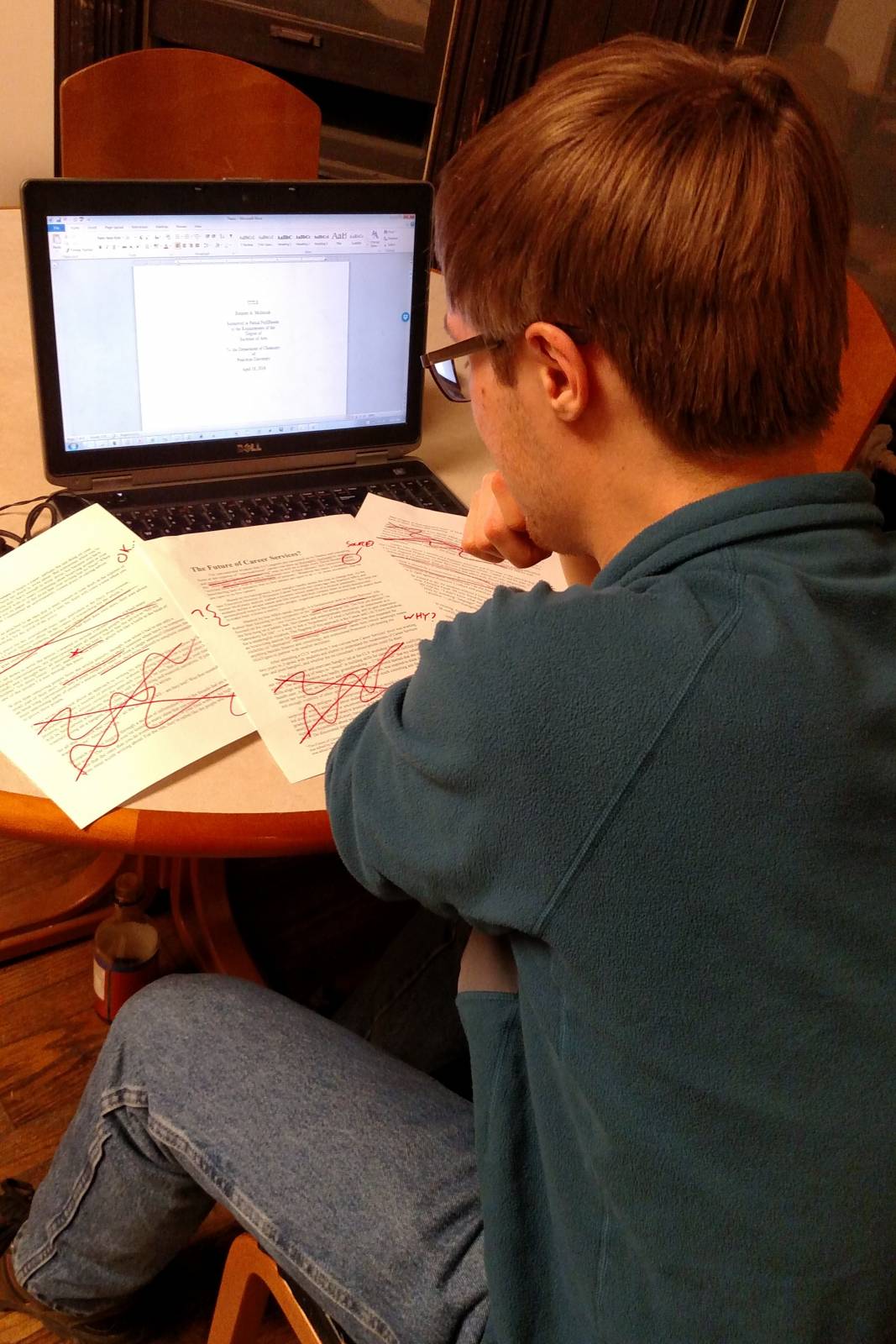
Editing can be painful, but comparisons to prolicide are a bit exaggerated

When I find myself in such a situation, I remember an unfortunately violent piece of editing advice: Kill your children — that is, don’t let your attachment to particular sentences or ideas prevent you from cutting them.

Just do it. Don’t convince yourself that an idea that it must remain in your draft at the expense of the quality of the work as a whole. However painful it may be, there will come a time when you have to sacrifice something for the good of the piece.

This fall, I wrote a piece for my journalism class, later published in the Daily Princetonian, about Princeton’s Career Services office. In the course of researching for the article, I interviewed more than a dozen students, alumni, and career service staff. Musicians and consultants, grad students and executives – everyone had  their own story, their own advice to offer me and other students.
Categories
Present & Publish Findings Research Life

Sorcery or Science? The Value of Subjective Research

In an ideal world, research is pretty straightforward. Evidence is collected, synthesized, and analyzed. Meaning emerges. Results point to objective truth.

But if there’s anything I’ve learned from the first two weeks of ANT 301 (The Ethnographer’s Craft), it’s that research is often far from this ideal. Ethnography, at its core, is a subjective science. But that does not discount its intellectual value.

9780226893983

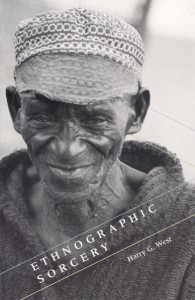
We recently read Harry G. West’s Ethnographic Sorcery, an account of West’s research in Mueda, Mozambique, where he studied sorcery as a prominent belief system. In short, Muedans believe that there are sorcerers among them who turn into lions and claim innocent lives. Early in the book, West recounts a conference he held to bounce his ideas off of community members. There, he presented a theory: we may understand these lion-people as metaphors for power play in society. An awkward hush took over the room before a schoolteacher spoke up. “I think you misunderstand,” he said. “These lions that you talk about … they aren’t symbols — they’re real.”

The case of the lion-people as metaphors reveals a problem of subjectivity: interpretations are often based on vastly distinct epistemologies, or ways of understanding the world. West acknowledges that calling lion-people metaphors is a fallacy because it dismisses local belief systems. In other words, viewing aspects of other cultures as metaphors rather than truth is a way of holding Western values above others.

Categories
Conduct Research Present & Publish Findings

Challenging the “Proper” Way to Write a Research Essay

Pinpoint a research question. Develop a clear thesis. Support that thesis with foolproof evidence. Discredit any rebuttals.

This is how many of us approach research papers — because ever since elementary school, teachers have told us to pick an argument and stand by it. I have completed assignment after assignment using this strategy, but recently I had the opportunity to break out of the single-argument box and experience a new writing technique.

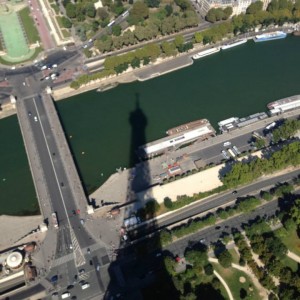
This is a picture I took from atop the Eiffel Tower while on vacation in France. Little did I know that what an important role French culture and ideas would play in expanding my approach to research.

For my French class last semester, I had to write a final paper about a current event of my choosing in the style of a typical French essay. My professor explained that in France, academic writing commonly diverges from the structure I described above. Students are encouraged to report on current events by investigating all of the different perspectives, components, and opinions at hand. Instead of crafting a specific argument to articulate and support, students offer thorough descriptions of multiple perspectives, the reasoning behind them, and their sources. As the paper develops, the writer must depict the similarities and differences of each perspective and describe how they interact to affect each other and to shape the greater context.

Categories
Independent Work Present & Publish Findings

I went to the senior thesis archives. Here’s what I found.

The basement of the Lewis Library Fine Hall Wing is quiet.

"Where are the books?" you may well ask. The Lewis Library answers...
“Where are the books?” you may well ask. The Lewis Library answers…

There aren’t many books down here, and the ones that are here don’t seem to have many readers. There are dim-lit shelves of dusty periodicals, and tomes with titles like Essential Entomology: An Order-by-Order Introduction (a book I actually borrowed for a project last semester).

And then there are the theses, and these are something else. For sophomores looking at concentration selection, theses give a true sense of what it means to be part of a given department at Princeton. Even simply flipping through titles can give a distilled, unbiased sense of the type – and diversity – of work that students in each department undertake.

Math theses archived from the 1970's.
Math theses archived from the 1970’s.

As a junior, I went to the archives this week under the pressure of an impending deadline for my EEB thesis funding application. In the black-bound books, I felt optimism and excitement, a sense of both broad possibility inspired by all my peers have done, and realistic scope that comes from the recognition that these books are finite, and that writing one is possible.

Categories
Present & Publish Findings

#ResearchGoals: The Story of Football Star and Mathematician John Urschel

I have so much respect for the professional football players who sacrifice so much for their team and fans. But, after reading one particular story, I've started to respect football players for reasons beyond their on-field performances.
I have so much respect for the professional football players who sacrifice so much for their team and fans. But, after reading one particular story, I’ve started to respect football players for reasons beyond their on-field performances.

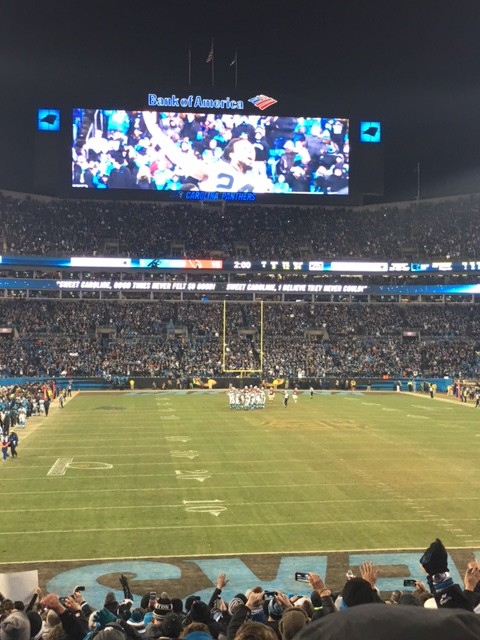
Over intercession break, I went back home to Charlotte – which is probably the happiest city in America right now. Our very own Carolina Panthers just punched their ticket to the Super Bowl, something the franchise hasn’t accomplished in over 10 years. The day after we clinched our Super Bowl berth, I was laying in bed watching football analysts apologize for estimating the Panthers, when a headline caught my eye. “Ravens’ John Urschel Accepted into PhD program at MIT”. It was one of those tiny headlines in the news ticker, and not a story they were actually covering. So I went on my computer and sure enough, there it was. Baltimore Ravens center John Urschel was just accepted into MIT’s PhD program in mathematics to study spectral graph theory, numerical linear algebra, and machine learning. Now, having talked to some of my own math professors about their research, I know how difficult it is to do novel research in such advanced topics, especially in the seemingly inaccessible world that is math. But to do all of that while enduring the physical and mental pressures of playing football for an NFL team? I couldn’t believe it.

Categories
Independent Work Present & Publish Findings

The Eternal Struggle Between Academics and Extracurriculars

It’s the beginning of a new semester, and I’m sure many students are asking themselves the same question I ask myself time and time again: How much can I realistically take on? Balancing academics and extracurricular activities is always delicate. And even though it feels particularly strained right now as I prepare to write my spring JP, I know how important it is to find time for what I love to do. The purpose of this post is not to provide some cure-all for your scheduling woes — because everyone works differently — but rather to talk about what has worked for me.

11548_300036186864579_7410891750618535207_n
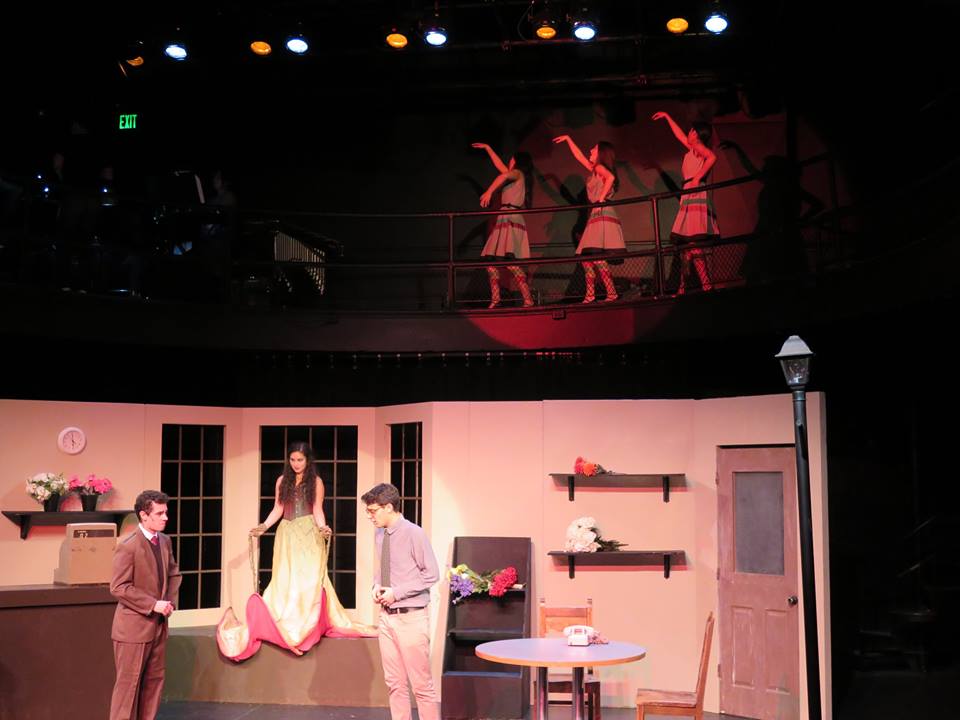
Snapshot from PUP’s Fall ’14 production of Little Shop of Horrors, in which I played Seymour — a botanist who must murder to feed his man-eating plant.

Most of my time outside of class is dedicated to theater. I have performed in many productions on campus and serve as the Princeton University Players’ Vice President. Beyond the immense joys I find in making theater, it has taught me how to effectively manage my time: an invaluable skill for big research projects. Since rehearsals often run late, I’ve had to learn to speed-read during 10-minute breaks and work productively during time off. Luckily, there is support in the struggle to get everything done. McGraw has resources to help us develop more effective time management strategies and to make our time more productive.

Categories
Present & Publish Findings

LAST CHANCE to be in Princeton Research Day!

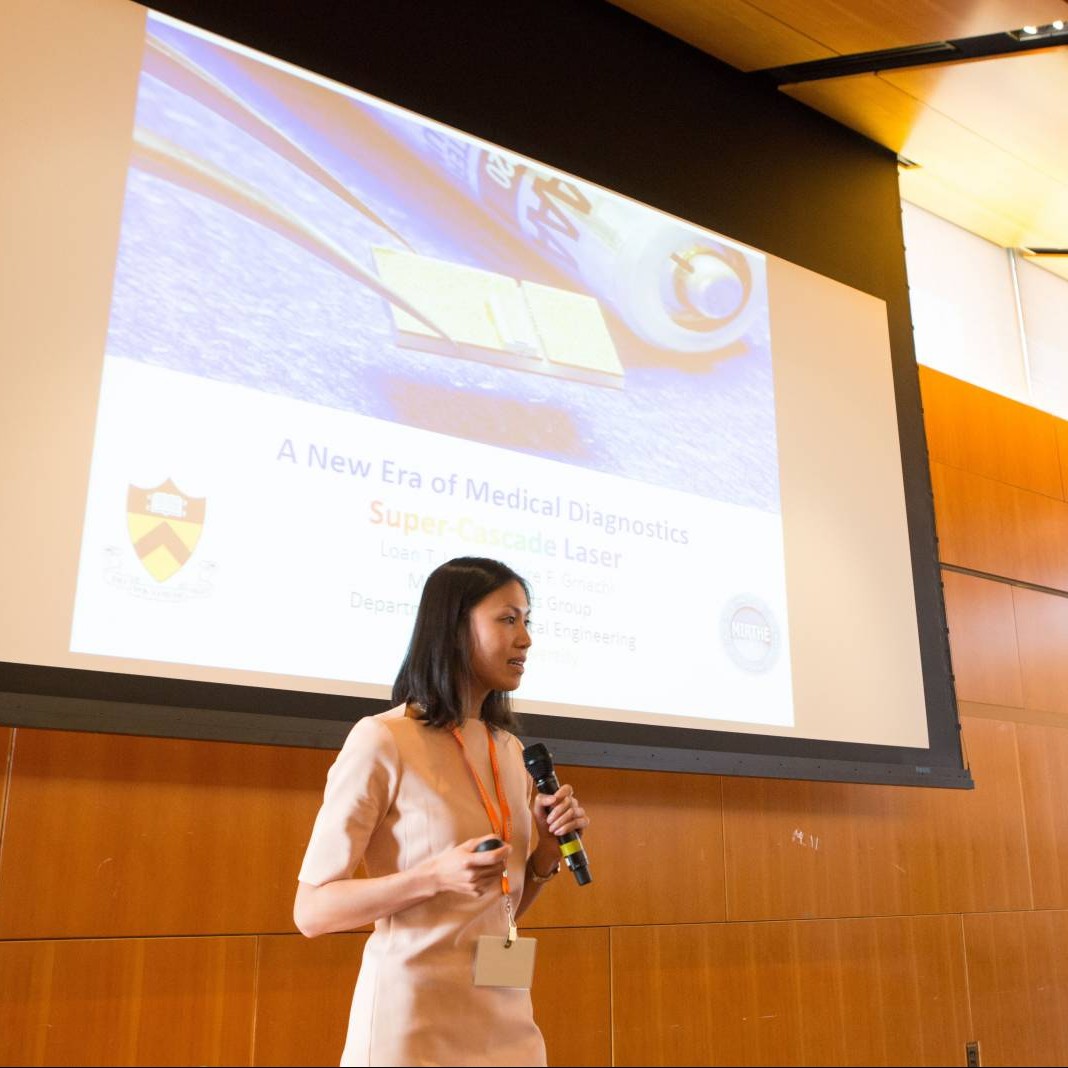
By now, you might have seen posters, social media advertisements, and even blog posts by Stacey and Melissa about Princeton Research Day this May. Princeton Research Day is a university-wide “research fair”: a day for students to present their research and learn about others’ work. PRD is for student research at all levels– whether a freshman seminar paper or a senior thesis project. The application deadline is THIS FRIDAY at 5 pm, so I wanted to write a post about the value of PRD and the ease of the application!

This could be you if you apply NOW to present at Princeton Research Day!
Categories
Independent Work Present & Publish Findings

4.5 Things to Remind Yourself Before Your Second JP

Exactly 26 days ago, I submitted my junior paper on U.S. immigration policy.

To repeat: I wrote a JP, I submitted it, and it’s completely done.

I couldn’t imagine writing those words back in September, when everything about junior independent work seemed completely overwhelming. I struggled to find a topic because I had limited experience with the scholarly field of U.S immigration. After choosing, and then changing, my paper topic, I needed to recruit participants, schedule interviews, and transcribe every word the participants said. All that led to a 24 page draft (written during Thanksgiving break, of course) and two subsequent drafts before I submitted the final paper on January 5th.

IMG_8811
Directly relevant: 4.5 things I should not eat when I’m stressing about JP deadlines.

While I enjoy talking about my fall JP in the past tense, my upcoming spring JP necessitates a return to the present. This time, however, there is one crucial difference: I finally know how JPs work. And that understanding can revolutionize a scholarly independent project — because once you know how JPs work, their long page limits and enormous possibilities no longer seem scary. So, here are 4.5 things I want to remind myself (and share with you) about the JP process:

Categories
Conduct Research Present & Publish Findings

How 4 Desk Friends Help Me Through Finals

IMG_7680
A sure sign of finals: Post-its of equations are everywhere.

With Princeton’s 3-week-long reading and finals period, January can seem like one long, unending study session. Thankfully, you’re not alone. There are always some friends by your side… and by friends, I mean desk friends: objects you can’t do finals without. Of course, it’s also a good idea to make time for your real friends during finals. As Kavi has explained, study groups are extremely effective, and they can help you approach studying with better mood. But for now, let’s focus on 4 desk friends that can really do wonders for your studying and your sanity.

Categories
Conduct Research Present & Publish Findings

The Project That Made Me a Researcher: 8 Things Infancy Teaches Us About Research

Over the course of the semester, PCURs will explain how they found their place in research. We present these to you as a series called The Project That Made Me a Researcher. As any undergraduate knows, the transition from ‘doing a research project’ to thinking of yourself as a researcher is an exciting and highly individualized phenomenon. Here, Bennett shares his story.

~~~~~~

This is hardly the conventional idea of a research project: for one thing, I don’t remember it, and it’s hardly a lab or an archive project. But, unlike the writing seminar paper I wrote on Osama bin Laden, or my first lab experience with yeast genetics, this is a project every PCUR reader has gone through. So here’s baby Bennett, to take you through the first and most exciting research project any of us has participated in: discovering the world as an infant.

1. Bury Yourself In The Literature

I don’t mean that literally, silly.

You can’t start a research project without a deep background on the question you’re asking in the first place. That’s pretty difficult for an illiterate baby: the best I could do was crawl into the papers in my Dad’s briefcase, and hope some knowledge rubbed off, or that I would at least get a better understanding of how the world around me was shaped. If you’re literate, then you’ve got a huge advantage: read everything you can (even if you don’t understand it all at first – we’ll get to that later).