Categories
Conduct Research Independent Work Present & Publish Findings

Pushing forward

Last week, Zoe wrote about research in the face of despair from external factors. How can you not push forward, she asked, when in your work is hope for a better future?

late_night_squarejpg
Late nights in Frick – an all-to-familiar scene for me and many other thesis students.

This week, I tackle inner despair: How can you push forward when in your work you see no hope?

My thesis project holds no immediate promise of hope for the reefs, or of curing some plague, or of fantastic future technology. The motivation for basic biochemical research comes from its intrinsic beauty, and the hope of applications long in the future. I was incredibly excited about my thesis project at the beginning – I was asking fundamental questions about the origin of life; I had the potential to create something genuinely new. Inevitably, though, my project hit obstacles – both technical problems and scientific difficulties indicating misconceptions in my original idea.

So, the thesis I’m currently writing looks nothing like the thesis I imagined last spring.
Categories
Independent Work Present & Publish Findings

Editing Independent Work: How to Know When You’re Done

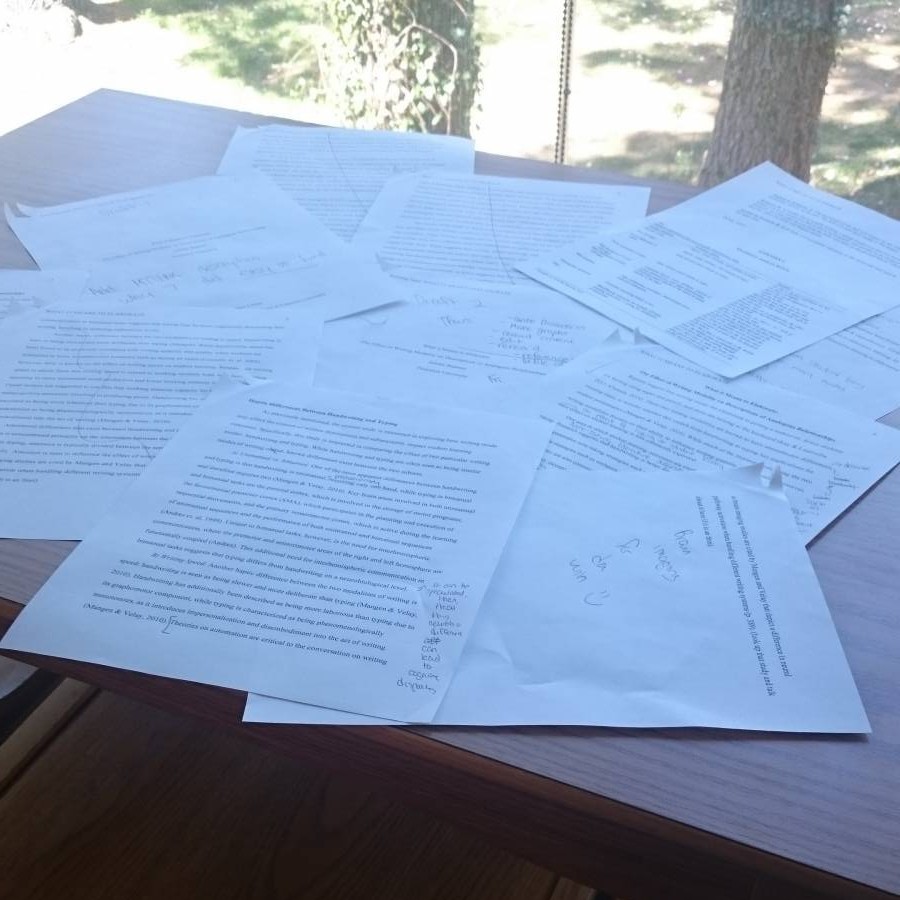
Many juniors and seniors will spend their sunny spring days inside revising!

With JP and thesis deadlines quickly approaching, many students have moved from the writing stage to what seems like a never-ending cycle of editing and revising. Editing and revising independent work (or any long paper) can be daunting, mainly because there’s a lot of content and there’s always some way to improve your writing. While there is no “perfection test” to let you know when your independent work is immaculate, here are some telltale signs that you should probably just hit submit:

Categories
Present & Publish Findings

Do’s and Don’ts for Research Writing

Don't let bad grammar plague your writing!
Don’t let bad grammar plague your writing!

In the thick of doing research, it’s easy to forget about the ultimate goal of writing and publishing. Thankfully, about once a month, the Princeton University Laser Sensing Lab holds what we call a “literature review”: Everyone brings in papers they’ve come across for their own research, and shares techniques that could be useful for the group at large.

At our last meeting, someone changed things up. Instead of bringing in a paper that contained interesting ideas, he brought one that he declared “the worst paper I’ve ever read”.

Categories
Independent Work Present & Publish Findings

5 Thesis-Related Things That I’m Excited About

As everyone knows, thesis crunch time is upon us. In an attempt to keep the positive energy flowing, I’ve decided to divert my attention away from stressful thoughts of drafts and deadlines…. and instead compose a list of 5 thesis-related things that I’m excited about! Here they are:

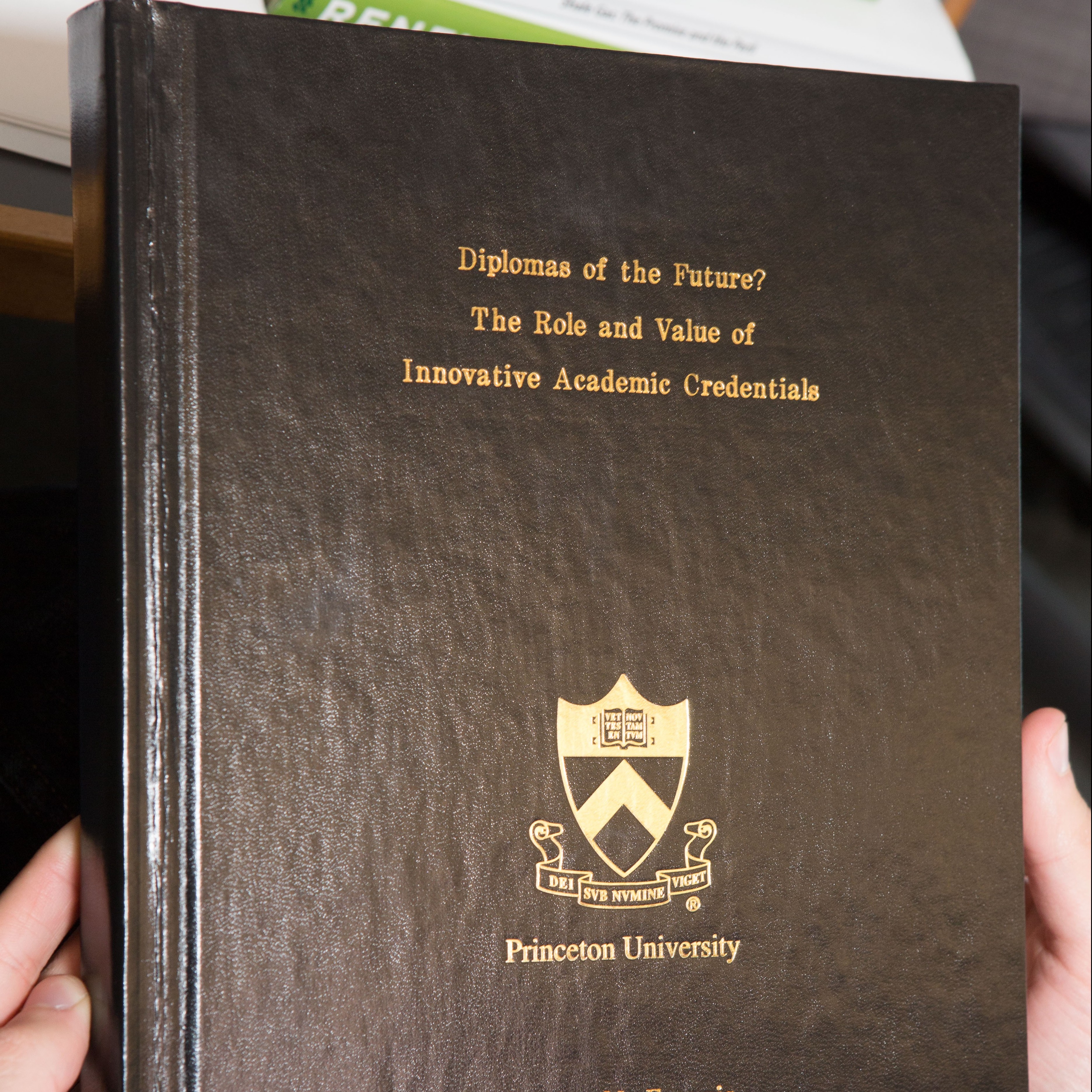
  1. Seeing my thesis title gold-stamped on the cover.
Every senior dreams of the day their thesis is finally binded! Photo credit: Princeton University Office of Communications
Bound theses always look so prestine!

Bound theses are beautiful, but the best part for me is seeing the gold letters of the title contrasted against the black leather. It is going to look so official!

2. Actually wanting to talk about my topic.

I’m so excited to finally feel like an expert when talking to people about my topic. I mean, we picked our topics because we were interested in them and thought others would be too, right?

I’ve also applied to present at Princeton Research Day, so hopefully I’ll get to look legit while giving a 10 minute presentation about how handwriting and typing influence learning differently!

Categories
Conduct Research Present & Publish Findings

Presenting Like a Pro: Three Tips for the Freshmen Research Conference and Princeton Research Day

Often, the second half of the semester calls for students to present their research findings in class, or in front of professors/advisers evaluating independent work. Presentations are a different kind of assignment than, say, fifteen-page research papers — and they require a different set of skills. At this time last year, I found myself facing a new and unexpected presentation project: My fall writing seminar professor had asked me to revisit my final research paper and present it at the Quin Morton ‘36 Conference.

Engaging your audience during a presentation can seem like a daunting task, but with some thoughtful preparation, you’ll be sure to command their attention.

Now called the Mary W. George Freshmen Research Conference, this event is an opportunity for freshmen to share their writing seminar research with a wider audience through ten-minute presentations. I encountered many challenges while breaking down my paper—a feminist perspective on evaluations of sexuality in films— into slides and bullet points. However, I also learned a lot about presentations through the process. While this year’s participants are gearing up for the conference in early April, students presenting at Princeton Research Day are in the midst of similar preparation. In light of these upcoming events, and since many students will have to present their research as spring semester comes to a close, I have decided to offer some advice on research presentations. Below I throw in my two (three) cents on the topic.

Categories
Conduct Research Present & Publish Findings

Fighting Imposter Syndrome and Finding My Confidence at Princeton

Even though they said I belonged, I felt like I was hiding a flawed interior - that I was an imposter among the many high achievers.
Even though they said I belonged, I felt like they had only seen the veneer over a flawed interior – that I was an imposter among the many high achievers.

When I was a freshman, President Shirley Tilghman stood on the stage in McCarter Theater and told us, a crowd of alert and excited newly enrolled students: “If you’re wondering whether you belong here, you do. We don’t make mistakes.”

I wanted very hard to believe that. I was in awe of all of my classmates who seemed so talented and brilliant. I loved talking to them, but at the end of the day, I felt inadequate. I spent a lot of time wondering whether President Tilghman’s words really applied to me.

Categories
Independent Work Plan Beyond Graduation Present & Publish Findings

Rocky trails: Researching what matters to you

eve1
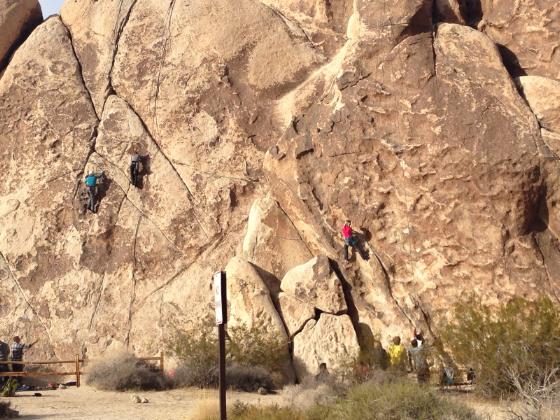
Climbers using fixed anchors in Arches National Park

How would you like to travel to six of the country’s most famous National Parks for your senior thesis?

My friend Eve Barnett, a senior in the politics department, did just that. Eve, who also leads Outdoor Action trips and rock-climbs with the Princeton Climbing Team, found a way to combine her academic training with her love of the outdoors. Her thesis focuses on how the Park Service addresses a controversial issue within the climbing community: fixed anchors, metal bolts pushed into a cliff face for climbers to clip into. Should they be allowed in National Parks because they increase access, or banned because they’re a permanent change to the rock face? I sat down with Eve to learn more about her research journey.

How did you decide on a research topic? Was it related to your previous independent work?

It was totally unrelated! My fall JP was about international ocean conservation commissions, and my spring JP was about the different political experiences of high-income and low-income college students. I asked my thesis adviser what he thought about continuing with the college student project, but he recognized that it wasn’t really my project since it was a small portion of a professor’s ongoing research. He told me he believed my thesis topic should be something I have ownership of. So I started thinking, what do I love?

Categories
Conduct Research Independent Work Present & Publish Findings

Q&A with HackPrinceton Directors

Every year, students across the country come to campus for HackPrinceton, the biannual hackathon event that boasts thousands of visitors. While I’ve never attended a hackathon in my life, quite a few of my friends attend them regularly. They gather in small teams to work on technology and engineering projects (colloquially called “hacking”) at the event, which culminates in group presentations of the projects they’ve created. I’ve noticed that the hackers who are involved in research or entrepreneurship find the hackathon experience especially rewarding. So, this spring, I plan to try out my first hackathon at HackPrinceton. In preparation for the April 1-3 session. I decided to learn a little more about hackathons and how they relate to research in general.

Here’s a snippet of my Q&A with 2015-16 HackPrinceton Directors Zach Liu ’18 and Monica Shi ’18, who helped run the incredibly successful HackPrinceton Fall 2015.

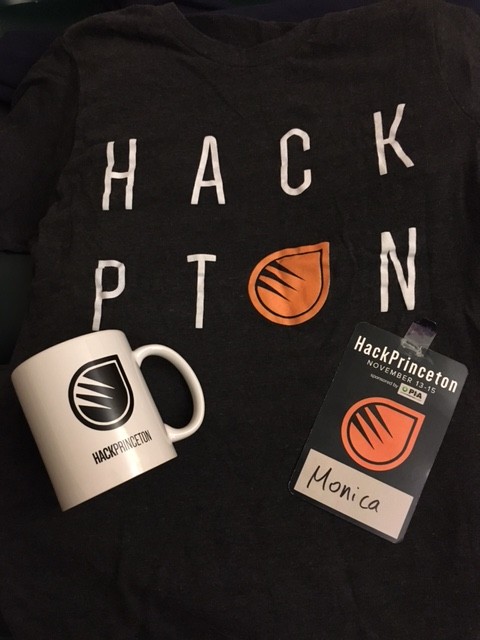
A great perk of being a HackPrinceton competitor – lots of free swag! Swag Credit to Monica!

Me (Kavi): What exactly is a Hackathon?

Monica: Essentially it’s an event where people come together to think of and build projects. Traditionally, these projects are divided between software and hardware, but there are hackathons for other things – like design projects. It’s a great way for people to learn about programming and technology by getting together with a group of like-minded students to build a project for 24-36 hours. It’s kind of like a marathon where you have any and all the materials you need to build your project. The hackathon organizers will do their best to make sure you’re able to hack with all the resources you need – including all the food you need to keep you satisfied. At the end, teams get feedback from a panel of judges, and the top projects win awesome prizes!

Categories
Conduct Research Present & Publish Findings

Are We Robots or Are We Dancers?

Princeton’s Dance Department and Robotics Program might seem like polar opposites to the average student: The former attracts the most creative and artistically inclined of the student body while the latter is deeply math-science oriented. Over the past three weeks, however, I have seen one student challenge these assumptions by bridging the arts-science divide.

Dana Fesjian ’17 is an undergraduate in the Electrical Engineering (ELE) Department, who is participating in a Lewis Center for the Arts initiative called Performance Lab. Known informally as P-Lab, this initiative allows dancers to explore independent work that connects dance with a different field. The culmination of this exploration is a performance in early March where the participants showcase their choreography and explain their independent work. Dana—whom I dance with in Princeton University Ballet—is using sound-sensitive robots to create dance movements and patterns that will eventually be performed by humans. She asked me to be one of the dancers in her project and I happily agreed to do so.

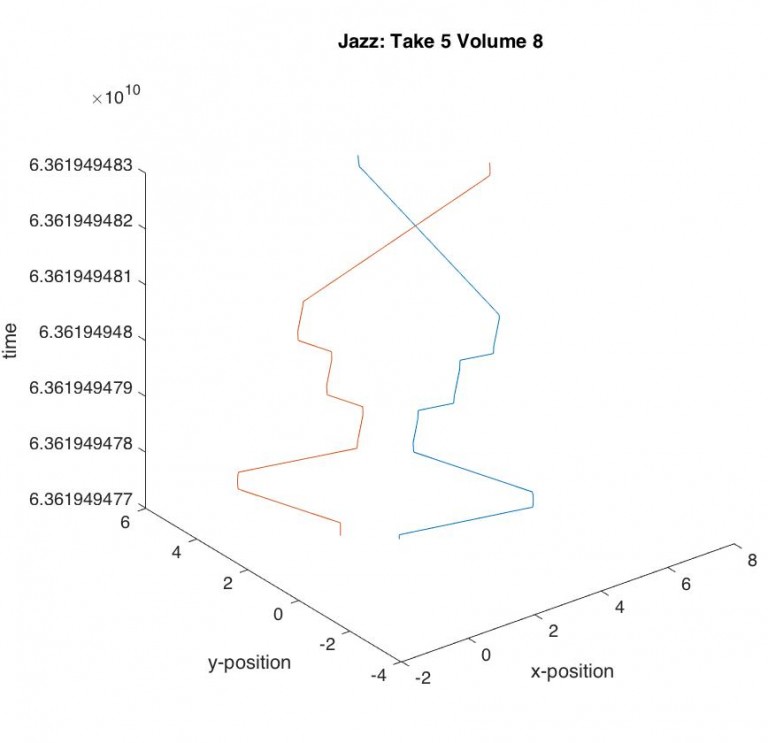
Dana’s robots reacted to sound signals from a jazz song to map out the pattern above. In her P-Lab piece, the dancers will trace this exact pattern and five other ones created using different songs.

Throughout our rehearsals over the past three weeks, I have had the chance to learn more about Dana’s independent work, and decided to cover her experience for my post this week.

Categories
Conduct Research Present & Publish Findings

Mentorship in Research: Don’t go alone!

Over the course of the semester, PCURs will reflect on the professors, advisers, and friends who shaped their research experiences. We present these to you as a series called Mentorship in Research. Most undergraduates have met, or will meet, an individual who motivates and supports their independent work. Here, Stacey shares her story.

~~~~~~

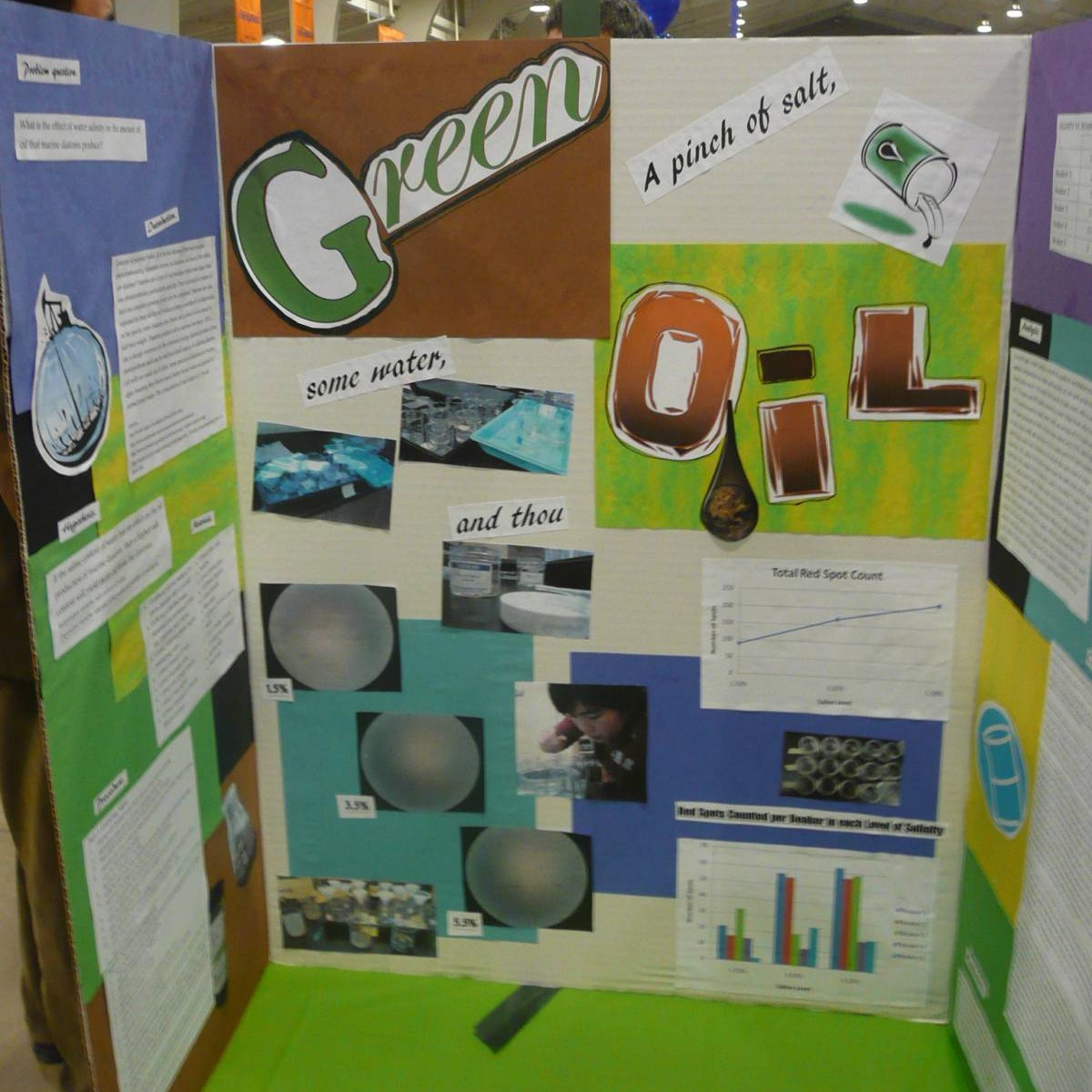
I didnt even know how to make a proper posterboard when I started conducting research.
I learned a great deal about conducting research during my first research project, even if making a proper poster was not one of those skills.

I really didn’t want to stay for the awards ceremony at the science fair that day, but Mrs. Sabherwal insisted. I told her I had to go to my clarinet lessons. No luck. I asked my mom to plead my case. No luck. She only offered, “It’s okay if you miss your lessons today”—and so, defeated, I waited at the fair.

And what an arduous wait it was. I couldn’t sit still—I just wanted to leave, and I was starting to get hungry. They kept calling names and more names. Names and more names. Were they done yet? I left and used the bathroom. But there was a flurry as I emerged, hands still damp with residual sink water—come quick, they told me, they’re calling your name! The highest award in the district science fair! Impossible. It turns out that Mrs. Sabherwal had confided in my mom about the award and expressly requested that I remain.

Mrs. Sabherwal was like that—always looking out for her students, no matter how frustratingly obstinate. She pushed me to become a researcher even when I didn’t realize I could be one.