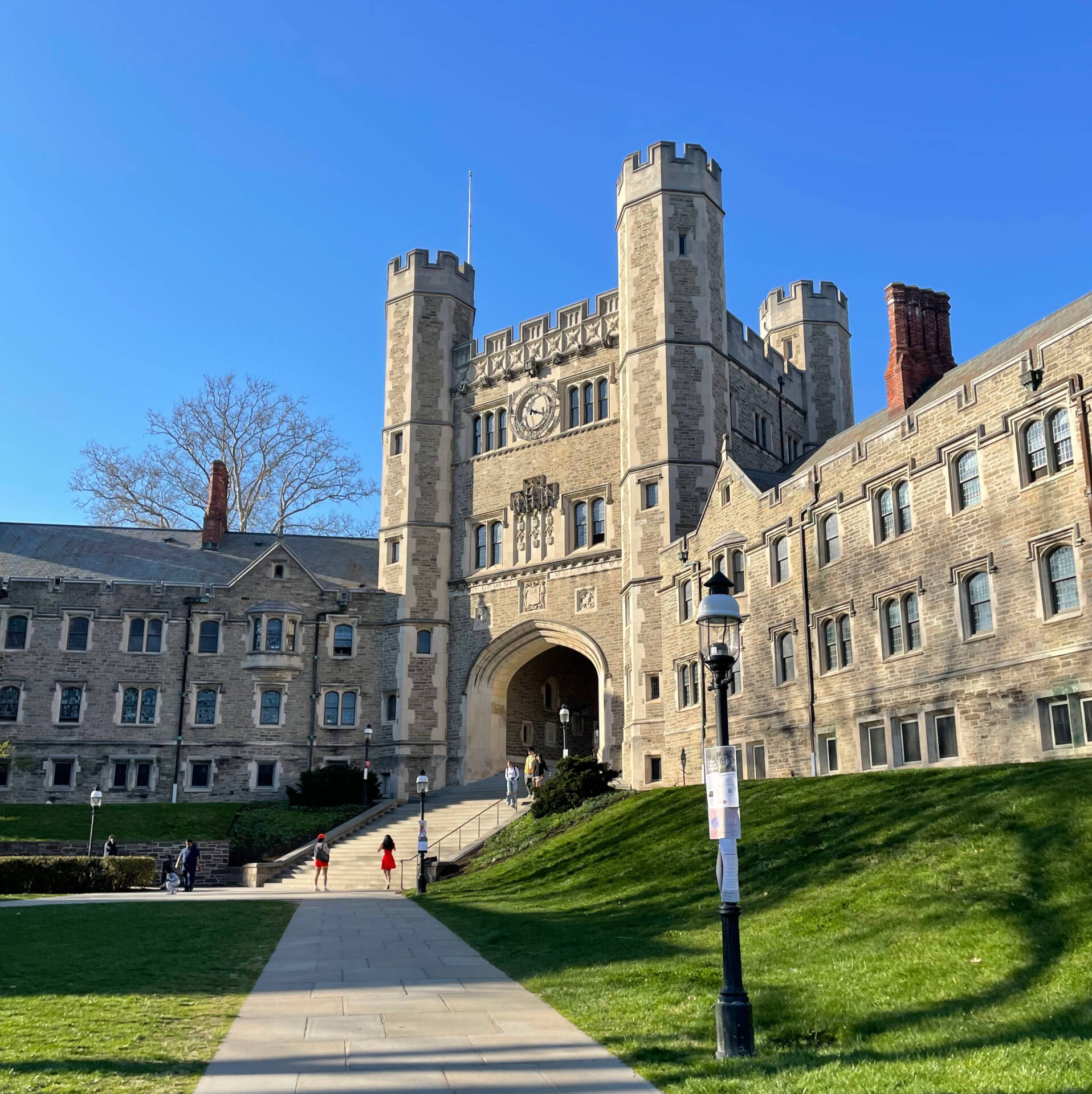
I have yet to print my senior thesis, but once I do, I’ll be taking a photo with it in front of Blair Arch (per tradition!). Photo by author.
When I sat down to write the acknowledgements for my senior thesis, I realized something surprising: my department’s resources on how to write a thesis or independent work paper didn’t include any advice on writing this section. In some ways, that makes sense. Most readers focus on sections like the abstract, methodology, and results, which really serve as and highlight the key contributions of the paper. But having guidance on how to write acknowledgements can go a long way in helping students thank the people who made their research possible. In this article, I’ll share a few tips for writing acknowledgements—whether you’re submitting a STEM paper to a conference or wrapping up your senior thesis.
David Walker is a Professor of Computer Science at Princeton University whose research focuses on programming languages, formal methods, and computer systems. Known for his commitment to advancing both theoretical and practical understanding in the field, Professor Walker also plays a central role in mentoring students.
As someone who completed my junior independent work under Professor Walker’s guidance last semester, I’ve had the chance to witness his thoughtful mentorship firsthand. In a research culture where both the technical challenge and emotional uncertainty can feel overwhelming, I’ve come to appreciate how crucial the human side of research is—how we learn from and grow with those who guide us. With that in mind, I sat down with Professor Walker to explore how he thinks about mentorship: what it looks like, why it matters, and how he helps students, like me, find their footing in the world of research.
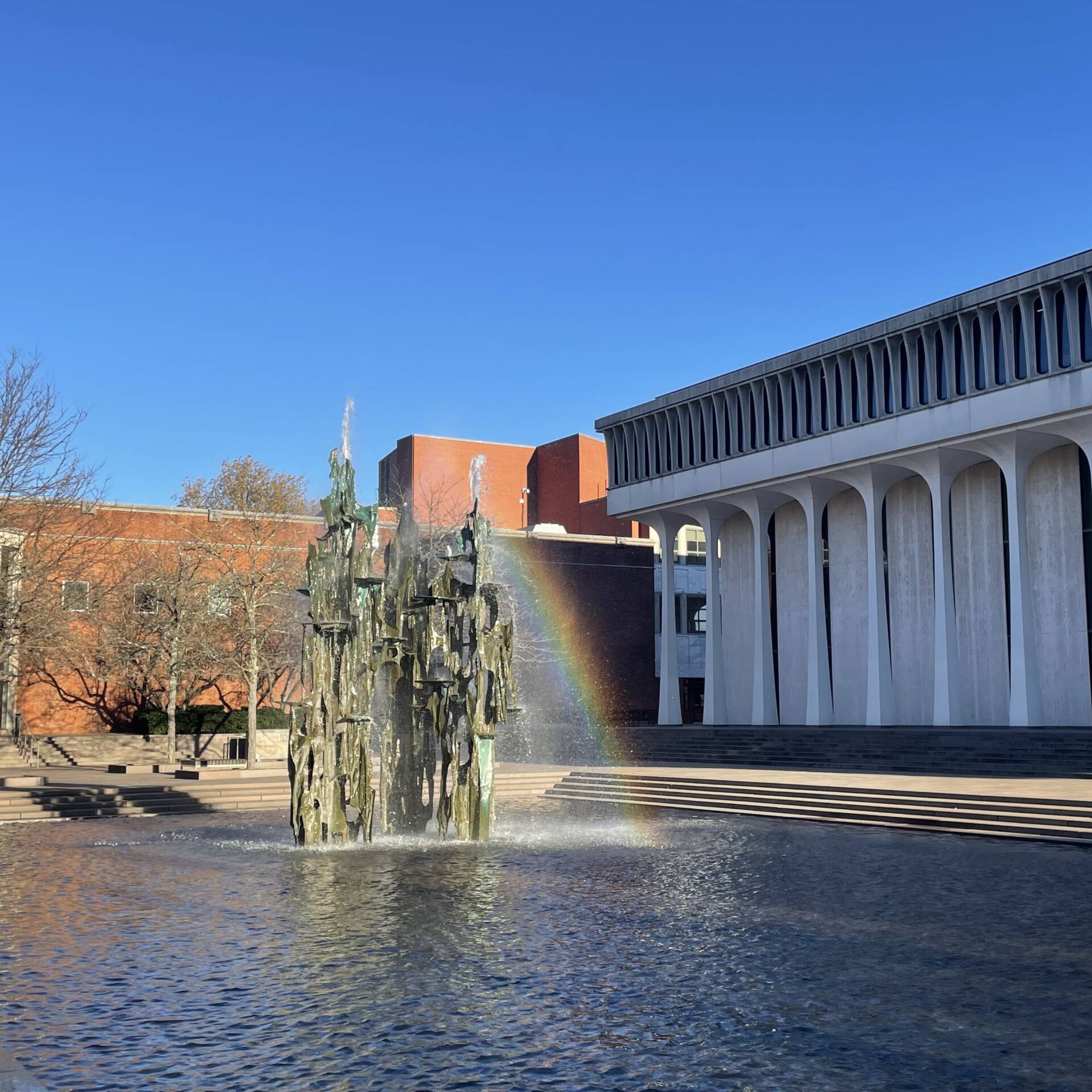
A rainbow at the Fountain of Freedom (colloquially called the “SPIA Fountain”), taken during a break from working on my thesis
Independent research at Princeton offers an incredible opportunity for students to explore their academic interests and gain experience in the research world. This year, I’m working on my Senior Thesis with Professor Aleksandra Korolova, conducting an audit of Google ad delivery optimization algorithms. Specifically, I am studying whether aspects of advertisements—the image, text, links, and so on—impact the demographics of the audience to whom the advertisement is delivered.
In the fall, many people were curious about how my thesis was progressing. The truth was, for a few weeks, I hadn’t started running any experiments, since I first needed my research to be approved by the Institutional Review Board (IRB). Through this experience, I both gained insight into the IRB process and found that many students had never even heard of the IRB. In this article, I share my experience and offer advice for students who are planning to conduct independent research.
Hailing from Saipan and South Korea, Cevina Hwang is a junior in the Ecology & Evolutionary Biology department. With a longstanding interest in the field of dentistry, she chose to expand upon this passion through her junior work, where she will be exploring the evolution of the human jaw and teeth.
Join me below to read about Cevina’s journey in the junior work process.
Many books in a library. Citing them all would probably take a long time. Credit: Emil Widlund
If I have to be completely honest, dealing with citations is my least favorite portion of the academic writing process. Ascertaining what citation style I need to use, successfully figuring out how to actually format citations in that style, and managing the hodgepodge of footnotes and endnotes are all tasks that seem, to me, cumbersome. Of course, these are necessary tasks: it is imperative that if we paraphrase, quote, or utilize in any way the work of others, we should always attribute the proper credit to them. But recognizing the importance of academic integrity doesn’t prevent us from still finding the task of dealing with citations to be a chore! If you’re in the same boat as I am, I’ll try to provide some advice and tips on dealing with citations!
Anna Calveri ’26 is a junior in the Computer Science department. On campus, she is a member of Princeton University Robotics Club, Sympoh Urban Arts Crew, and Colonial Club.
The senior thesis is a hallmark of the Princeton experience, giving students the opportunity to conduct original research under the mentorship of a faculty adviser. Every senior is required to write a thesis, with the exception of Computer Science majors in the Bachelor of Science in Engineering (B.S.E.) degree program. Instead, these students are required to undertake a substantial independent project, called independent work (IW), which can take the form of a traditional one-on-one project with an adviser, an IW seminar where a small group of students independently conduct projects tied to the seminar’s main theme, or an optional senior thesis.
In 2022, I interviewed Shannon Heh ’23 about her experience in an IW seminar, where she highlighted the structure and guidance the professor and course seminar. This year, I wanted to explore the perspective of a B.S.E. Computer Science student who pursued a different option: the one-on-one IW project.
Anna Calveri ’26 stood out as the perfect person to speak with, not just because of her exciting research at the Princeton Vision & Learning Lab led by Professor Jia Deng, but also because she began her project during the summer as a ReMatch+ intern and built on it during the fall semester. While many students only work on their IW within a single semester, Anna’s approach of extending her research across both the summer and fall gave her the chance to deepen her research and hit the ground running with impressive progress.
You’ve finished a research project and now you’re on to the final step: presenting your work! It’s time to share the incredible work you’ve done with the general public, and one of the best ways to do so is to create a poster conveying the significance and conclusions of your research. This will be an essential skill during your time at Princeton whether for a course or as a part of your junior and senior independent work. If this is your first time creating a poster presentation, check this blog out!
Sara Akiba ‘26 with her poster presentation on “Foraminifera-bound δ13C as a Paleo CO2 Proxy: Methods Testing” for the Geosciences Junior Poster Presentations! If you want a poster as great as hers, continue reading below for some advice.
This could be you working passionately on your funding proposal using the tips in this guide! Photo credit: Glenn Carstens-Peters.
After having discovered a potential funding opportunity, you might be reading the requirements for the application and find that you need to write a “research proposal” as a part of the application. This might be your first time writing a funding proposal. Here are a few tips to assist you in writing your funding proposal!
Finding the right sources within a literary field is a key part of all independent work. Photo credit: Olena Bohovyk.
Writing a Junior Paper (or two, depending on your major) can be a stressful process. But it does not have to be that way. Below are some strategies to help you minimize JP-induced stress and streamline your research process.
A student working in a lab, potentially on a research project for their senior work that would greatly benefit from funding! Photo credit: Nick Donnoli.
You’ve brainstormed a great idea for your research project. You have the details of your topic all figured out, but you need some assistance with figuring out the logistics of the financial aspects that come with your great idea.
If that’s you, here’s a quick guide on one way of securing funding as a Princeton student!