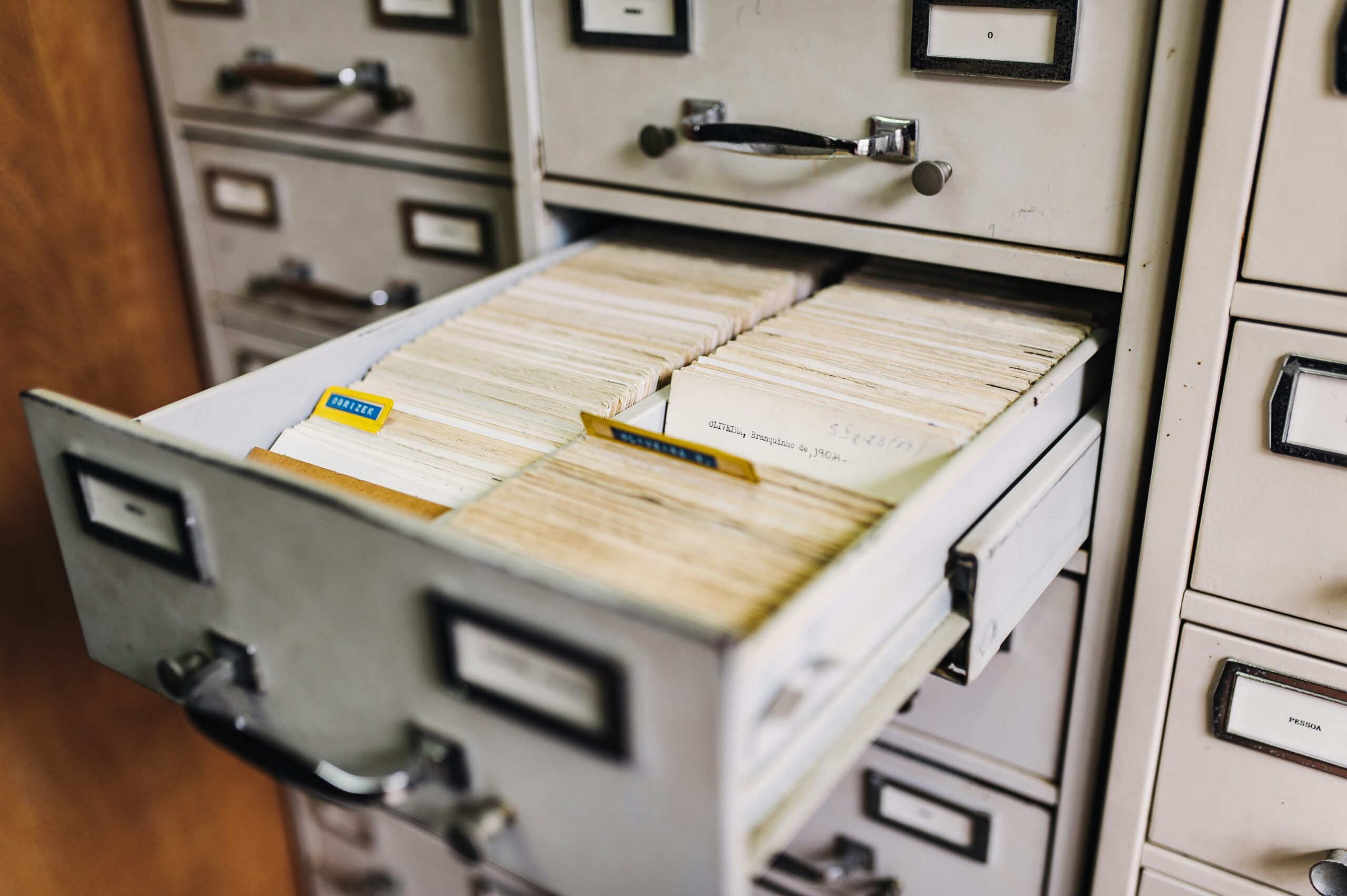
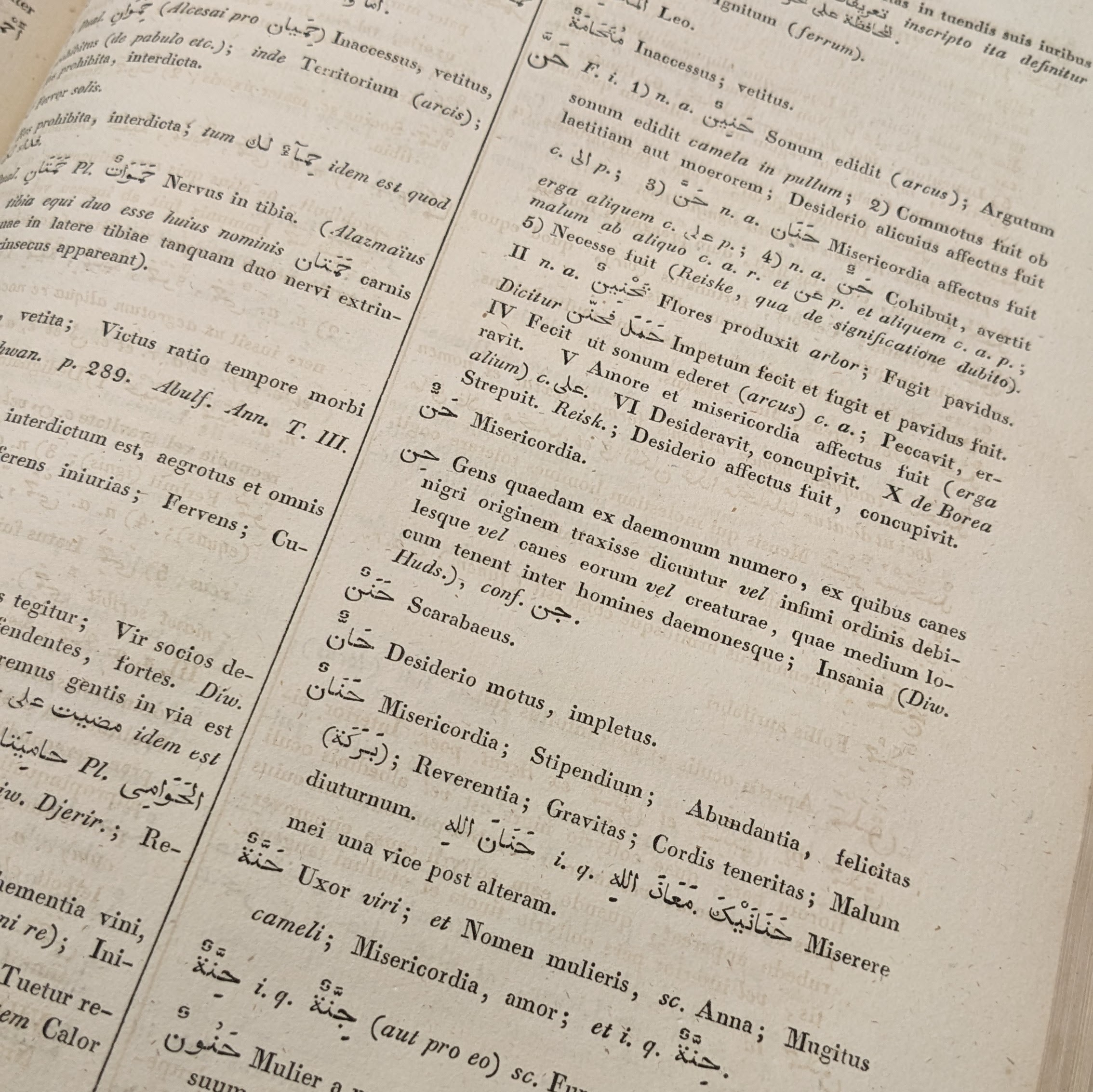
The Princeton Index of Medieval Art used to be a physical register, much like this one.
Many academic disciplines engage with visual art, whether from the standpoint of art history, material culture, or even paleography. The Princeton Index of Medieval Art is a unique database well-suited to the needs of researchers across various fields. Whether history, comparative literature, art, or classics, the index gathers a vast amount of information on Late Antique and Medieval Artworks, neatly sorted in an accessible way.
Many Princeton students, when writing their senior theses, will be required to submit something resembling a “literature review,” where they give a broad summary of the extant literature on their respective senior thesis topics. Surveying the extant literature on a topic can help students to develop their own independent thoughts on the matter. For many students, the literature ends up being a very important part of the actual final text of the senior thesis.
After reaching this stage when researching my senior thesis topic, a relatively-unknown Arabic Christian legal text from 18th-century Lebanon called the Mukhtaṣar al-Sharīʿa of ʿAbdallāh Qarāʿalī, I realized that only a few paragraphs and couple footnotes had been written about the text in English. All told, the entire body of English-language academic work on the Mukhtaṣar totalled a mere two pages. This lack of a developed scholarly conversation about my topic came with its own challenges and opportunities. The relative obscurity of this topic was a large part of why I chose to write my thesis about it— I found it to be very intriguing and wished there was more written about it. In this post I intend to look back at my own experience writing a thesis on such a niche topic, and hope to offer some considerations on how such a project might be approached.
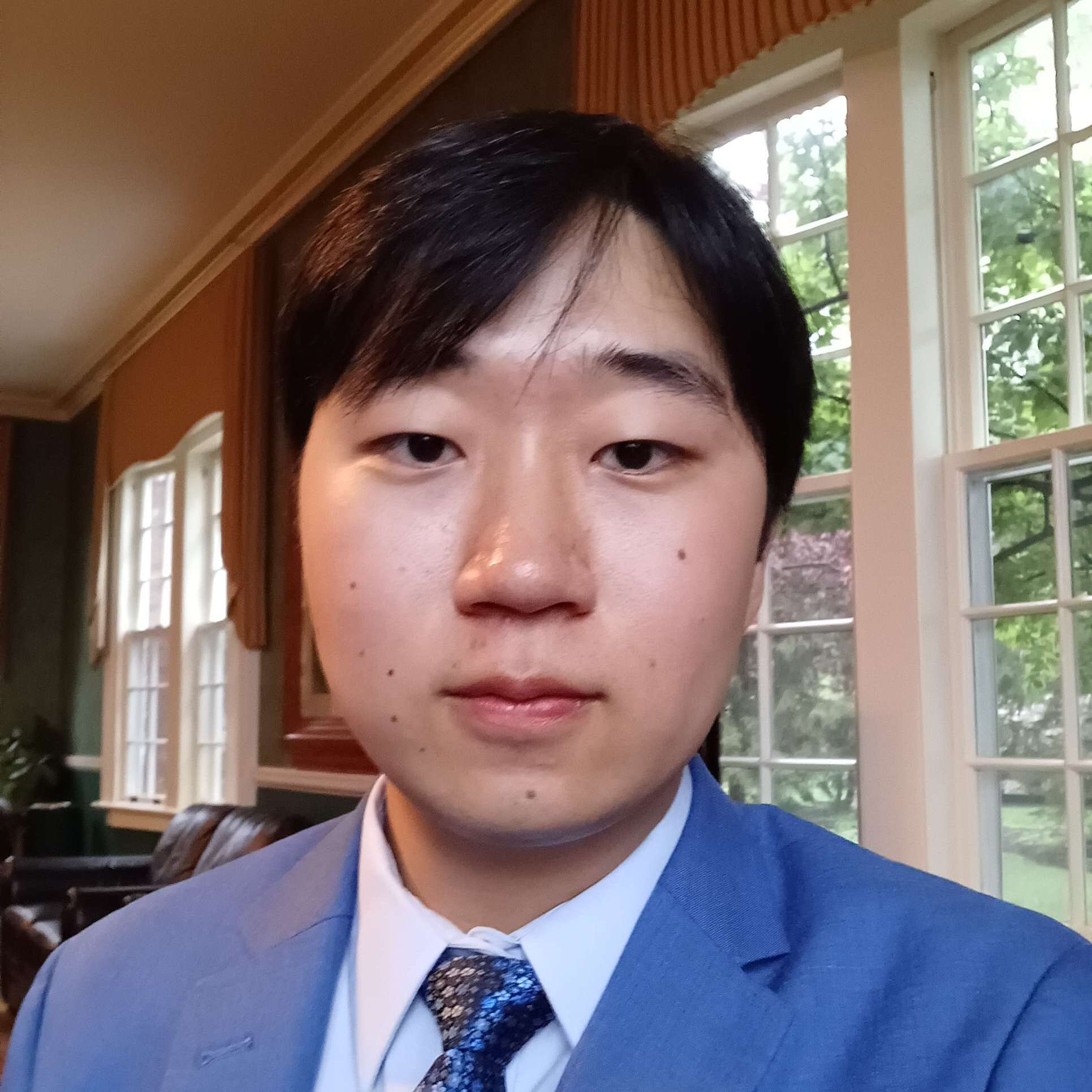
Eric Ahn ’24, from Suwanee, Georgia, is an Operations Research and Financial Engineering (ORFE) major at Princeton University. Ahn is the Class of 2024 Treasurer, as well as a member of Manna Christian Fellowship and Kindred Spirit. This coming summer, Ahn will work as a Trading Intern at IMC Trading before returning to Princeton in the fall to obtain a graduate degree in finance.
In the spirit of upcoming senior thesis deadlines, I wanted to interview a senior currently working on their thesis. As an underclassman that doesn’t have to worry about any form of independent work yet and a COS BSE major, one of the only majors exempt from the senior thesis requirement, I’ve always been curious about the thesis writing process and what a BSE senior thesis entails. As a part of our Seasonal Series, I am excited to present my interview with Eric, as he shares his ORFE senior thesis, his interest in finance, and his advice for rising seniors.
Whether writing a paper or providing a presentation, you will often find yourself relying on the completed work of others to synthesize information about a subject. An essential part of using these outside sources is to give their owners rightful credit in your references! Read some tips below on making citations easier.
Citations can be the most dreaded section of your writing. Finish your references with ease using this guide!
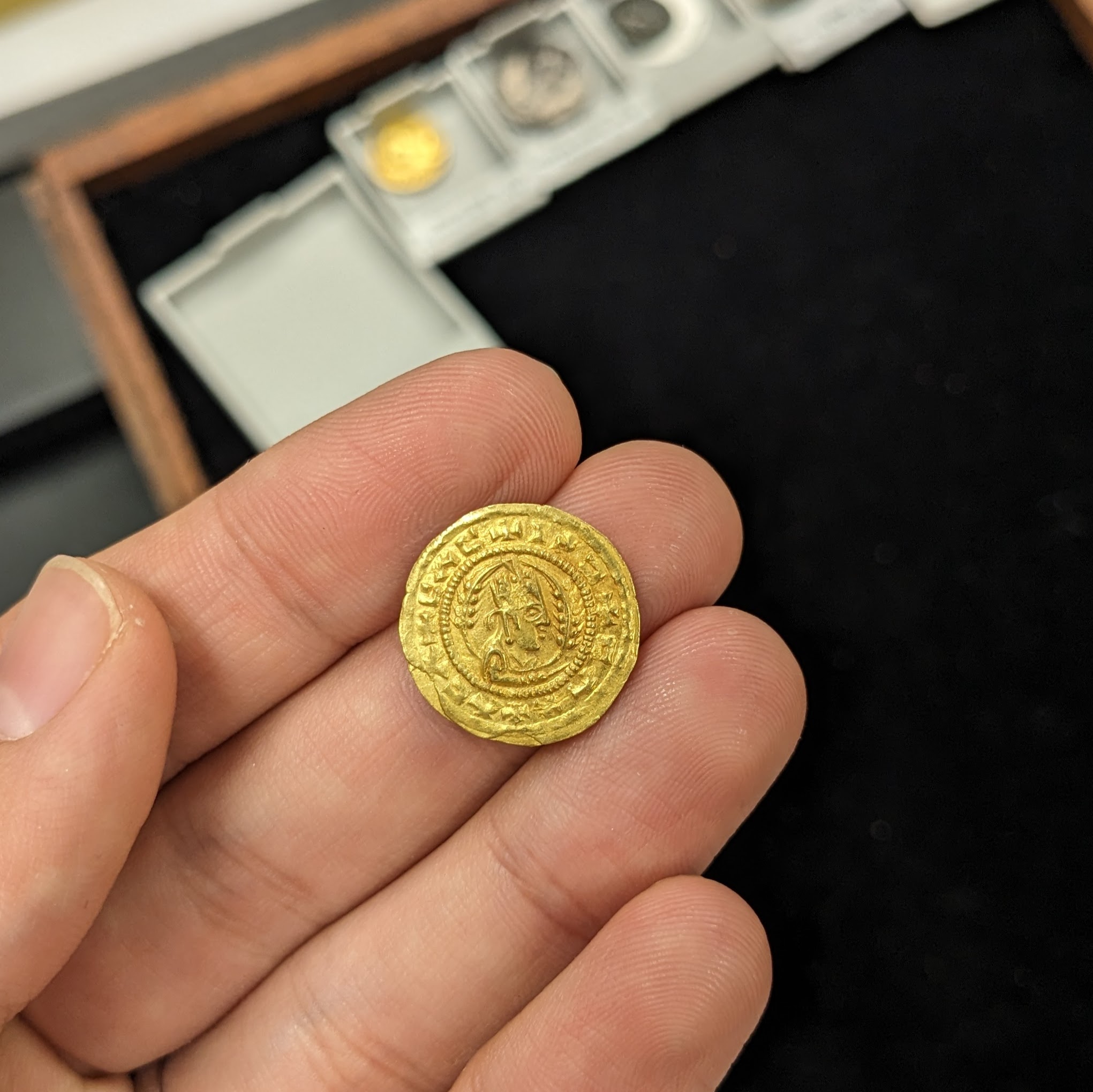
Students at Princeton are fortunate to have access to one of the largest collections of coins anywhere in the United States. Made up of roughly 115,000 items, the collection includes coins, paper money, medals, and other tokens covering almost the entire history of human money— in fact, the university has coins minted in the 6th century BC by Croesus, who is credited with inventing the first system of gold and silver currency. The university’s collection serves many purposes. For example, you may have been in a class which has gone down to Firestone C Floor to look at coins from the time and place you were studying. The coins are also used for exhibitions and workshops. I’m writing here to explain to you how you can use these coins to do great research.
Yours truly holding a 1500 year-old coin in Firestone Library
While it may feel like the semester has only just begun, classes are in full swing and, already, junior paper (JP) deadlines are fast approaching. For many majors, the spring semester is where the bulk of the JP work actually takes place. Whether that means writing thousands of words, crunching monstrously large datasets, or debugging hundreds of lines of code, I think we all can agree that a JP draft is better not left to the last minute.
One of the biggest challenges all Princeton students face with independent work, however, is figuring out where they can even find the time to start. With a full course load, weekly assignments, and a myriad of extracurricular obligations, just when exactly is a student to work on their JP? Read on for three tips on how you can fit your JP into a hectic schedule. With the right daily habits, supports, and mindset, you may even find that you enjoy the process more than the final product.
One of the major differences between the A.B. and B.S.E. courses of study at Princeton is that A.B. students are required to take (or test out of) at least four semesters of a language class. Studying a foreign language is, therefore, an essential part of studying the humanities at Princeton. There are many good reasons for studying a foreign language (besides simply needing to fulfill the language requirement)— perhaps you want to live or study in a different country, you might envision some professional advantages from knowing a foreign language, or you simply see studying languages as a new way to connect with others. Many Princeton alumni have successfully put their language skills to use in these sorts of pursuits. I’d like to offer another reason in addition to these: studying a foreign language at Princeton can prepare you to do exceptional research.
Albert Lee ‘24 is the Diversity, Equity, and Inclusion (DEI) Chair at Colonial Club, a member of the Students for Prison Education, Abolition, and Reform (SPEAR), and former Senior Writer for The Daily Princetonian.
As a junior, a hot topic for many of my friends lately has been their junior research and senior theses. In brainstorming ideas for this piece, I also thought about the incredible amount of learning that takes place in just a semester. That’s when I got the idea for this paper—to hear from seniors about their recent experiences conducting research for their Junior Papers. So, I reached out to Albert Lee ‘24, a senior majoring in Sociology and pursuing a certificate in Journalism.
As course selection begins, you might find yourself searching endlessly through the Course Offerings webpage, trying to craft the perfect schedule for next semester. You’re probably weighing a number of different factors— the professor, the class topic, the reading list, the different requirements it fulfills— and trying to balance these in the best way possible.There is another possibility here, which you can’t find in the course offerings: reading courses. Not advertised on department websites or listed with course offerings, reading courses are some of Princeton’s hidden academic gems. The University defines a reading course as a specially designed course not normally offered as part of the curriculum that is arranged between a student and a faculty member. These courses count for academic credit, and focus on a topic of the student’s choosing. If you’ve ever dreamed about designing your own course, this is your opportunity.
If you want to take your research in the humanities to the next level while here at Princeton, one of the best ways you can do that is by availing yourself of Princeton’s Special Collections. Home to vast stockpiles of manuscripts, rare books, coins, and other materials, Special Collections is a great place for students who want to pursue rigorous and impressive humanities research while making use of the excellent resources that Princeton has to offer. Many of these articles were donated by benefactors or acquired by the university specifically so that they could be researched by professors, students, and other researchers. In this article, I’ll present some reasons why you might consider checking out Special Collections, and then follow that up with a basic “how to” for when you visit.
A manuscript of an Ethiopic Synaxarion in Special Collections