Mount Illusion: Finding My Research Question…While Doing Research

Since the day I learned how to write a research paper, I always assumed I needed to use the same research question throughout my project. To me, the question seemed to be the metaphorical guiding light in the darkness of independent work, the go-to reference for determining what information is relevant or what can be put aside. It wasn’t until I started conducting my own study that I realized my initial assumption was wrong. It turned out that the more I learned about my topic, the more I learned about what I actually wanted to figure out. In hindsight, I now see that my search for a research question followed the path of Mount Stupid, or as I’ve renamed it, Mount Illusion.
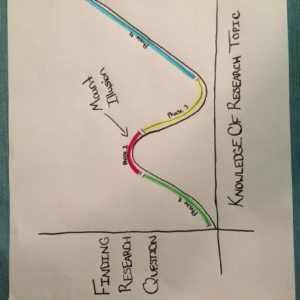
My journey over Mount Illusion to find my research question!

For those who are unfamiliar with this comic, Mount Stupid is a graphic that originally appeared on Saturday Morning Breakfast Cereal. The comic is an illustration of a chart in which the x axis measures one’s knowledge of a topic and the y axis measures one’s willingness to give his or her opinion on it. The small hump in the middle of the graph is called Mount Stupid, otherwise known as the place where people who think they know a lot about a topic are actually not that knowledgeable on the subject. 

In my case, I’ve repurposed Mount Stupid so that the y axis measures how close I was to finding my research question and the hump, Mount Illusion, measures when I believed I finally found it (needless to say, I was wrong). As the illustration above shows, I didn’t actually find my question until I was well into the research process. Here’s how I finally figured it out:

Continue reading Mount Illusion: Finding My Research Question…While Doing Research

Recycling Content: How to Expand Your Fall Semester JP for the Spring

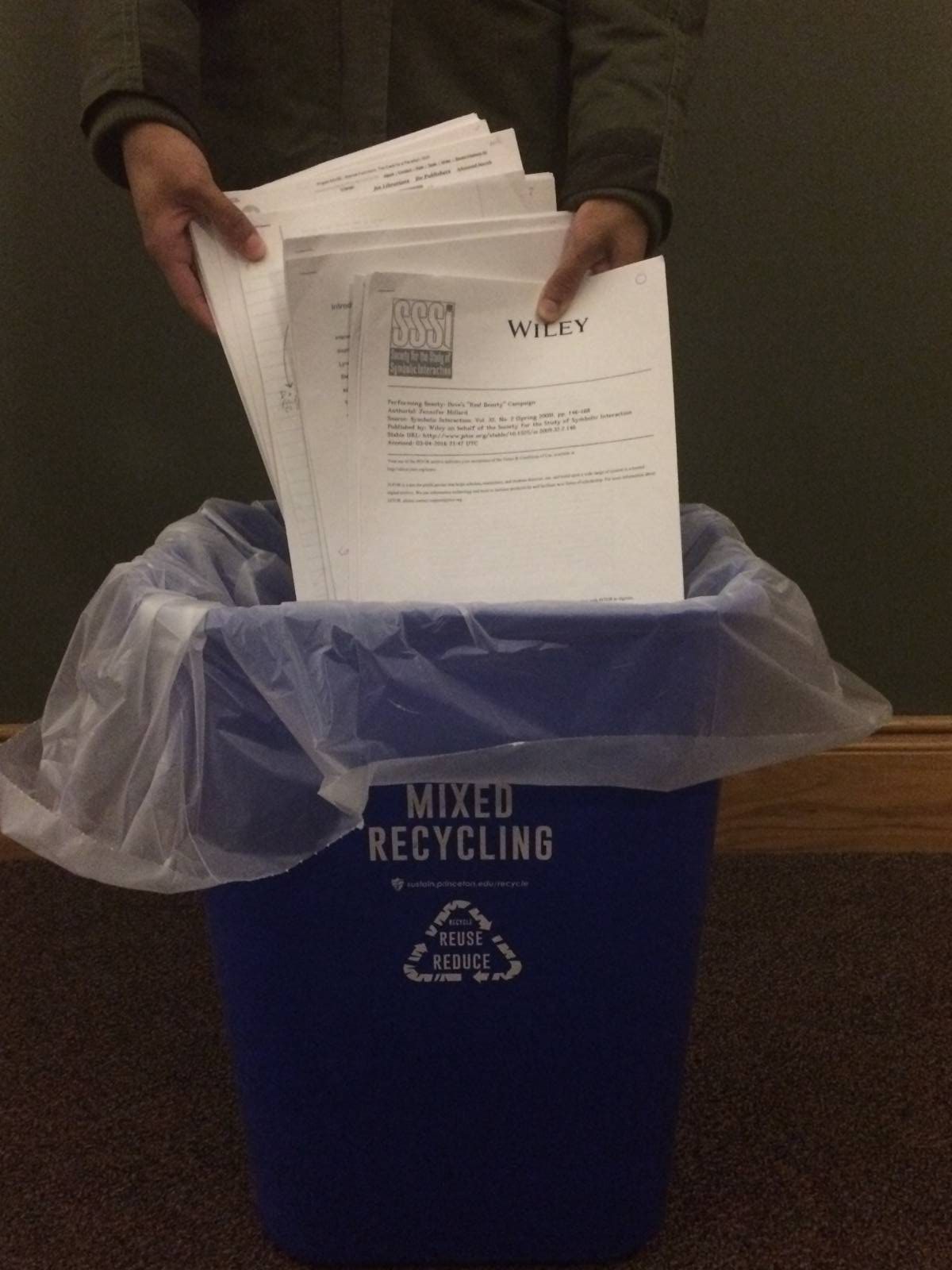
All of the sources I was about to get rid of…before I realized I could use them again!

One of the most rewarding parts of conducting independent research is finishing it. After spending several months finding a topic, looking for a research question, keeping track of sources, and writing up a semester’s worth of work, you can’t help but be proud (or simply relieved) to finally turn in your Junior Paper. That being said, there is a downside to completing your first independent project: having to start over. If you’re like me, you’re required to write another JP for the spring semester. And perhaps, also like me, you dread having to let go of your previous hard work and starting from scratch. Well, maybe you don’t have to!

The beauty of research is that there is no limit to how many times and ways you can study the same material. More importantly, building upon pre-existing work can help you better understand your topic and plan for future studies. This could entail conducting new research that tries to eliminate limitations from the original study or research that compares the results of the original study with the those of a new one. For that reason, with departmental permission, your spring semester JP could be an extension of your fall semester research! Here are three ways you could expand your old research: Continue reading Recycling Content: How to Expand Your Fall Semester JP for the Spring

Need to Keep Track of Sources? Create a Reference Guide

fullsizerender-3
My stack of sources keeps getting bigger!

It’s officially December, which means it’s one month closer to Dean’s Date. This also means that the time you have to gather your secondary sources, otherwise known as the preexisting literature on your research topic, is quickly dwindling down. I’m sure I speak for myself and several other independent researchers when I say that juggling multiple sources can be not only overwhelming, but also confusing. With so many articles focused on similar topics, how can one keep up with all of the new information?

Based on my professor’s advice, I created a handy-dandy excel spreadsheet to keep track of my secondary sources. Here are the important points I made note of for each author in my secondary source reference guide: Continue reading Need to Keep Track of Sources? Create a Reference Guide

Princeton Underground: A researcher’s guide to lesser-known resources

Princeton’s resource network, like Firestone Library under construction, is so big and complex you could spend hours inside it but only see a small part, never knowing what you’re missing. Here are 3½ of campus’ most under-the-radar resources, and a guide to using them.

img_2210-1
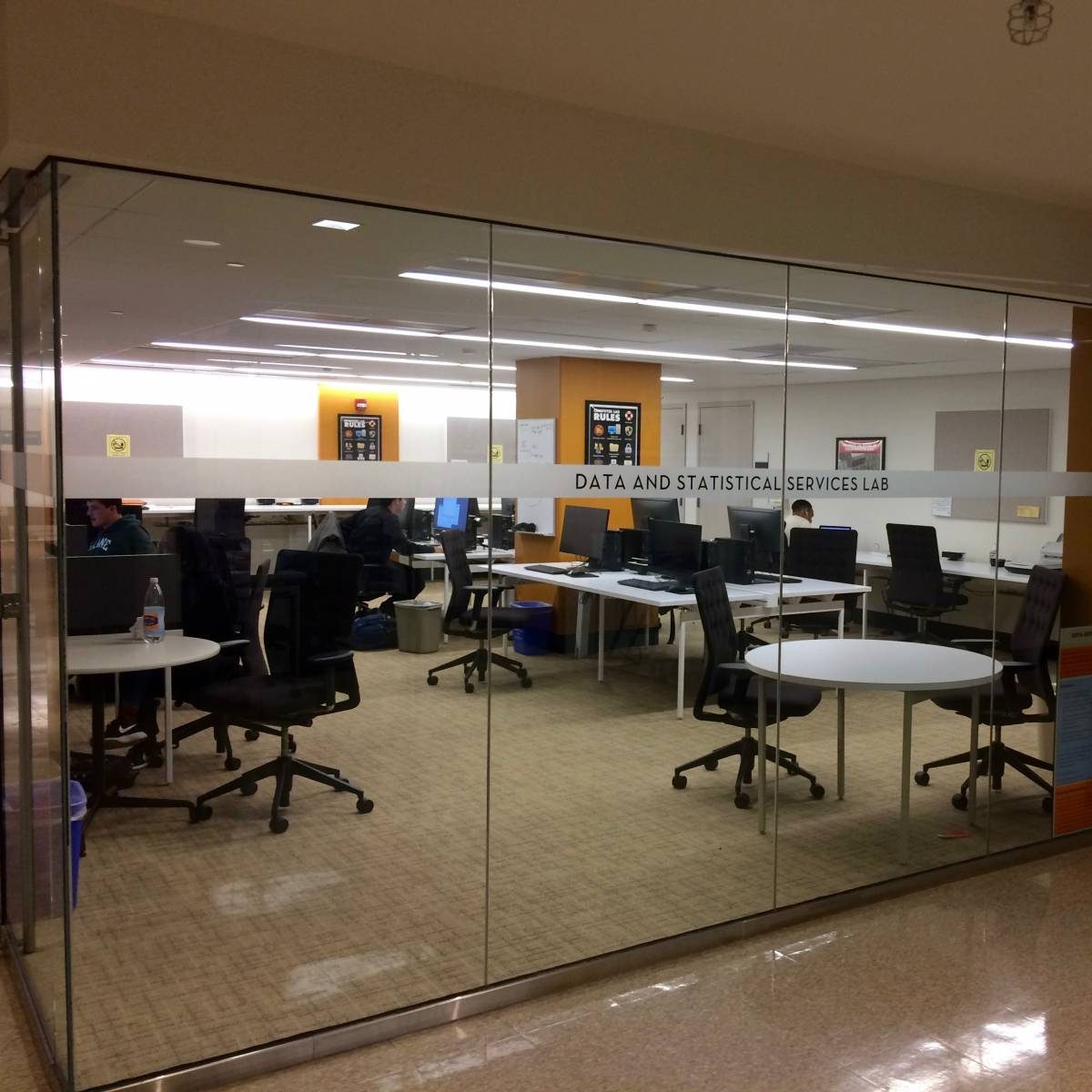
The DSS Lab in Firestone: literally underground.

1a. Data and Statistical Services: Lab edition
What: The original inspiration for this post, the DSS Lab is literally underground. A well-lit room of big-screen PC’s, the lab is run by two incredibly friendly statistical consultants who can help you download, format, reshape, or analyze data.
Where: The A floor of Firestone – see this map.
How: The lab consultants’ schedule is available here. Walk-in hours are available from 2-5 p.m. on weekdays through December 16.
Underground tip: For brief, specific questions, send an email to the consultants at data@princeton.edu. Continue reading Princeton Underground: A researcher’s guide to lesser-known resources

Is It Time to Panic Yet?

Going into panic mode!

Going into fall break, reality set in for myself and several other juniors in the Sociology Department as we wrote our first official proposals for our Junior Papers. While writing my draft, I had to answer several questions for myself and my professor. What was my choice of methodology? Where did I plan on finding my data? How was my research significant to others? And on top of those explanations, the most daunting question of all—what was my intended timeframe of completion?

My initial thought was that I should have plenty of time; the final paper isn’t due until January 10th and I already have a game plan for how I want to conduct my research. But as I began to create the deadlines for gathering my secondary sources, analyzing my data, writing the paper, and more, I soon realized that I needed to get started on several tasks within a matter of days if I didn’t want to end up scrambling at the last minute. So after deciding on my umpteenth deadline, I finally found myself going into a state I’m sure we are all familiar with: panic mode. Continue reading Is It Time to Panic Yet?

Quantitative vs. Qualitative Research: What’s the Difference and How Do I Choose?

Deciding Between Quantitative and Qualitative!
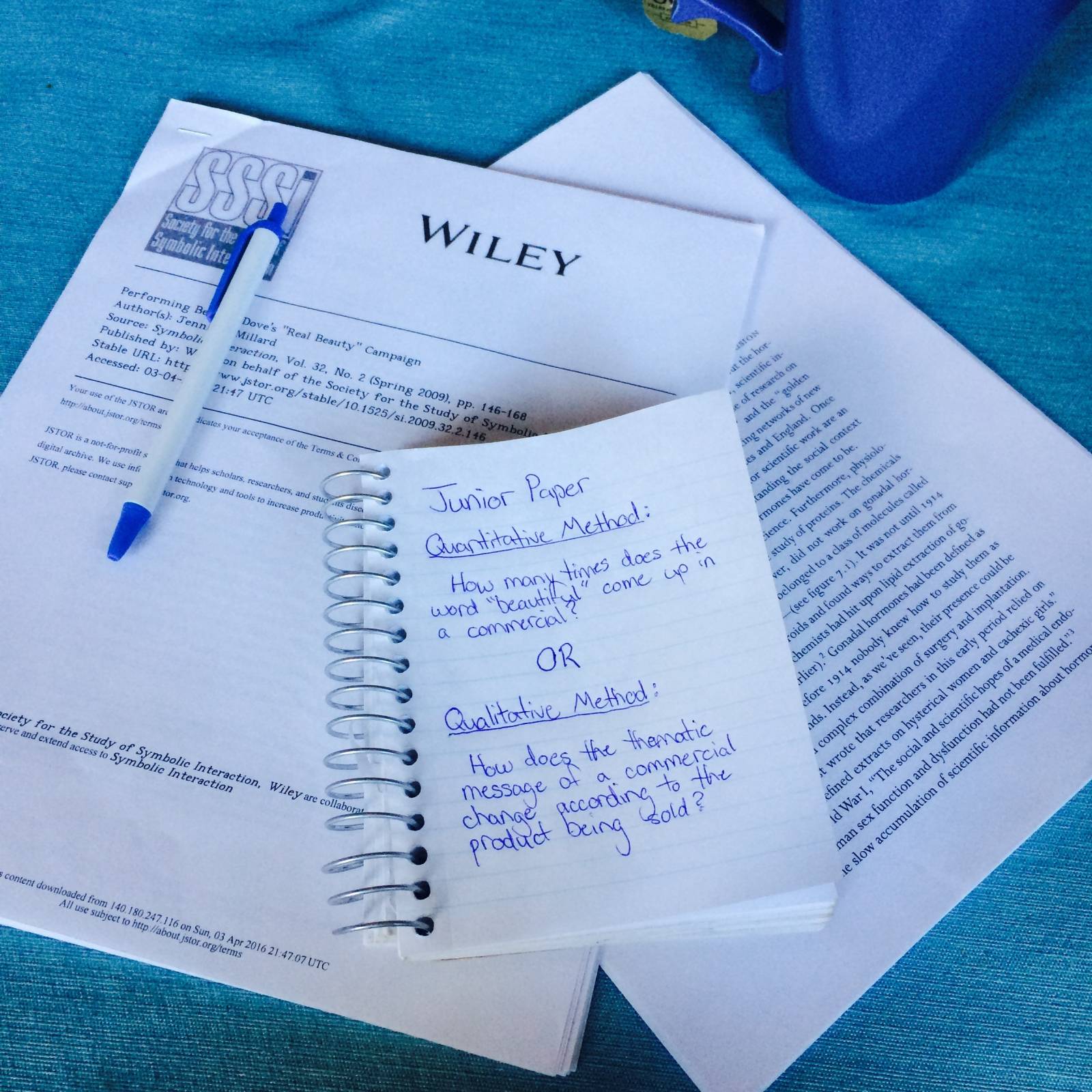
Deciding between a quantitative and qualitative research method!

It’s almost November now, and if you’re a junior, you’re used to everyone asking you the same question: How’s your junior paper going? If your experience has been anything like mine, your initial reaction may be, “It’s great!” I’ve finally come up with a JP topic that interests me, I’ve already talked to (and received incredible advice from) my professors, and I’m in the process of mastering my Magic Research Statement. Getting started on my JP feels like a walk in the park!

But as November creeps nearer, my reaction to the JP question is a little less confident and a little more like, “Ummmm……” For me, this pause and sense of apprehension grow from two measly words that have plagued the minds of researchers for years: quantitative and qualitative. Sure, I may know what I want to research, but that still leaves me with the challenge of choosing my research method. How does one go about choosing between quantitative versus qualitative research anyways? Continue reading Quantitative vs. Qualitative Research: What’s the Difference and How Do I Choose?

The “Magic Research Statement”—Turning a Topic into a Research Question

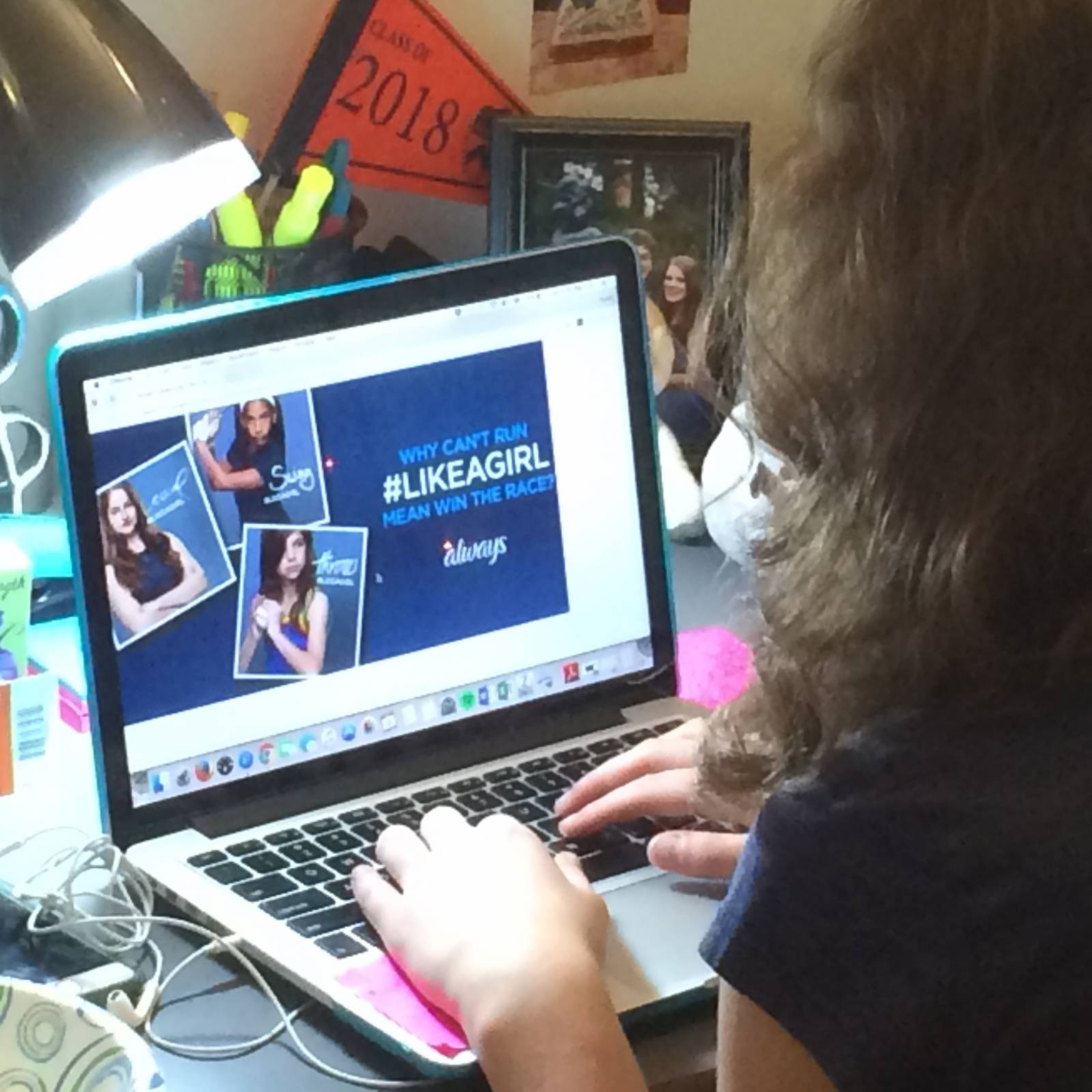
#LikeAGirl Ad from Always!

We all know that trying to find a topic for a Junior Paper can feel like dragging your feet through quicksand. So when you eventually settle on the right topic, you feel like running to the top of a hill and shouting, “I’m unstoppable!”

…That is, until you stop and ask yourself, “Now what?” This is precisely where I found myself after determining that my Junior Paper for the Sociology Department would focus on gender progressive advertisements. Sure, I had finally discovered a topic that I was passionate about, but how could I transform that into a a reasonable research question? Continue reading The “Magic Research Statement”—Turning a Topic into a Research Question

How to Pick a Research Topic

Struggling to pick a research topic? We’ve all been there. Starting can be one of the hardest parts of research. There’s so much pressure to have a good topic that finding one becomes difficult. With that in mind, I’ve compiled some tips to ease this process.

1. Consider your personal interests. If this is a JP or thesis, you will be spending between a semester and an entire year delving into your topic. Make sure you like it! Finding something that genuinely piques your interest will help keep you engaged months down the road. I am lucky to have found Brazilian art therapy pioneer Nise da Silveira, whose work — after writing a JP about her and conducting my senior thesis research abroad on her — continues to keep me curious.

As I develop my thesis research, I hope that I continue to be interested in learning more. After all, just this summer, even before stepping foot in Firestone, I accrued this stack of books!
Crossing my fingers that my thesis topic continues to intrigue! After all, just this summer, even before stepping foot in Firestone, I accrued this stack of books!

2. Read a little about something that fascinates you. Interested in learning more about Mayan basket-weaving traditions? Find a few books or articles about it and start reading! Afterward, assess your feelings. Are you intrigued to learn more, or did you get bored halfway through? Read these signs — they can help you distinguish between topics that pique your interest at first, and those that will give you the stamina to keep reading months later.


3. Set up a meeting with your professors. I’ve written before about how helpful it can be to tap into what your professors might think. For my thesis, I knew that I was interested in a community project in Rio that used art to foster mental health, but wasn’t sure where to start. So I set up a meeting with a professor to talk about it. He suggested I look into Nise da Silveira, and I haven’t looked back since.

Continue reading How to Pick a Research Topic

Researching Abroad? Here’s some advice!

Most Princeton students have been done with school for a while, but I just wrapped things up in New Zealand.  Two weeks ago, I was packing up to leave my flat in Dunedin. I finished my last final on that Tuesday, submitted my JP on Thursday, and then flew out of Dunedin on Saturday.  This week, I’ve been spending time with family before I start my job at PRINCO, Princeton’s endowment fund. At PRINCO, I’ll shadow and help different teams that manage Princeton’s endowment investments in different areas, like fixed income/cash, private equity, real assets, etc.

My favorite hike in NZ-- French Ridge Hut in Mt. Aspiring National Park!
My favorite hike in NZ– French Ridge Hut in Mt. Aspiring National Park!

Since my summer job hasn’t yet started, I thought I’d write about my experience doing JP research abroad.  My advice here is relevant and easily applicable to any student researching abroad. Many of my thoughts in this earlier post have held true throughout the research process, but my topic and experiences changed significantly throughout the semester. As a bit of background, I focused most of my JP on the following asymmetry between aesthetic and moral admiration:

Aesthetic: Henry knows nothing about Velazquez’s Las Meninas. Jill tells him that Las Meninas is an aesthetically praiseworthy painting and lists its qualities, providing evidence for by citing its physical characteristics. Henry comes to admire Las Meninas.

Moral: Henry knows nothing about Mahatma Gandhi. Jill tells him that Gandhi was a morally praiseworthy man and lists his qualities, providing evidence by citing stories about his deeds. Henry comes to admire Gandhi.

My intuition dictated that, in the above example, Henry’s moral admiration seems warranted — but his aesthetic admiration based on testimony does not. The moral qualities relevant to admirability seem communicable by testimony, whereas the aesthetic qualities relevant to admirability do not. Why?

In tackling my research on this topic in New Zealand, I found the following tips useful: Continue reading Researching Abroad? Here’s some advice!

Confessions of a Post-Declaration Sophomore

For AB Princeton sophomores, April 19, 2016 was (and still is) a date engraved in our brains. It marked the deadline for declaring our concentration. By extension, it also symbolized a major transition in our academic careers. April 19 signaled the end of days, weeks and even months of uncertainty mixed with internal debates and (many) last-minute mind changes. Theoretically, the passing of April 19 should have put us sophomores at ease. No more doubt and anxiety …right?

Still feel torn between two concentrations?

On the contrary, I personally have experienced some uncertainty since declaring my major (Woodrow Wilson School of Public and International Affairs, also known as “Woody Woo”). Given that many of my friends have had similar feelings, I’ve decided to address two questions that my fellow not-so-anxiety-free sophomores might have post-concentration declaration.

Continue reading Confessions of a Post-Declaration Sophomore