Categories
Conduct Research Independent Work Present & Publish Findings Research Life

Senior Thesising 101: Choosing your Topic

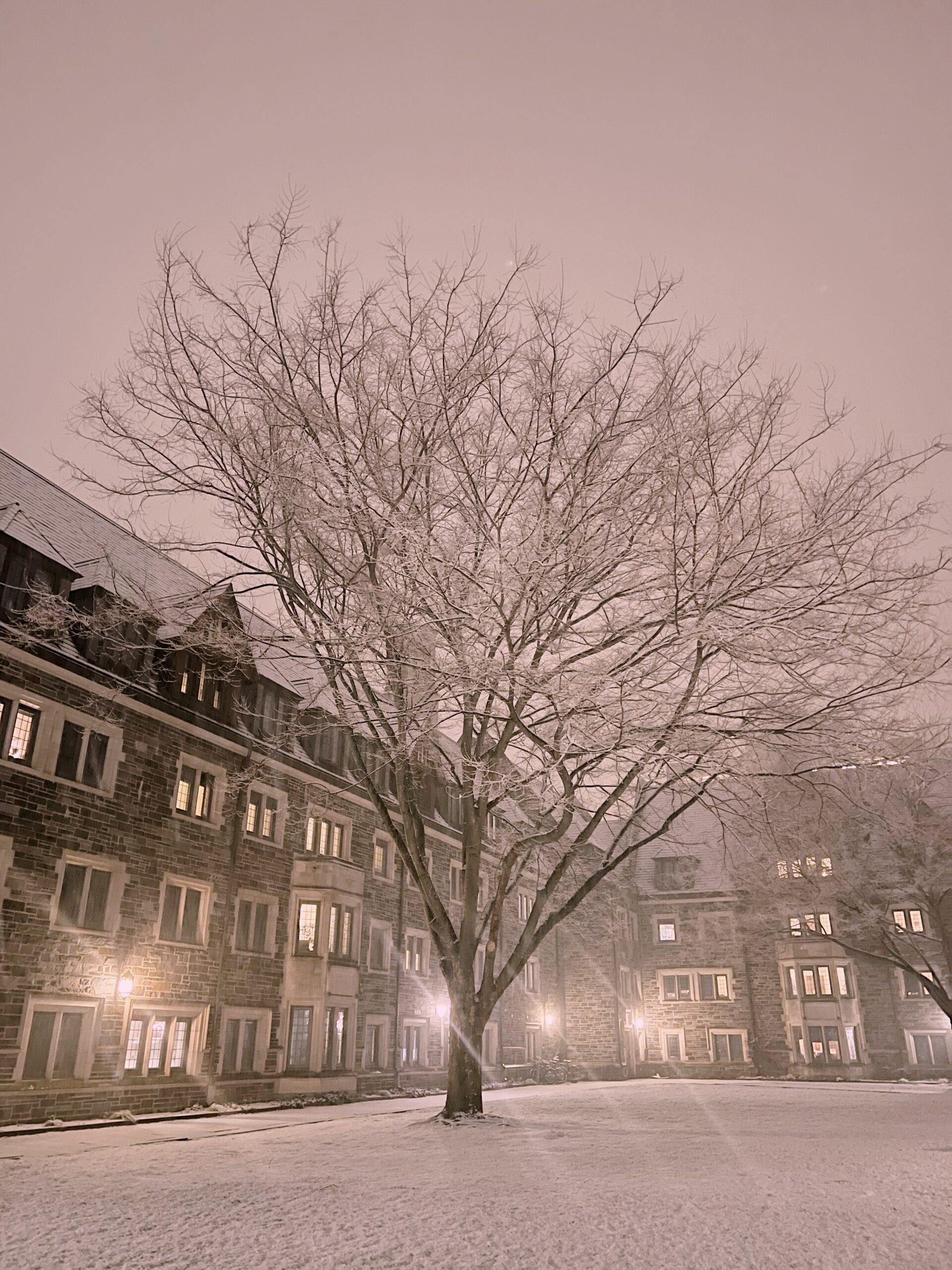
Princeton building at night with light snow. Tree in center of frame and lights casting a glare
The first snow of the semester indicates that senior thesis season is upon us!!!!!

      Senior thesis. Senior thesis. Senior thesis. By this time of year, you have most likely heard seniors in the middle of the night at Firestone or at Coffee Club study breaks, thinking about, stressing about, and working on their senior thesis. In my last post, I wrote about one of the first and most important steps of the senior thesis process, choosing the right adviser (see here). Now, I walk through what I believe to be another pivotal moment for the senior thesis process: choosing a topic. For SPIA majors and presumably for many other majors as well, it may seem difficult to narrow down your project to one specific topic when the major is so broad and diverse. Throughout my time at Princeton, I have taken classes in law, environmental policy, psychology, economics, ethics and more, and I enjoyed them all. But, I eventually had to choose one topic to write a full thesis on. So, without further ado, here are some steps on choosing the right topic for you.
Categories
Conduct Research Independent Work Present & Publish Findings Research Life

Experiences in the ReMatch+ Program: An Interview with Kasey Shashaty ’23 – Part 2

Last spring, I interviewed Kasey Shashaty. In this second part of my interview, we discuss specific challenges in her transition between virtual and in-person research and reflections on how this experience in the PULSe Lab has influenced her perspective on research and her plans for the future. 

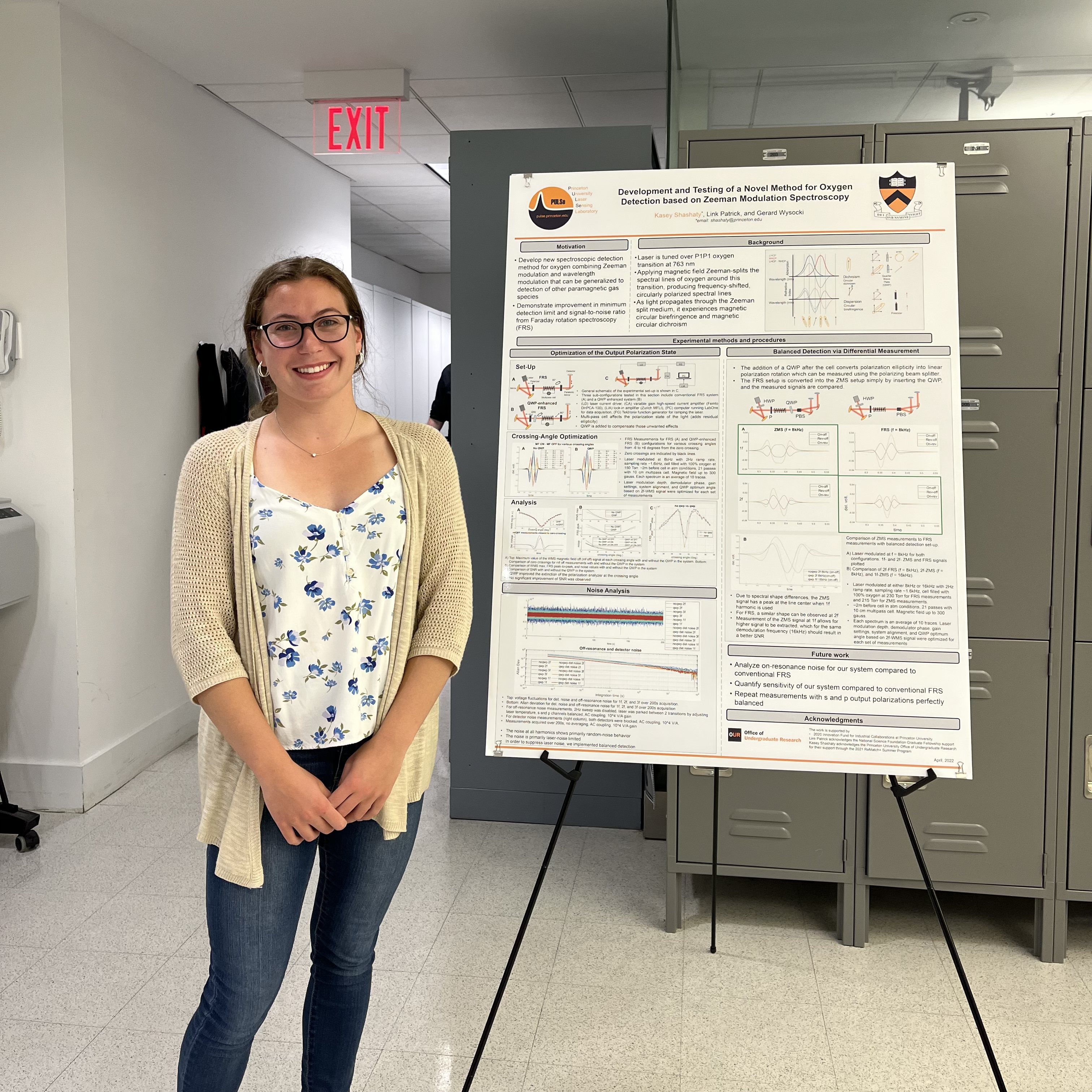
Woman is standing next to a research poster at a poster presentation session
Kasey presenting her research.

Kasey Shashaty got her jumpstart in research through the ReMatch+ program organized by the Office of Undergraduate Research. ReMatch+ is a summer mentorship program that pairs first-year and second-year students with a graduate student or postdoctoral fellow as they work on a summer research project. Read on to learn more about her research experience!

Categories
Independent Work Present & Publish Findings

PCUR Archives: Senior Thesis Planning

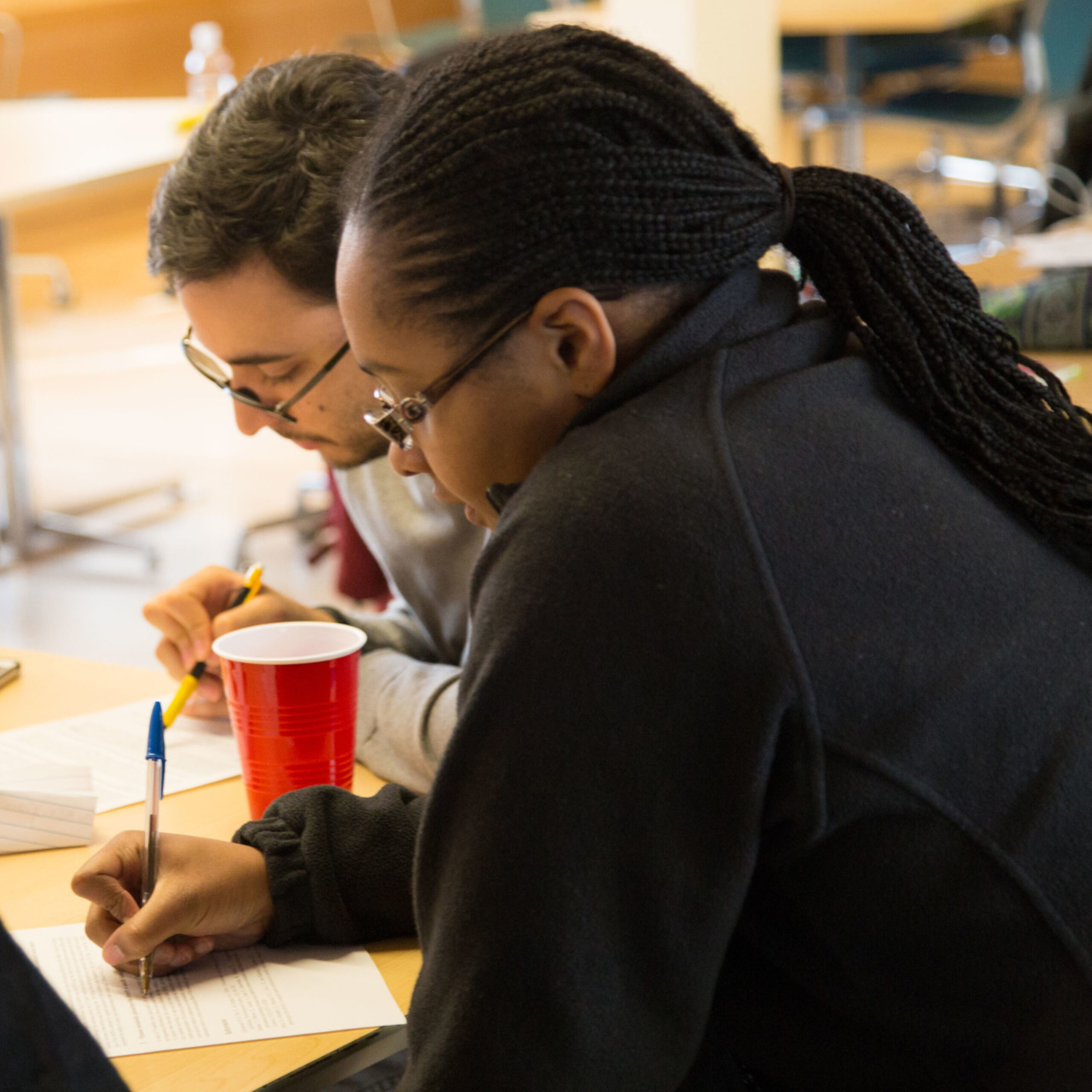
Two students sit at a table with their pen hovering over paper, working on their senior theses.
Students hard at work at a previous year’s Senior Thesis Bootcamp! (Photo Credit, Denise Applewhite)

As this is posted, many Princeton students are hard at work on their senior theses. Some are on campus right now participating in the residential colleges’ wintersession Senior Thesis Bootcamps. PCURs over the years have written extensively on this very important Princeton milestone. Browse through the posts below if you’ll be writing your thesis soon, are writing it right now, or maybe should be writing now.

Categories
Conduct Research Present & Publish Findings Research Life

Finishing Strong: Dean’s Date Traditions and Reading Period Excitement

Photo taken by Whitman College Council; depicts two young individuals smiling at the camera holding the showbill for Harry Potter
Keep an eye on your inbox for once-in-a-lifetime events that you can enjoy during Reading Period, like Whitman College Broadway trips!

Can you believe it is almost time for finals? Our fall semester is coming to a close and it feels surreal. It is true that finals season, reading period, and Dean’s Date can be stressful. Furthermore, if you are a first year, it may not be obvious how the whole system works. In sum, our last day of class is December 8th. Then, reading period, a week without classes used to study for finals and prepare for Dean’s Date, begins on the 9th and ends on the 16th. The 16th is the infamous ~Dean’s Date~ or a fancy term we use to describe the day in which many of our written assignments and final projects are due. Finally, we go out like legends and finish our finals from the 17th to the 23rd. You can check the date of your finals on the University Registrar and reach out to your Academic Dean about rescheduling them if you have multiple finals on one day. The next few weeks may seem like a gloomy time on campus, but I want to use this post to share some moments of excitement and sneaky Princeton traditions that you can look forward to.

Categories
Conduct Research Present & Publish Findings

Publications, Conferences, and Professional Development: Motivations for Your R3

Research Correspondent, Amaya Dressler ’25, presenting her Writing Seminar R3 research at the Mary George Research Conference.

Writing sem. For many, it’s one of the most challenging courses they’ll ever take at Princeton. It forces you to think in new and challenging ways, often questioning some of the ‘basic rules’ we’d previously been taught about writing. With late nights spent drafting and redrafting, 8:30 am classes, and daunting essay prompts, it’s easy to understand how writing sem (short for writing seminar) gets its reputation. No student makes it out of writing sem with three perfect papers. Yet, in the midst of challenge, it’s easy to lose sight of the many professional opportunities that writing sem can offer. Whether you’re looking to get published, nail your next job interview, or just make a little extra cash, here are four ways that any student can make the most of their writing sem experience.

Categories
Independent Work Present & Publish Findings Research Life

How and Why to Use Firestone Special Collections

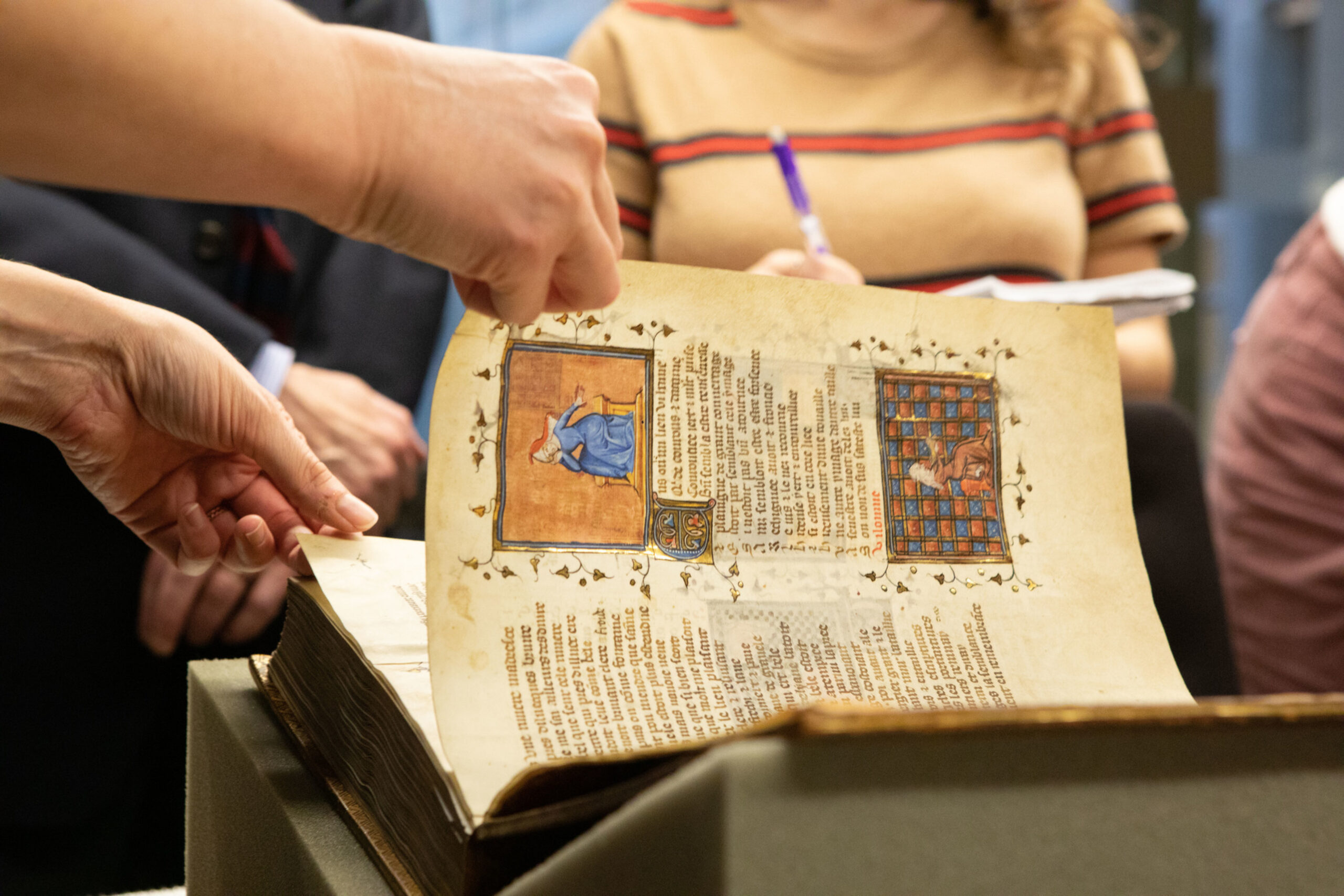
Hand turning page of a book of 13th century poems in Firestone special collections.

Where can you find trinkets Albert Einstein collected in Japan, diaries and manuscripts by Toni Morrison, and an autographed manuscript of The Great Gatsby? None other than our very own Harvey S. Firestone Memorial Library of course! Welcome to the wonderful world of one of Princeton’s coolest resources: Firestone special collections. Basically, it contains anything in the University’s possession that is rare, valuable, and/or too old and fragile to be removed from the library. I learned about special collections recently through my AAS 244 class on Pre-20th Century Black Diaspora Art in which we often check out art and related manuscripts in the special collections.

Categories
Conduct Research Plan Beyond Graduation Present & Publish Findings Research Life

Princeton from a Student’s Perspective: The Most Legendary Courses at Princeton University

Set of four images depicting Princeton students. Top left: two Princeton students decked out in Princeton gear, standing back to back and smiling at the camera. Top right: Four Princeton students wearing pink jackets and dotted scarves smile at camera. Bottom Left: Two students sit on the green, one holding flowers the other holding a small bunny figurine. Bottom right: Three Princeton students smile at camera in front of a Princeton flag

Thank you to the best friends in the world for sending in their favorite courses!

“Does anyone know a good English class?” “I need to fulfill my history requirement.” “I am looking for a chill, creative P/D/F course.” Everyone is searching for the best schedule possible and I know that many of you are open for suggestions. In my last post, I wrote about my favorite courses at Princeton as a SPIA major interested in law and service (see post here). But, I understand that every Princeton student is unique, so I have spoken with classmates and friends within other majors to better understand the full Princeton experience. Thus, without further ado, here are the most unforgettable courses that they have taken at Princeton.

Categories
Conduct Research Present & Publish Findings Research Life

Tips for Talking About Your Research

Sharing the discoveries you’ve made is not just extremely rewarding, but a necessary part of the research process because it ensures your findings can be put to use. Writing about your research is a tough obstacle to tackle in and of itself, but what I want to focus on today is the arguably more intimidating half of sharing your research: speaking about it. Both formats require demonstrating your command of the subject while also being engaging. Unlike writing about your research, where you generally have a well-defined goal from the get-go, you will find yourself speaking about your research in an enormous range of contexts. Here are three of my tips for talking about your research, whether summarizing your findings for your grandma or giving a formal presentation to a group of experts.

A woman giving a presentation
A presentation given in Princeton’s beautiful J-Street Library.
Categories
Present & Publish Findings Resources

Tips for Writing about Your Research Experience (Even if You Don’t Think You Have Any)

If you’re someone who hasn’t yet done formal research in a university setting, one of the most intimidating parts of the process can be simply getting your foot in the door. Just like the way your options can seem very limited when applying for your first job, asking for a research position when you have no “experience” can seem discouraging — maybe even to the point of causing you to question whether you should apply in the first place. With that being said, there are some simple tips you can employ when applying for research positions to highlight the link between your existing interests and the work of the position for which you are applying.

Illustrated resume on a desk being held by anthropomorphic tiger paws/hands. Tiger is wearing a suit. Desk is covered in writing/working items like pens, reading glasses, and coffee.
Check out the Center for Career Development’s Resume Guide! (Image credit to Career Development)
Categories
Conduct Research Independent Work Present & Publish Findings

Submitted and Successful: 3 Final Steps Before Turning in Your First Paper

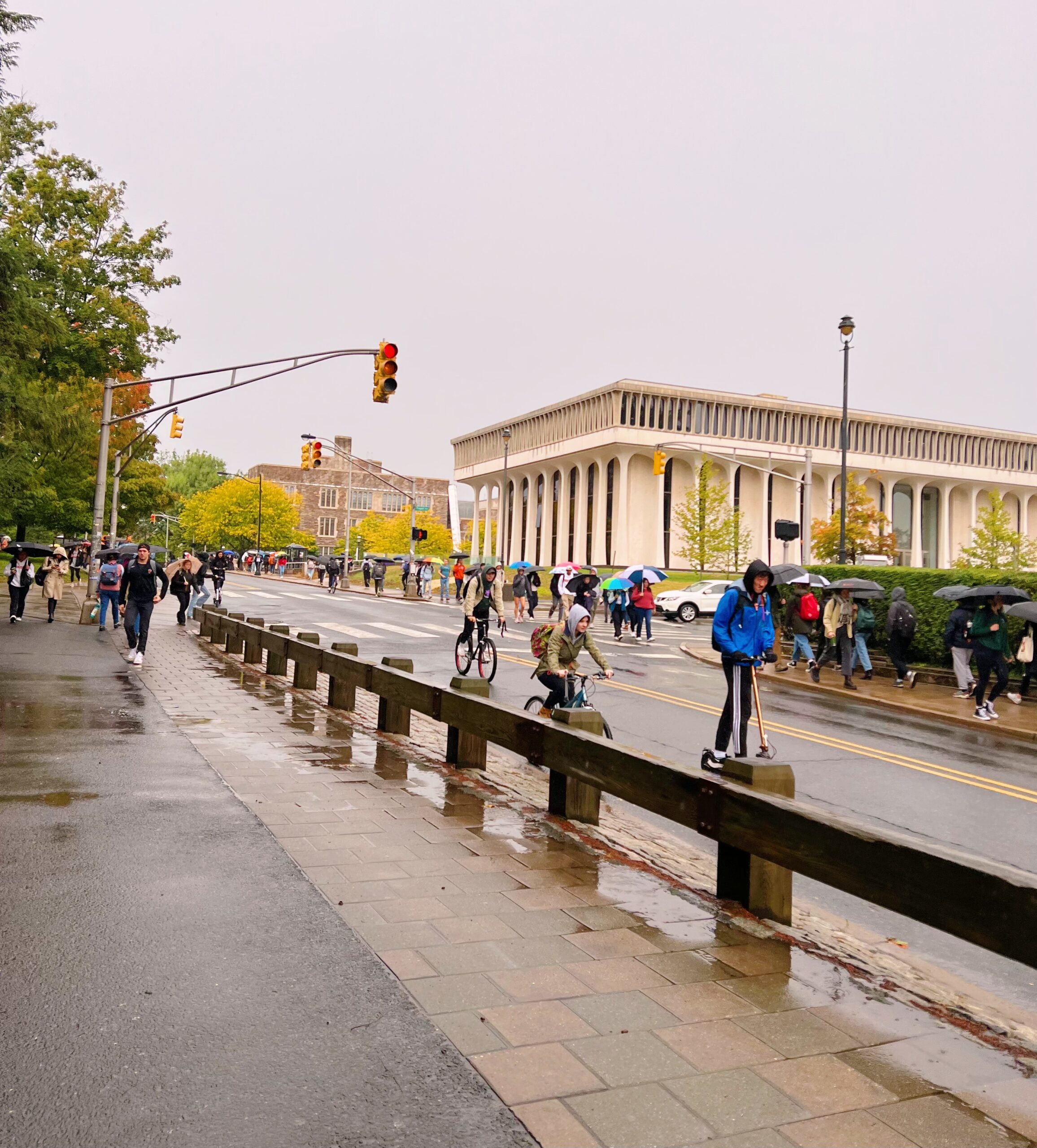
Photograph of Princeton University in the rain, with many students walking, biking, and scootering to class holding umbrellas or wearing rain jackets
These rainy, gloomy days are perfect for colorful umbrellas and cozy paper-writing sessions.

“Did I include a scholarly conversation? Where is the motive of my piece? Do I even have a thesis?!” The “Submit” button on Canvas can stir worrisome thoughts as it may seem permanent or stressful. The goal of this post is to walk you through a few final steps you can take to ensure that everything is in check and ready to go, so that you don’t feel like something is missing once turning in your assignment. These points are by no means the end all be all, but you may use them to help you feel more confident handing in your final product. Thus, without further ado, here are 3 final steps to follow before submitting your research paper.