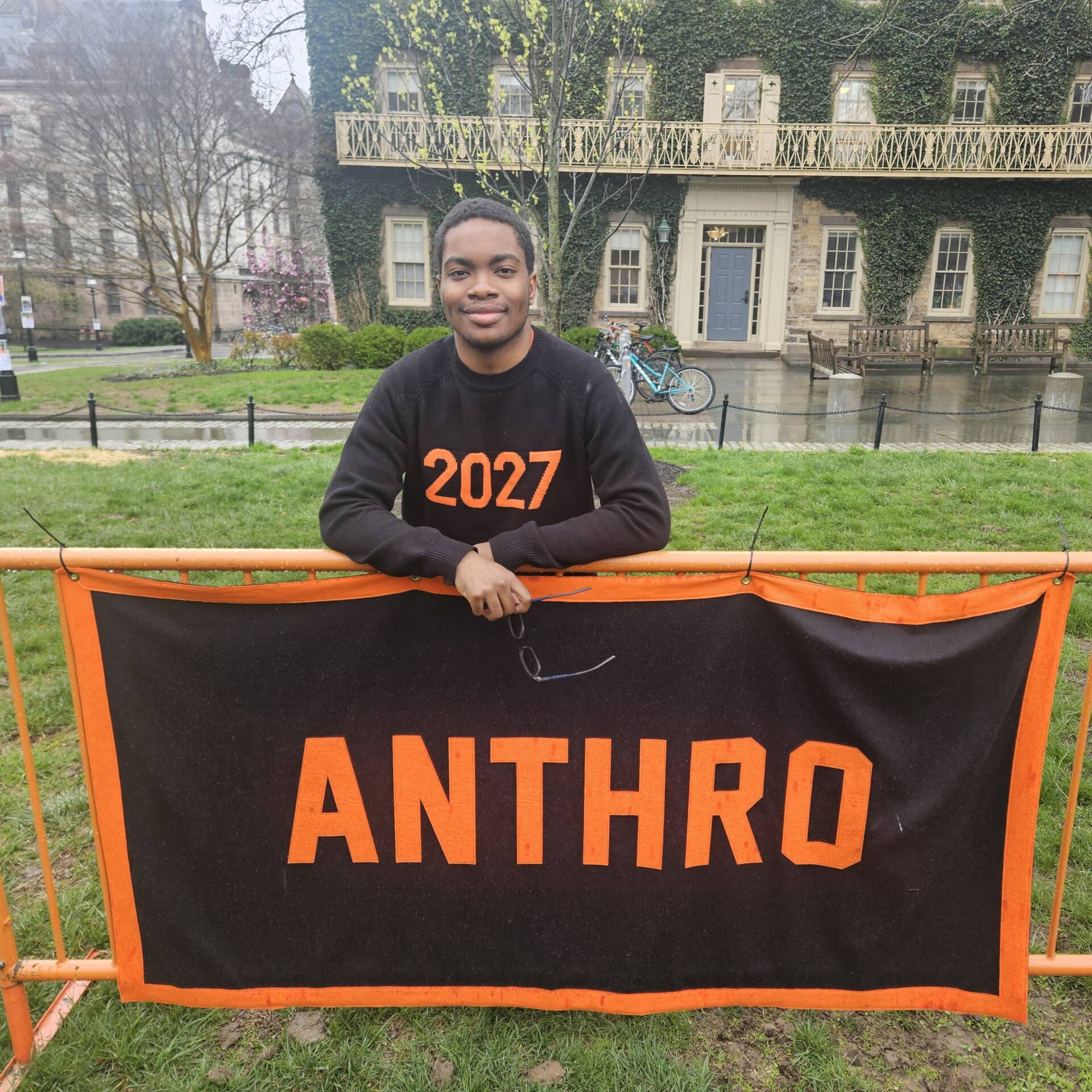
Princeton and research go together so well they can almost feel synonymous. From the first-year writing seminar to the Junior Paper two years later, core milestones in the Princeton experience are research experiences. Every step of the academic journey undergraduates undergo feels as though it’s building up to the ever-looming thesis. However, nestled between Writing Sem and the JP is sophomore year, when students pursuing AB degrees declare their major. It’s a time to explore diverse courses and meet new faculty, an opportunity to engage with Princeton as the liberal arts institution it is. Often in the process it can be easy to forget about the role research plays in the experience of a major. As someone who needed until Declaration Day to decide his major, considering potential future experiences with research was crucial in my decision to declare Anthropology on the Medical track. With Dec. Day on the horizon again, I wanted to share some of the thinking that was useful for my decision-making process.
Continue reading Let Research Help Guide Your Major DecisionsDealing with Feedback

Whether it’s long hours alone in a lab or late nights in Firestone, research can feel like a uniquely isolating experience. The process of compiling existing knowledge and producing new knowledge invites us to dive deep into ongoing conversations that exist within our fields. These deep dives into the procedures, frameworks, and models that define research projects require a degree of focus that can narrow our view. One of the few moments in any research journey that disrupts this individual flow is the feedback process. That moment, when we are reminded that research is explicitly collaborative, is always critical and often dreaded. Having received my fair share of feedback over the years, I’ve learned just how important each step of the feedback process is. This goes beyond just receiving feedback, but instead really considering the importance of preparing for feedback too.
Continue reading Dealing with FeedbackNavigating Deadlines

If someone asked me to describe my experiences with research in a word, I’d probably end up at a loss. My research experiences have been exciting, tiring, and fulfilling all at once. Research is endlessly multifaceted, with each experience being unique. Still, a few constants remain, and deadlines are certainly one of them. No matter the methods, no matter the discipline, every project eventually comes to an end. As that moment creeps closer, it often feels more and more inconveniently insurmountable.
Despite this, deadlines are important. They not only help with the goal-setting process, but also force us to abandon the appeal of endless revisions in the pursuit of perfection. Deadlines ensure that, at some point, there will be a final product. Meeting those deadlines, however, is a different story and one that can present real challenges.
Continue reading Navigating DeadlinesRecommendations for Rec Letters
With my junior year well underway, I’ve started to do some thinking about everything that comes after you leave the “orange bubble”. As someone whose Princeton experience has been shaped by diverging interests, it’s exciting to imagine applying the unique skillsets I’m gaining to new contexts. Still, whether it’s internships, fellowships, or research projects, nearly every opportunity is guarded by an application process of some kind. While some applications can be relatively simple, many are decidedly complex. Of the many interlocking parts that make up any application process, letters of recommendation represent some of the most critical cogs in the machine. What makes letters of recommendation so important is that they can provide a new perspective on you as an applicant, affirm aspects of your application you’ve already shared, and more fully characterize you as a person. Still, asking for letters of recommendation can create uncertainty.
Continue reading Recommendations for Rec LettersWho Guides the Guardrails?
There’s no doubt that the summer is one of the most promising times to experiment with your research interests, and the International Internship Program (IIP) can provide awesome opportunities for Princeton students to explore those curiosities. From creating theoretical frameworks to engaging with lab-based experimentation, there’s a wide range of ways to explore research through the summer program.
I had the pleasure of sitting down with Katya Grygorenko (‘27), who spent her summer doing research on artificial intelligence (AI) for the Center for the Study of Democracy (CSD), a public policy institute based in Sofia, Bulgaria. The rise of Large Language Learning Models (LLMs) like OpenAI’s ChatGPT and other AI systems has inspired uncertainty, and even fear. The idea of a “black box where people don’t really know what’s going on”, as Grygorenko put it, can feel daunting to think about. But the idea of tackling the ethical challenges of implementing these complex digital systems didn’t scare Grygorenko at all— it excited her.
Continue reading Who Guides the Guardrails?Jumping Back In!
The summer is always a great time to get involved in research, whether on campus or off campus. One common challenge, however, is figuring out how to actually become a part of those research opportunities. At the end of this summer, I was fortunate enough to be able to return to the research team I worked with last year. While it was exciting to once again be working on the study (an investigation into the effectiveness of peer coaching on high blood pressure) it was a different experience the second time around. Jumping back into any project can introduce new challenges, and research is no different.
Continue reading Jumping Back In!Encounters with Mentorship
As I was graduating high school, everyone – whether it was friends, teachers, or family – told me I had to find a good mentor. I didn’t really know what this meant in the context of college. I had experienced instructive relationships with coaches and teachers before, but I didn’t really know how that would translate into a research-driven environment.
Now as a sophomore, I understand that especially before declaring a major, it can be challenging to forge mentorship connections. Still, during the first two years of my undergraduate experience, I have encountered mentorship in a variety of ways that I would have never expected. Whether it was through my lab-based courses, an internship, or even a recent serendipitous moment, quality mentorship has been a defining part of my Princeton experience.
Continue reading Encounters with MentorshipStaying Connected
Each spring semester, it feels like many of us find ourselves scrambling to find unique, competitive, and exciting research experiences. In these intense weeks full of interviews, rejections, and offers, it is also important to think ahead about what comes next. Although staying connected with your research team after a program or internship ends can present a unique set of challenges, it can just as easily open up a number of new opportunities. This was a dynamic I had to adjust to at the end of my research internship last summer. Through that personal experience, I have found that consistent and clear communication are key after any research experience.
Continue reading Staying ConnectedNavigating Uncertainty

The start of 2025 has been an interesting one to say the least when it comes to research. New breakthroughs in Artificial Intelligence models are rapidly advancing our understanding of everything from ancient texts to protein structures. At the same time, they have complicated the publishing process by introducing a flood of junk to scientific journals. Turning to the federal level, years of biomedical research has culminated in the FDA approval of a new non-opioid pain medication. Developments like this are happening while major national pillars of our research structure face confusing directives amidst a clear priority shift in budget allocation. The degree of uncertainty researchers at the undergraduate level face today can feel overwhelming, but uncertainty is intrinsic to research across all disciplines. Whether that uncertainty is caused by human participants or dated lab equipment, it’s an aspect of research across the board. The unique large-scale uncertainties confronting researchers today can be faced using the same ways uncertainty is addressed during the research process.
Continue reading Navigating UncertaintyThe Skills for the Job
Research is always top of mind here. Princeton is a research university. Princeton faculty are engaged in research. Princeton students complete independent research to graduate. These are just some of the ways that we collectively understand what research is as Princeton. Yet, the images that can come to mind when thinking about “research” are quite limited. The idea of research conjures up images of bubbling chemicals and expensive technical equipment. That picture of grueling lab work is illustrative of some disciplines, but it’s largely immaterial to the work of many researchers. This can lead to a misunderstanding of what skills are necessary to succeed in research environments. Getting involved with research is daunting enough without confusion about the skill set required. This past summer, when I worked in public health research, I identified core skills that are critical, no matter what your research experience looks like.
Continue reading The Skills for the Job