Theological Moments

IMG_2328 copy
It doesn’t quite mean wearing lab coats to church…

It’s late at night in the lab during my spring abroad in England. We’re waiting for the microplate reader to spit out another noisy mess of data, and I’m struggling. Not with any scientific point, but with trying to articulate poorly-remembered details of St. Thomas Aquinas’ teleology to a Muslim grad student colleague. What, you ask, does biochemistry have to do with Thomist teachings? Well, I wouldn’t be writing this if the answer weren’t “everything.”

Research, you see, isn’t just something we do in the lab or the archives. It’s a powerful expression of that fundamental human desire to understand the way the world works. It’s about wonder: We wonder where we came from, so we study cosmology and biochemistry. We wonder what came before us, so we study paleontology and archaeology. We wonder who we are so we study history, the arts, and the humanities. And we wonder at our place and our role in the world. And scientific answers lead to scientific questions, which inevitably stretch beyond the lab or the library into life. Continue reading Theological Moments

Design Thinking in Research

I remember it like it was just yesterday. The steps to the scientific method: Question. Research. Hypothesis. Experiment. Analysis. Conclusion. I can actually still hear the monotonous voices of my classmates reciting the six steps to the content of the middle school science fair judges.

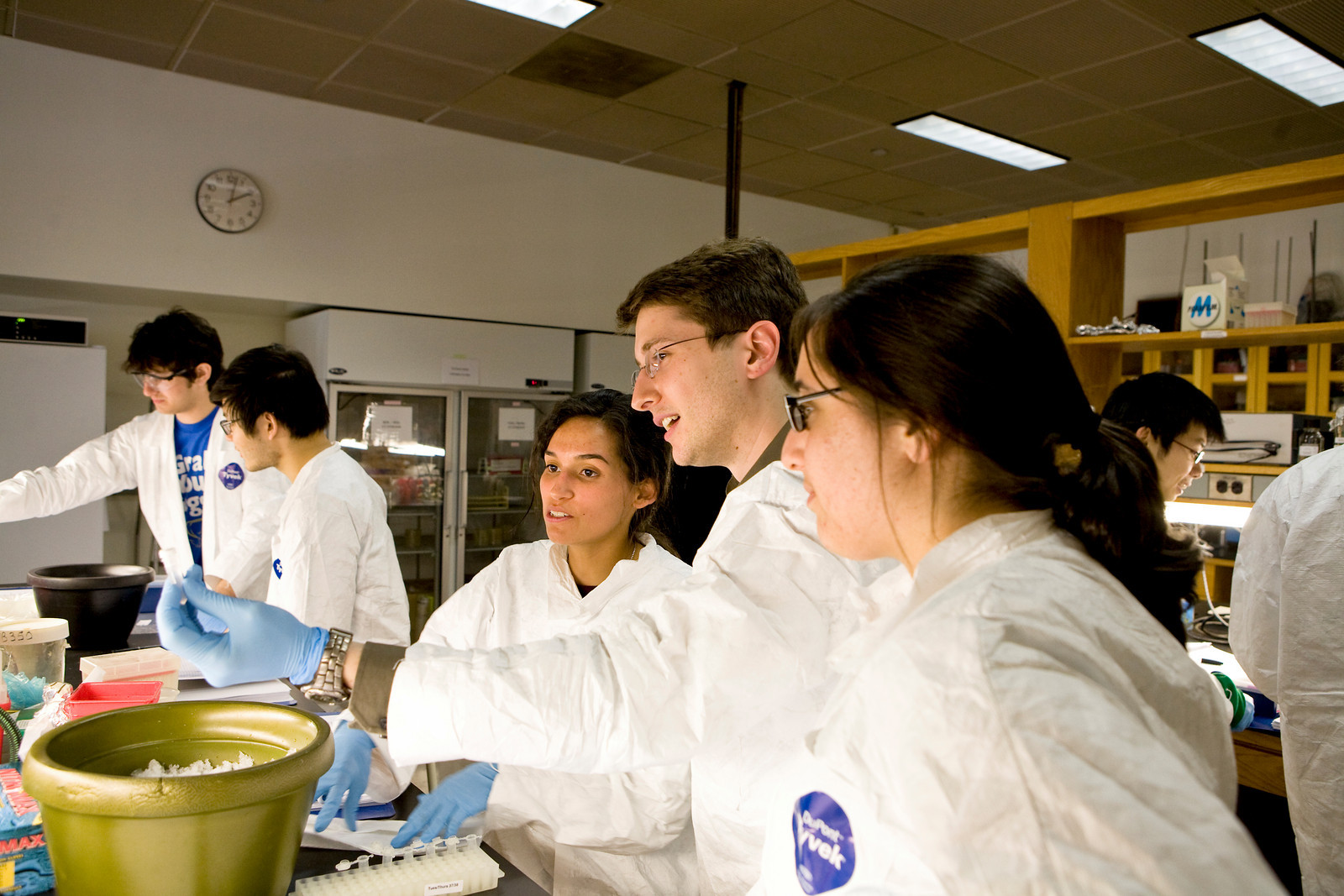
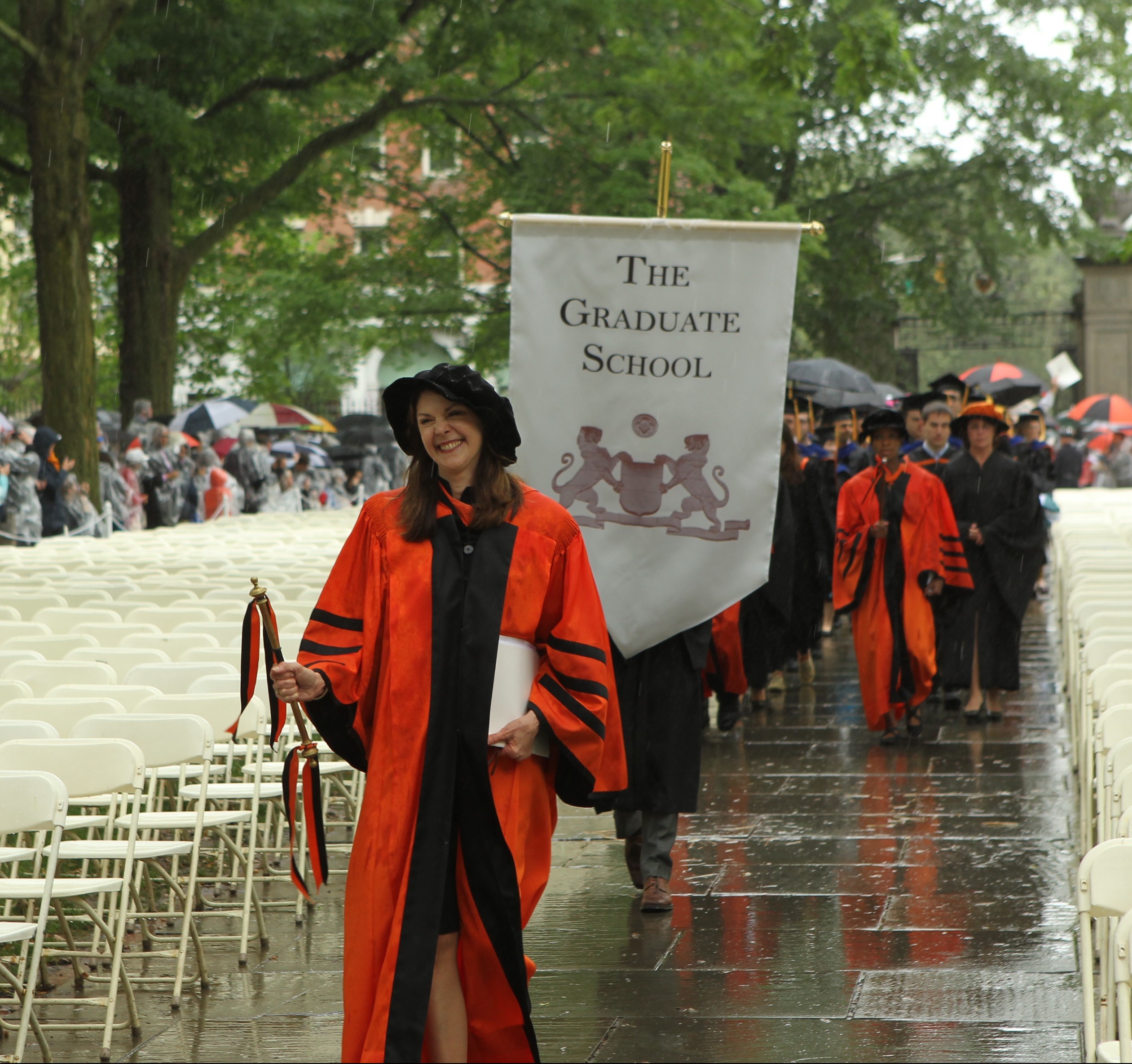
Princeton student researchers working at the Lewis Thomas lab
Princeton student researchers working at the Lewis Thomas lab.

For our middle school science fair, I had created a web-based calculator that could output the carbon footprint of an individual based on a variety of overlooked environmental factors like food consumption and public transportation usage. Having worked on the project for several months, I was quite content when I walked into our gym and stood proudly next to my display board. Moments later the first judge approached my table. Without even introducing himself, he glanced at my board and asked me, Where’s your hypothesis? Given the fact that my project involved creating a new tool rather than exploring a scientific cause-effect relationship, I told him that I didn’t think a hypothesis would make sense for my project. To my dismay, he told me that a lack of hypothesis was a clear violation of the scientific method, and consequently my project would not be considered.

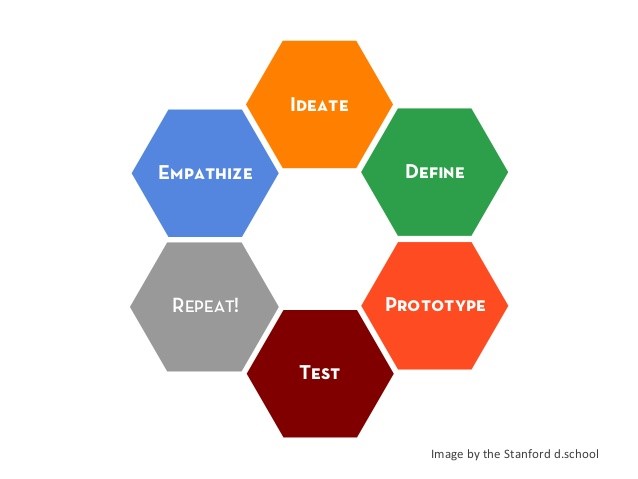
This was quite disheartening to me, especially because I was a sixth grader taking on my very first attempt at scientific research. But at the same time, I was confident that the scientific method wasn’t this unadaptable set of principles that all of scientific research aligned to. A few years later, my suspicions were justified when my dad recommended I read a book called Design Thinking by Peter Rowe. While the novel pertains primarily to building design, the ideas presented in the book are very applicable in the field of engineering research, where researchers don’t necessarily have hypotheses but rather have envisioned final products. Formally, design thinking is a 5-7 step process:

Steps to the Design Thinking Process

Continue reading Design Thinking in Research

To all the research skeptics

Research can help you gain a lot of new insights.

When I entered Princeton as a freshman, I was skeptical that research could do anything for me. I considered myself an applied person who cared little for theory, and I hadn’t planned on continuing on to graduate school. The tides turned when I stumbled upon an optics Research Experience for Undergraduates (REU) program when I was looking for summer programs freshman year. At the time I felt I had few marketable technical skills in my major, so I figured it would be a good chance to build up some useful skills and decided to give it a try. And I’m really glad I did — the experience made me realize how wrong I had been about my prior assumptions regarding research.

Are you a research skeptic, too? Let me tell you a bit about my story and why I would recommend giving research a try.

Continue reading To all the research skeptics

Correspondent Convos: What are your research challenges?

Correspondent_Convos_IconYou’ve probably heard that research is more of a marathon than a sprint. That’s definitely true — Every independent project involves thorough planning and lots of stamina.  But since we’re on the subject of analogies, it’s also true that research is an obstacle course.  Think about it: There are challenges built into the research process, and sometimes they’re impossible to avoid.  PCUR gets real about these roadblocks in our second Correspondent Convo.  Watch below to learn which struggles are most common, and which strategies can help you reach the finish line.

— Melissa Parnagian, Chief Correspondent

Doodling in the Lab

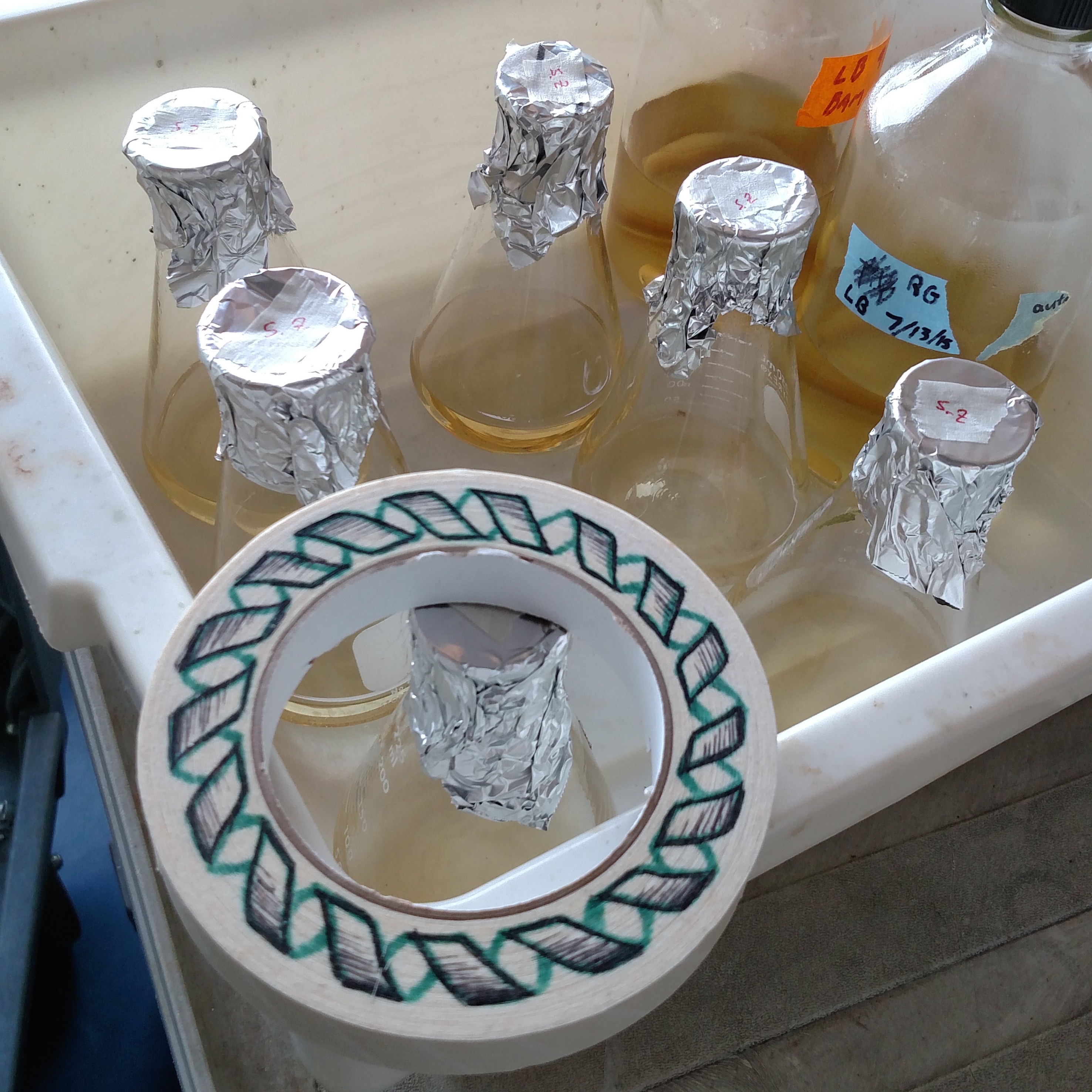
The doodles appear everywhere: on whiteboards, on lab notebooks, even on the autoclave tape. Impeccably shaded line drawings of a-helices, the protein structure nearly everyone in the lab works with.  The “culprit”? Ann, the senior grad student in our lab. Her artistic skill is rare, or at least perceived as rare, in science. Rare enough that Grant, one of the post-docs in the lab, complains, besides a few exceptions, science is “full of nerds”, by which he means those without any creativity or broad interest. And that rarity is a shame, because science needs creativity. This isn’t just about a desire for amusing doodles, it’s about building a scientific community full of clear, intuitive thinkers who can communicate their discoveries.

AutoclaveTape
This isn’t quite what’s usually meant by “biochemistry is more art than science”

Once upon a time, the protein-chemistry lore goes, everyone needed some artistic flair. Indeed, Jane Richardson, under whom my thesis adviser did his postdoc, is known as much for her artistic skill – hand-drawing so many diagrams of proteins in her field-defining papers that modern visualization software still largely uses the conventions she developed – as for her considerable scientific talent.

Now, due to that same software, and other software for visualizing other sorts of data, rapid and clean images of nearly any process, relationship, or other data are merely a few lines of code away. But when the graphics are automatically created with software, rather than by-hand, something is lost.  It’s all-too easy to let visualization software become a crutch by presenting colorful pictures without paying mind to the aesthetic or narrative considerations of the medium. Continue reading Doodling in the Lab

Correspondent Convos: Why do you enjoy research?

Correspondent_Convos_IconAs the semester rolls on, it can be difficult to get excited about your research projects or independent work.  You may be tempted to view an upcoming assignment as just another addition to your busy schedule – but that line of thinking zaps your energy before you even start.  Now is a good time to remember the things you enjoy about research.  And yes, there are things you enjoy about research.  Watch PCUR weigh in on the most exciting moments of independent work, and make sure to stay pumped for your next project.

— Melissa Parnagian, Chief Correspondent

Why I decided to apply to grad school

Applying to graduate school may seem like a natural choice for many people — is it right for you too?

I’m going to be honest: I had originally never intended to apply to graduate school. In fact, one of my many reasons for studying engineering in college was straightforward, if not overly simplistic: an engineering degree, I believed, could land me a relatively good job without having to pursue a graduate degree. I didn’t want to take another standardized test, and above all, I didn’t feel like I would enjoy research. Rather than theory, I preferred engineering and building things, and I wasn’t convinced that was what people with graduate degrees went on to do.

The summer after my freshman year was when I first started to reconsider my decision not to continue with higher education. I got the opportunity to participate in a Research Experience for Undergraduates (REU) at Rice University that summer, helping to develop optical sensors. I knew nothing about the field prior to that, but spending the summer surrounded by enthusiastic PhD candidates was enough to make me reconsider that a graduate degree in an engineering discipline was useless. It helped that optics is such a deep and convoluted field that requires a good deal of physics knowledge to navigate well — it convinced me that in certain cases, it certainly does make sense to obtain extra training and background even if the end goal is to engineer systems. Continue reading Why I decided to apply to grad school

A Lab Tucked in the Depths of the E-Quad

Unless you’re an engineer, you’ve probably never stepped inside the E-Quad. Usually, you’re lucky if you get to the E-Quad at least once before you graduate!

But never fear — you can visit the E-Quad digitally, too. Today I’d like to bring the E-Quad to you and take you on a tour around the lab I work in, the Princeton University Laser Sensing (PULSe) Lab.

2015-05-04 18.34.05
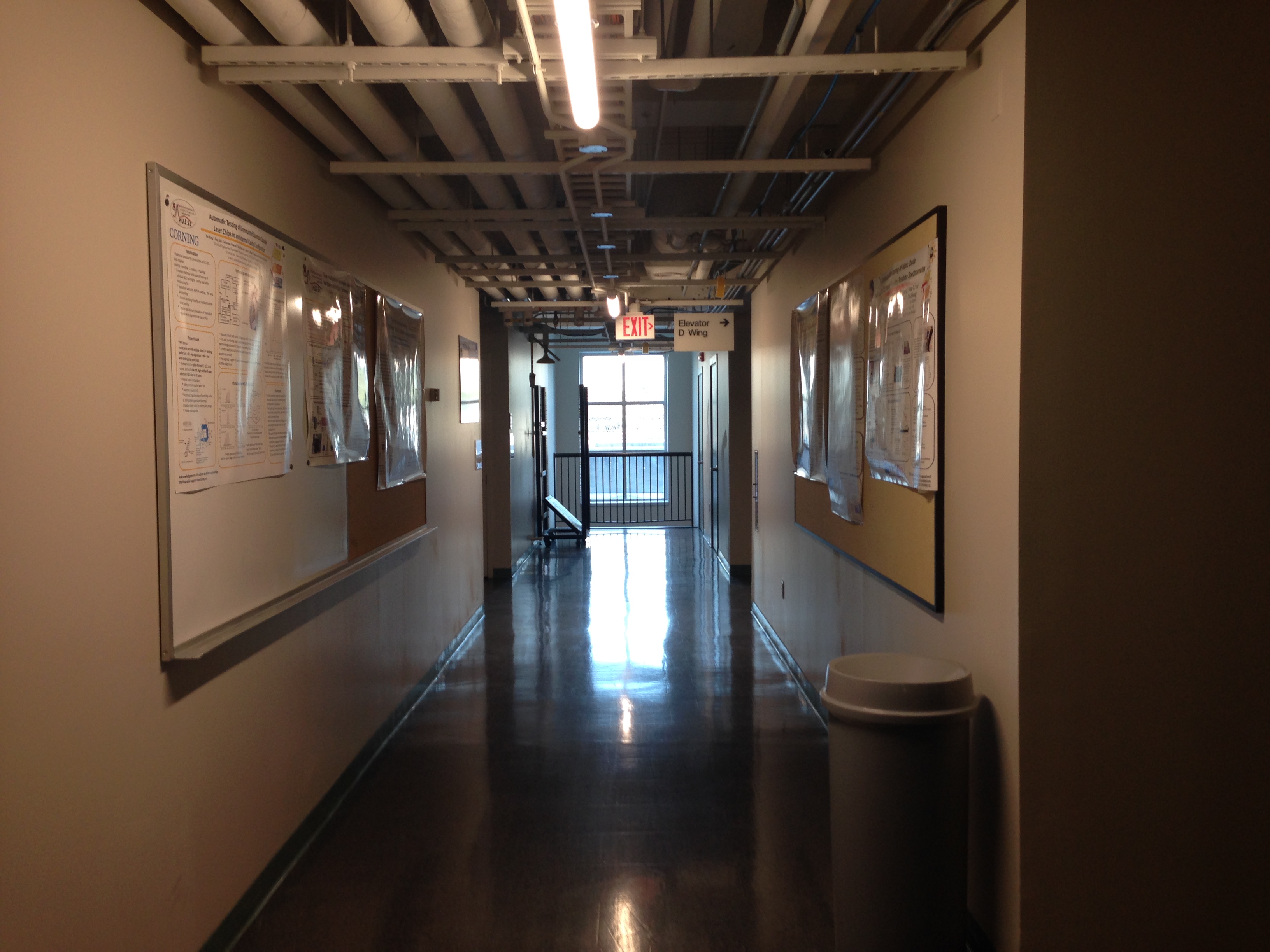
A walk down the J-Wing in the E-Quad.

It all starts with a walk down a hallway on the third floor of the J-Wing of the E-Quad. It can get especially dark at night, since the lights here are energy-saving and only turn on when someone is walking by. Continue reading A Lab Tucked in the Depths of the E-Quad

Moving Forward by Looking Back: Revisiting Old Posters, Papers, and Texts

2015-04-01 11.31.18
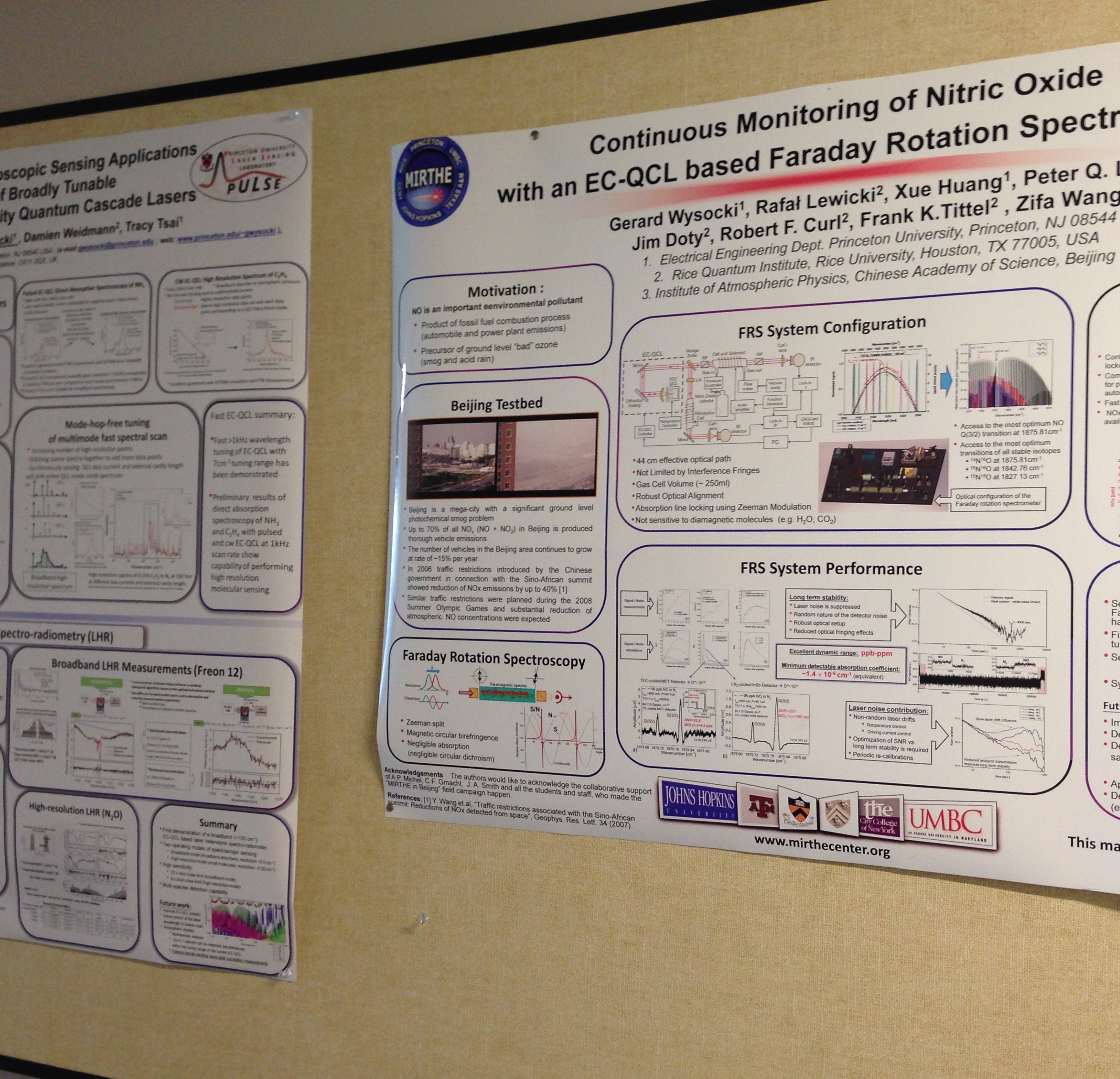
A couple of the posters that hang outside the lab.

Deep in the darkest depths of the E-quad, there is a lab I go to—a lab where I run all my optics experiments, run tests with the breath analyzer instrument I work with, and that I have come to know and love during the past year. The entrance to the lab actually includes a space for presentation posters, which show off the work of graduate students and past interns. Usually I’m in a rush to get in or out and don’t spare these posters a second glance. But last week, for some reason or another (perhaps because I was feeling less stressed than usual), I decided to take some time to  look at them.

When I did, I was surprised. What had seemed to me before like a mass of incomprehensible jargon and tangle of convoluted science was now something more tangible—here were key words I had encountered over and over again throughout the past year, concepts I had heard about many times in group meetings. Even within a mix of phrases that were still not so familiar to me, I could at least grasp what the projects were about and start to see what was so relevant and interesting about these projects. I even found the work that described the novel technology behind the breath analyzer instrument I currently work on, and I felt good being able to understand that poster in its entirety.

It’s kind of strange. Even though I had looked at these posters before, that was back when I had first joined the lab, more than a year ago. Continue reading Moving Forward by Looking Back: Revisiting Old Posters, Papers, and Texts

Finding the Department that Fits

Last year, around this time, I felt extremely unsure about my academic path at Princeton. I had always known I wanted to study something interdisciplinary, preferably combining my interests in science and the humanities. Cognitive science, which combines neuroscience with philosophy, seemed like the perfect fit. However, as Princeton had no neuroscience major and no cognitive science program, I wasn’t sure which department or program would allow me the appropriate amount of support and flexibility to do interdisciplinary research that bridged science and the humanities.

IMG_6641
During the spring of last year, I started to think about how to make Princeton a better academic home for myself!

For a while, my go-to departmental options had been computer science or economics. After talking to students and attempting to contact department representatives, I became worried about whether these departments would offer me the interdisciplinary flexibility to do the research I wanted. I thought about other university programs, like Stanford’s Symbolic Systems, which “focuses on computers and minds: artificial and natural systems that use symbols to communicate, and to represent information” (see more here: https://symsys.stanford.edu!) Sometimes, I wondered if I should consider transferring to another school.

One simple step at the end of spring semester of my freshman year reassured me about my options at Princeton and has kept me on the right track ever since. Continue reading Finding the Department that Fits