Engineering a New Outlook: The BSE Path

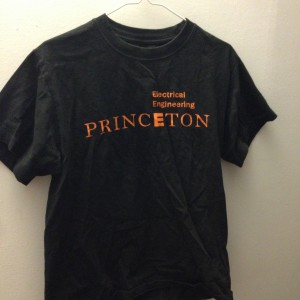
T-shirt
Deciding to bear the mantle bestowed by the Electrical Engineering T-shirt.

Last week, Melissa told us about her ruminations on and approaches to deciding a major. This week, I wanted to offer some of my own thoughts and reflections on why I chose to stick to the path to BSE two years ago.

To many people, engineering seems to be the hard way through college. Engineering classes notoriously lower GPAs, cause intense stress, and work you to the bone. I can’t deny I’ve had a generous share of that, as someone who’s far from the sharpest mind in electrical engineering. Sometimes it can really take a hit on my self-esteem—and it’s no lie that I’ve experienced first hand how engineering classes make you work at your limits, force you to think differently, and labor at solving problems that don’t have set answers. But that’s because the end goal is to make a coherent working system that will perform a task, which is often immensely complex, while working within physically possible limits. In other words, rather than only thinking and planning, the result is something that really works and that can interact with society in some meaningful way. And successfully creating such a system is a very satisfying feeling indeed.

The difficulty people associate with engineering often clouds that end goal.While it’s true that engineering certainly isn’t for everyone, engineering offers you a different outlook and approach to life that can benefit you far beyond the academic field. Continue reading Engineering a New Outlook: The BSE Path

Student Profile: Alexandria Herr, 2017!

So far, PCUR bloggers have focused on what we’ve learned from our own research journeys. This week, I thought I would share an interview I conducted with another student last fall about what he/she is working. Princeton students are always involved in something interesting, and Alex Herr is no exception.

I met Alex in our freshman seminar, Earth’s Environments and Ancient Civilizations, in which we travelled to Cyprus and analyzed topics of climate, minerals, and topography using geophyics and other scientific methods. A proud Forbesian and member of the class of 2017, Alex is a tentative Ecology and Evolutionary Biology major and plans on getting certificates in Computer Science and Latin American Studies. Last semester, she was enrolled in JRN 440: Unconventional Foreign Correspondence, a creative writing poetry class, GEO 365, and SPA 103.

What are your favorite pieces of research from past classes at Princeton?

Last year, in Ancient Egyptian Archaeology, we went to the archives of the art museum and were assigned a certain number of Egyptian scarabs, or beetle-shaped amulets. Scarab beetles were used as seals mounted on rings or simply as amulets placed over the heart of a mummy. Our final project was to identify where the scarabs in the art museum were from and whether they were real.

Scarabs are the ancient world’s equivalent of an “I Love NY” shirt. As individual records, they are not that special, but as conglomerates, they tell researchers a lot about a time period. One of my scarabs had been listed as a fake, but I was able to make an argument for its authenticity. Continue reading Student Profile: Alexandria Herr, 2017!

GoPro: The Life of a Geologist

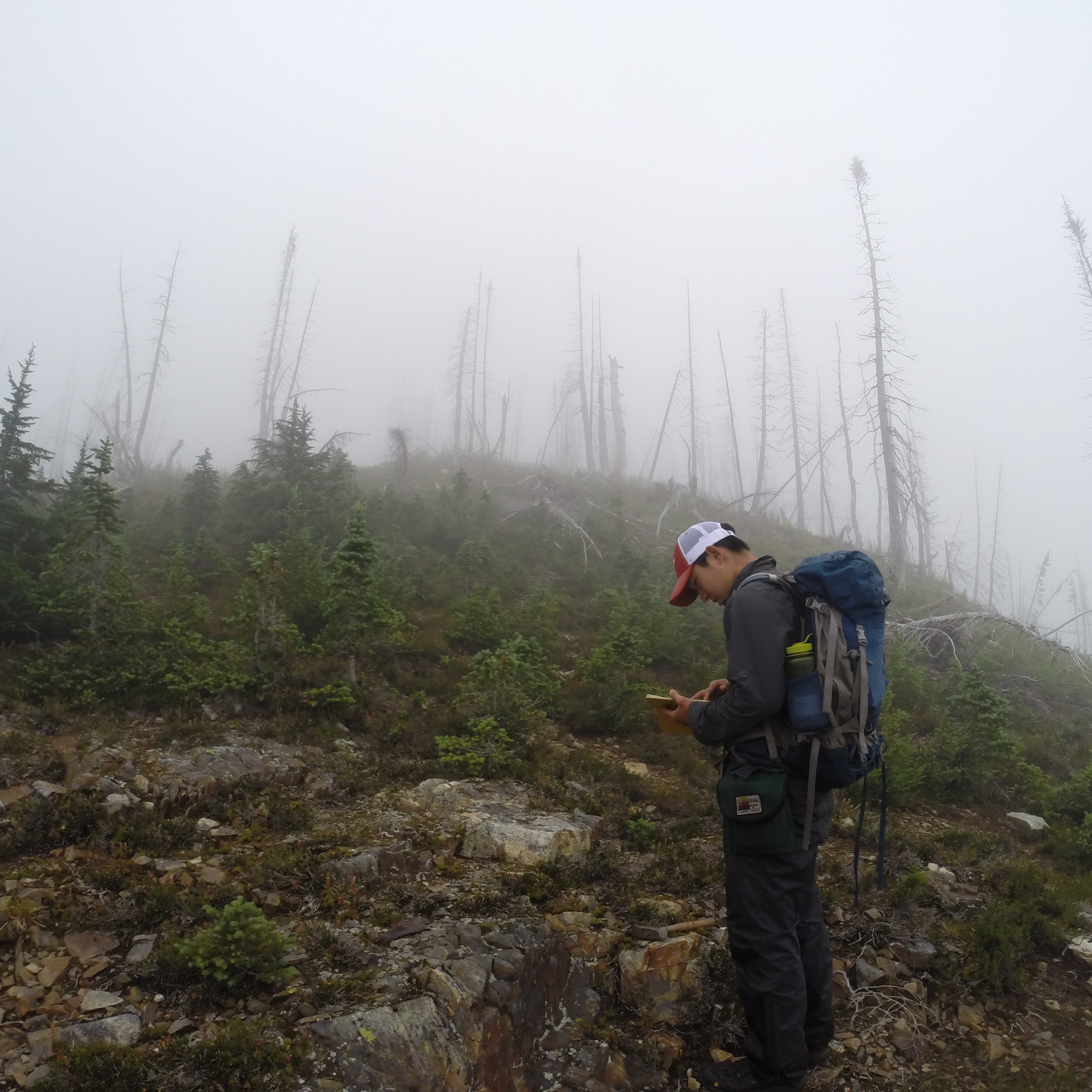
Research is often stereotyped as a boring intellectual pursuit, or for people who say things like “If my calculations are correct…” every day. But it certainly isn’t! Research is exciting, and often performed outside of the lab. For example, I spent the last summer hiking in the North Cascades, WA to examine the rapid exhumation of a rock unit along a major fault zone. Here is a short video montage of that field season…


To learn more about what the geosciences can offer you, visit the department webpage, reach out to any of us in the department, or consider taking a class with us!

Up in the clouds (Photo by Sean Muleady '17)
Up in the clouds…

— Yuem Park, Natural Sciences Correspondent

Ready for Take-Off: A Pre-Departure Plan to Study Abroad

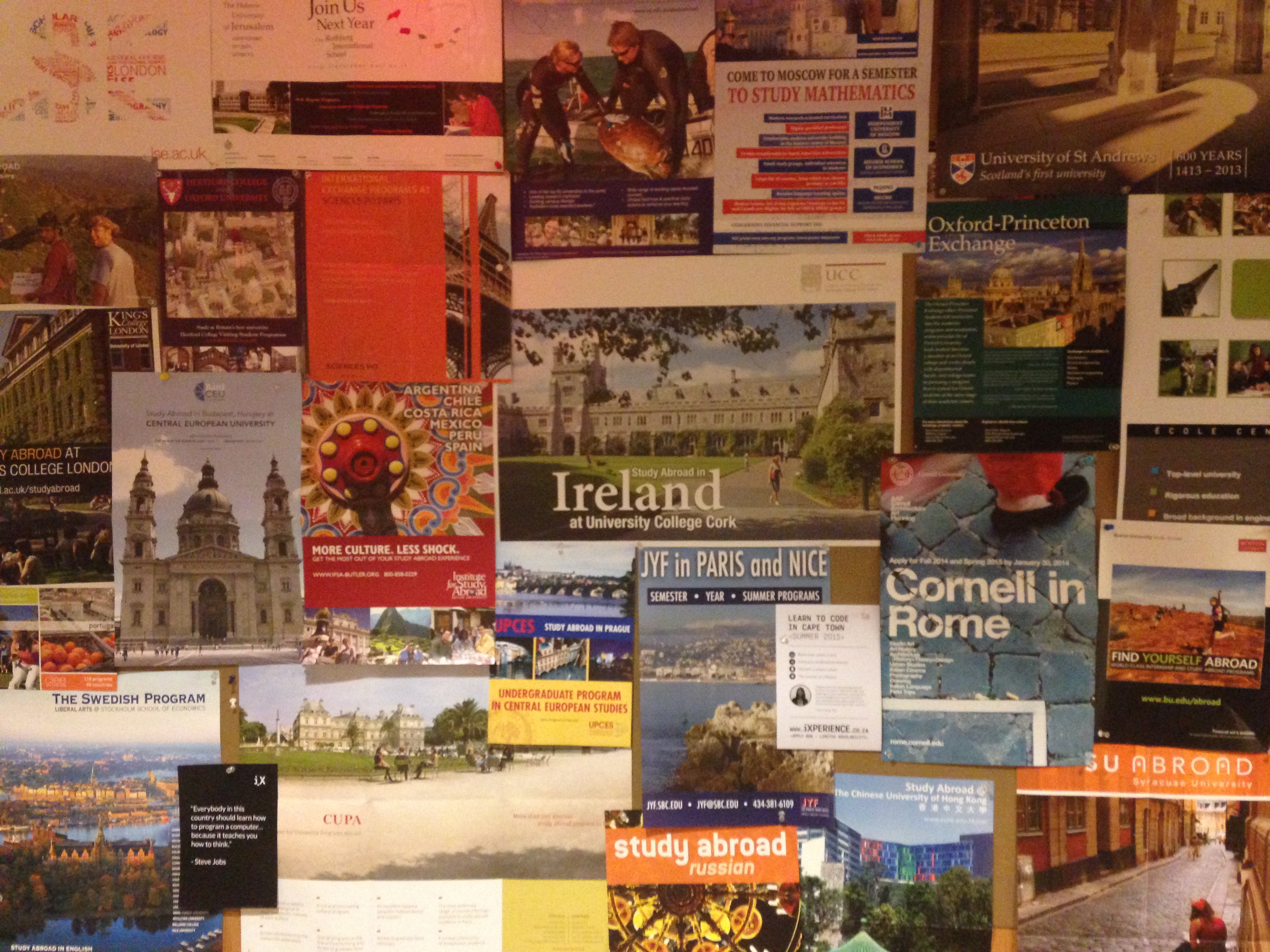
The Office of International Programs helps students make their travel dreams a reality! (Photo credit: Morgan Celistan)
The Office of International Programs helps students make their travel dreams a reality!

Many people think about studying abroad while at Princeton, but only a select few actually apply. I seldom hear of research-oriented students studying abroad.  Many of us fear leaving behind the Princeton-centered academic research we’ve grown attached to. However, study abroad can be an amazing opportunity for student researchers to learn about their fields from an international perspective.

Next semester, I’ll be studying abroad at University College London (UCL). In addition to taking classes at my new university, I also hope to get involved in its research community. It seems easy to get caught up in the grandeur of being in a new location, focusing on exploring the area and forgetting to engage in meaningful and intellectual pursuits related to research. Therefore, I have spent the last few days trying to brainstorm ways to tie my research ambitions in with my plans for studying abroad. I’ve come up with a few pre-departure tasks that I feel will help me keep my research at the forefront of my mind while I traverse across the seas:

Continue reading Ready for Take-Off: A Pre-Departure Plan to Study Abroad

Applications: Get (and Stay) Excited!

The excitement of post-graduate opportunities!

Last week, Stacey gave some great advice about productive things to do when you’re forced to pause for some part of your project, such as waiting on shipments or lab analyses. But what about the other end of the spectrum? What if you have so much to do that you feel overwhelmed and lose motivation to do any of it? Or if you’ve been working on your project for so long that you begin to lose interest?

I found myself in a similar situation a short while ago. I’m currently applying to various grad schools, and a major component of these applications is the  “Statement of Interest” or “Personal Statement”, in which you basically say why you’re interested in that particular program and how your past experiences have prepared you for it. And at first, it’s exciting! You’re reading about the schools/programs/research you’re potentially going to be spending the next few years immersed in, and the whole situation is one of promise and novelty. So you’re motivated to write, and you work hard on your statements.

But then, as you start working through the second statement, then the third, then the fourth, fifth, sixth… and the school work and extracurriculars start piling on, the initial feeling of promise and novelty wears off, and the task becomes a chore, even though you know it shouldn’t be.

So how do you put your mind back on track? How do you regain the motivation you had at first? Continue reading Applications: Get (and Stay) Excited!

Undeclared, Undecided–Still Eligible for Departmental Funding!

By late March of my freshman year, I was wholly undecided about my major. I had taken classes in a wide range of departments including geoscience, math, comparative literature, and philosophy. I had not taken a single Classics course. But I still decided–and succeeded–in applying for funding from the Classics department and gaining exposure to a new ancient language last summer.

Sanskrit

Before I applied for Classics funding, I felt unprepared about my summer plans. I had taken two “mandatory” class trips during my fall and spring break, to Cyprus and Greece respectively, so I was used to the thrill of university-sponsored travel. I had assumed that I would spend my summer abroad and counted on attending a global seminar. After being rejected from my choice global seminar, however, I dreaded speaking to people about my nonexistent plans. I doubted that I had time to find and apply to international summer programs. I reset my sights around my home near New York City and thought about what I really wanted to learn. Continue reading Undeclared, Undecided–Still Eligible for Departmental Funding!

Tales of Adventures: Keeping Detailed Records of Your Work

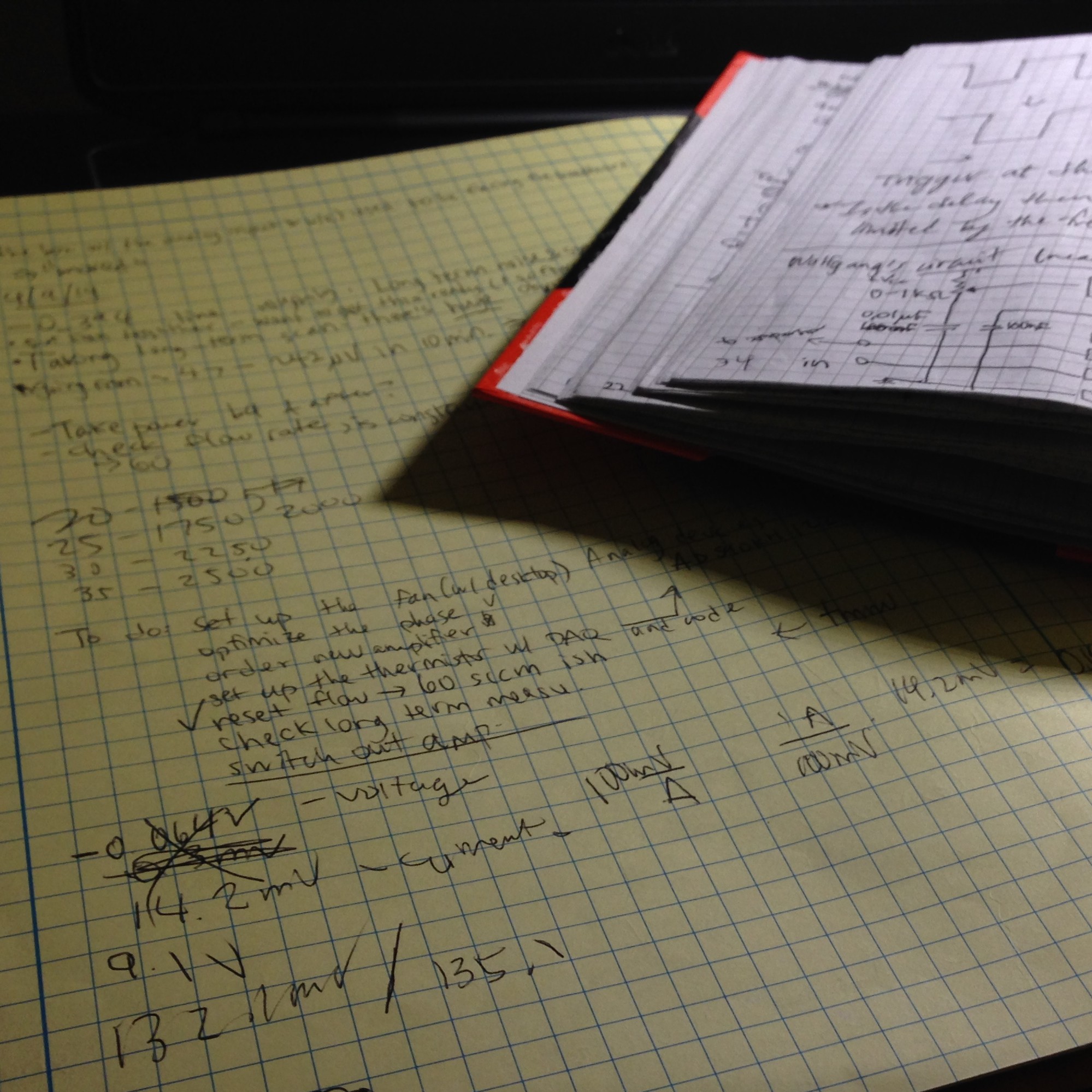
Notes can get messy very quickly. Photo by Stacey Huang)
Notes can get messy very quickly.

Whether you work in the sciences or humanities, it’s integral to keep track of your work. It sounds obvious – it did to me too – until I started flipping through some of my notes in my lab notebook, trying to figure out the tests and results for a few small tests last semester. I knew I had done the tests, but I just couldn’t figure out what exactly I had done. Eventually, I found a few numbers in my notebook but couldn’t decipher them. Maybe those notes made sense to me 5 months ago, but now they only look like random scrawls of numbers to me.

It isn’t always a lab notebook: it could be keeping track of papers you’ve read and researched, writing down ideas you’ve tossed around with classmates or your adviser, basically keeping a record of all the work you’ve done. Often it can get boring to record every little thing, and often it can feel unnecessary, but not keeping a detailed record or at least well-organized notes or data of your progress somewhere helps no one. It does your hard work no justice when you can’t look back on it in the future and save time by skipping what you’ve already done. It all saves you time in the future from looking at the same papers, doing the same tests. Continue reading Tales of Adventures: Keeping Detailed Records of Your Work

Funding Proposals – A Salesperson’s Approach

2a
What I needed funding for last year – the electron microprobe at MIT.

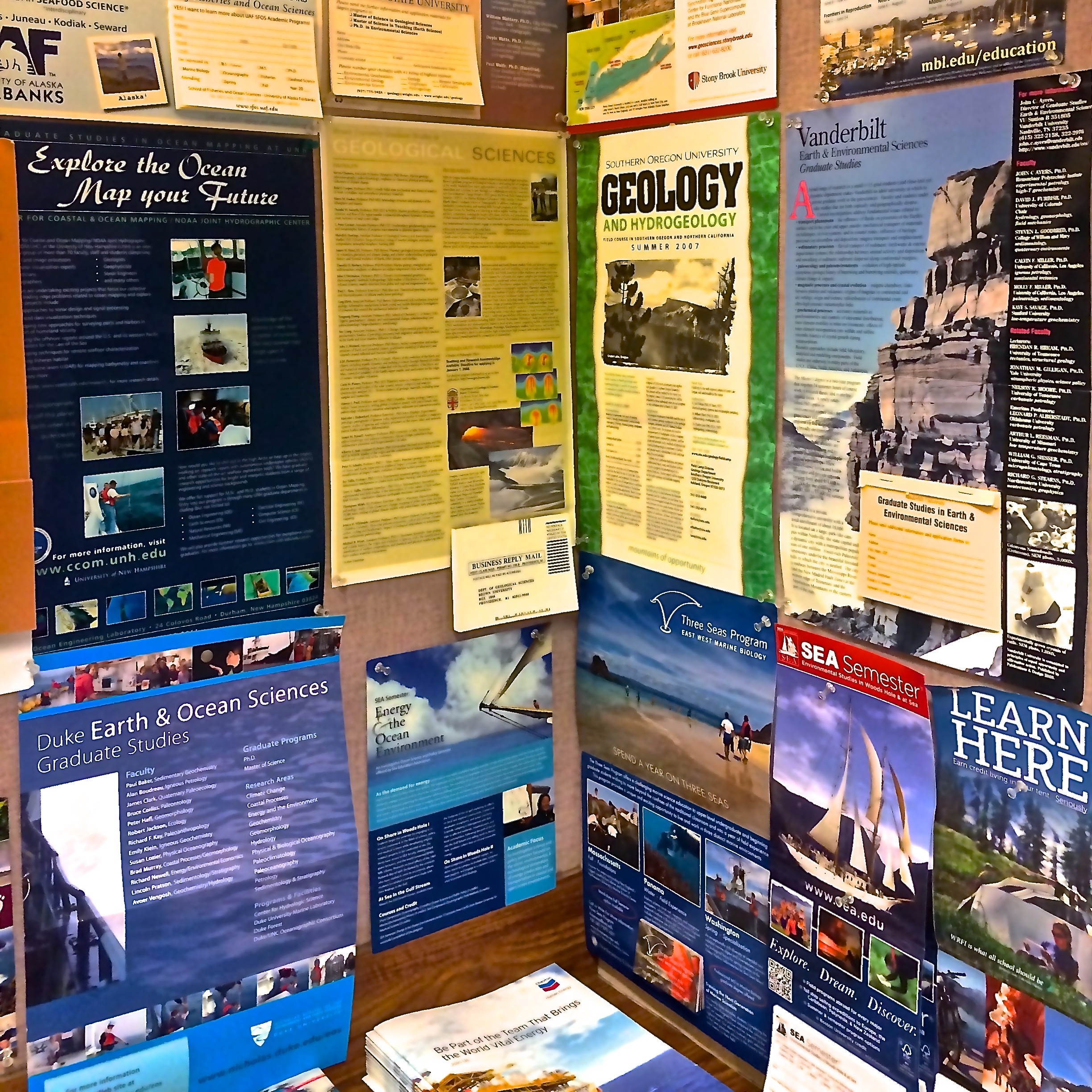
As Benjamin Franklin once said, “An investment in knowledge pays the best interest.” And indeed, funding and supporting research projects is a priority for Princeton as well as many other institutions. But just because our society values research, it doesn’t mean that it’s a walk in the park to get a project funded. In fact, in many cases, it’s actually very difficult to get a project funded, even if it’s a highly worthwhile one.

However, this doesn’t mean that your chances of getting funding are beyond your control – the better your funding proposal, the better your chances are of getting your project fully funded. Of course that’s beyond obvious, but how exactly do you write a well-executed funding proposal? Below are a few tips that I’ve picked up: Continue reading Funding Proposals – A Salesperson’s Approach

No Lab Coat Required

Before last summer, I considered the term “research assistant” exclusively reserved for science majors in lab coats. And since my intended major and wardrobe don’t fit this conception, I never thought I’d apply the term to myself.

Well, I was wrong — in more ways than one. “Research assistant” has since been added to my resume, and I didn’t have to wear a lab coat to do it. In fact, pajamas were perfectly acceptable attire.

If you're looking for research assistant loungewear, school spirit is a plus. (photo by Melissa Parnagian)
If you’re looking for research assistant loungewear, school spirit is a plus.

Let me explain: After a wonderful semester in Dr. Renita Miller’s writing seminar Race, Gender, and Representation, I knew I was interested in identity politics. The class fundamentally changed how I looked at policies and judged their effectiveness for minority groups. Dr. Miller must have noticed my enthusiasm, because she described her research project – a look at representation’s effects on the Texas State Legislature – and asked if I wanted to help code data over the summer. Relevant information in the legislature’s bills could be accessed anywhere online.

Continue reading No Lab Coat Required

Research at Princeton: Independent But Not Alone

Research is a group effort. Photo by Chung-Ho Huang
Independent work and research research are by and far collaborative efforts.

It used to be easy to tell myself that I could do everything alone. That was the way I had mostly done things until college, and I never felt the need to change. It was no different when I began research at Princeton. It was easy to convince myself to not to ask questions, to simply turn to books or articles for help, for fear of pestering and disappointing my adviser and my labmates. As long as I kept my head down and worked, I believed I would know what was happening eventually.

But I don’t tell myself that anymore. In fact, it frustrates me when I look back a year ago to that time. I’m only now filling in the gaps of my incomplete knowledge, a problem that would easily have been solved had I had the audacity to speak up and ask the questions that really mattered. I was just unsure and afraid about what I was expected to know – and somehow, I translated that into the fact that I was somehow expected to know everything. Because of that fear, I ended up neglecting my greatest resources, my greatest friends – my adviser, my labmates, my peers.

Continue reading Research at Princeton: Independent But Not Alone