“People” page of Princeton Computational Memory Lab
Cold-emailing a professor can feel like yelling into the void. You’ve pinpointed your field of interest, done the research on the lab and professor you want to work with, and yet—there’s so much uncertainty. You don’t know what the response will be, or if you’ll even get one at all. You don’t know if the void will yell back, or if your voice will simply disappear.
But that doesn’t mean you can’t maximize your chances. After crafting and sending a few emails, I started to see what actually makes a difference—and it’s not just about hitting “send.”
David Walker is a Professor of Computer Science at Princeton University whose research focuses on programming languages, formal methods, and computer systems. Known for his commitment to advancing both theoretical and practical understanding in the field, Professor Walker also plays a central role in mentoring students.
As someone who completed my junior independent work under Professor Walker’s guidance last semester, I’ve had the chance to witness his thoughtful mentorship firsthand. In a research culture where both the technical challenge and emotional uncertainty can feel overwhelming, I’ve come to appreciate how crucial the human side of research is—how we learn from and grow with those who guide us. With that in mind, I sat down with Professor Walker to explore how he thinks about mentorship: what it looks like, why it matters, and how he helps students, like me, find their footing in the world of research.
Professor Barry Rand stands at the frontier of sustainable electronics and energy solutions as a Professor of Electrical and Computer Engineering and the Andlinger Center for Energy and the Environment at Princeton University. His work in thin-film electronics and photovoltaic materials offers promising paths toward greener technologies, with real potential to reshape how we power our world.
As a student in his ENE 431: Solar Energy Conversion course, I’ve had the privilege of learning from Professor Rand this semester. This course has challenged how I think about energy and prompted me to look more closely at the systems that power the world. What stood out to me wasn’t just the technology, but the sense of possibility it held. I found myself thinking more seriously about what the future of energy could look like, and who’s shaping it. That curiosity led me to interview Professor Rand for Now & Next, where we discuss his research in thin-film electronics and where he sees the field heading.
The author and the rest of the GEO 372 field trip cohort at Dante’s View, Death Valley
Many of us might think of classwork and research as two separate entities. Here at Princeton, we might think, we take classes to learn and to prepare ourselves for independent work, but the two are distinct concepts. But reality is, of course, much more complex: classes at Princeton can and do incorporate elements of independent research work. This spring break, I had the opportunity to conduct field research as part of one of my classes, GEO 372 (Rocks!). We flew down to Death Valley National Park for a week, collecting various rock samples and learning about the regional geology. For the rest of the semester, we’ll be analyzing the samples to answer our given research question.
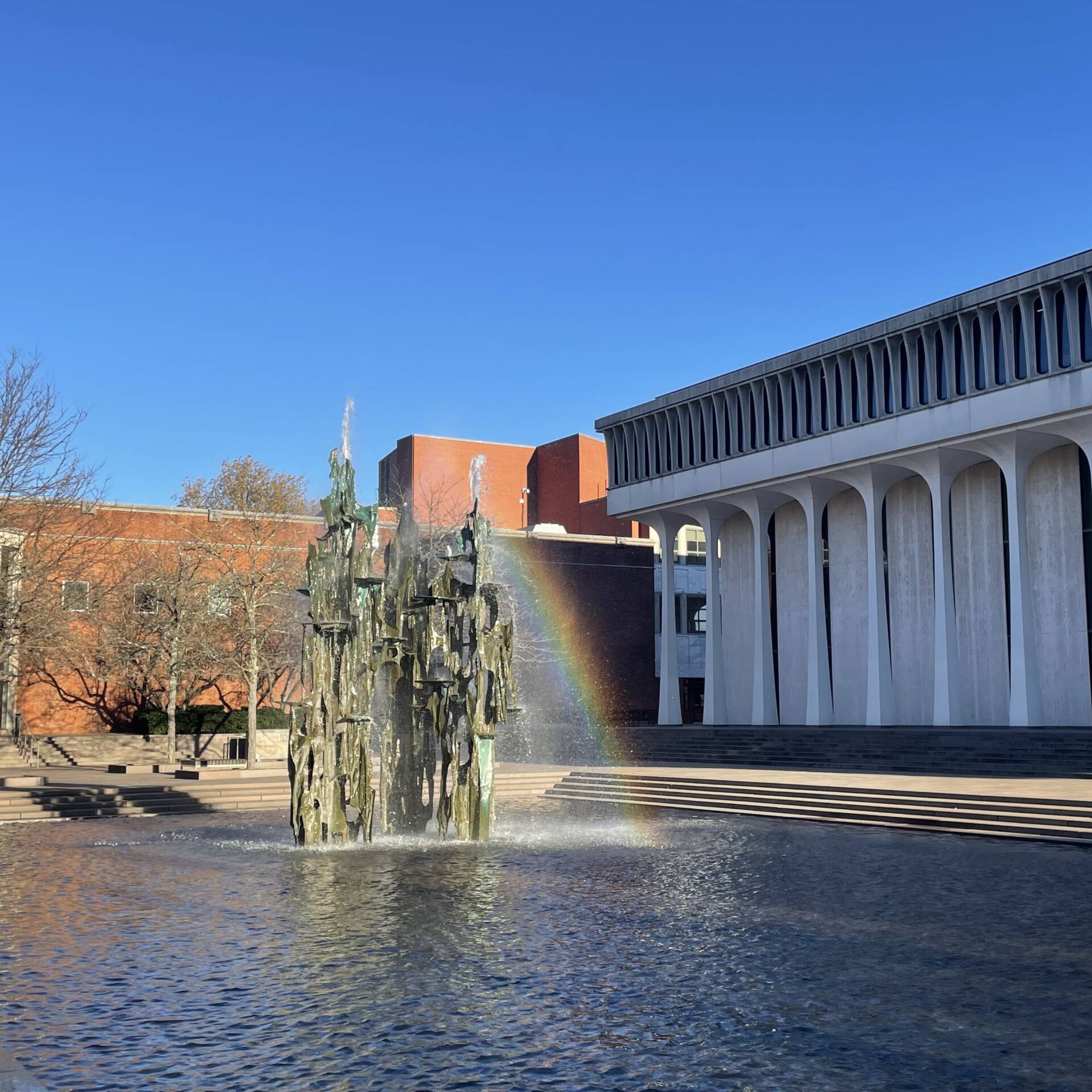
A rainbow at the Fountain of Freedom (colloquially called the “SPIA Fountain”), taken during a break from working on my thesis
Independent research at Princeton offers an incredible opportunity for students to explore their academic interests and gain experience in the research world. This year, I’m working on my Senior Thesis with Professor Aleksandra Korolova, conducting an audit of Google ad delivery optimization algorithms. Specifically, I am studying whether aspects of advertisements—the image, text, links, and so on—impact the demographics of the audience to whom the advertisement is delivered.
In the fall, many people were curious about how my thesis was progressing. The truth was, for a few weeks, I hadn’t started running any experiments, since I first needed my research to be approved by the Institutional Review Board (IRB). Through this experience, I both gained insight into the IRB process and found that many students had never even heard of the IRB. In this article, I share my experience and offer advice for students who are planning to conduct independent research.
Glass brain plots from the data analysis of the project I’m working on with my mentor, who spends a couple hours every week going through the fundamentals of coding in neuroscience with me. When I started working with him, I didn’t even know I could make plots like these. Our weekly meetings paid off.
When I first came to Princeton, already interested in neuroscience research, I kept hearing about all the incredible opportunities available to undergraduates. Professors conducting groundbreaking neuroscience studies, cutting-edge labs filled with brilliant minds—it all sounded amazing. But as a first-year student, I had no idea how to actually get involved. Everyone seemed to know what they were doing, while I was stuck wondering: Where do I even start? Will a professor really take time to mentor someone like me? If I cold-email them, will they even read it?
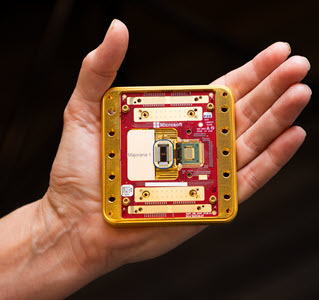
The Majorana 1 Chip.Photo by John Brecher for Microsoft.
In light of recent discussions in the scientific and engineering community, I wanted to take a closer look at Microsoft’s latest announcement in quantum computing. As someone deeply interested in the intersection of research and innovation, I was curious about what this means for the field. Is this truly a turning point in quantum computing, or is there still more work to be done? As part of Now & Next, a new series dedicated to exploring current events, groundbreaking research, and forward-looking trends in engineering, this post delves into Microsoft’s research, the promise of topological qubits, and how the research community is responding. This could be the dawning age for quantum computing, or another step in a long journey. Let’s dive into what’s going on now and what’s coming next with Microsoft’s quantum computing announcement.
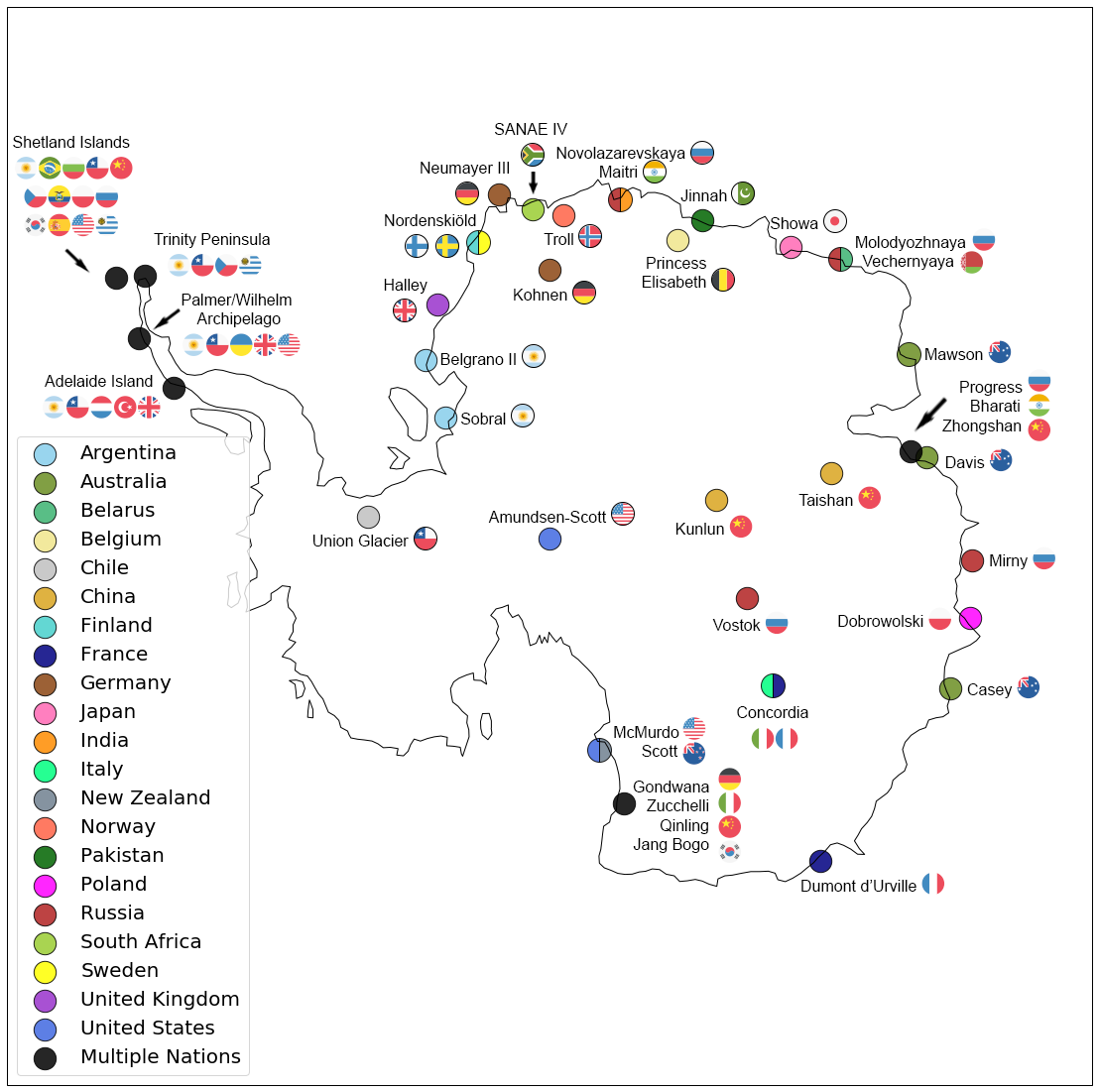
A figure of national research stations in Antarctica, which I recently created for my research using the Python library Cartopy.
Ever since I was a child, I’ve always loved maps—I was a major geography nerd growing up. Jumping forward to today, my like-minded roommates are just as obsessed as I am: the walls of our dorm are literally covered floor to ceiling with maps. These include (but are not limited to) a glaciological map of Antarctica, public transport maps of numerous cities (Toulouse, Christchurch, and New York are just some examples), and a road map of my home state of Washington!
Maps aren’t just a fun hobby: They’re also enormously important in numerous research fields (in addition, of course, to just being plain useful). Whether your research field of interest is history or meteorology or epidemiology, there’s a good chance that you’ll be reading—and making!—some maps. In my own field of glaciology, maps are of paramount importance, whether it’s a map of glacier melt contribution from southeast Alaska or a map of Antarctic ice core sites. I’ve written this guide to provide some helpful resources and tools for making maps for your research, so hopefully it will serve as a good starting point! I should note that this isn’t a tutorial, but plenty of great tutorials should exist on the Internet for all of these tools.
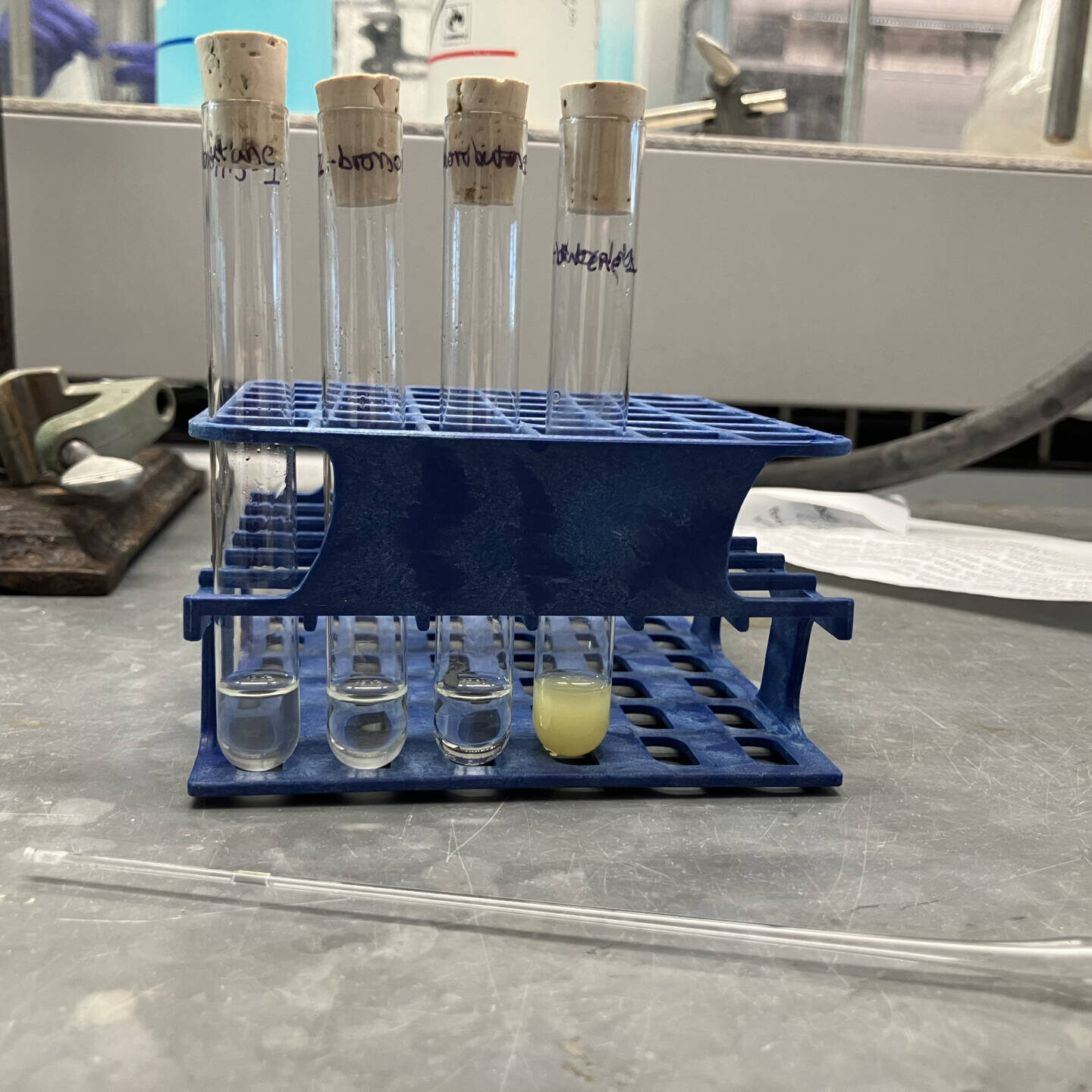
Organic Chemistry Lab Procedure in Frick, taken by Haya Elamir
For STEM majors, lab components of classes can be cumbersome. They can add stress to the classroom experience–not to mention the long hours. Unlike research in a lab as part of a thesis or independent work, these labs may not allow for self-direction, and can feel very methodical. Sure, they apply what we are taught in class, but for me personally, the rates at which lab and lecture move can be quite different, and I do not fee the benefits of the lab experience until later on in the semester when it finally clicks for me.
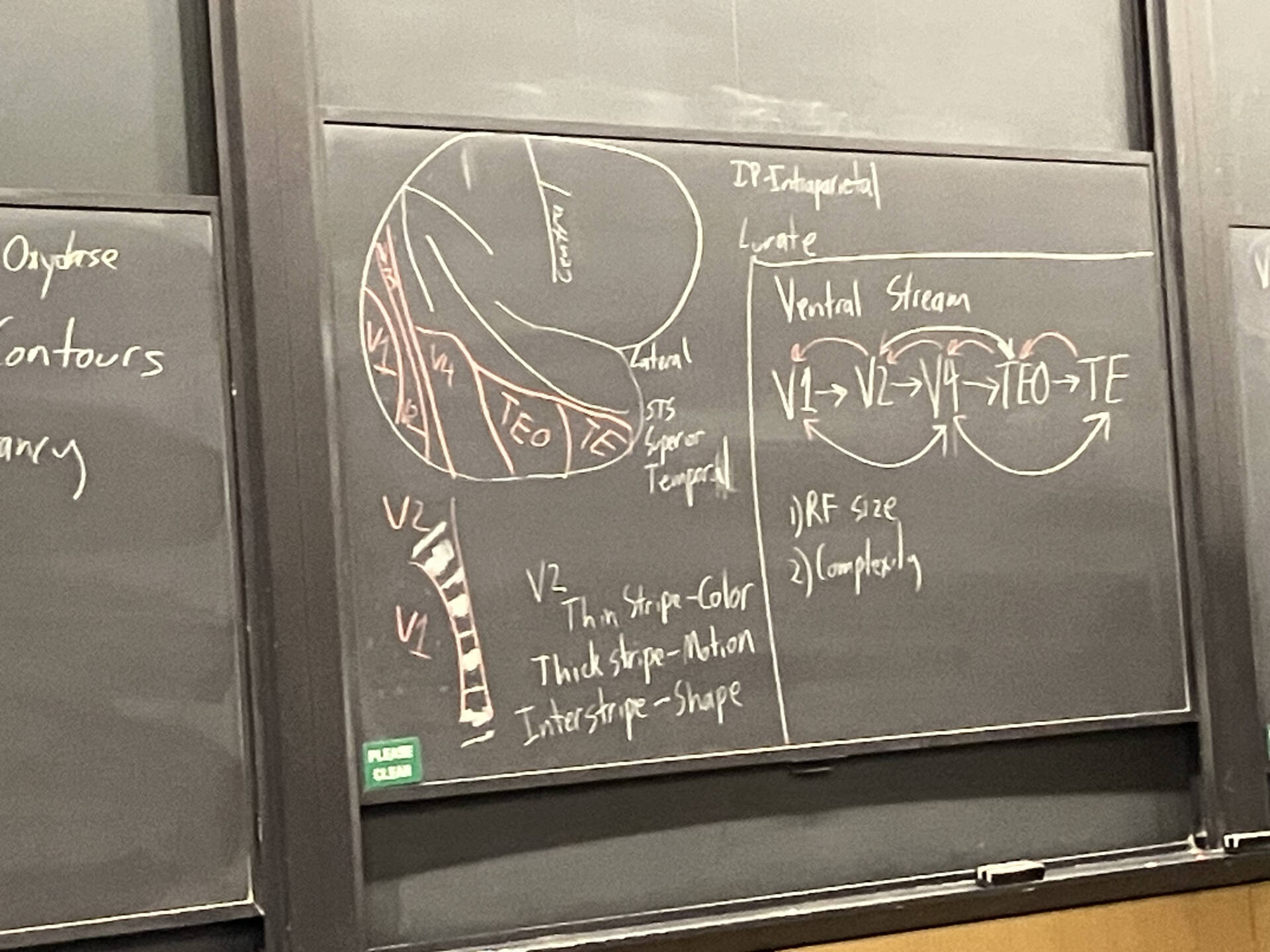
Blackboard featuring some neuroscience concepts from a neuro class taken at Princeton
We all have to do it: read research papers. They can be jargon-y, long, confusing, and all in all an upsetting experience, but there’s no way around it.
First of all, let’s start by approaching this with a more positive mindset. Reading research papers can give us access to a bucketload of information that no other resource can provide. It is the most updated source on your favorite scientific topics, a Vogue magazine for the scientific world if you will. As such, reading them can be fun–but only if you know how. Now that we are a bit more optimistic about reading them, we can start with the first few steps.