Categories
Conduct Research Research Life

Doha Diaries: Zara’s Internship at QCRI

This summer, Zara Hommez traveled from Princeton to Doha, Qatar, for an internship at the Qatar Computing Research Institute (QCRI), where she worked in the Humanitarian AI division. As a sophomore majoring in Operations Research and Financial Engineering (ORFE), she was drawn to the placement through Princeton’s International Internship Program (IIP) because it offered a rare blend of quantitative modeling, computer vision, and real-world impact, which is the exact intersection she hopes to pursue.

When browsing IIP opportunities, QCRI immediately stood out. Its mission to use data and AI to address global humanitarian challenges aligned perfectly with her academic interests in optimization, systems thinking, and applied machine learning. The chance to live in Doha, a rapidly growing, modern city at the heart of the Middle East, added an exciting cultural dimension she was eager to explore.

Zara on a sand buggie
Zara on a sand buggie! Photo credit: Zara Hommez.
Categories
Conduct Research Research Life

In Defense of Core Lab

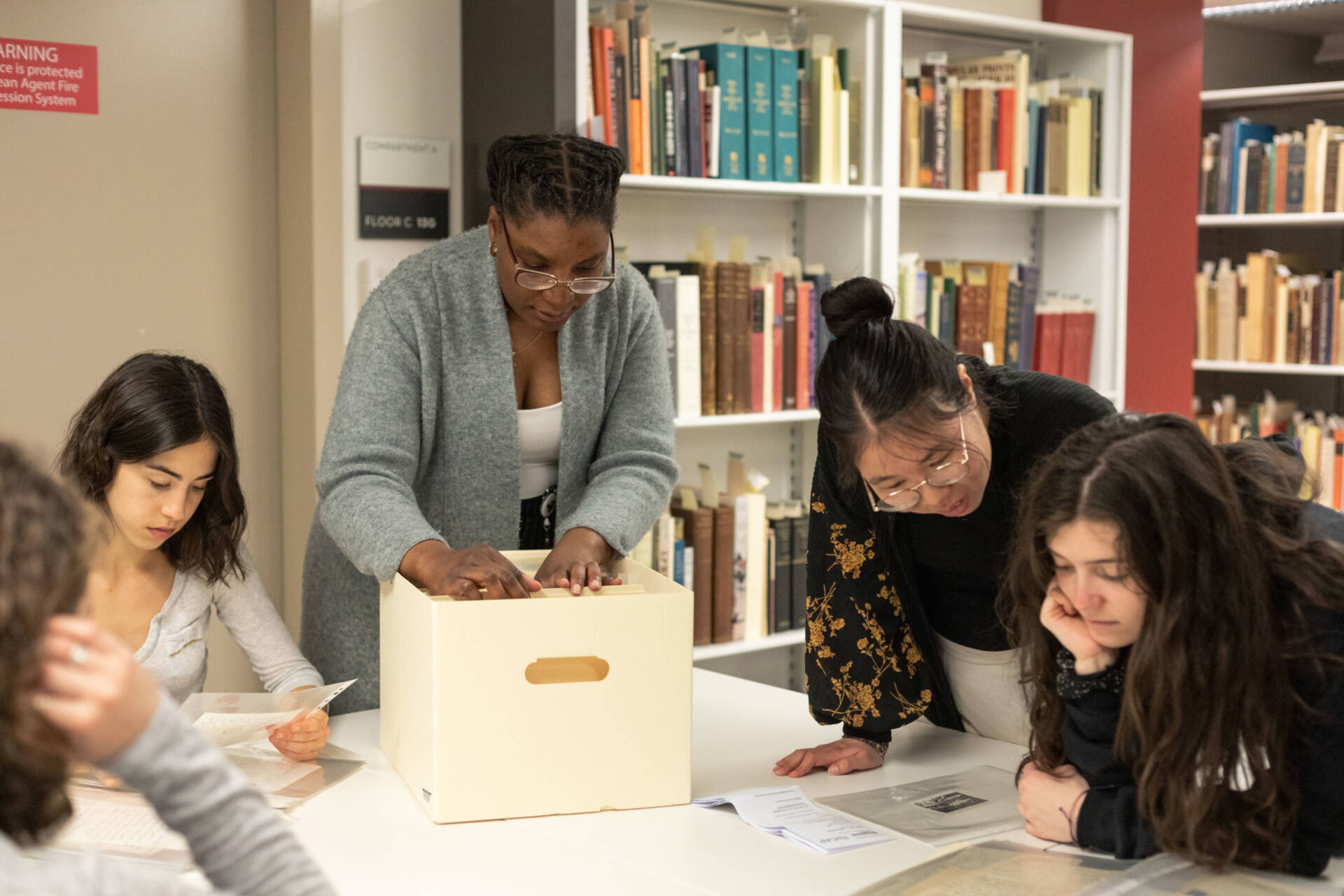
this image is to represent the kind of group environment that core lab represents, even if this isn't an actual core lab class depicted
A classroom of students reading at Princeton (not core lab). Photo credit: Ryan Halbe.

Many STEM majors here have the same rite of passage: core lab. For non-lab majors, core lab is a class that is purely to teach you about lab techniques and critical thinking skills that are useful for writing our theses. They usually involve a bit of a simulated lab experience where you discover new findings while the teachers guide you through the motions of a lab research experience. 

Molecular biology’s core lab meets twice a week for 3 hours and then a small 50 minute lecture/precept on Fridays for half the semester. Other majors have similar constraints. However, while at first it may seem a bit overwhelming and even redundant if you’ve already done these procedures in a lab or are in a lab that definitely will not be using any procedures you learn, core lab goes beyond just teaching you technical skills. 

I too was confused as to why I was here and why this mattered, but over time, I began to internalize one of the real skills this class is meant to teach you, something that pipetting will never give you: asking the right questions. 

Categories
Conduct Research

Facilitating a Research Discussion in COS 436

An example of human computer interaction
A student writes on a tablet using a stylus, an everyday example of human-computer interaction

Having facilitated a precept discussion in COS 436: Human-Computer Interaction, I was able to reflect on what it means not just to thoroughly read a research paper, but also to guide my peers through a structured discussion based on common threads reflecting their thoughts and insights. COS 436 explores how technology and design shape human behavior and counts towards computer science degree progress as a fulfillment of the breadth category. Engagement with foundational research papers in the field and a semester-long research project are the core components of the course. Each week, students are responsible for writing discussion posts on assigned research papers and take turns facilitating precept discussions.

Categories
Conduct Research Independent Work Present & Publish Findings

Finding Your Focus: 5 Tips on How to Narrow Down Your Topic

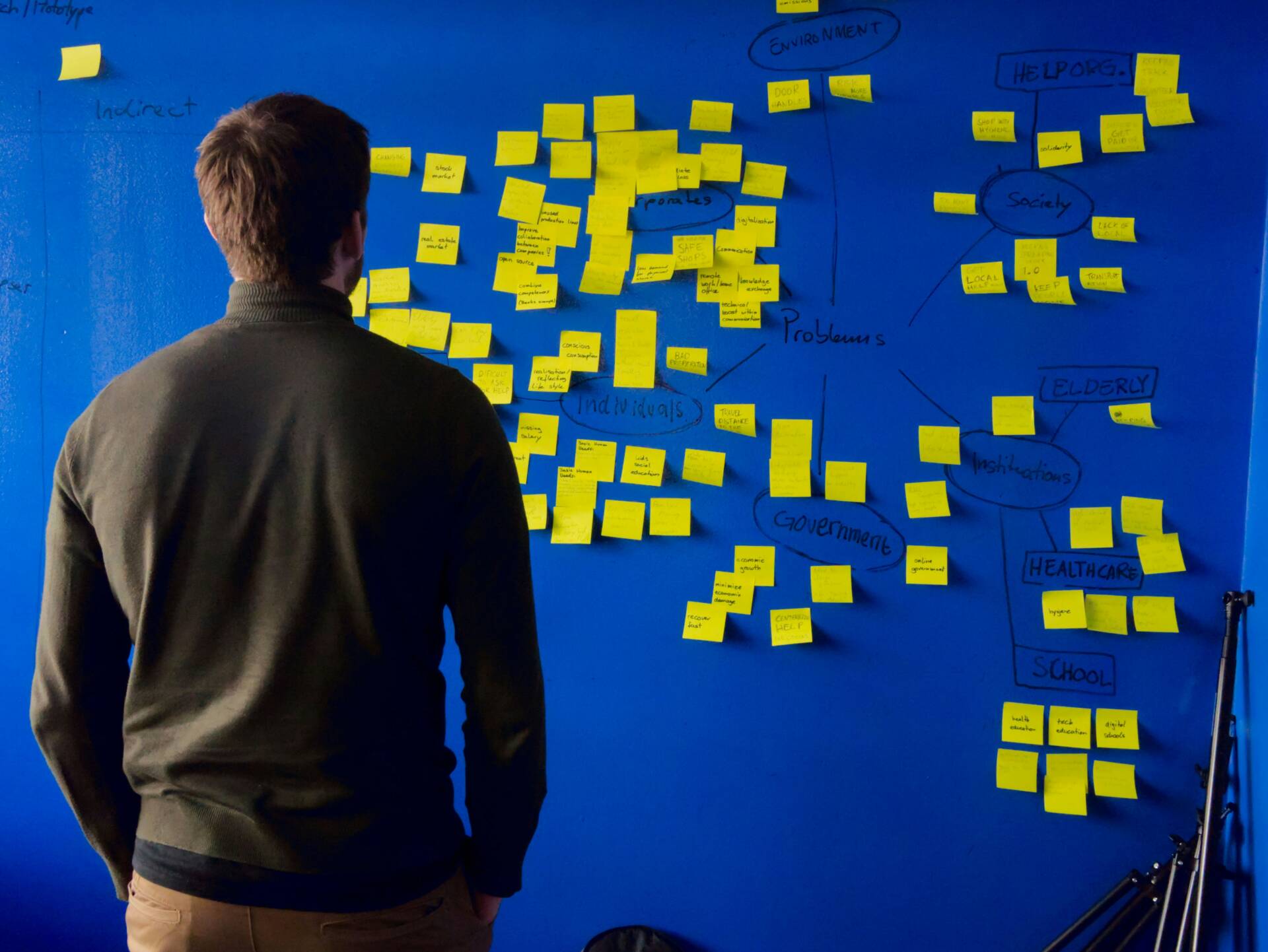
A brainstorming man looks at a wall covered with notes and ideas
Brainstorming Ideas. Photo Credit: Per Lööv

As someone in the social sciences and humanities, I had a broad idea of what I was interested in when going into my independent research. But once it came time to propose a specific topic, I was overwhelmed by how many possibilities there were. I was drawing on a massive archive of documents that dated back to the 1890s, so trying to decide on just one moment or figure to focus on made me feel like I was leaving a lot of important stories out. The best research projects are the ones that you’re genuinely excited about, but what do you do when you’re excited by a lot of different topics? Here are five tips that have helped me narrow down a broad research interest to a specific research topic.

Categories
Conduct Research Research Life

Research, Friends, Mountains, and Everything in Between

Neuschwanstein Castle
The view of the Neuschwanstein Castle on the way back from a 5-hour hike.

When I boarded my flight to Munich this summer, I thought I knew exactly what awaited me: labs buzzing with experiments and discoveries, even a big “Aha!” moment that would shape my research career. After spending over a month home in Thailand, beach hopping and exploring the underwater world with my scuba diving gear, I was ready to slip back into my academic shoes and make the most out of my time in a new country.

What I found was… not quite what I expected.

While I had overestimated how sparkly the research world would be, I didn’t even come close to imagining how many lessons I would learn or how many memories I would make.

Categories
Conduct Research

The Art of Bouncing Back

Spring is a bit of a bittersweet time for me every year. When the sun comes out, so does any brain cell willing to do work. Summer is right around the corner, and things just seem to drag–even in the quick Princeton semesters. However, that ‘summer right around the corner’ thought is not always an exciting one. With summer comes the prospect of internships, and perhaps more pressing: the lack of thereof. In a previous post, I discussed tips for applying to internships, but by now, you may have already heard back. If you have heard back and the email made your heart sink to your stomach, this post is for you. I’m here to remind you that internship rejections are not the end of the world. 

Categories
Conduct Research Get Started with Research Research Life

The Beauty of Mentorship

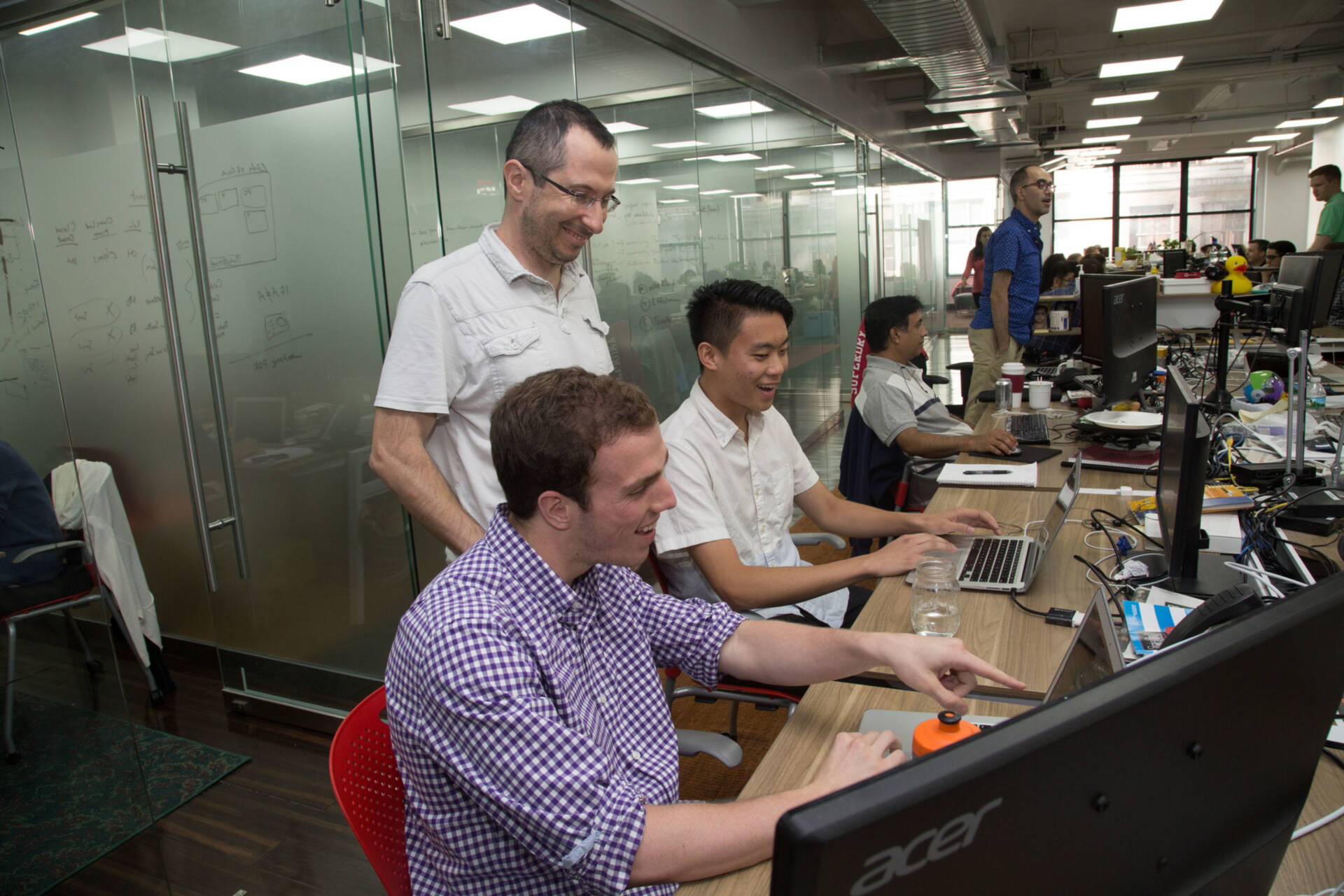
the purpose is to represent the main idea of the post: mentorship
A mentor guiding two students on a startup project. Photo Credit: Danielle Alio.

I think mentorship can be highly overlooked in the undergraduate community. This is mostly because we feel that professors and Ph.D. students can be so far in their own fields, and so we’re just intruding in on their time. They’re so impressive that it is almost intimidating. However, in hindsight, you start to realize how important their mentorship becomes in your life. I think a lot of undergraduates value mentorship in the sense that they’re being given an opportunity in the current moment to do research or work on a project. This is the perspective I had on mentorship when I entered research. Luckily, for me, mentorship turned out to be so much more; it’s the gift that keeps on giving. 

Categories
Conduct Research Get Started with Research

Cracking Cold Emails: Reaching Out to Professors in a Way that Works

Screenshot of the Princeton Computational Memory Lab that shows the main faculty, staff, and post-docs in the group.
“People” page of Princeton Computational Memory Lab

Cold-emailing a professor can feel like yelling into the void. You’ve pinpointed your field of interest, done the research on the lab and professor you want to work with, and yet—there’s so much uncertainty. You don’t know what the response will be, or if you’ll even get one at all. You don’t know if the void will yell back, or if your voice will simply disappear.

But that doesn’t mean you can’t maximize your chances. After crafting and sending a few emails, I started to see what actually makes a difference—and it’s not just about hitting “send.”

Categories
Conduct Research Independent Work Research Life

Paying it Forward: A Faculty Perspective on Mentorship in Research

Headshot of David Walker
David Walker is a Professor of Computer Science at Princeton University whose research focuses on programming languages, formal methods, and computer systems. Known for his commitment to advancing both theoretical and practical understanding in the field, Professor Walker also plays a central role in mentoring students.

As someone who completed my junior independent work under Professor Walker’s guidance last semester, I’ve had the chance to witness his thoughtful mentorship firsthand. In a research culture where both the technical challenge and emotional uncertainty can feel overwhelming, I’ve come to appreciate how crucial the human side of research is—how we learn from and grow with those who guide us. With that in mind, I sat down with Professor Walker to explore how he thinks about mentorship: what it looks like, why it matters, and how he helps students, like me, find their footing in the world of research.

Categories
Conduct Research

Now & Next: Illuminating Solar Innovations with Barry Rand

Barry Rand Headshot
Professor Barry Rand stands at the frontier of sustainable electronics and energy solutions as a Professor of Electrical and Computer Engineering and the Andlinger Center for Energy and the Environment at Princeton University. His work in thin-film electronics and photovoltaic materials offers promising paths toward greener technologies, with real potential to reshape how we power our world.

As a student in his ENE 431: Solar Energy Conversion course, I’ve had the privilege of learning from Professor Rand this semester. This course has challenged how I think about energy and prompted me to look more closely at the systems that power the world. What stood out to me wasn’t just the technology, but the sense of possibility it held. I found myself thinking more seriously about what the future of energy could look like, and who’s shaping it. That curiosity led me to interview Professor Rand for Now & Next, where we discuss his research in thin-film electronics and where he sees the field heading.