
Writing a Junior Paper (or two, depending on your major) can be a stressful process. But it does not have to be that way. Below are some strategies to help you minimize JP-induced stress and streamline your research process.
 Princeton Correspondents on Undergraduate Research
Writing a Junior Paper (or two, depending on your major) can be a stressful process. But it does not have to be that way. Below are some strategies to help you minimize JP-induced stress and streamline your research process.

You’ve brainstormed a great idea for your research project. You have the details of your topic all figured out, but you need some assistance with figuring out the logistics of the financial aspects that come with your great idea.
If that’s you, here’s a quick guide on one way of securing funding as a Princeton student!

“What’s your priority this semester?” my friend asked after our first meal together post-summer break. My instinct was to say classes, internships, research—after all, we’re at school, preparing for life after college. The pressure to secure a job or get accepted into graduate school looms large. What could be more important than staying focused on the future? But none of those answers felt right. I paused for a moment before saying, “being happy.”

At Princeton, I’ve formed close friendships with students across all years and departments, witnessing their challenges, hard work, and achievements, from difficult courses to their independent work and senior theses. When my friends often name-drop courses from their departments and share exciting insights from their day, I realize I haven’t taken many of those classes myself. This realization sparked a desire to generate deeper conversations about their academic interests, even if I don’t fully grasp all the technical details and concepts of their field.
One of these conversations was with Jeremy Kiil ‘24 about his experience in ‘Car Lab’ (formally, ECE 302: Robotics and Autonomous Systems Lab), a required course for all ECE juniors. To my surprise, our conversation wasn’t focused on the nitty-gritty details about hardware components. Instead, Jeremy shared insights applicable to all students. I found his advice on making consistent progress, staying resilient, and taking care of oneself as wonderful reminders for everyone. Inspired by our conversation, I wanted to document and share it with a broader audience.

A few weeks ago, while I was volunteering with the Trenton Youth Orchestra, a student asked me, “Do you think you have a lot of discipline?” I honestly didn’t know how to respond. Discipline hasn’t been something I’ve spent time thinking about as a college student. While the concept of discipline had been hammered into my brain by soccer coaches and band directors before college, I found myself thinking about what discipline really means here.

Many students at Princeton spend their summers exploring a research project or a lab internship in their field of interest. But what’s next? Maybe you really enjoyed your experience and wanted to continue. Then, you come across the question: should I stay in the same lab or join a different lab?
This was the question I pondered when entering my sophomore year. I had an incredible summer experience as an High Meadows Environmental Institute intern in the Sigman Research Laboratory in the summer of 2023. I worked on a project that enabled my exploration of biogeochemical reconstruction via an investigation of the marine environment during a historical mass extinction through the use of a biological proxy known as foraminifera. But, where did I want to go from there? If you’re in a similar position, here are some things to keep in mind!

“So what does this data mean?” My professor asked, looking at me expectantly. What does the data mean? “What does this data tell you about the cancer cells?” If he thought rephrasing it made it any better, it didn’t. I am not quite sure what I said to save face (and frankly, I really do not want to remember), but I must have said something because my professor just nodded. “When you look at your data, I want you to create a story. It may be a mystery, but then you’d be providing a certain set of clues.”
It is very easy to get caught up in generating data, especially if the data is particularly tricky and you’re concerned about making sure it looks right, generating the right graphs, having the right axes, numbers and titles. It can be a headache. By the time the graphs are done, I would rather not look at it anymore or think too hard about the numbers. However, as lab reports and analysis questions stack up for our classes, it becomes prudent to know how to analyze these graphs. While I am not a seasoned veteran, I have a few tips that helped me approach these types of situations.

As Princeton students in 2024, we’ve all heard other students throwing around the terms “connections” and “networking.” Although I myself was eager to take advantage of Princeton’s vast resources, I didn’t quite know where to start, or how to start. To those of you who are facing a similar dilemma, let me introduce you to an incredible, vastly underutilized resource: our alumni network.

In a world where instant responses to messages are possible, it can be especially frustrating when, after several days, you’re still waiting for a response on a time-sensitive issue. Many of us have experienced this before: asking an adviser a question, checking with a teammate if they’ve completed their tasks, and so on. Yet even with conventional wisdom on how to receive a response (crafting a compelling subject line, personalizing a message, or keeping an email short and sweet), responses can be elusive.
The truth is, the people we work with as students, researchers, or employees often have busy schedules. They may have several responsibilities vying for their attention, and sometimes an email just falls lower on their list of priorities. We want to resolve our questions and continue making progress as quickly as possible, yet help does not always come that quickly. In this article, I share key tips I’ve learned through discussions with my managers, colleagues, and advisers over the course of my time as a student and working in industry.
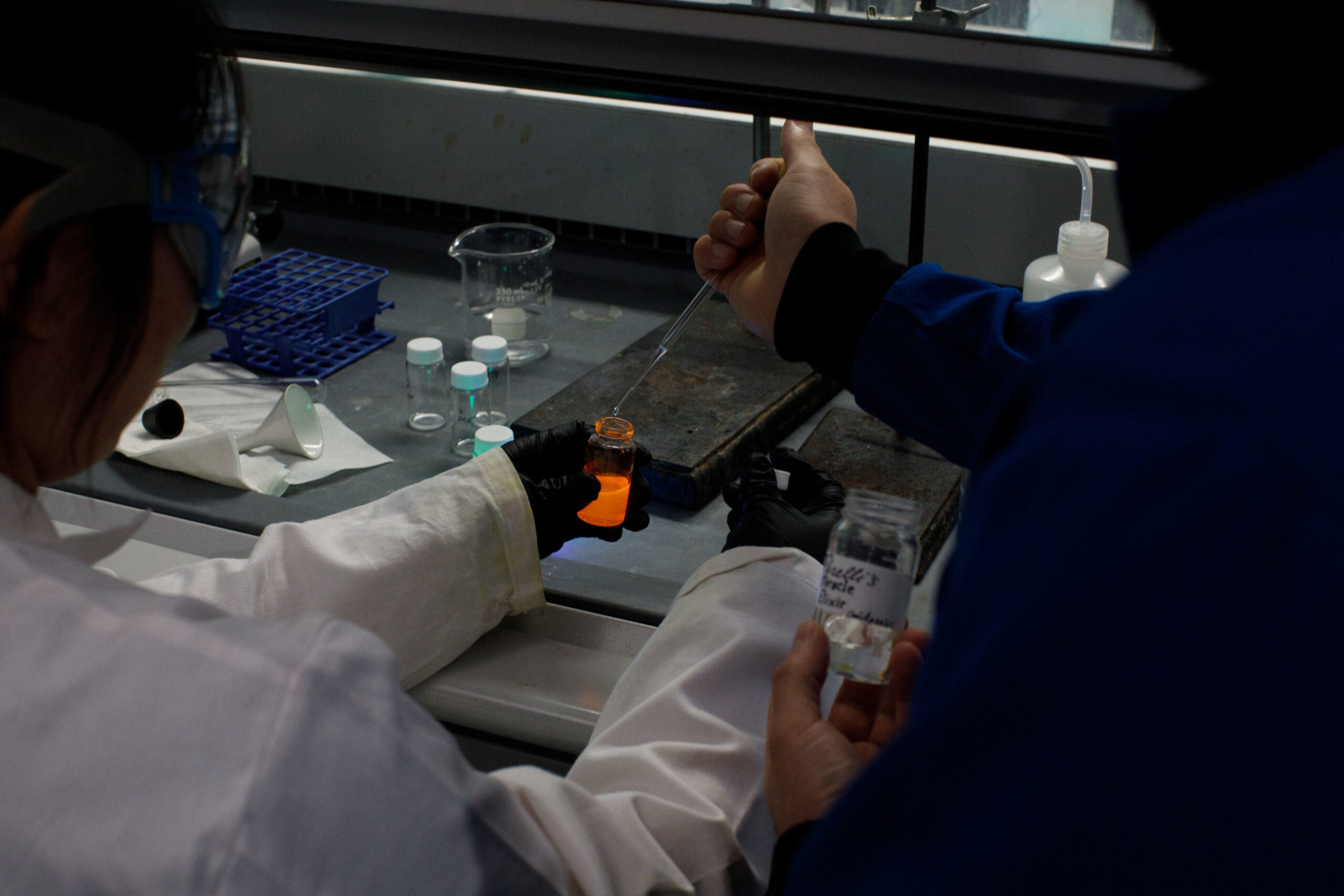
When I first walked into the lab this summer, I thought research was all about running experiments and gathering data. What I didn’t expect was how much the people around me—the mentorship and the shared triumphs and failures—would shape so much of my learning and how I view scientific research.
Starting a research position at a bioengineering lab over the summer was really intimidating for me, especially as an undergraduate. At the start, I felt like the most inexperienced person in a room full of graduate students, postdocs, and faculty who seem to have it all figured out. Although I’ve learned or at least seen a lot of the quantitative and qualitative components in my Chemical and Biological Engineering course, I did not have much hands-on experience and critical thinking that comes with actually doing experiments. That’s when I realized how big of a role a mentor plays.