Categories
Conduct Research Present & Publish Findings Research Life

Finishing Strong: Dean’s Date Traditions and Reading Period Excitement

Photo taken by Whitman College Council; depicts two young individuals smiling at the camera holding the showbill for Harry Potter
Keep an eye on your inbox for once-in-a-lifetime events that you can enjoy during Reading Period, like Whitman College Broadway trips!

Can you believe it is almost time for finals? Our fall semester is coming to a close and it feels surreal. It is true that finals season, reading period, and Dean’s Date can be stressful. Furthermore, if you are a first year, it may not be obvious how the whole system works. In sum, our last day of class is December 8th. Then, reading period, a week without classes used to study for finals and prepare for Dean’s Date, begins on the 9th and ends on the 16th. The 16th is the infamous ~Dean’s Date~ or a fancy term we use to describe the day in which many of our written assignments and final projects are due. Finally, we go out like legends and finish our finals from the 17th to the 23rd. You can check the date of your finals on the University Registrar and reach out to your Academic Dean about rescheduling them if you have multiple finals on one day. The next few weeks may seem like a gloomy time on campus, but I want to use this post to share some moments of excitement and sneaky Princeton traditions that you can look forward to.

Categories
Conduct Research Research Life

Choosing Classes that Align with Your Research Interests

With spring course selection coming up very soon, it can be intimidating to try and pick your classes from the massive selection advertised on the Course Offerings website. Maybe you have a few ideas about the type of classes you’d like to take, but creating a balanced schedule while also making sure you’re on track to fulfill your requirements can be a big undertaking. I also want to encourage you to keep one more element in mind when it comes to picking classes: potential research opportunities. The final paper you write in your favorite class next semester is not only your next great writing sample, but could be the beginning of your next big research project. Better yet, forming a relationship with your favorite professors is a great way to open doors to research opportunities. But if you’re looking to try something slightly out of your comfort zone, where should you start when looking at new courses? Here are a few of my tips.

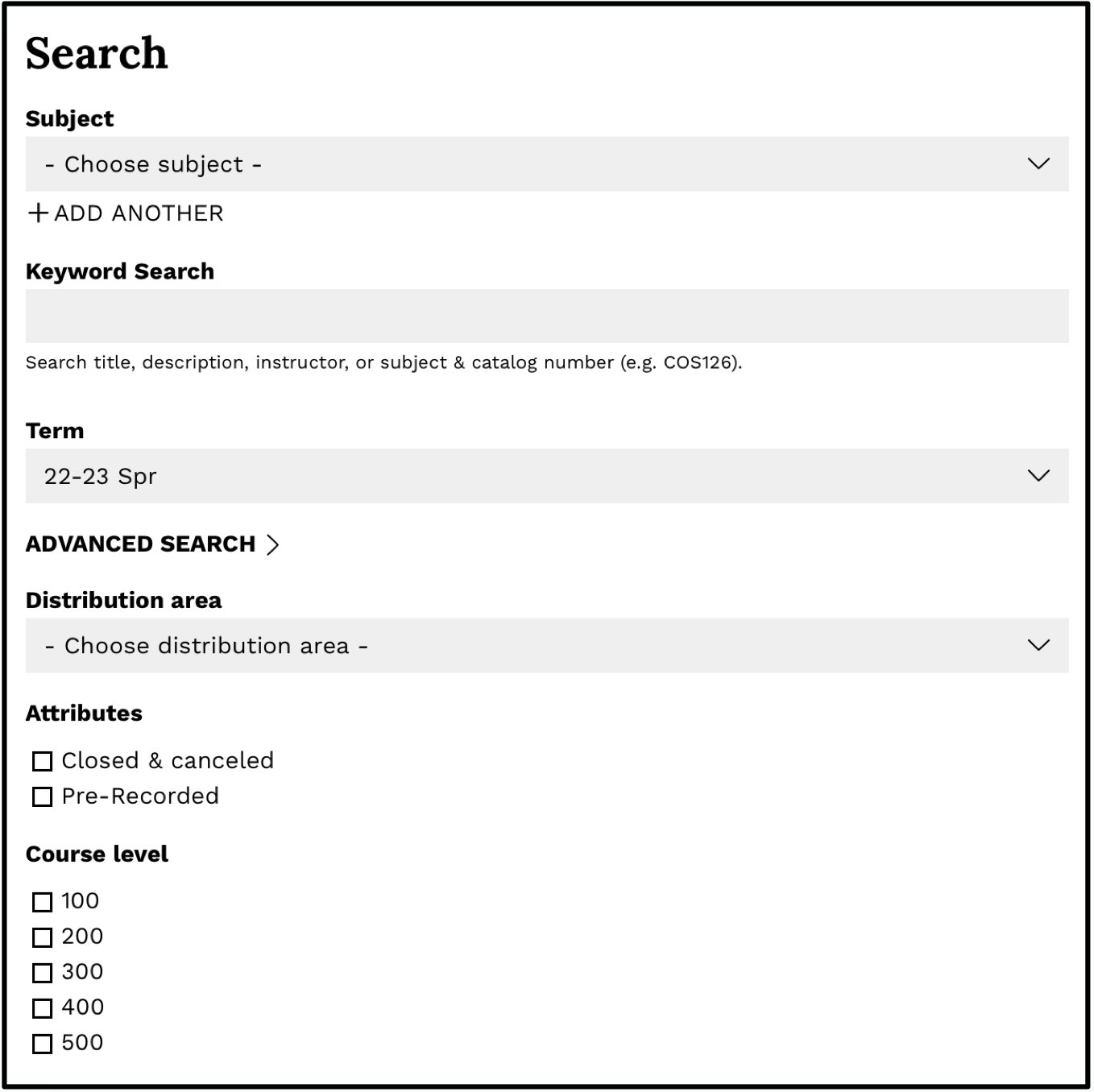
a screenshot of the search tools on the course offerings website
When browsing for courses, be sure to look at the Advanced Search options!
Categories
Conduct Research

Need Resources For Your Next Paper? Visit the Seeley G. Mudd Manuscript Library!

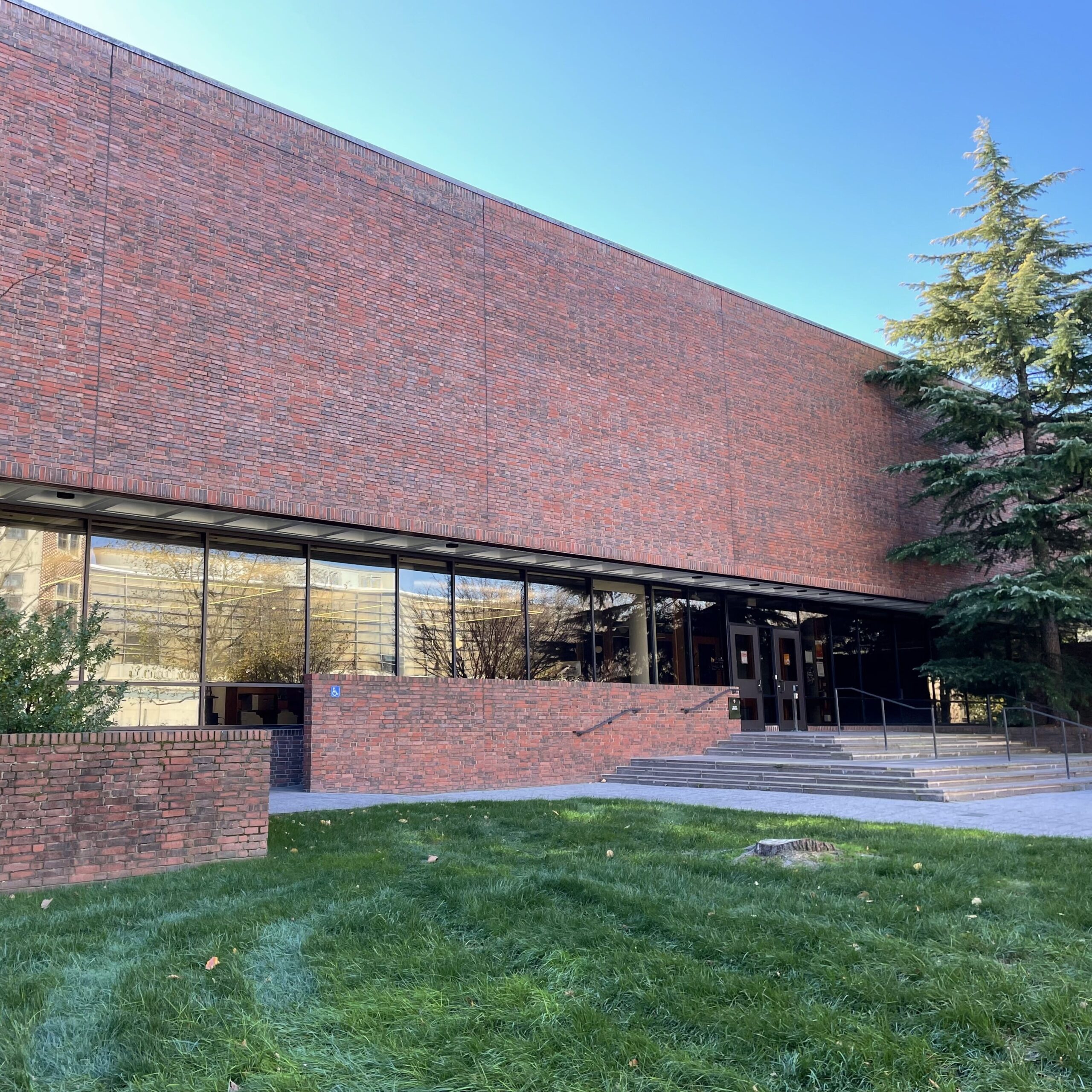
Seeley G. Mudd Manuscript Library

Seeley G. Mudd Manuscript Library

In this post, I share my experience of requesting resources from Princeton’s Seeley G. Mudd Manuscript Library for a research paper in ART102/ARC102: An Introduction to the History of Architecture. I took the Spring 2022 iteration of the course, taught by Professor Basile Baudez and Professor Samuel Holzman. The course provided an overview of architectural history from ancient Egypt to the modern-day through key monuments and architectural movements.

One of my favorite parts of ART102 was our semester-long research project. Students have the opportunity to delve deeper into the history of any building in the Princeton community. My peers covered a wide range of buildings, including Firestone Library, the Graduate College, and the University Chapel. Inspired by my involvement with the Princeton University Art Museum as a student tour guide, I chose to research Bainbridge House (now repurposed as Art@Bainbridge, one of the Museum’s gallery spaces on Nassau Street).

Categories
Conduct Research Present & Publish Findings

Publications, Conferences, and Professional Development: Motivations for Your R3

Research Correspondent, Amaya Dressler ’25, presenting her Writing Seminar R3 research at the Mary George Research Conference.

Writing sem. For many, it’s one of the most challenging courses they’ll ever take at Princeton. It forces you to think in new and challenging ways, often questioning some of the ‘basic rules’ we’d previously been taught about writing. With late nights spent drafting and redrafting, 8:30 am classes, and daunting essay prompts, it’s easy to understand how writing sem (short for writing seminar) gets its reputation. No student makes it out of writing sem with three perfect papers. Yet, in the midst of challenge, it’s easy to lose sight of the many professional opportunities that writing sem can offer. Whether you’re looking to get published, nail your next job interview, or just make a little extra cash, here are four ways that any student can make the most of their writing sem experience.

Categories
Conduct Research Plan Beyond Graduation Present & Publish Findings Research Life

Princeton from a Student’s Perspective: The Most Legendary Courses at Princeton University

Set of four images depicting Princeton students. Top left: two Princeton students decked out in Princeton gear, standing back to back and smiling at the camera. Top right: Four Princeton students wearing pink jackets and dotted scarves smile at camera. Bottom Left: Two students sit on the green, one holding flowers the other holding a small bunny figurine. Bottom right: Three Princeton students smile at camera in front of a Princeton flag

Thank you to the best friends in the world for sending in their favorite courses!

“Does anyone know a good English class?” “I need to fulfill my history requirement.” “I am looking for a chill, creative P/D/F course.” Everyone is searching for the best schedule possible and I know that many of you are open for suggestions. In my last post, I wrote about my favorite courses at Princeton as a SPIA major interested in law and service (see post here). But, I understand that every Princeton student is unique, so I have spoken with classmates and friends within other majors to better understand the full Princeton experience. Thus, without further ado, here are the most unforgettable courses that they have taken at Princeton.

Categories
Conduct Research Research Life Resources

The Creation of TigerResearch: An Interview with Vivek Kolli ’24

Photo of Vivek Kolli '24

Vivek Kolli ’24 is Vice Chair of the Julis-Rabinowitz Center for Public Policy and Director of Marketing and Outreach for Scholars of Finance.

A few weeks ago, I interviewed Vivek Kolli ‘24, a junior in the Operations Research and Financial Engineering (ORFE) department. Vivek is one of the three developers for TigerResearch, a comprehensive platform that allows for students to easily navigate through their database of Princeton professors and their research areas. In our interview*, we discuss his vision for the platform, the importance of entrepreneurial ideas in driving the research process, and advice for students who would like to get involved with research at Princeton.

Categories
Conduct Research Present & Publish Findings Research Life

Tips for Talking About Your Research

Sharing the discoveries you’ve made is not just extremely rewarding, but a necessary part of the research process because it ensures your findings can be put to use. Writing about your research is a tough obstacle to tackle in and of itself, but what I want to focus on today is the arguably more intimidating half of sharing your research: speaking about it. Both formats require demonstrating your command of the subject while also being engaging. Unlike writing about your research, where you generally have a well-defined goal from the get-go, you will find yourself speaking about your research in an enormous range of contexts. Here are three of my tips for talking about your research, whether summarizing your findings for your grandma or giving a formal presentation to a group of experts.

A woman giving a presentation
A presentation given in Princeton’s beautiful J-Street Library.
Categories
Conduct Research Independent Work Research Life

From Politics to Neuroscience: 5 Princeton Courses I’ll Never Forget

Photograph of Nassau Hall at night. Blueish-Green light is cast over the center of the building. The brick pathway leading up is wet and covered in fall leaves.
Rainy fall leaves will turn to snowy flakes before you know it; it’s never too early to plan some future courses!

“I have to wake up at 6:23 AM for course enrollment?!” Yes. You do. But you got this! It’s true that course enrollment is still a month away, but it is never too early to start drafting your schedule to avoid this “oh no” early-bird moment. Generally, I recommend taking courses that excite you, even if they are outside of your major, because before you know it you’ll be an old senior like me wishing you had time to take more. Everyone has a different taste in classes. I am a SPIA major who is passionate about service, social justice, and law, but I have tried to take unique and expansive research-based classes. Thus, without further ado, here are 5 of my most memorable classes at Princeton, in no particular order, and why they might be of interest to you:

Categories
Conduct Research Get Started with Research

Missed the First ReMatch Dinners? I Got You Covered

Photo of ReMatch table at the Carl A. Fields Center Multipurpose Room. Mentors and mentees are standing around a tall bistro table covered in an orange tablecloth.
Great conversations were happening at the Computer Science and Quantum Studies table at the October 13th ReMatch Meet and Greet

Princeton gives its farthest walks to its strongest academic weapons. Still, sometimes schlepping all the way to the Carl A. Fields (CAF) Center is just a bit too much. If you felt like this around 6:00pm on Tuesday October 4th or Thursday, October 13th, you just may have missed the first ReMatch dinner. No worries! I am here to fill you in on what you missed and hopefully convince you that the next one is worth the walk. First things first, ReMatch (developed and led by the Office of Undergraduate Research and the Graduate School) is a program that helps match first- and second-year undergraduates interested in research with graduate student and postdoc researcher mentors. Mentor and mentee pairs that develop potentially embark on a summer of research in Princeton fully funded by the university. At the dinners, students can eat catered food, mingle, and chat with researchers at tables. 

Categories
Conduct Research

A Budding Field: Finding Opportunities in Psychedelic Research

The logo for the Princeton Science of Psychedelics Club. A large three-dimensional ring with blue radiating ovals.
The logo for Princeton’s Science of Psychedelics Club (PSPC), a student-lead organization seeking to educate students about psychedelics, discuss current trends in psychedelic research, and provide opportunities to other students interested in pursuing psychedelic research. If interested in joining, contact PSPC@princeton.edu or President Camilla Strauss ’23 for more information.

One goal for any budding researcher is to see their work have a tangible public impact. But, with endless hours spent in a lab or hunched over a computer, there are times where research can feel abstract or removed from reality. Neuroscience, in particular, faces this stereotype. True, many (including myself) believe that neuroscience holds the key to understanding our conscience and, by extension, our modern predicament. But the question remains: where can an aspiring neuroscientist find the life-altering research they seek?

Ironically, the answer might just lie in reality-altering substances. From neuroscience to public policy, psychedelics is a budding topic across many different fields of research. While Princeton itself is yet to enter the field, the Princeton Science of Psychedelics Club (PSPC) serves as the hub for all students interested in this emerging field. I sat down with PSPC and senior Neuroscience Major President Camilla Strauss to talk about how students interested in psychedelics research could learn more.