Working ahead prior to a break is another way to maximize your “off time” and enjoy a respite from the demands of academic life.
As we are all undoubtedly aware, another break is coming up. Thanksgiving break, actually! Excitement is in the air as cherished plans for relaxation and the celebration of gratitude inch ever closer. Whether you’re going home or sticking around campus, I’m sure you’re looking forward to this break as much as I am.
There’s just one problem: right on the other side of this break are the final three weeks of the fall semester. And if your course schedule is anything like mine, those will be three rather busy weeks! So, with break coming up and the final pre-winter break sprint right behind it, this is a perfect time for you, me, and everyone in between to come up with a game plan for what’s ahead.
Many first years who come to Princeton are interested in doing research, but are too intimidated to pursue it when they arrive on campus. Conducting research in a laboratory can seem like something only juniors and seniors do as part of their independent work. But there are definitely ways to get involved in research earlier as a first year or sophomore. This week, I decided to interview my friend, Janie Kim ‘21, about her experience working in a natural sciences lab as a sophomore, to help shed some light on the process of joining a lab early.
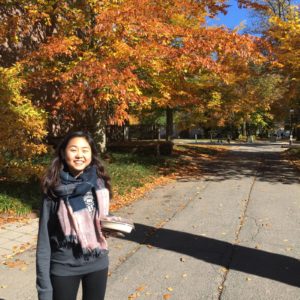
Janie Kim ’21 does research in the Donia Lab.
Here’s a little bit about Janie first
Janie Kim is a sophomore at Princeton University who will be majoring in molecular biology. She is doing research on small molecules secreted by marine bacteria in the Donia Lab. On campus, she is also involved in the CONTACT Crisis Hotline, Princeton Public Health Review, and the Arch & Arrow Literature Magazine. She loves sculpting and adores sci-fi unashamedly.
The registrar for spring courses came out not too long ago. It’s time to start thinking about course selection!
Each semester, Princeton offers over 1,000 courses, taught in over 100 departments and programs, over a range of 8 distributions by professors who have served as Presidents, been awarded Nobel Prizes, made groundbreaking discoveries in their fields, and received Pulitzer Prizes. At Princeton, each course is not just a series of lessons; courses are opportunities–opportunities to travel, to get to know professors, to learn methods for independent work, to explore your interests.
With so much available each semester, how does one pick just 4 or 5 courses to take?
Here is a guide to Princeton’s (many) resources for selecting courses. Included are reviews of different online applications for course searching and scheduling and a few general tips of advice.
Last semester, I hurried out of MOL lab every week to make it to late meal. This past summer, I hurried out of lab at my summer internship to catch my train home. Now I hurry out of orgo lab to finish my reading for precept.
Whether you are working in a lab for your senior thesis or for an intro science class, every period is a race with yourself to complete your work promptly. The key to finishing early is not rushing through your procedure, but rather working efficiently in the lab.
This summer, I worked at a bioengineering lab on campus researching methods to engineer the metabolic pathways of yeast cells to produce large quantities of target biofuels. Normally, yeast cells produce ethanol during fermentation. My goal was to shift the production of ethanol to other biofuels- such as isobutanol- that have a greater potential to be alternative sources of energy. In this post, I will give tips on how to effectively use your lab time by describing a typical day in the lab at my summer internship.
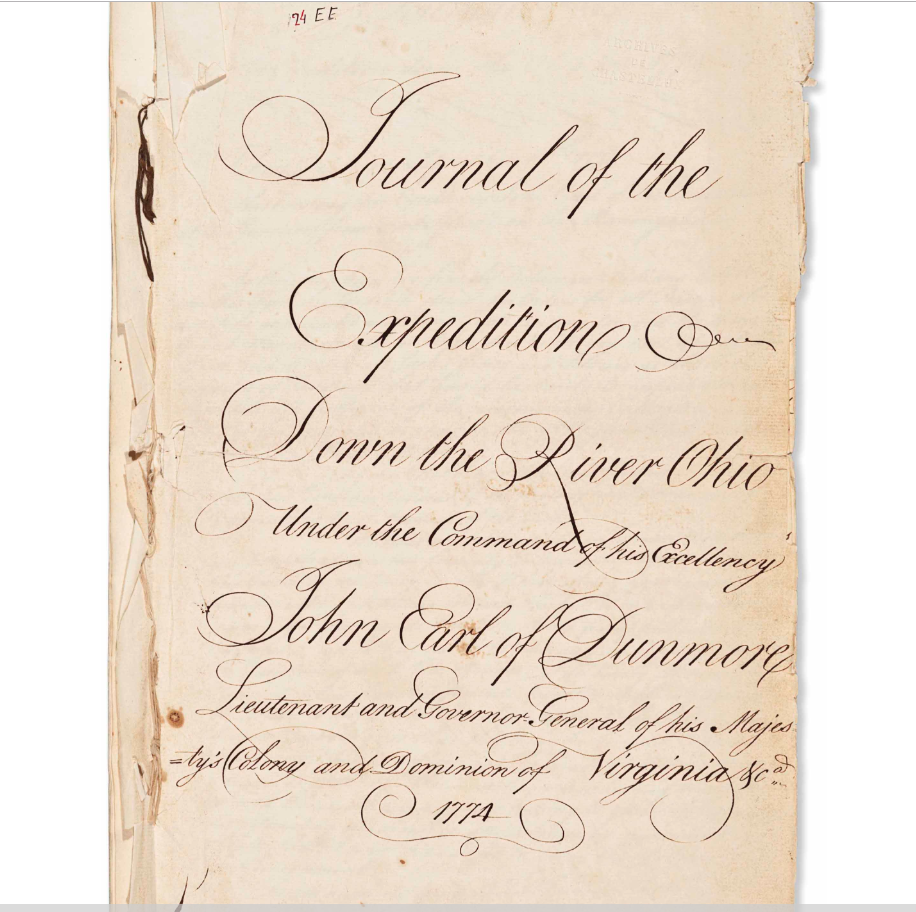
On Friday morning, I encountered a manuscript no historian had studied before. I was on the C Floor of Firestone in the Rare Books and Special Collections Reading Room, finding it hard to believe my luck. I had asked Gabriel Swift, the Reference Librarian for Special Collections, if he knew of any interesting primary sources connected to my Junior Paper topic, an 1805 Lenape religious revival led by a woman named Beate. In response, he connected me with this new acquisition, a handwritten journal from 1774. Just this year, he explained, the University had purchased it at auction in Paris. And because it was from a private collection, the source was previously unknown to academics.
“‘Journal of the Expedition down the River Ohio Under the Command of his Excellency John Earl of Dunmore Lieutenant and Governor General of his Majesty’s Colony and Dominion of Virginia 1774.”
According to the RBSC website, “its holdings span five millennia and five continents, and include around 300,000 rare or significant printed works.”
With just a few simple steps, you can see one of the first “Wanted” posters for John Wilkes Booth, Beethoven’s music manuscripts, or Woodrow Wilson’s love letters. It is one of the most fabulous and underutilized research resources on campus – especially for historians. As undergraduates, we have nearly complete access to the collections.
At Princeton I often find myself overwhelmed by my workload, behind on assignments and readings, and struggling to prepare for exams. When work piles up, it is necessary to work as efficiently as possible to meet deadlines, but it can be really challenging to work productively when you are feeling overworked. Princeton’s heavy workloads are often a source of stress–here are a few strategies that help me when I am struggling:
Conducting good research requires many skills which we learn throughout our Princeton careers. Self care is one of the most important skills, but it is easy to overlook with so many other academic demands.
Go outside and exercise:
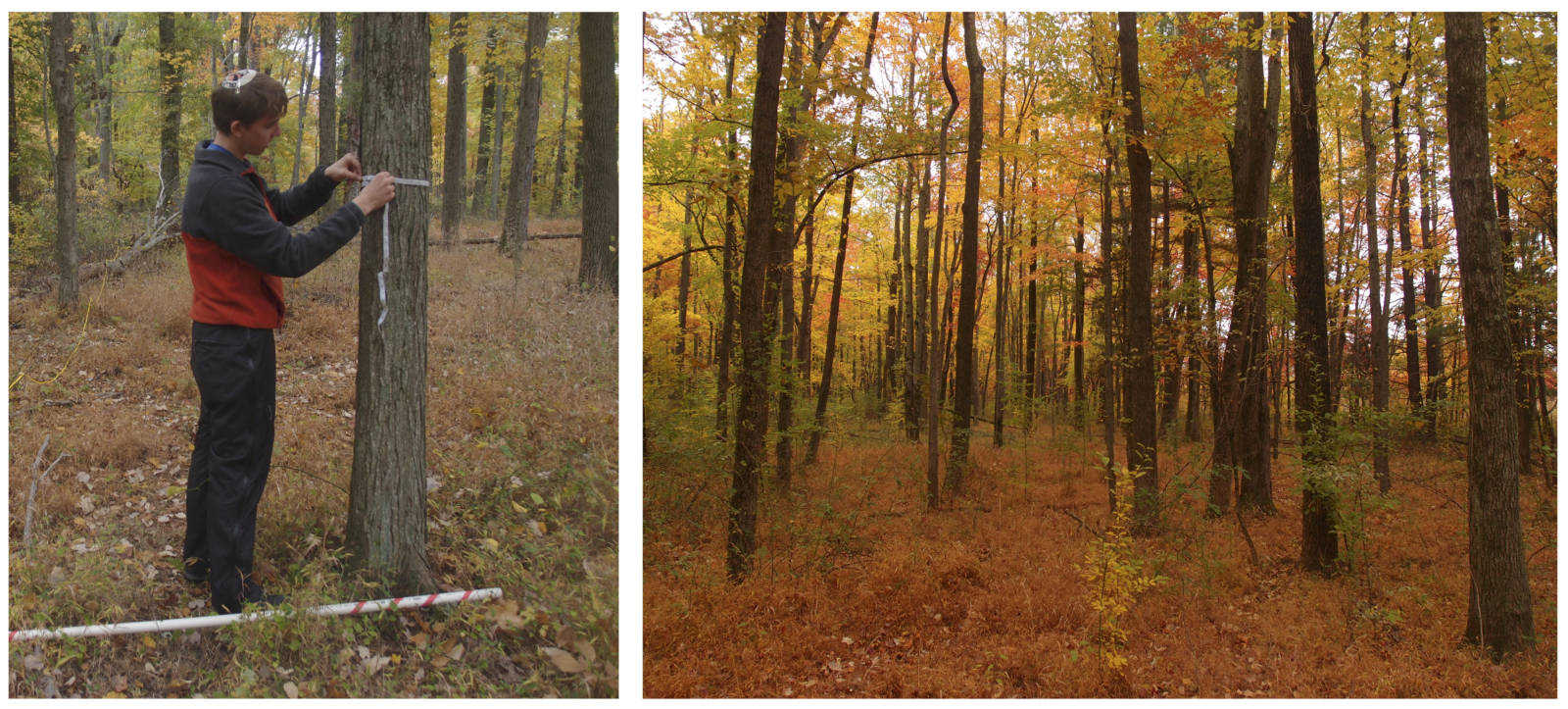
If you can’t concentrate on your work or feel low energy, taking a half hour break from working to go for a walk or a jog can help clear your head while also jump-starting your blood flow. Being outside gets me back in contact with the rest of the world and helps me escape coursework induced myopia. I like to go to Mountain Lakes nature preserve, which has a small network of hiking trails and a few picturesque ponds. The ponds are great for a (very) cold swim, and the forest has beautiful foliage in the fall.
I first visited Mountain Lakes preserve my freshman fall, while doing a field project in EEB 321 Ecology: Species interactions, biodiversity, and society. Now it is my go-to place to get off campus, go for a run or a swim, and check out beautiful fall foliage.
If you read my previous post, you’ll remember that I recently went through the process of picking my JP topic. If you’re reading this post, you’ll see that I’m going through this process for a second time after realizing my first topic wasn’t going to work out–my professor told me my topic was too general and not empirical enough. Hearing this was a shock, because I had spent so much time developing my first topic that my enthusiasm and excitement made me blind to the paper’s flaws. However, hearing this negative feedback made me realize I had to take a step back and look at my paper with fresh eyes.
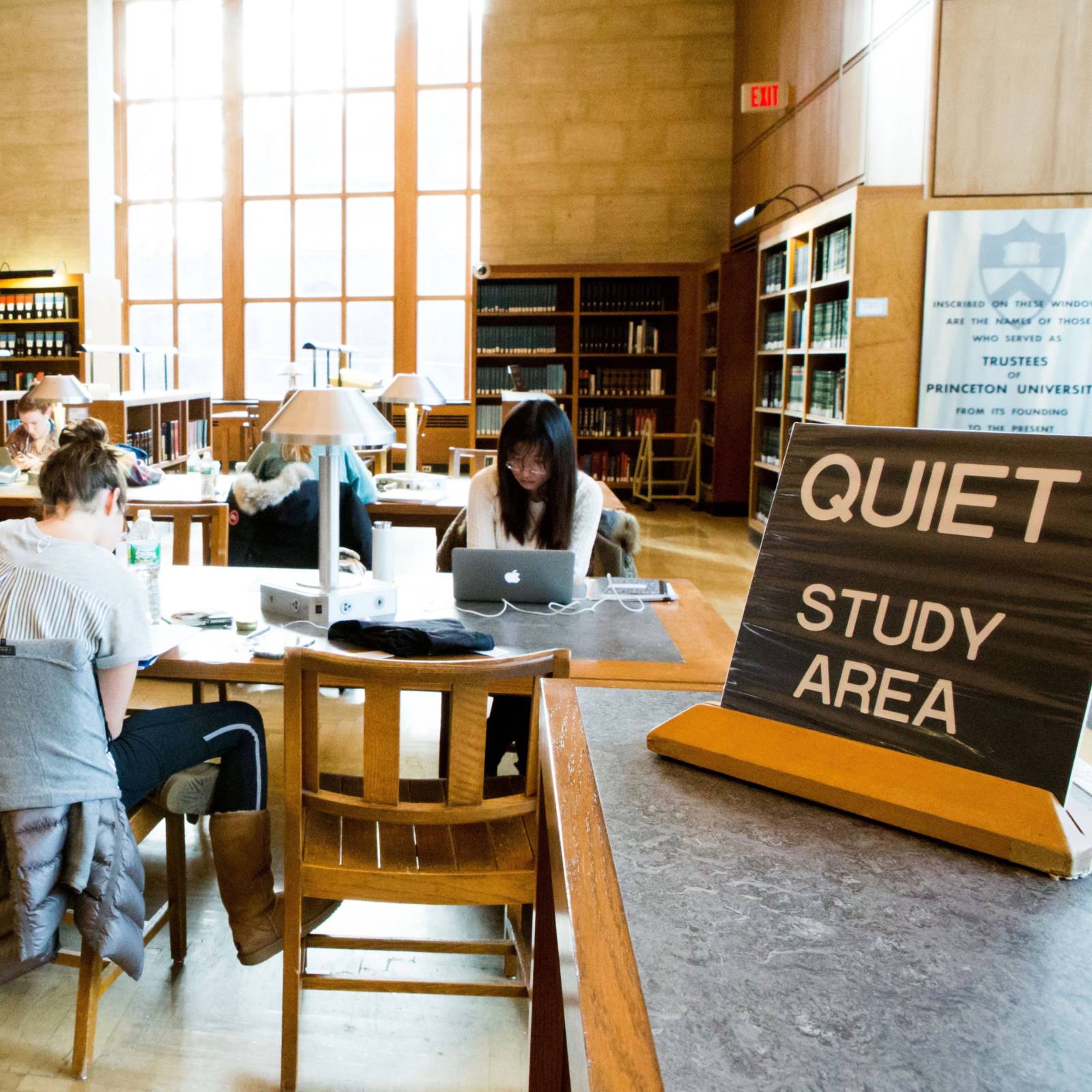
Identifying a suitable study location is one important aspect of getting ready for midterms week.
It’s hard to believe, but Fall 2018 midterms are coming up. Perhaps your professors have begun to talk about past exams or paper topics. Or maybe you’re just looking at some ominous exam dates on the syllabus, poised like a roadblock between you and the glorious week of Fall Break. Friends, I’m here to tell you that it’s going to be alright. Whether these are your first fall midterms or your last (!), this post will share some surefire strategies that you can use to get yourself ready for the first major round of testing of the academic year. While I will share some specific study strategies, I’ll mainly focus on steps you can take to get yourself ready to study. That way, when the studying actually begins, you’ll have greater peace of mind knowing that you have an overall plan for the week.
Have you ever wanted to learn how to use Photoshop? How to write code in multiple programming languages? How to use Excel? InDesign? Adobe Illustrator?
My new favorite online resource.
This semester, as part of my Urban Studies Certificate, I’m taking ARC 205, an interdisciplinary architectural design studio. Like most studio classes, we meet for six hours a week to develop our drawing, design, and analysis skills. Each week our instructors present us with a new drawing assignment designed to improve our architectural analysis skills. Pretty much everything we’re learning in this class is totally new to me. I’ve never really drawn – aside from doodles on my notes – and most of our assignments are far outside of my comfort zone. There hasn’t yet been a week when I’ve felt confident about my work, but in the past week, I’ve discovered a resource that might change that.
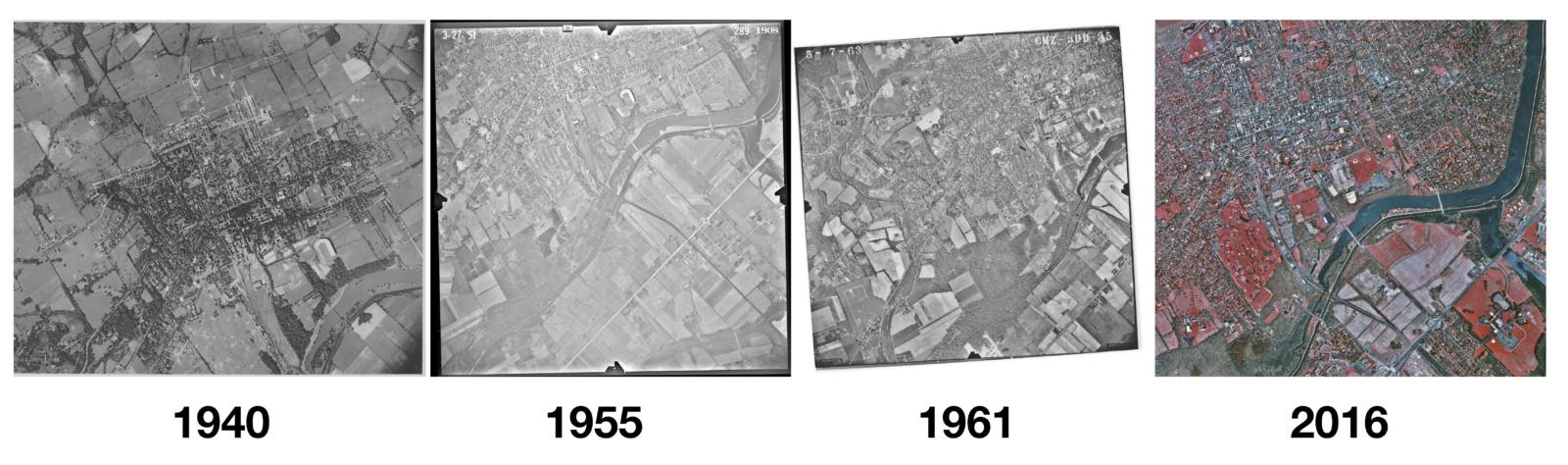
Last year, Princeton announced a plan to expand the University by 2026, adding another residential college and building new athletic facilities on the south side of Lake Carnegie. In what ways will this latest expansion transform our campus, and how does that change fit with the university’s historic land use? These are the questions that my twin brother, GEO senior Benjy Getraer, set out to answer last year in a class project for GEO 90 “Analyzing Ecological Integrity: An Assessment of Princeton’s Natural Areas.”
To address these types of large-scale research objectives or answer smaller questions such as Benjy’s, you can use Geographic Information System (GIS) software to display, edit, and analyze geospatial data. Spatial analysis provides a unique way to study data and add diversity to figures and data visualization. In this post I will introduce basic concepts of geospatial data and one application of GIS analysis by walking through Benjy’s project, mapping land use change on Princeton’s campus.
Benjy Getraer ’19 analyzed historical imagery of Princeton’s campus to track land use change over the past 75+ years. The first step was to align the original overhead photography by geo-referencing the raster images.