Categories
Conduct Research Independent Work Research Life

How to Tackle Research Topics “Beyond Your Depth” as an Undergraduate

Civil and Environmental Engineering graduate student Meiqi Yang working on lithium extraction in a lab.
You may not feel as confident as CEE department graduate student Meiqi Yang looks here working on lithium extraction, but as you do more research over time, you’ll feel much more comfortable as you progress. Photo Credit: Bumper DeJesus (2023)

When doing research as an undergraduate, sometimes the work you are doing and topics you study may be very familiar to you, other times you may be totally unfamiliar with what is going on. Maybe you even have some previous experience but the topic of the project is way above anything you’ve done before—you might be working with a physics professor on something really advanced like quantum field theory or condensed matter, which you have never taken a class on and are expected to now work on and understand what’s going on during your project. This can happen a lot in any field, not just STEM, where your professor may have spent years studying something that you are expected to contribute to after having taken maybe a few classes in it, if that. Some professors may work more often with graduate students, so they may assume that you know “basic” things about your field that you as an undergrad have just encountered for the first time: you could be working with an Art History professor who focuses on Late Antiquity, and they start throwing around terms and common symbols that you aren’t able to easily recognize. 

Regardless of the circumstances, this situation comes up a lot in undergraduate research. The fortunate thing is that tons of professors are willing to work with students who have no prior experience in the subject, but you still have to wrestle with “catching up” as you try to somewhat understand anything that you’re actually doing. Here are some tips to try to get acclimated with difficult, unfamiliar topics that may be well above your current depth as an undergraduate.

Categories
Uncategorized

Doing Summer Astrophysics Research at Princeton (Astro USRP)

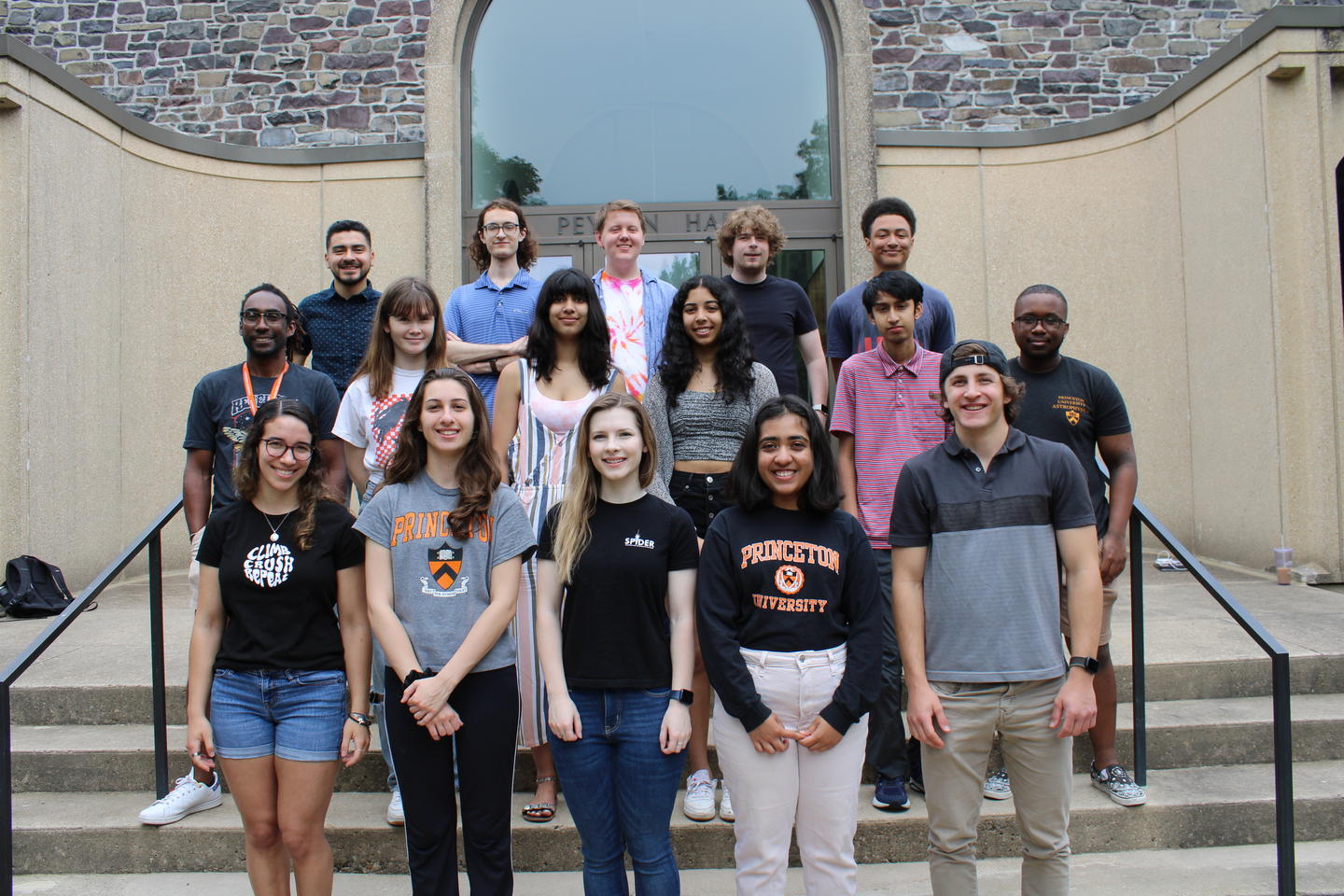
2023 Astrophysics USRP Students Group Photo standing on steps.
2023 Astrophysics USRP Students Group Photo. Photo Credits: Stephanie N. Reif (2023)

My first summer research experience convinced me to declare my major as Astrophysics and solidified my plan to pursue research as a career after graduation. In 10 weeks, our Astrophysics department taught me how to start and complete a research project culminating in a presentation and paper write-up, with no prior research experience required! It was a particularly good experience to get to focus on research full-time without having to juggle courses, extracurriculars, and more, and it made me feel prepared and hungry to do even more research in the future.

Categories
Research Life Resources

A Look Inside TigerResearch: A Gateway to Princeton Professors’ Research Interests

Last year, I wrote an article on The Creation of TigerResearch, a platform created by three Princeton undergraduates (Vivek Kolli ‘24, Eric Ahn ‘24, and Alex Zhang ‘24) to help students to easily discover Princeton professors and learn more about their research focuses. Through my interview with Vivek, I was able to see how students at Princeton take their entrepreneurial ideas and bring them to life, creating new solutions that help other students become more engaged with research on campus.

Image of the TigerResearch homepage

TigerResearch homepage welcome message

This year, as I continue to explore my own research interests, I find myself returning to TigerResearch. I’m interested in learning more about my professors’ research backgrounds, particularly in what their latest and current work is on and how it relates to the discussions and material we cover in class. So, I wanted to take this opportunity to delve deeper into TigerResearch.

Categories
Conduct Research Independent Work

How to Prepare for a Research Presentation

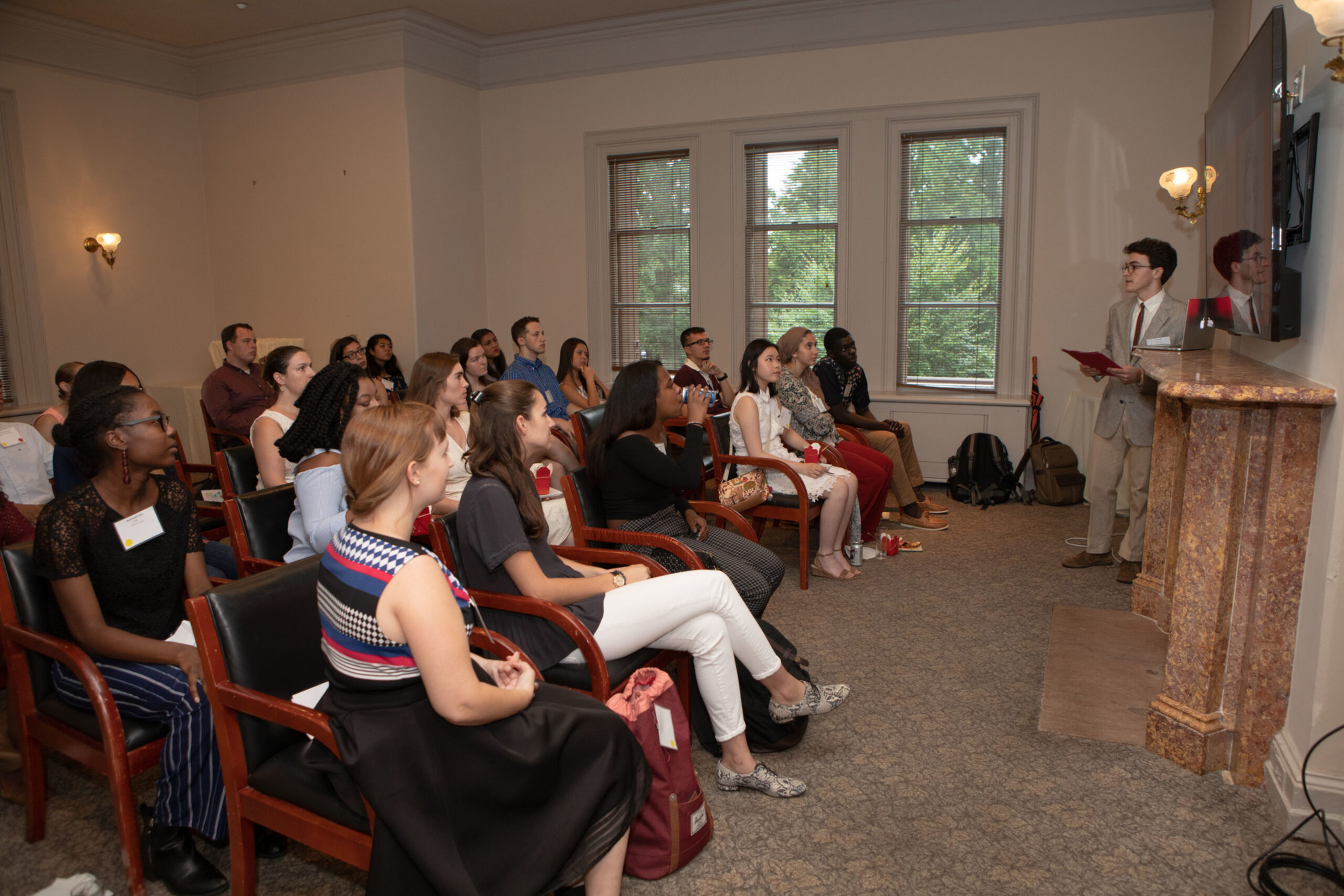
Students sitting in chairs face a man in a grey suit standing and speaking to them
Students in the Freshman Scholars Institute were invited to the 3rd Annual Summer Research Colloquium Conference in Prospect House. They listened to research presentations by current Princeton students both graduate and undergraduate. Photo Credits: Danielle Alio (2018)

Imagine that you’ve been working on a research project for months. Now you’re standing in front of a crowd of professors, some of which probably know more about your topic than you do. If you do research working in an academic department, it can be a stressful experience if you have to eventually present your work to that department. Trying to talk about what you’ve done with your own adviser can be enough sometimes, and showing work that you may not be 100% comfortable with for a whole crowd of professors is a whole new level of daunting. They all have years of experience and may know more about aspects of your presentation than you do, so trying to seem like you know what you’re talking about while possibly being asked questions far out of your depth may seem impossible for an undergraduate to do.

Nonetheless, whether it’s theses, JPs, internships, or summer projects, all undergraduates here are going to find themselves in this position. So how do you do it?

Categories
Conduct Research Independent Work Present & Publish Findings Research Life

An Interview with Cara Khalifeh, PPP Treasurer

The Princeton Perspective Project (PPP) is an initiative by Princeton students against the expectation of “effortless perfection.” Our seasonal series in partnership with PPP interviewed professors, undergraduate students, and graduate students to hear their thoughts on expectations, challenges, failures, and growth through it all. In this segment of our Seasonal Series, we hear from Cara Khalifeh, the Treasurer of the Princeton Perspective Project. 

Cara Khalifeh sitting on a red bench in central park with the NYC skyline in the background.
Cara Khalifeh ’24
Categories
Independent Work Present & Publish Findings Resources

Effortless Perfection at Princeton: The “Perfect” Thesis is Really Hard Work

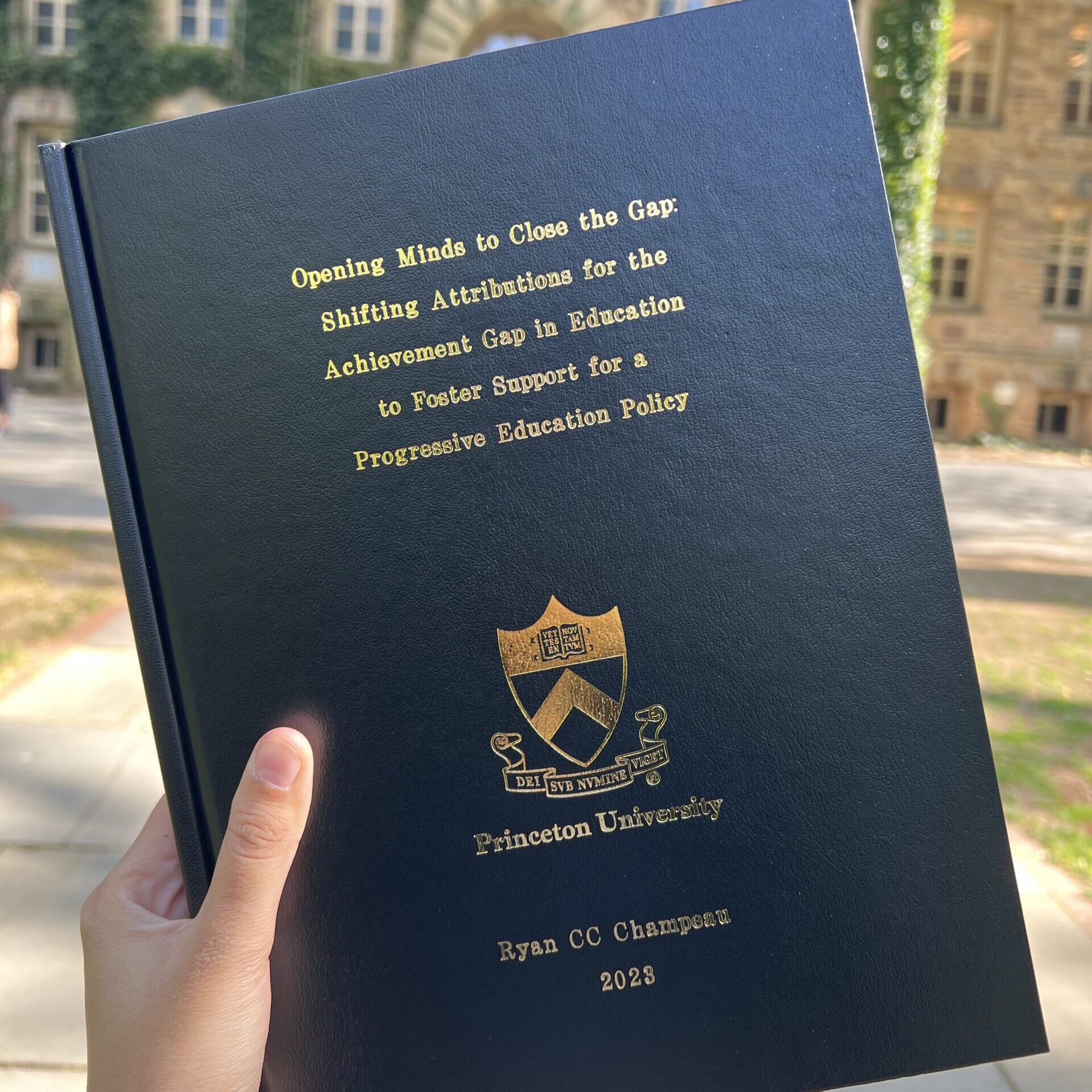
Photo of Ryan CC Champeau's undergraduate thesis - bound, hardcopy print book with gold lettering of thesis title: Opening Minds to Close the Gap: Shifting Attributions for the Achievement Gap in Education to Foster Support for a Progressive Education Policy

My final senior thesis!

I’ve always loved reading through senior thesis titles and thinking “Wow, that’s clever,” “That’s genius,” “I wonder how they came up with that.” The senior thesis, which many seniors refer to as a full-blown novel, is supposed to be a senior’s finest work and proudest possession. It looks impressive in its black book with gold font. It is 115 pages. It has fancy acknowledgments. As a first-year/sophomore, and even as a high schooler on tour, I was in awe at how seniors could create such a perfect paper. It isn’t until now that I know the answer: hard work. 

Categories
Conduct Research Plan Beyond Graduation Research Life

An Interview with Kelly Finke on Finding your Way in Research and the Meaning of Failure

Kelly smiling in a red jacket holding a coffee mug

For this post in our collaboration with Princeton Perspectives Project I dusted off my blog-writing skills and had the pleasure of interviewing 2nd year EEB PhD student Kelly Finke. She uses computational biology techniques to study collective human behavior in Professor Corina Tarnita’s lab.

Categories
Conduct Research Present & Publish Findings

Introducing the Sophomore Research Seminars: An Interview with Professor Emma Ljung

Image of Professor Emma Ljung teaching a seminar
Professor Emma Ljung teaching in a seminar.

With course selection coming around the corner, the sheer number of opportunities can be overwhelming. Choosing courses can be doubly challenging for rising sophomores who are finishing up their prerequisite courses and trying to figure out what they even want to major in. I wanted to take this opportunity to introduce a new and exciting opportunity for students interested in research—the Sophomore Research Seminars.

Categories
Conduct Research Research Life

A Guide to Your Next Museum Visit

As someone who has loved museums for as long as I can remember, it feels heretical to even admit that my own brother considers most museums to be boring. The older sister in me has not let this go easily, and, in fact, I’ve been practicing my art of persuasion through getting my friends and family into museums even when they are hesitant. If you, too, are hoping to convince someone to join you at a museum or maybe are looking for a way to get more out of museums yourself, here is some of my hard-earned advice.

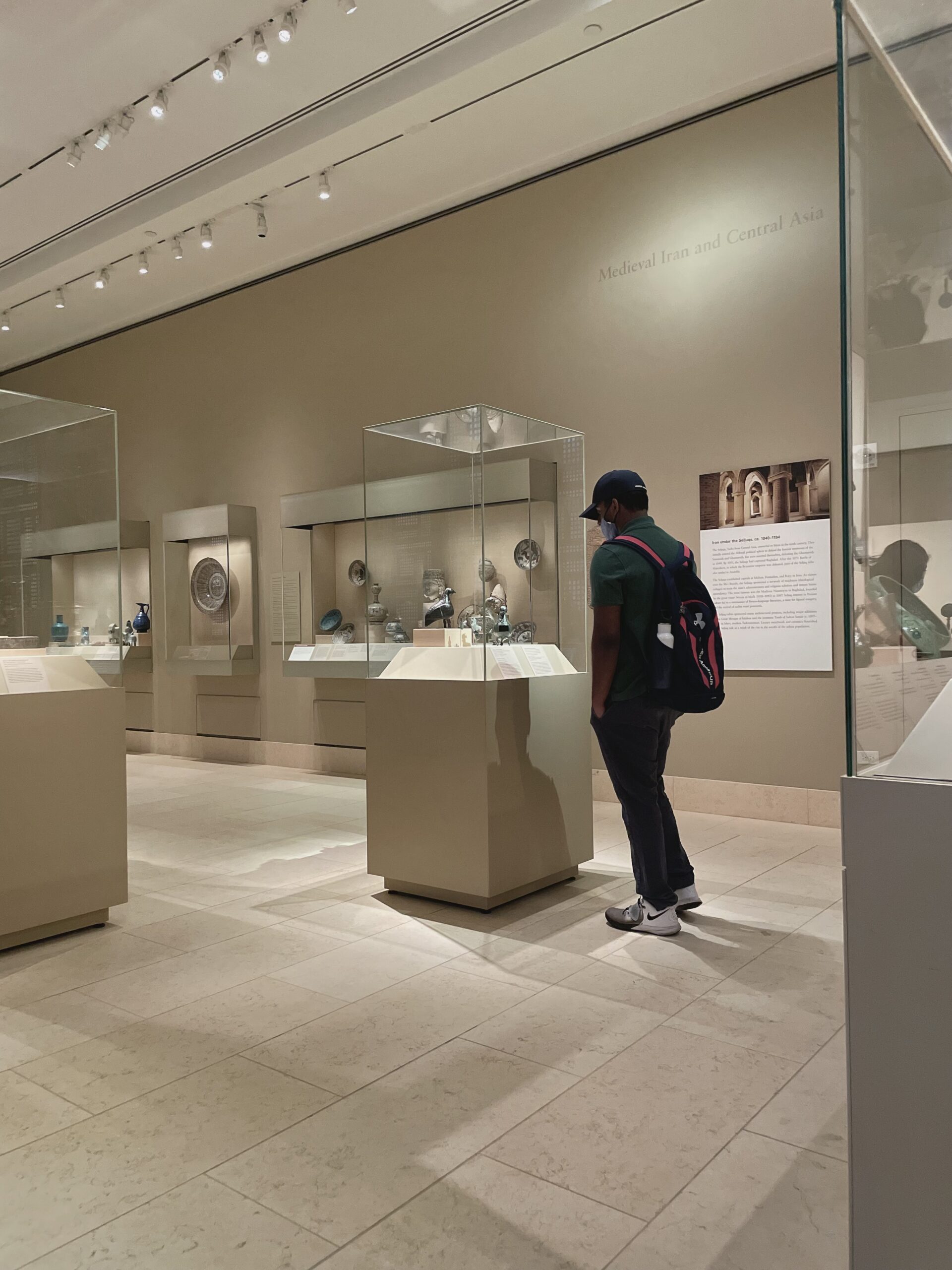
A man looking at an artifact in a display case.
On a recent museum trip, I was so excited that my friend was having a good time that I took this photo to document the moment.
Categories
Conduct Research Research Life

Wintersession: A Fun Chance to Discover New Interests

The start of a new semester can be an adjustment, especially after a long and relaxing break. In the spring, I often end up feeling overwhelmed by internship applications, which Amaya recently wrote about. A few weeks ago, though, I found myself overwhelmed in a far more positive manner; I came back to campus early this year for Wintersession, and was amazed by the huge selection of opportunities both on and off campus. Wintersession is a recent Princeton initiative, giving students the chance to teach and participate in workshops, classes, and trips during the last two weeks of winter break. This past Wintersession, some of the offerings included a class on blacksmithing and a skiing trip. Free, short-term programs are the perfect chance to step out of your learning comfort zone. A particularly engaging class could spark your interest in an unfamiliar (or even underexplored!) topic, opening up new avenues for potential research. 

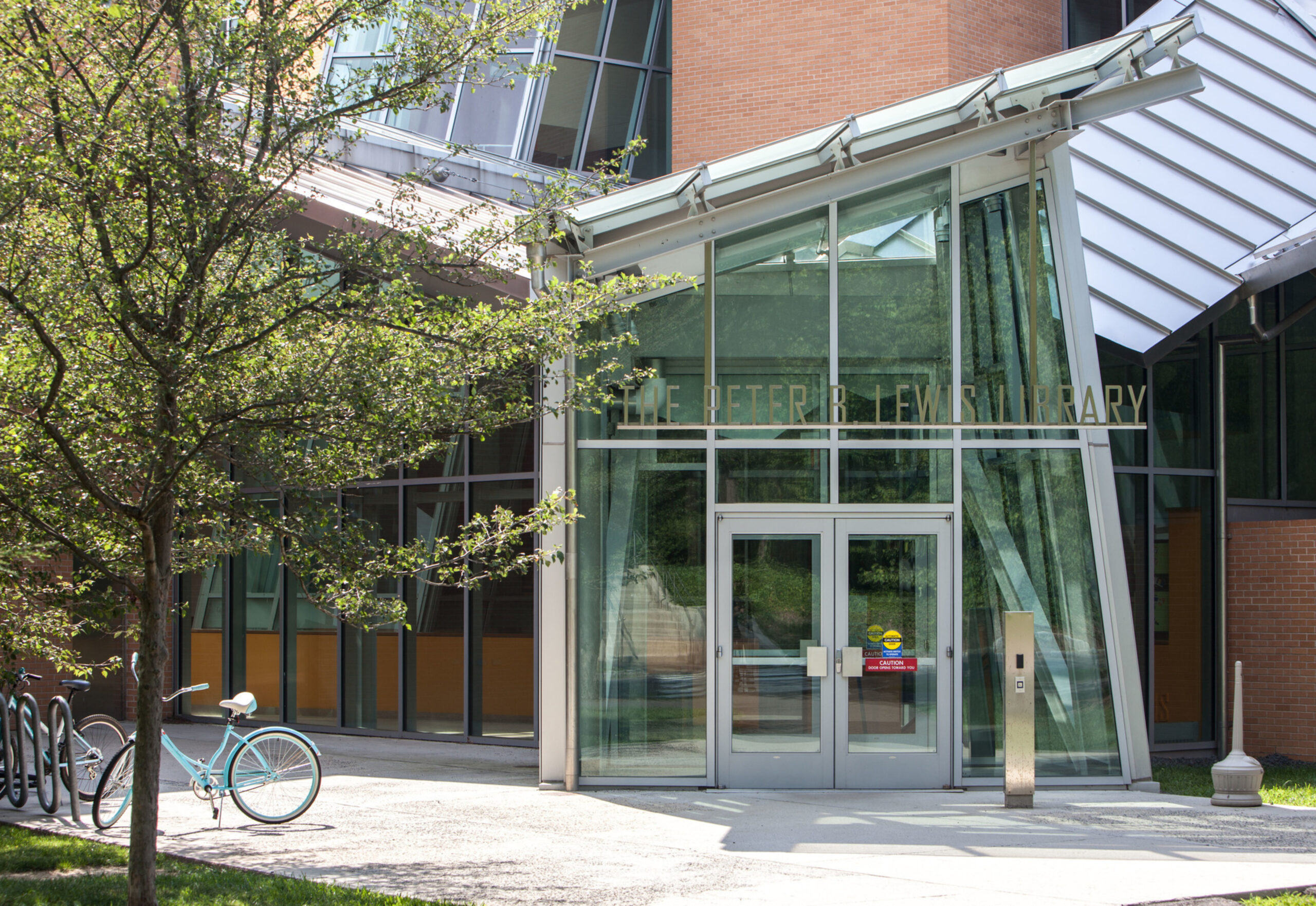
Entrance to Lewis Library
This Wintersession, I attended a class in the Maker Space located inside Lewis Library.