Tiny Models, Big Impact: Erika Yeung’s Work in Edge AI

Picture of Erika Yeung
Picture of Erika Yeung.

When Erika Yeung arrived at Princeton, she knew she was drawn to the intersection of hardware and intelligence, the idea that physical systems like chips and sensors could not only compute, meaning process information, but also perceive the world, learn from data, and adapt over time. As a sophomore in the Electrical and Computer Engineering department, she took a bold step into that space through independent research with Professor Hossein Valavi. Her work focused on how neural networks, which are computer models inspired by the way the human brain processes information, can be redesigned to run efficiently on edge devices. These are small, local devices such as phones, sensors, or embedded systems that operate without relying on distant cloud servers.

At the heart of Erika’s work was quantization, a technique that reduces the numerical precision of neural network weights, which are the internal values that determine how the model makes decisions. Instead of using highly precise numbers, quantization simplifies them into smaller, more compact representations. This allows the model to take up less memory and run faster while still maintaining strong performance. This idea is central to fields like Edge AI and TinyML, which aim to move machine learning out of large data centers and into everyday devices, from wearable health monitors to autonomous systems operating far from the cloud. Running AI locally means the models must be not only accurate, but also lightweight, fast, and energy efficient. Quantization offers one of the most promising ways to make that possible.

Continue reading Tiny Models, Big Impact: Erika Yeung’s Work in Edge AI
You Don’t Have to Be an Expert to Start Research

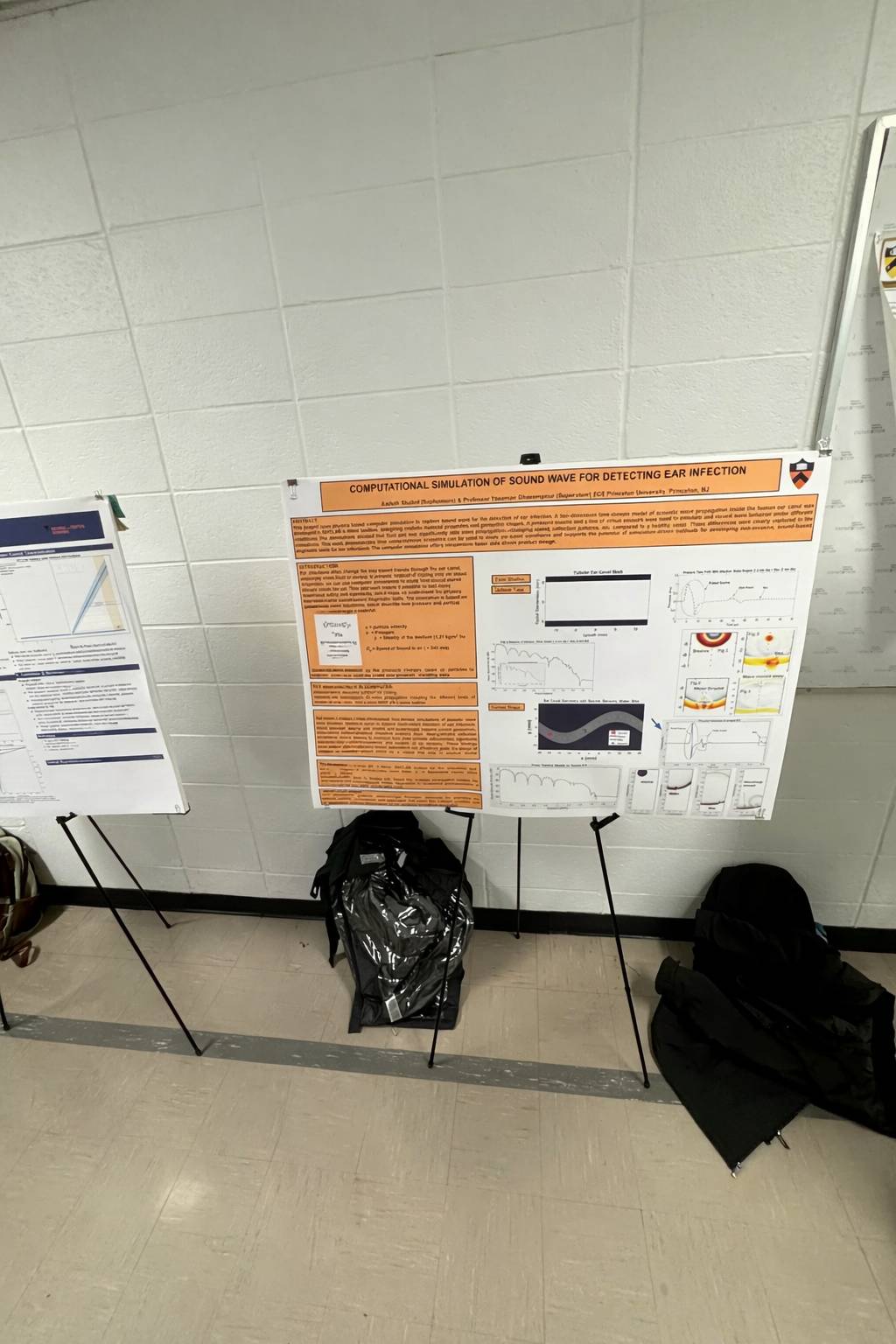
My final research poster at the poster presentation
My final research poster at the poster session.

Last semester, as a sophomore in the Electrical and Computer Engineering Department, I completed my first independent research project as part of the Sophomore Independent Work (ECE 298) with Swan Labs, a lab that works on next-generation wireless systems by combining electromagnetics, signal processing, and system-level design to build fast, intelligent, secure, and adaptable wireless technologies. While I had done research in high school before, this was my first time engaging in research within a truly structured academic setting. The experience felt fundamentally different from anything I had done previously, and it reshaped how I understand what research really means. 

Continue reading You Don’t Have to Be an Expert to Start Research

Returning to Roots: Sadat’s Summer at the Muslim Interscholastic Tournament

As a first-year, Sadat Ahmed—now a sophomore majoring in Electrical and Computer Engineering—returned to a community that had shaped some of his most defining high school experiences. For Sadat, the Muslim Interscholastic Tournament (MIST) had always been more than a competition. It was where he discovered leadership, formed lasting friendships, and learned to believe in his own potential. Coming back as a Software Engineering Intern gave him the chance to reconnect with the program in a new and meaningful way.

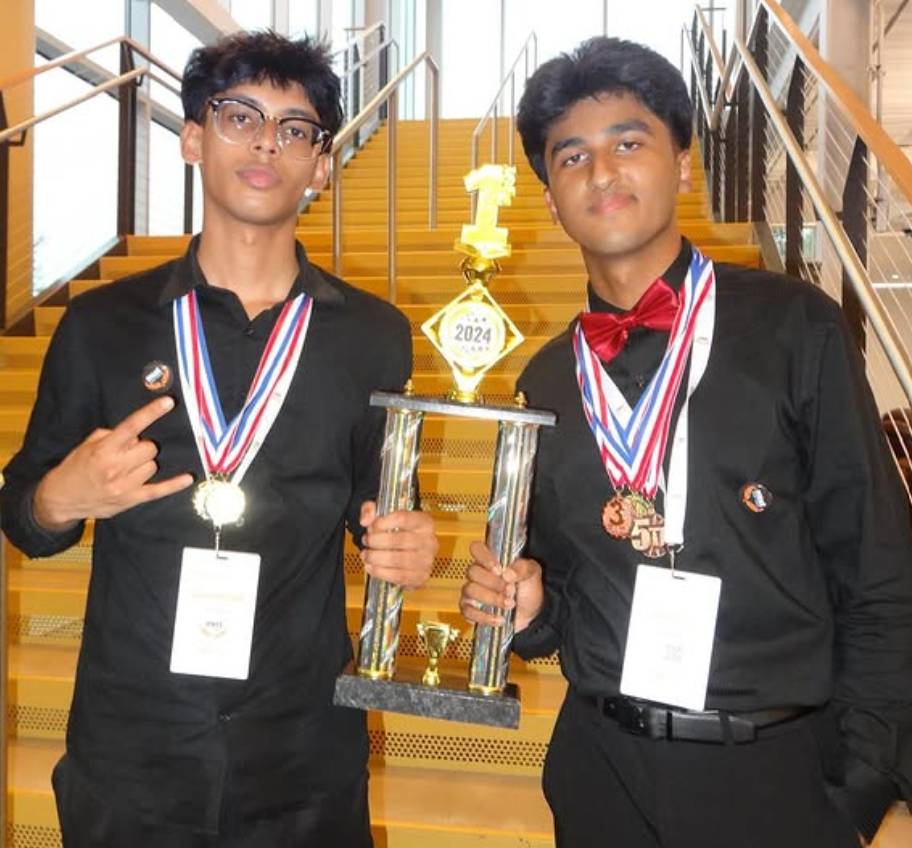
Sadat Ahmed holding MIST trophy.
Sadat (right) holding the winning MIST trophy. Photo credit: Sadat Ahmed. 
Continue reading Returning to Roots: Sadat’s Summer at the Muslim Interscholastic Tournament

Scaling Solutions: Kyaw Naing’s Internship Journey at Amazon

This summer, Princeton sophomore Kyaw Naing returned to his hometown of New York City for a 12-week internship with Amazon’s Grocery Subscription team, an opportunity made possible through the Amazon Future Engineer (AFE) program. AFE is a highly competitive national initiative that aims to support students from underrepresented and underserved communities in STEM, offering college scholarships, mentorship, and paid internships at Amazon. Kyaw was one of only 400 students selected for the program. As an Electrical and Computer Engineering student from Queens, Kyaw saw the internship as a chance to push himself beyond the classroom. During his time with the Grocery Subscription team, he tackled real-world technical challenges at massive scales while working on services that millions of customers rely on every day.

The team owns the whole lifecycle of Grocery Subscription and focuses on building the Amazon Grocery Subscription, enabling customers to subscribe and order groceries. Work on the team involves significant research into sophisticated cloud infrastructure and pipelines and for Kyaw, this was the perfect environment to connect what he learned in his COS classes with real-world practice and research.

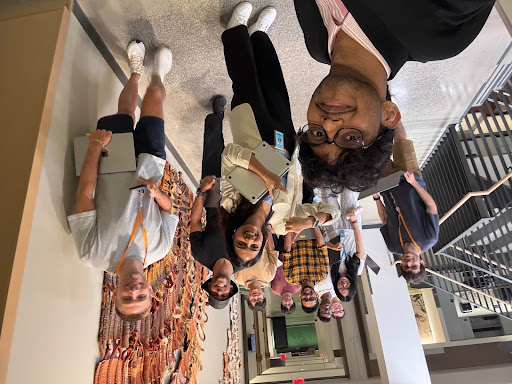
Kyaw (pink shirt) with his co-workers at Amazon
Kyaw (front, pink shirt) with his co-workers at Amazon. Photo credit: Kyaw Naing.
Continue reading Scaling Solutions: Kyaw Naing’s Internship Journey at Amazon

Doha Diaries: Zara’s Internship at QCRI

This summer, Zara Hommez traveled from Princeton to Doha, Qatar, for an internship at the Qatar Computing Research Institute (QCRI), where she worked in the Humanitarian AI division. As a sophomore majoring in Operations Research and Financial Engineering (ORFE), she was drawn to the placement through Princeton’s International Internship Program (IIP) because it offered a rare blend of quantitative modeling, computer vision, and real-world impact, which is the exact intersection she hopes to pursue.

When browsing IIP opportunities, QCRI immediately stood out. Its mission to use data and AI to address global humanitarian challenges aligned perfectly with her academic interests in optimization, systems thinking, and applied machine learning. The chance to live in Doha, a rapidly growing, modern city at the heart of the Middle East, added an exciting cultural dimension she was eager to explore.

Zara on a sand buggie
Zara on a sand buggie! Photo credit: Zara Hommez.
Continue reading Doha Diaries: Zara’s Internship at QCRI

“My Summer in Kuala Lumpur”: Iman’s Internship Journey

This summer, Iman Bedru ’28 traveled from Woodbury, Minnesota, to Kuala Lumpur, Malaysia, for an internship with Chumbaka, an organization dedicated to empowering youth through technology and education. As a rising sophomore in Electrical and Computer Engineering, Iman went to Malaysia through Princeton’s International Internship Program (IIP), drawn by the opportunity to connect her technical background with her passion for education and community engagement.

When browsing through IIP’s opportunities, Chumbaka stood out immediately. Its mission, which is to equip students and teachers with the tools to explore and innovate through STEM, aligned perfectly with Iman’s vision of using engineering knowledge to create meaningful social impact. The fact that the internship was based in Malaysia only added to the appeal. A country rich in cultural and ethnic diversity, Malaysia promised not just professional growth, but also immersion in a vibrant new environment.

Picture of Iman Bedru at Kuala Lumpur temple.
Picture of Iman at a Kuala Lumpur temple.
Continue reading “My Summer in Kuala Lumpur”: Iman’s Internship Journey