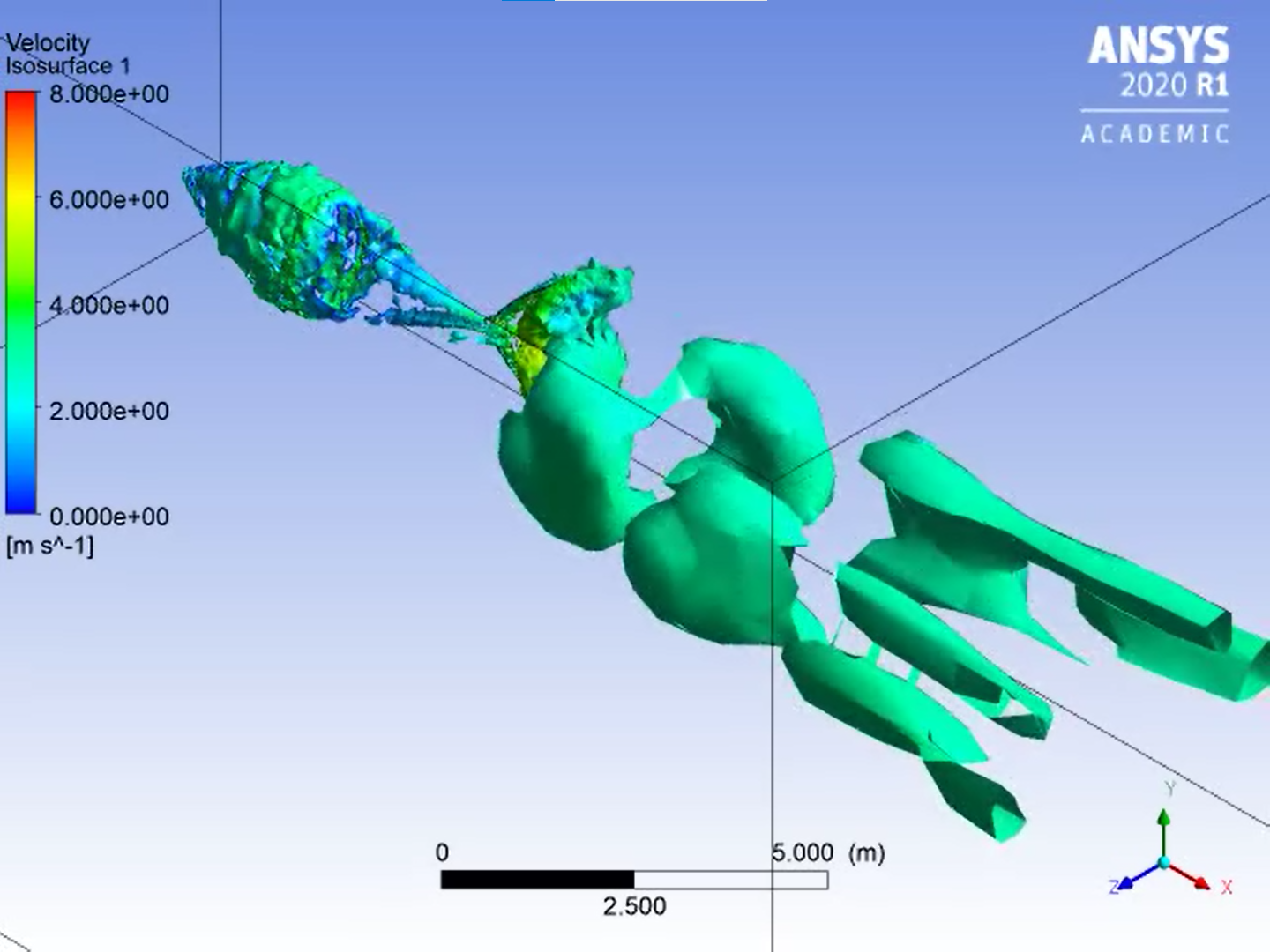
When I entered my sophomore year in the fall of 2019, I was determined to get more hands-on engineering experience. I applied for a High Meadows Environmental Institute Internship to do research on a robotic tuna at the Princeton Gas Dynamics and Fluid Dynamics Lab. I was fortunate enough to have been accepted to the internship, and I spent the early part of 2020 getting ready to work under the tutelage of Professor Alexander Smits and postdoctoral scholar Dr. Liuyang Ding. The project was to conduct an experiment where we would measure the generated thrust force, power, and efficiency of a robotic tuna.
Virtual simulation of the robotic tuna in ANSYS Fluent
One of the most exciting parts of the academic experience at Princeton is undoubtedly getting to take advanced (3-400 level) elective classes in your concentration. While all classes at Princeton are valuable, elective classes can provide a unique opportunity to have a more personalized learning experience – the classes are often much smaller, with some classes having as few as 5 students – while getting to learn about somewhat more niche disciplines that professors are both specialized in and are more passionate about. However, sometimes the embarrassment of riches can be a problem. The sheer number of truly incredible and interesting advanced courses that are offered at Princeton can make it difficult to choose which courses to take, especially when your course slots are taken up by concentration and certificate requirements as well as either the AB or BSE general requirements. I went through such an exercise myself, and in this post, I hope to offer some insight on how to choose courses based on my experiences at Princeton.
As a SPIA major, I was worried about coding for the first time. But, after taking POL345, I realized that I actually love statistics and computer science.
“I can’t code,” I told my friends when I realized that I had to take a statistics course for my major that required coding. “I don’t understand it,” I told them. I had never coded before and the thought of creating algorithms on a computer sent shivers down my SPIA spine. I loved math in high school, and coding always seemed interesting to me, but rumors about Princeton math courses, as well as computer science courses, had me sprinting away from Fine Hall. But then, I realized I had to take a statistics course for SPIA. I had to face my fear of R, or the programming language that most SPIA statistics courses use for statistical computation. I didn’t think that I could do it, but I did. And, I ended up loving it. I faced my fears, learned how to code, and you can too.
In the summer of 2021, I participated in a virtual global seminar in Cyprus entitled Conflict, Borders, Multilingualism, Translation. I was particularly drawn to the idea of learning about Cyprus’ history and culture through the lens of multilingualism and translation. Personally, language has always played a key role in my understanding of identity and culture. Three languages are spoken in my home (Filipino, English, and Chinese Hokkien), and growing up in this way has made me very conscious of language-culture influences, code-switching, and nuances in connotation.
An aerial shot of Nicosia, the capital of Cyprus
Applying to this global seminar was a spontaneous decision; I major in MAE and am more used to spending my summers doing research and technology. However, when I read about this seminar in an email, I knew that it aligned with my personal interests in the social sciences. Because of the great time I had during the seminar, I am writing to motivate people to take advantage of the breadth of courses offered by Princeton and try studying something totally spontaneous and new!
Have you ever come across something in class that you wish you could get a better Have you ever been wondering more about how proteins are made in the body? Or have you ever been looking for a specific type of lab experiment protocol for your independent work? If yes, then look no further than the National Center for Biotechnology Information (NCBI) website! It contains dozens of resources, some of which I have found to be very handy in my own research and school experiences. The site is tailored for students in the life-sciences field, but there is a lot of breadth in the resources available—you’ll be able to find useful tools regardless of whether you’re a MOL or CHM major, or if you’re interests lie in researching chemically synthesis mental health, or neurodegenerative diseases.
The NCBI Logo, as it appears on the website
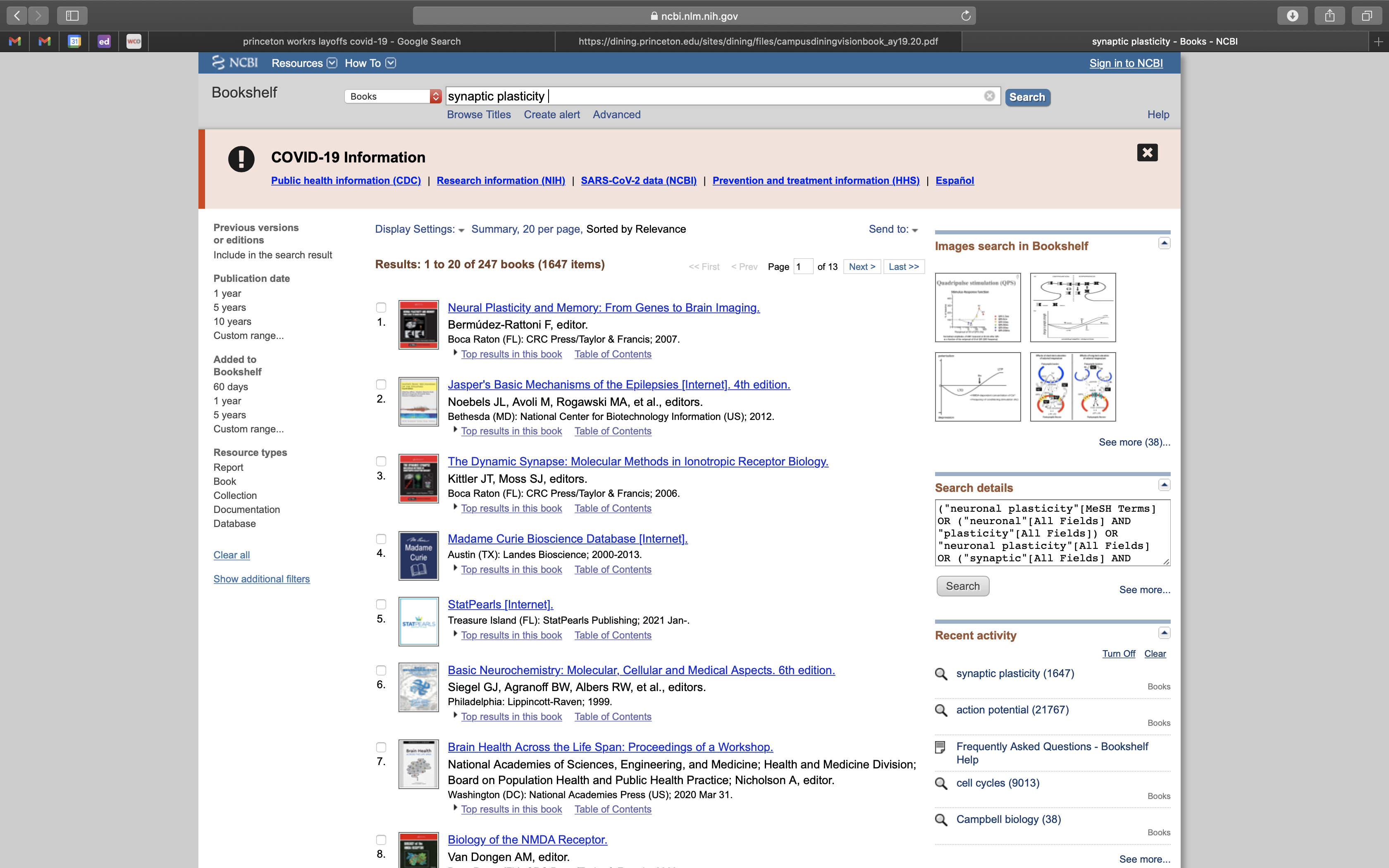
A very useful tool on the NCBI website is Bookshelf. There is a search bar at the top of the website where you can input some topic, book title, or field name, and the program will return a variety of different reference materials relating to the query, including full scientific textbooks, book chapters, studies. On the side, there are often figures and graphs that may relate to your search.
Some sample search results within Bookshelf if I look up “synaptic plasticity”
With midterms being in full swing this week, you’ve most likely started reviewing concepts and studying for these exams. However, another crucial part of the preparation process is to readjust to the in-person exam experience. After a year and a half of taking exams virtually, it is important to recognize that exams in the classroom will look and feel very different, so don’t let that take you by surprise. Whether you are studying for midterms or want to start thinking about final exams, here are a few key tips when it comes to taking exams at Princeton in person:
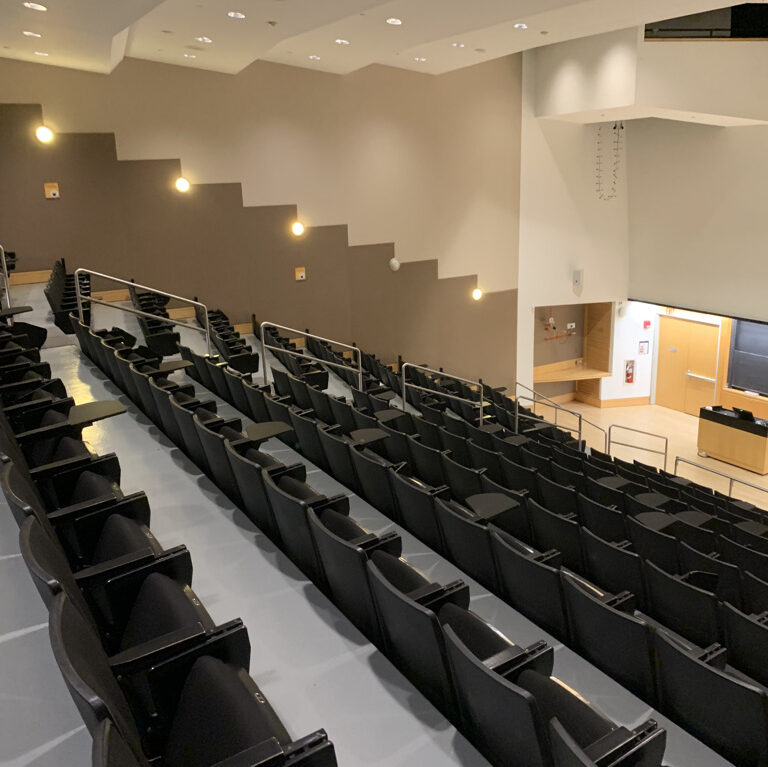
McDonnell A01, a large lecture hall where one of my midterms is taking place this semester
East Pyne looks absolutely beautiful as students approach midterm season.
Midterms start this week. I know; I also had to read that twice because I could not believe it. Time is flying on campus and it has been amazing, but with everything going on it can be difficult to stay motivated and study for midterms. Nonetheless, I believe in myself and all of you reading this post! We will make it through midterms and we will succeed. Here are the tips and tricks that I am going to use to perform my best, and I hope that you can use them too:
Writing the literature review section for a scientific research article can be a daunting task. This blog post is a summary of what I have personally found to best help when writing about scientific research. I hope some of these tips can help make the process an easier and more fulfilling experience!
With classes in full swing, I thought I would share my thoughts on what is a woefully underused resource at Princeton: office hours. Going to office hours has been an extremely valuable tool for me in completing problem sets, studying for tests and exams, and connecting with professors. So read ahead for some advice and observations I’ve made!
Consult your department’s website or syllabus for professors’ office hour availabilities—faculty try hard to make themselves available because office hours can be a very valuable resource!
As a first-year B.S.E student with little to no previous research experience, the idea of writing an eighty-page senior thesis based on my own lab-based research seemed like an extremely daunting task. Now, into the first semester of my junior year, the thought of having to write a thesis next year still seems like a challenge, although a lot less intimidating than two years ago. The main reason for this is because I have participated in multiple research-based summer internships through Princeton, which have helped me feel better prepared to do lab-based junior independent work and a senior thesis in the coming semesters.
You may also be wondering how early you can get involved with lab-based research at Princeton. Although there is certainly no pressure to do research as a first-year or sophomore if you do not want to, Princeton does make sure that opportunities are available for those who do want to be involved early. Here’s a timeline of some of the different lab-based opportunities available, and when you can start getting involved.
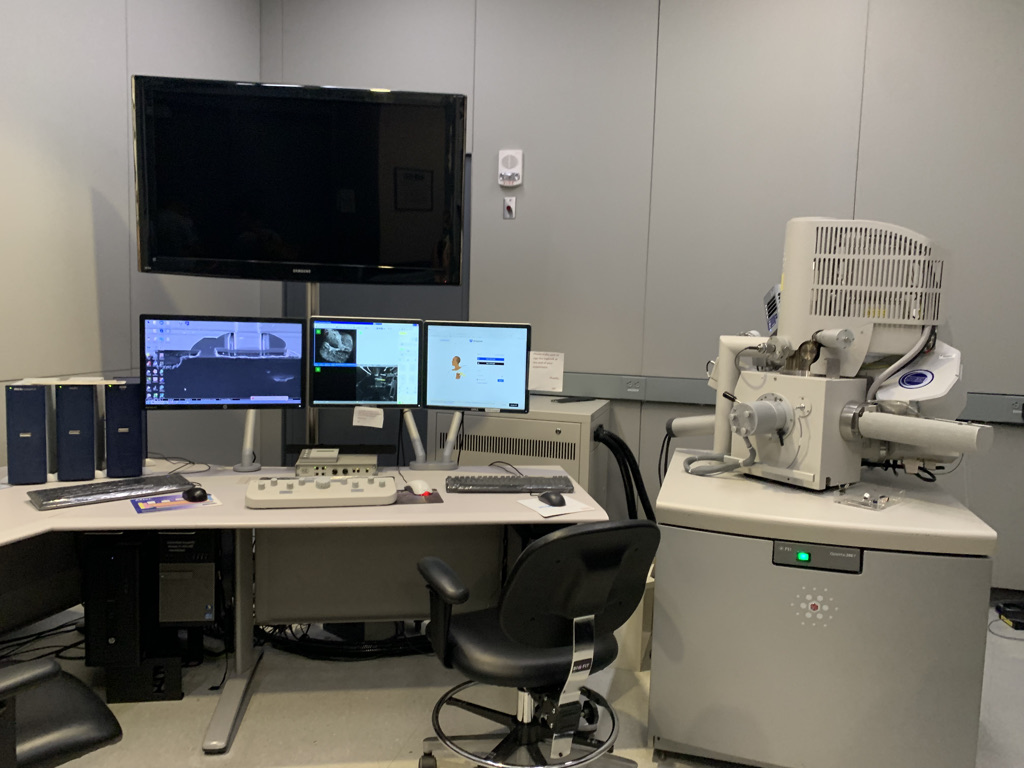
The scanning electron microscope in Princeton’s Imaging and Analysis Center, where I am doing research with a material science lab on campus.