Categories
Conduct Research Independent Work

Worried About a Lack of In-Person Research Experience? Don’t Be. Here’s Why.

Due to the Covid-19 pandemic, a lot of in-person internships and research positions for students have been transitioned to remote opportunities. Last summer after my first year of college, I opted to take online classes over the summer because in-person opportunities were not a possibility. For this upcoming summer, I was hoping to gain laboratory experience in person, but my internship was also transitioned online. With only one summer left before I apply to graduate school, this left me with a looming question: will I have enough in-person research experience before I apply to graduate school?

Although this question bothered me for a while, I realized that I was approaching this issue from the wrong perspective. I feel as though many students are probably dealing with similar issues now that many summer opportunities have been canceled or moved online due to the pandemic. In this article, I am going to walk through the reasoning behind why you should not worry too much about lacking in-person research experience and also include some additional opportunities you should be on the lookout for. 

In-person research positions may not be available right now, but you can still take advantage of your remote research experiences.
Categories
Conduct Research Independent Work

How to Write a Research Proposal as an Undergrad

As I just passed the deadline for my junior independent work (JIW), I wanted to explore strategies that could be helpful in composing a research proposal. In the chemistry department, JIW usually involves lab work and collecting raw data. However, this year, because of the pandemic, there is limited benchwork involved and most of the emphasis has shifted to designing a research proposal that would segue into one’s senior thesis. So far, I have only had one prior experience composing a research proposal, and it was from a virtual summer research program in my department. For this program, I was able to write a proposal on modifying a certain chemical inhibitor that could be used in reducing cancer cell proliferation. Using that experience as a guide, I will outline the steps I followed when I wrote my proposal. (Most of these steps are oriented towards research in the natural sciences, but there are many aspects common to research in other fields).

Categories
Conduct Research Independent Work

On “Choosing Sides” in an Academic Debate: The More Precise, the Better

An amusing remark on academics, itself attributed to several different academics, goes something like this: In academia, disputes take on such huge proportions precisely because the stakes of them are so small. Whether this observation is or is not true, I have found that its general sentiment is passed down to undergraduates, if inadvertently so. Of course, there are pedagogical reasons for instilling this impression; when we are learning about debates on a given subject within a discipline, it can help to read the most absolute positions on either side, if only to distill the terms of argument.

But the impression that such debate must necessarily be black and white, and must be of great intensity, can be daunting to accept as an undergraduate writer. Who am I, I wonder to myself, to so totally challenge the work of an established academic researcher? Even if I might disagree with their broader argument, have they not done far more research than I have? Relatedly, what if their research offers some quite usable background information– am I not just a little hypocritical to use it while arguing against the position it was intended to support? Or, what if I agree with smaller asides or observations by the researcher, but not the thrust of their whole argument? In a word, need the division be so absolute within the scholarly conversation? 

Categories
Conduct Research Independent Work

How to Make Progress on Your Lab-Thesis Outside of the Lab

When writing a research manuscript or a lab report, I have been conditioned to complete all of my experiments first and then start by writing the results section. My mentors have always encouraged me to start with the section that ‘writes itself’, given that when you obtain your experimental results, you cannot alter them. I started the school year thinking I would use this approach for my thesis – focus strictly on experiments during the fall and the start of spring semester and transition into the written portion of the thesis during late spring semester. However, while I was at home and outside of the lab between Thanksgiving break and early February, I knew I could not spend more than 2 months without thesis progress. Although I did not have my results nearly ready by that point, I began to brainstorm different ways in which I could work on my lab-based thesis without access to the lab. In this post, I will highlight ideas and resources that can help you make progress on your thesis, even while you are outside of the lab. 

Categories
Conduct Research

Doing Research in a Pandemic, An Interview with Molecular Biology Graduate Student Emily Mesev

For this Spring Seasonal Series, entitled Doing Research in a Pandemic, each correspondent has selected a researcher to interview about the impact of the pandemic on their research. We hope that these interviews document the nuanced ways the pandemic has affected research experiences, and serve as a resource for students and other researchers. Here, Nanako shares her interview.

For this seasonal series, I decided to interview Emily Mesev, a Ph.D. candidate in the Department of Molecular Biology. I was interested in how her experience as a graduate student differed from my experience as an undergrad. Because undergrads aren’t allowed to be in the laboratory (at least for Molecular Biology), I’ve had to change my thesis topic and redirect it to become computational. I was excited to find out whether the graduate student experience had changed in similar ways!

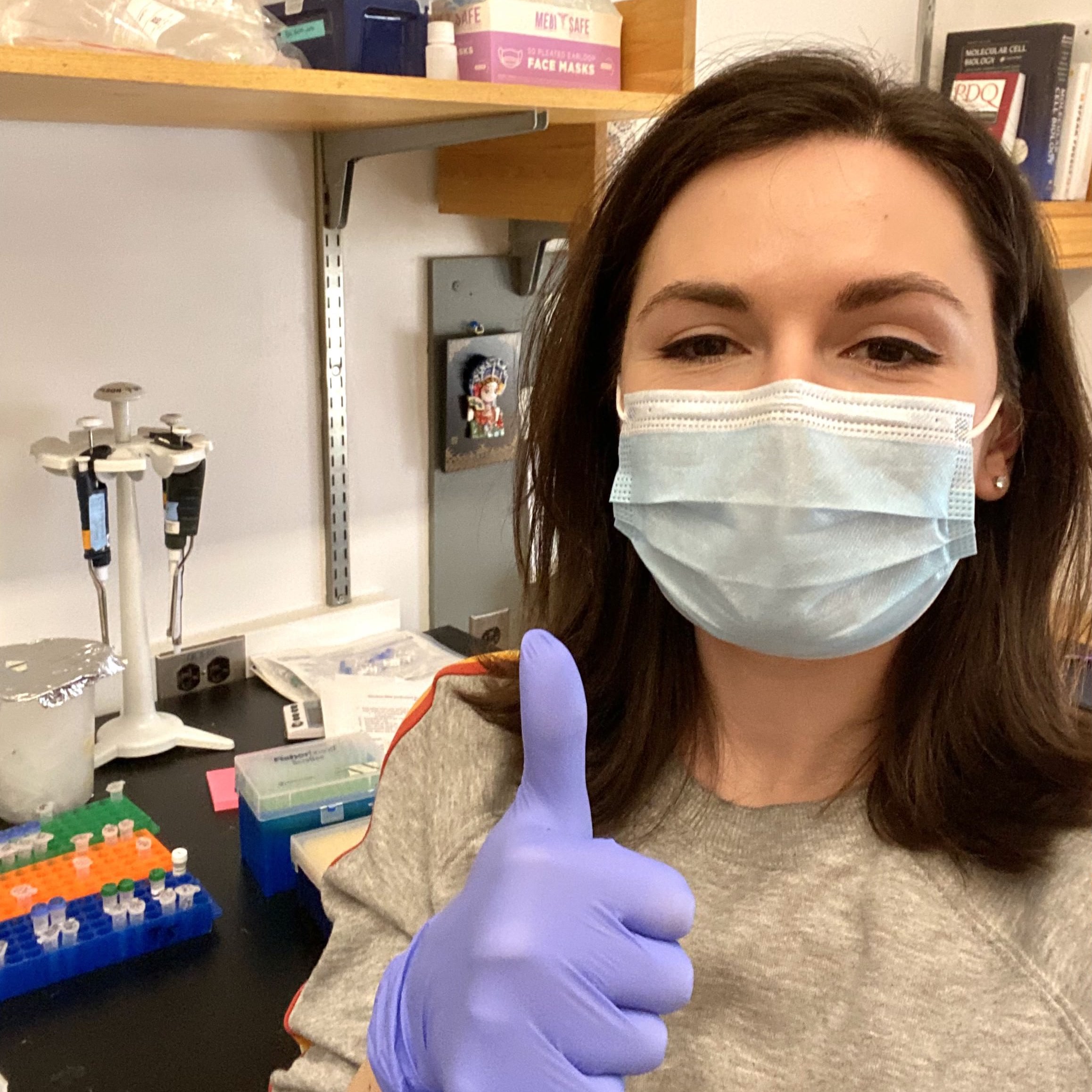
Emily at her laboratory bench this week.
Categories
Conduct Research

Say Goodbye to FOMO: Making the Most of Your Virtual Experience at Princeton

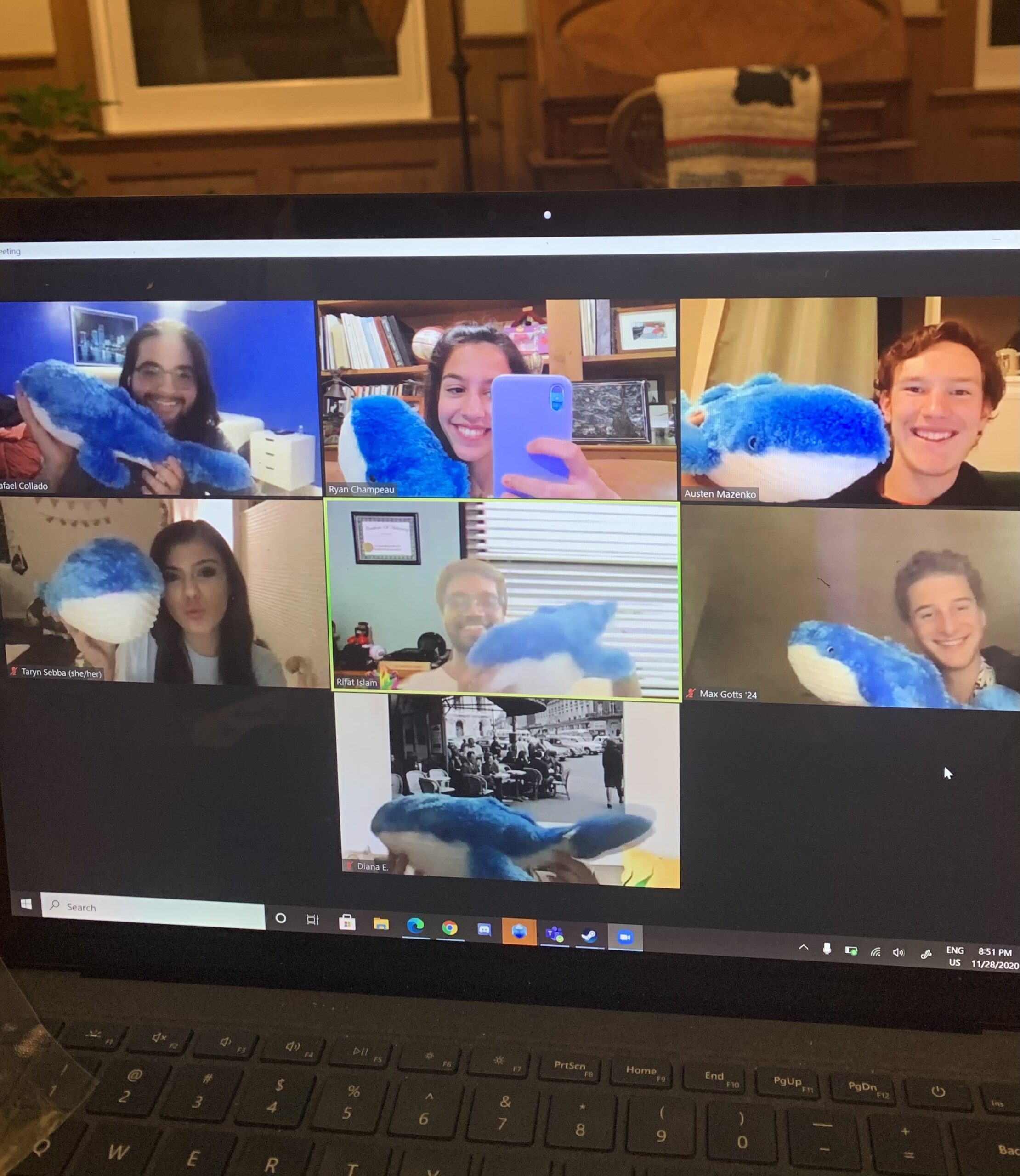
Whitmanites are making whales and you can too! There is an abundance of academic and social events taking place this semester virtually.

It has been about a year since the world turned upside down and Princeton as we know it changed completely. Most students returned to campus this spring, hoping to feel a piece of what Princeton once was. However, many other students stayed home due to safety concerns, or because they knew Princeton wouldn’t be the same. Regardless of the decision, I know that many students, myself included, feel FOMO and like we are missing out on what our four years should have been, both intellectually and socially. However, there is a silver lining. There are ways to stay engaged academically wherever you are, conduct research, and make new connections. So without further ado, here are 6 ways to reduce your Princeton FOMO and make the most of this semester:

Categories
Conduct Research Independent Work

A Quick Crash Course in Statistics: Part 2

Most people’s New Years Resolutions, I imagine, are not about improving their knowledge of statistics. But I would argue that a little bit of knowledge about statistics is both useful and interesting. As it turns out, our brains are constantly doing statistics – in reality, our conscious selves are the only ones out of the loop! Learning and using statistics can help with interpreting data, making formal conclusions about data, and understanding the limitations and qualifications of those conclusions.

In my last post, I explained a project in my PSY/NEU 338 course that lent itself well to statistical analysis. I walked through the process of collecting the data, using a Google Spreadsheet for computing statistics, and making sense of what a ‘p-value’ is. In this post, however, I walk through how I went about visualizing these results. Interpretation of data is often not complete before getting a chance to see it. Plus, images are much more conducive than a wall of text when it comes to sharing results with other people.

Categories
Conduct Research Plan Beyond Graduation Present & Publish Findings

Interdisciplinarity and the Political Imperative of Research: An Interview with Daniela Gandorfer, Part II

Specializing in legal thought and critical theory, Daniela Gandorfer is a graduate of the doctoral program in Princeton’s Department of Comparative Literature, a postdoctoral scholar at UC Santa Cruz, and co-director and head of research at the Logische Phantasie Lab (LoPh). LoPh, a research collective recently founded by Princeton alumni and current students, describes itself as a “comprehensive research agency that actively challenges injustices resulting from political, legal, economic, social, physical, and environmental entanglements by means of specific investigations.” I want to thank former PCUR correspondent Rafi Lehman, now the Development Coordinator at LoPh, for putting me in touch with the research collective’s team.

Over email and Zoom, I was able to talk to Daniela about the critical methods employed by LoPh, its relationship with the established academy, and the benefits and limits of an interdisciplinary research approach.

This interview has been edited for length and clarity. Below is part two of a two-part interview. You can read Part I here.

Daniela Gandorfer, co-director and head of research at LoPh.
Categories
Conduct Research Independent Work

A Quick Crash Course in Statistics: Part 1

In PSY/NEU 338, From Animal Learning to Changing People’s Minds, my group recently presented our capstone project for the course: we researched irrationality, trying to understand when humans make irrational decisions, how that is implemented in the brain, and if certain things might actually be incorrectly labeled as ‘irrational’. Our emotions are a leading example: although some call them irrational, in practice, they play a key role in fine-tuning our decision-making and reasoning abilities. When you’re happy, for example, everything might be going more positively than expected. Your mood is thus encouraging you to continue the behaviors that led to those rewards, since that positive trend might continue (for a neuroscientific discussion of this topic, see this paper).

To demonstrate this phenomenon first-hand, we had students in the class play what is known as the Ultimatum Game:

You are the proposer. You have been given $100. You are tasked with splitting your money with a stranger, the responder. If the responder accepts the split that you propose, you both keep the money after the game ends. If the responder does not accept, no one keeps the money.

The question: how much money do you decide to offer the responder?

After reading this, students had five seconds to provide their answer. They were then asked to report their mood. The question we wanted to answer was simple:

Is the amount of money people offered statistically different between those who reported “positive” versus “negative” moods?

In this post, I’ll explain some of the basic statistics I used to formally answer this question, bolding some key terms in the field along the way. In my next post, I’ll walk through the programming aspect for visualizing those statistics. 

In Google Spreadsheet, I calculated the mean dollar amount for the “positive” and “negative” categories, equaling $32.2 and $66 respectively. The “equals” sign indicates a function, and D51:D55 corresponds to the cells containing the data for the “positive” category.
Categories
Conduct Research Independent Work

Coming Back to Campus in January? A Look into a Hybrid Semester and its Challenges

Like most students at Princeton, I am really looking forward to next semester.  Having taken into account the pandemic and the Princeton community’s well-being, the university is offering all undergraduates the option to return to campus, even though most classes will still largely be held online. Consequently, Spring 2021 will be the second time since the pandemic began where we can experience a different side of Princeton – a hybrid semester, where there will be a mix of in-person and virtual classes. A hybrid semester presents a lot of opportunities to enhance the educational experience from a fully virtual semester like the one we had this fall. Next semester, I am looking forward to the small things — like seeing more students outside of classes and interacting with them as guidelines allow. However, it is likely that there will be new and old challenges for students on and off-campus. Although it is difficult to predict exactly how the semester will unfold, I outline three challenges that stand out to me, so that we can prepare for them beforehand.